
WOODLAND GARDENS
Location
Geographic Setting
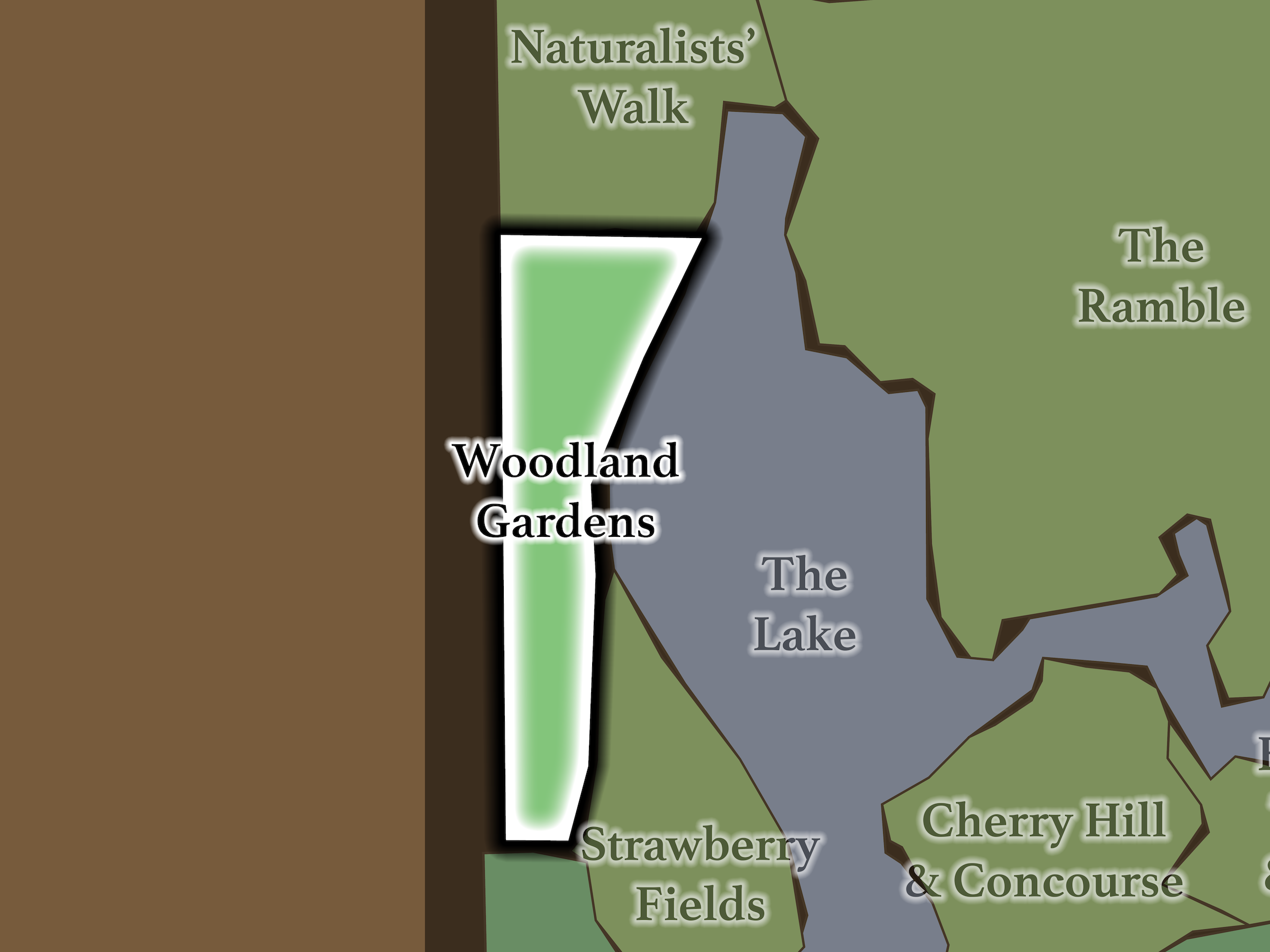
Woodland Gardens forms a narrow, secluded corridor along the western edge of Mid-Park South. Naturalists’ Walk begins above West 77th Street; The Lake and Strawberry Fields lie beyond West Drive to the east; The Green begins beyond Terrace Drive to the south; and Central Park West separates the landscape from the Upper West Side.
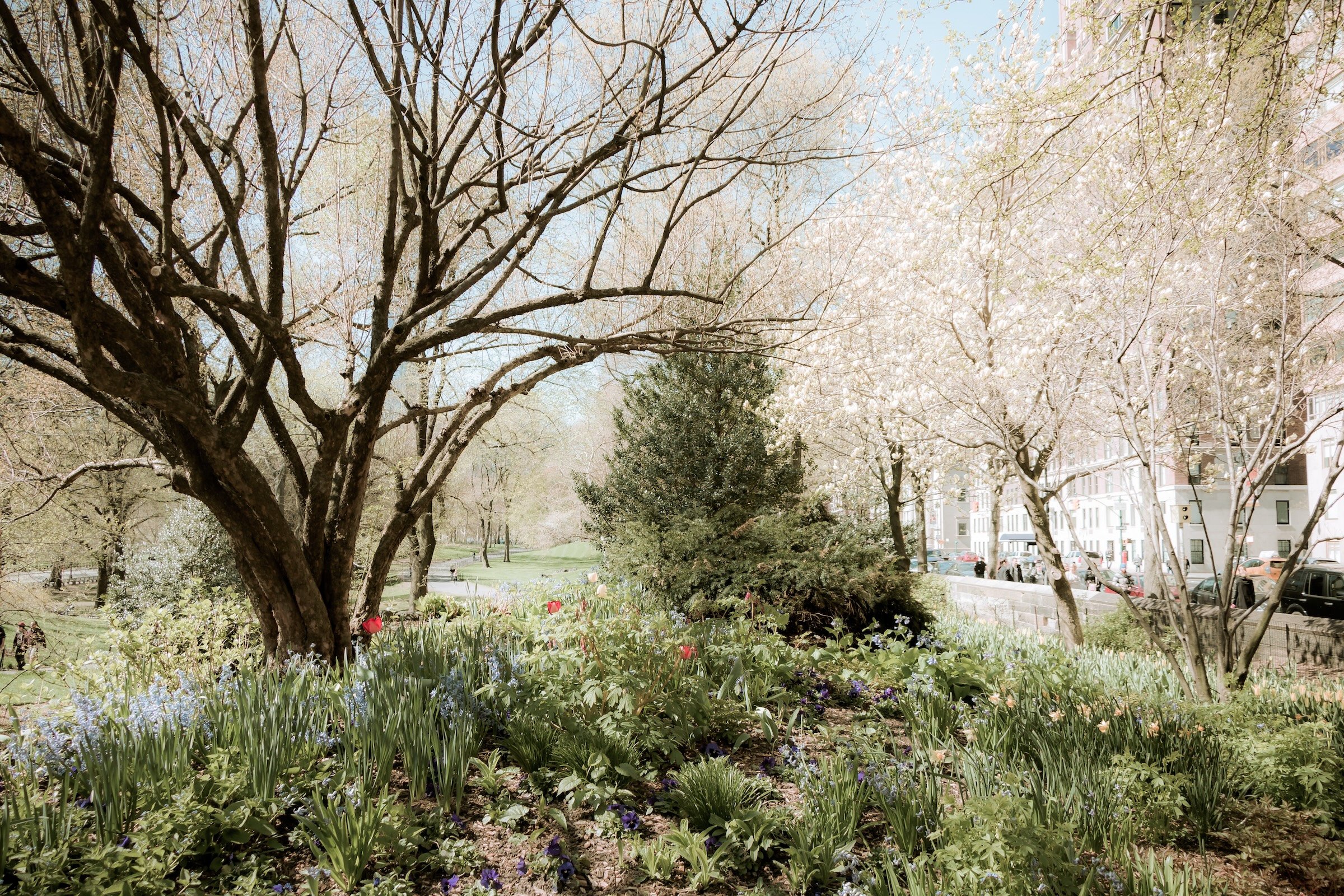
Like Naturalists’ Walk immediately north, Woodland Gardens is shaped as much by movement as destination. Pedestrian paths and the historic Bridle Path run lengthwise through rolling terrain, passing beneath mature trees, through glades and beside exposed rock. Yet the landscape repeatedly slows that movement, particularly along Azalea Walk, where flowering shrubs turn what could simply be a transit corridor into a seasonal garden.
Etymology
Woodland Gardens is an established Central Park Conservancy landscape name with particularly strong precedent from the park’s 1990s restoration era. Conservancy planning documents mapped Woodland Gardens from West 67th to West 77th Street, while describing the landscape south of Eaglevale Arch as one of the woodland settings associated with the western Bridle Path.
Within the CityNeighborhoods taxonomy, the name is applied more narrowly to the surviving northern portion between Terrace Drive and West 77th Street, since the landscapes farther south have developed strong identities of their own. The name nonetheless remains especially appropriate here: woodland, glades, flowering shrubs, rock and circulation are precisely what define the experience.
History
1858–1873: Greensward Plan & Construction
Olmsted and Vaux designed Central Park’s western edge as an intricate circulation landscape rather than a single broad destination.
The Bridle Path wound north through wooded scenery while pedestrian walks followed separate routes above, below and alongside it. Changes in elevation, plantings and rock helped keep the different forms of movement visually distinct, allowing horseback riders and pedestrians to occupy the same narrow portion of the park without constantly intersecting.
That system is especially apparent at the neighborhood’s northern edge. Eaglevale Arch, now generally identified by the Conservancy as the West 77th Street Stone Arch, carries the West 77th Street entrance path above two separate routes—the Bridle Path through its western opening and a pedestrian path through its eastern opening. It is the only Central Park arch composed of two separate archways.
1858–1899: Early History & Grand Openings
During Central Park’s nineteenth-century decades, this western corridor formed part of a much more complex water-and-woodland landscape than exists today.
At Eaglevale Arch, the eastern opening originally rose above Ladies Pond, a small extension of The Lake reserved during winter for women skaters. The arch therefore connected entrance, equestrian route, pedestrian circulation and water within an extraordinarily compact piece of terrain.
The southern entrance also acquired one of Central Park’s original civic designations. The West 72nd Street entrance became Women’s Gate, part of the commissioners’ system of names honoring New Yorkers collectively rather than commemorating individual dignitaries. Other gates honored occupations such as artists, engineers and merchants; this one explicitly honored women.
The landscape between those entrances remained primarily one of passage—exactly the sort of rustic, wooded journey Olmsted and Vaux intended visitors to encounter while moving through the park.
20th Century: Transformation & Restoration
By the late twentieth century, years of altered use and declining maintenance had weakened much of that original character.
The Central Park Conservancy made the western landscapes a major focus of its Wonder of New York restoration campaign during the 1990s. Its 1994 and 1995 planning maps formally identified Woodland Gardens as one of the campaign’s major landscapes, alongside Naturalists’ Walk, Summit Rock and the Southwest Corner.
The work south of Eaglevale Arch was substantial. An abandoned playground was removed and replaced with a grassy glade, while azaleas, rhododendrons and other plantings were introduced along the slopes. The resulting Azalea Walk developed into a flowering woodland path extending roughly from West 74th to West 77th Streets.
By 1997, the Conservancy described the restored western landscapes as a return to the rustic woodland character originally envisioned by Olmsted and Vaux.
Explore
21st Century: Renovation & Modernization
Today, Woodland Gardens is easy to mistake for a place that exists simply to get somewhere else.
And in one sense, that is exactly what it is.
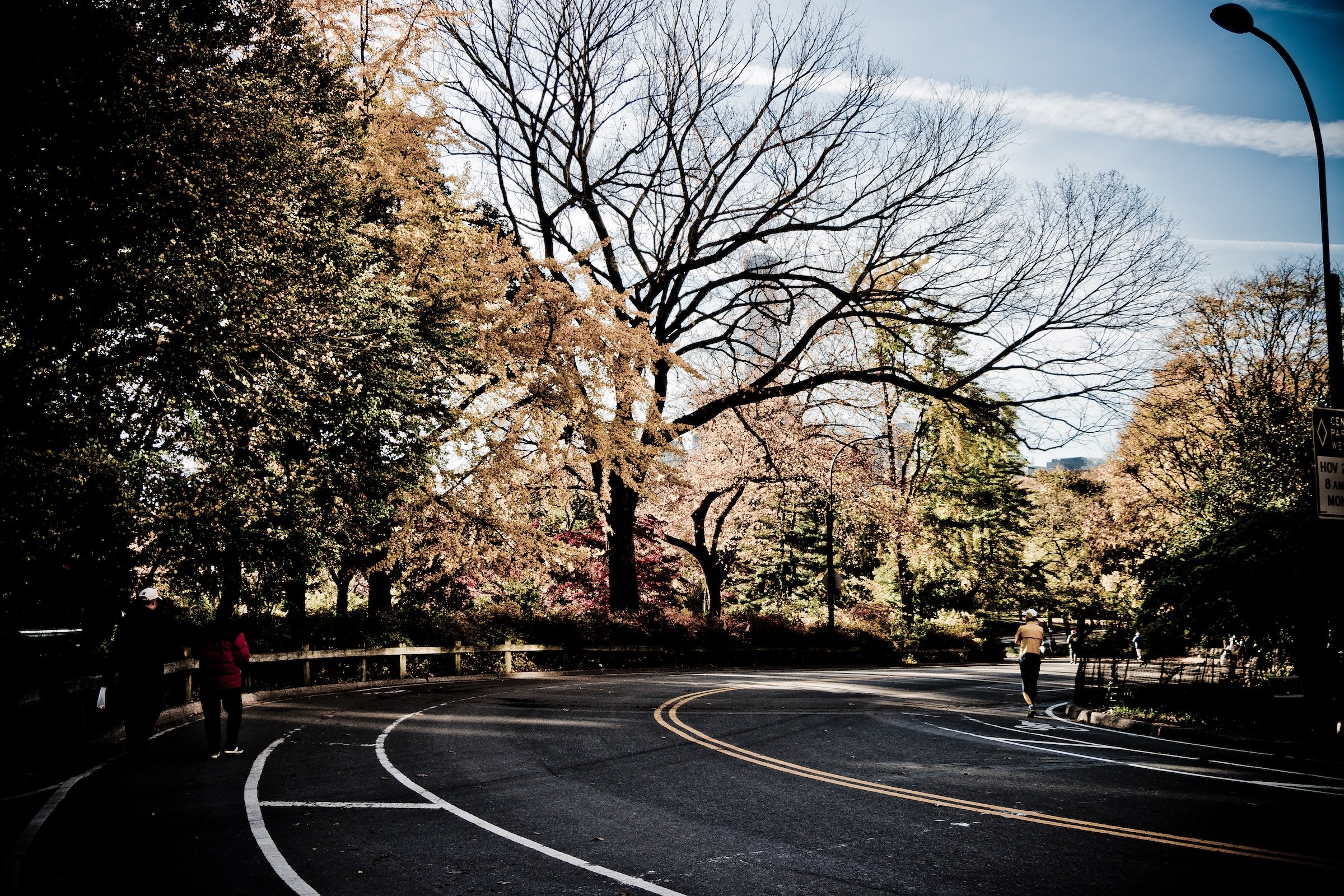
The walking paths and former Bridle Path carry visitors north and south along the park’s western edge, connecting The Green and Strawberry Fields with Naturalists’ Walk and the landscapes beyond. Central Park West remains close throughout, while West Drive separates the corridor from The Lake.
But the landscape continually complicates that simple journey.
Trees close overhead. Lawns appear between rocky slopes. Paths rise and descend. Views toward the Lake occasionally open and disappear again. In spring, Azalea Walk becomes one of the neighborhood’s great rewards, with azaleas and rhododendrons flowering along the shaded path between approximately West 75th and 77th Streets.
That makes Woodland Gardens another strong example of a neighborhood defined primarily by Navigation expressed through Landscape. The point is not necessarily to arrive at a centerpiece. The point is that moving through it has been deliberately made pleasurable.
Waypoints
-
Running along the western side of the park between approximately West 75th and 77th Streets, this shaded path is lined with azaleas and rhododendrons that produce one of the western corridor’s most concentrated spring displays. It connects directly with Naturalists’ Walk to the north.
-
Also known as the West 77th Street Stone Arch, Eaglevale is unique among Central Park’s arches in containing two separate openings. One carries the Bridle Path and the other a pedestrian walk; historically, its eastern opening also overlooked Ladies Pond.
-
The West 72nd Street entrance belongs to Central Park’s original democratic gate-naming system. Rather than honoring an individual, the commissioners named it for women collectively, alongside entrances celebrating workers, professions, children and other groups within New York.
Photography
Visual Identity
Central Park has no single visual identity. It moves between open meadow and enclosed woodland, exposed bedrock and carefully planted garden, reflective water and hard-edged skyline. Its paths can narrow into shade beneath old trees, then open suddenly toward towers, lakes, monuments, or a broad field filled with people. The Park’s character is made from those transitions: the designed discovery of one landscape giving way to another.
Water and horizon recur throughout its geography. The Lake, Reservoir, ponds, fountains, and seasonal pools of light create places of reflection—sometimes literal, sometimes figurative—where the city appears fractured, softened, or enlarged. Beyond them, Manhattan’s towers remain present as a constant reminder that this cultivated landscape exists within, not apart from, one of the world’s densest cities.
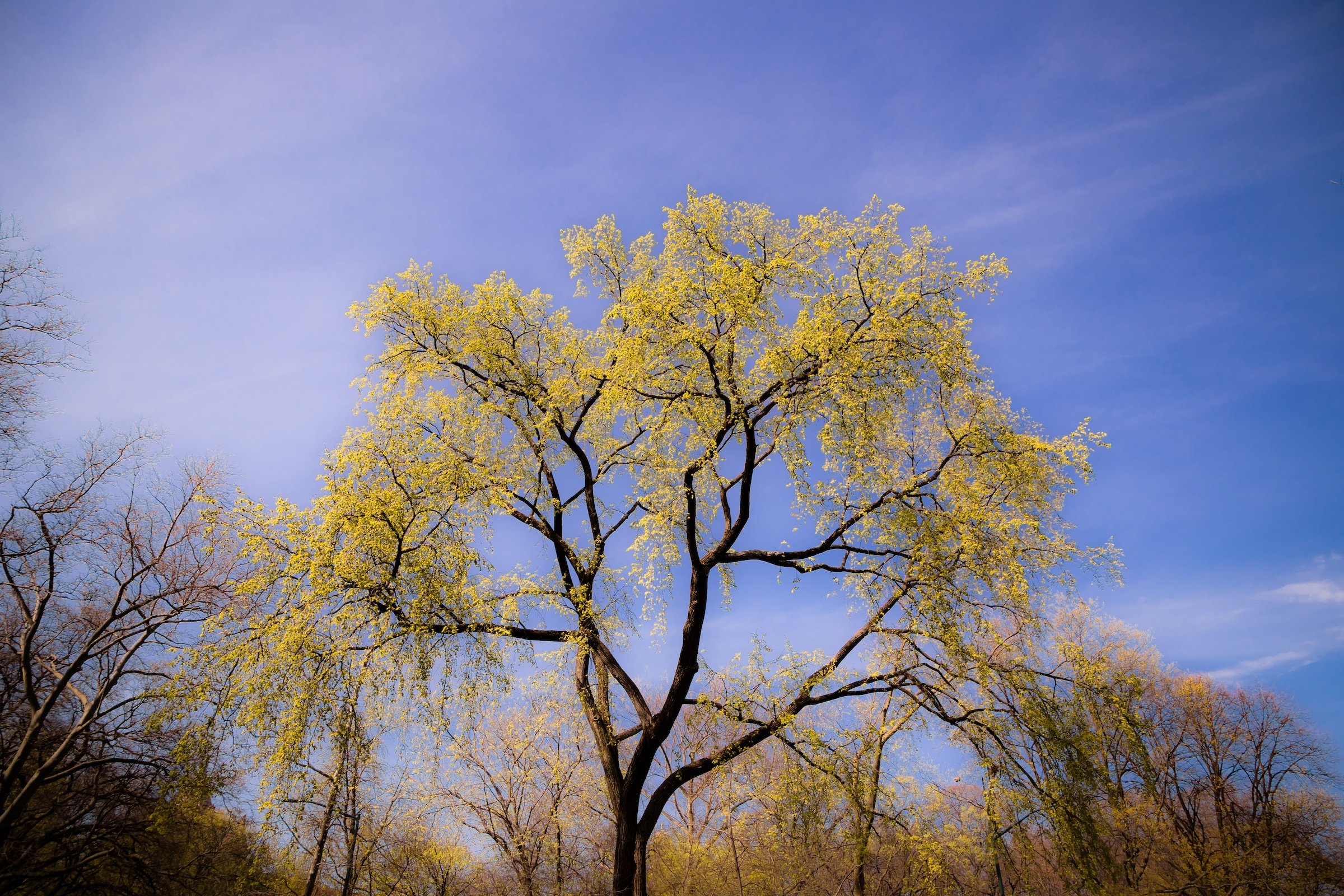
Its visual language also changes dramatically with the seasons. Winter exposes branches, stone, and skyline; spring briefly turns the Park into blossom and color; summer fills its lawns and paths with activity; autumn intensifies the drama of canopy, water, and light. Central Park is designed to be revisited, and its identity is never fixed for long.