
EAST PINETUM
Location
Geographic Setting
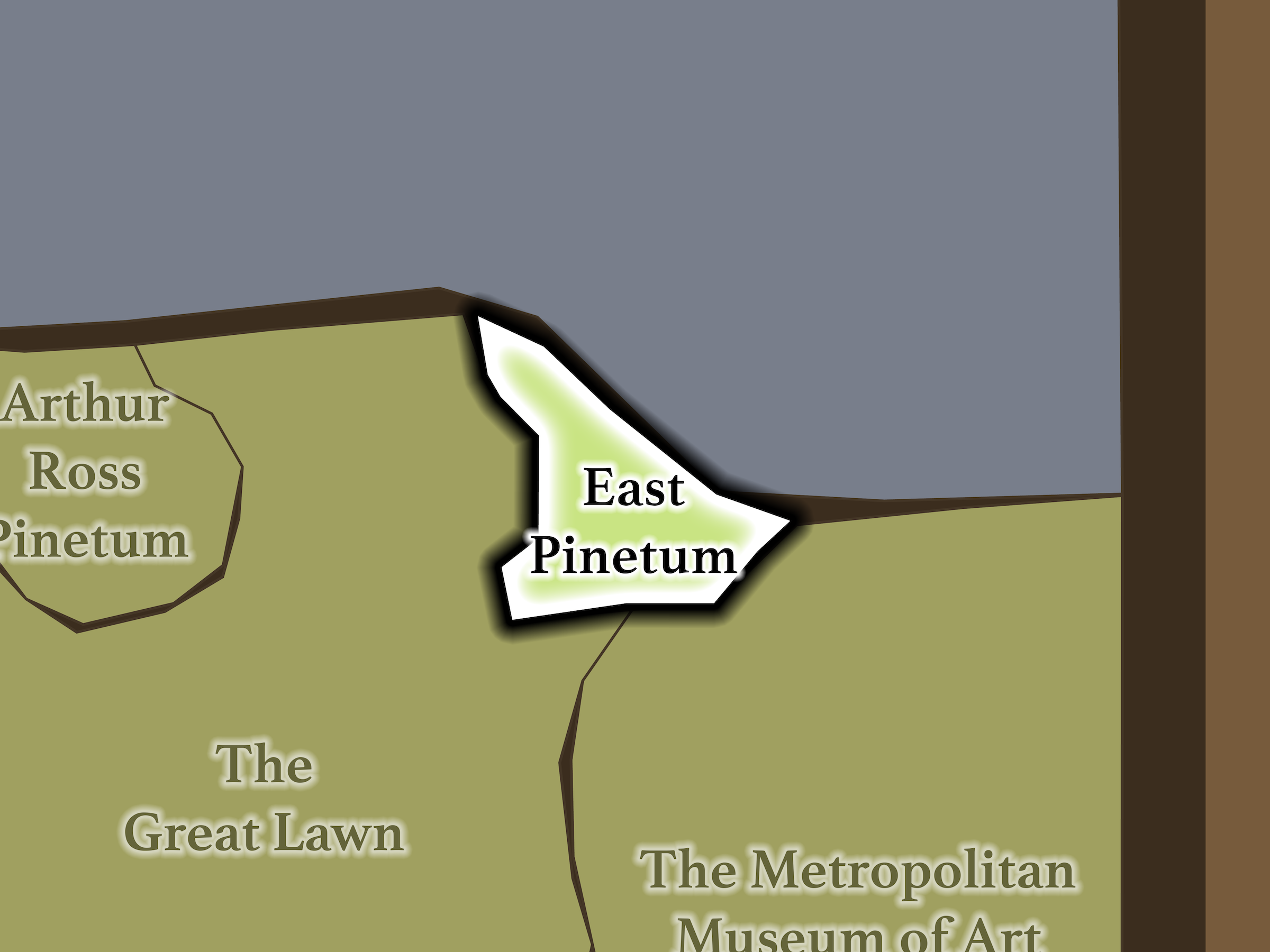
East Pinetum occupies a narrow wooded pocket between the northeastern edge of The Great Lawn and The Metropolitan Museum of Art, immediately south of the 86th Street Transverse. The Great Lawn’s basketball and volleyball courts lie beside it, while The Reservoir begins beyond the transverse to the north.
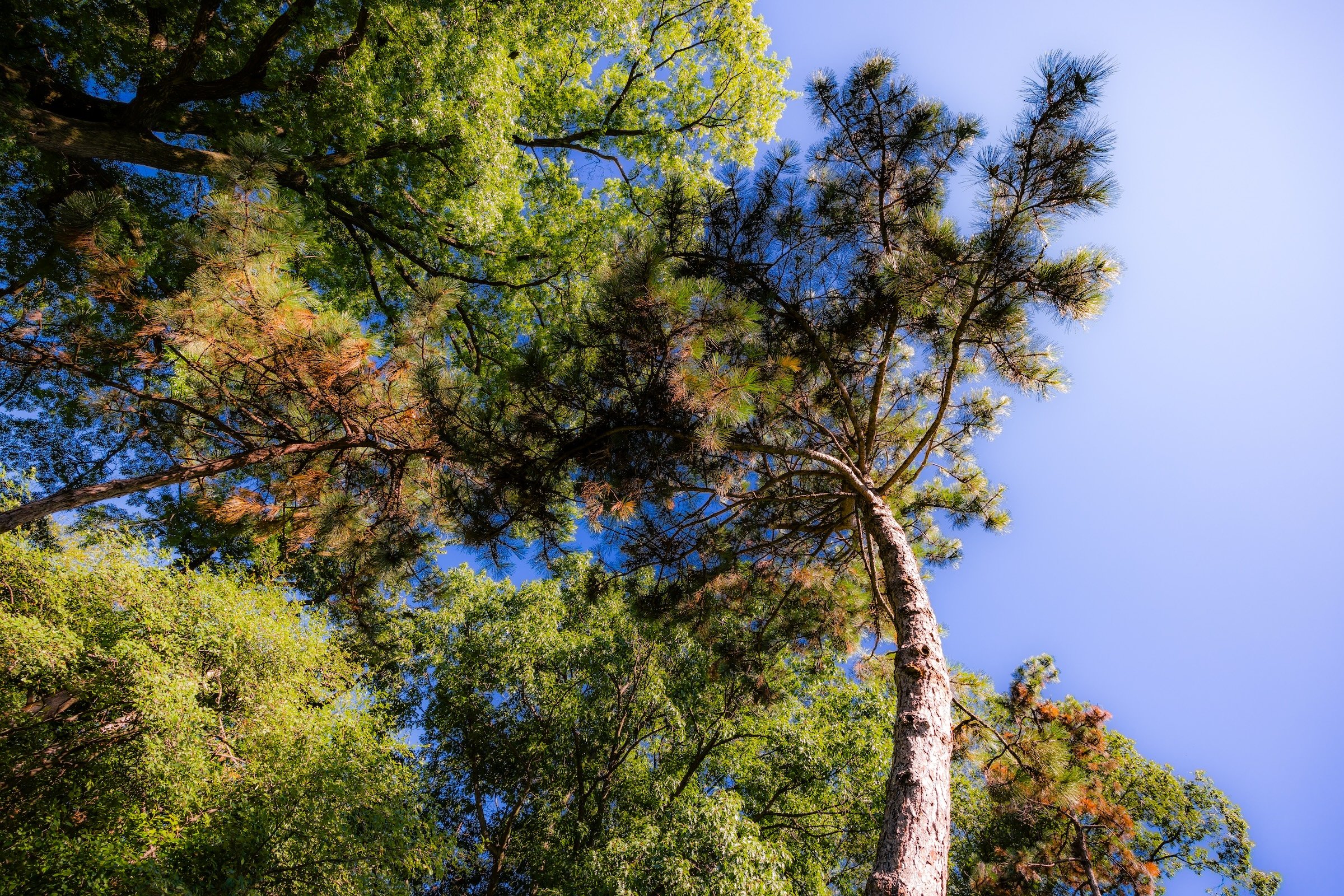
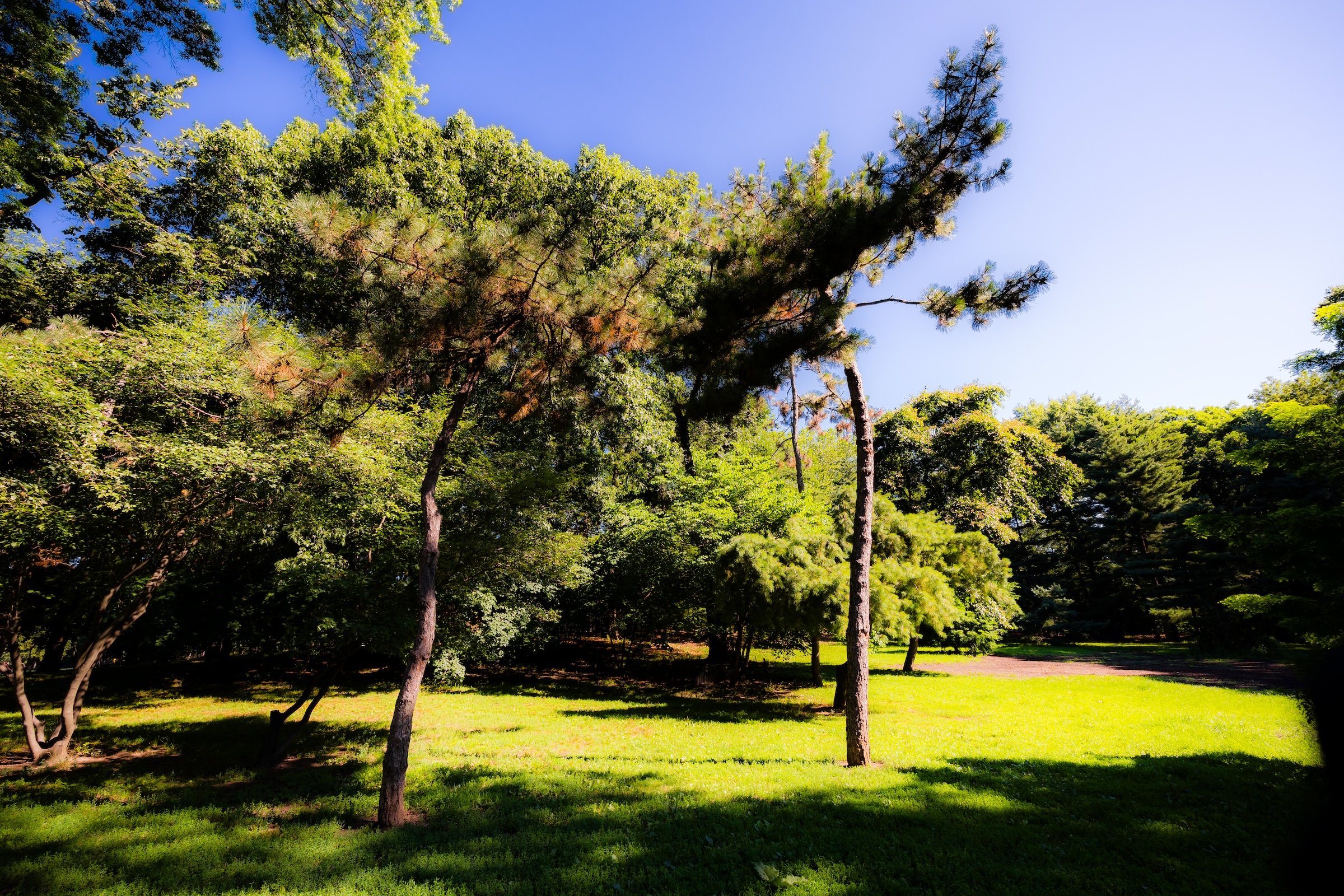
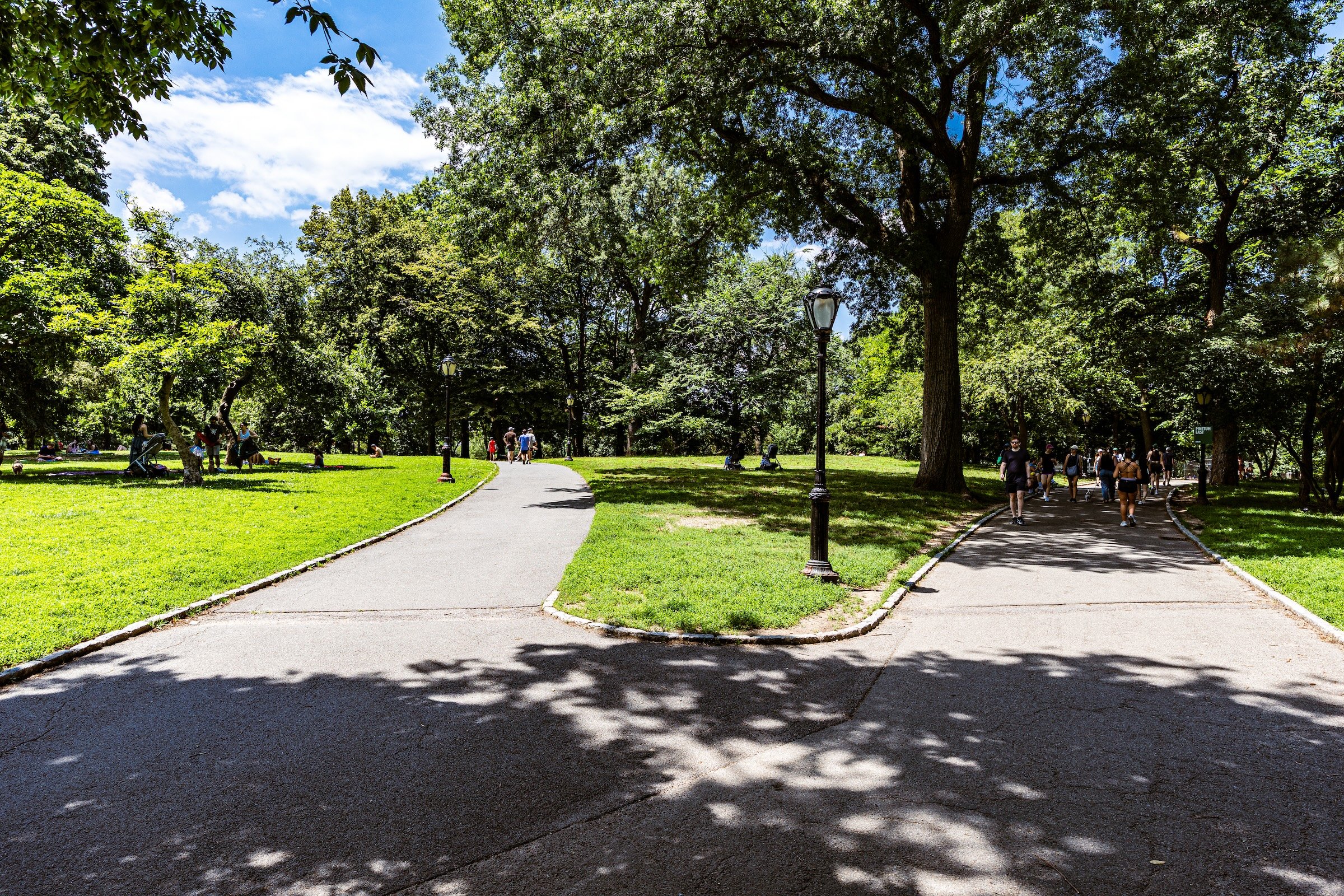
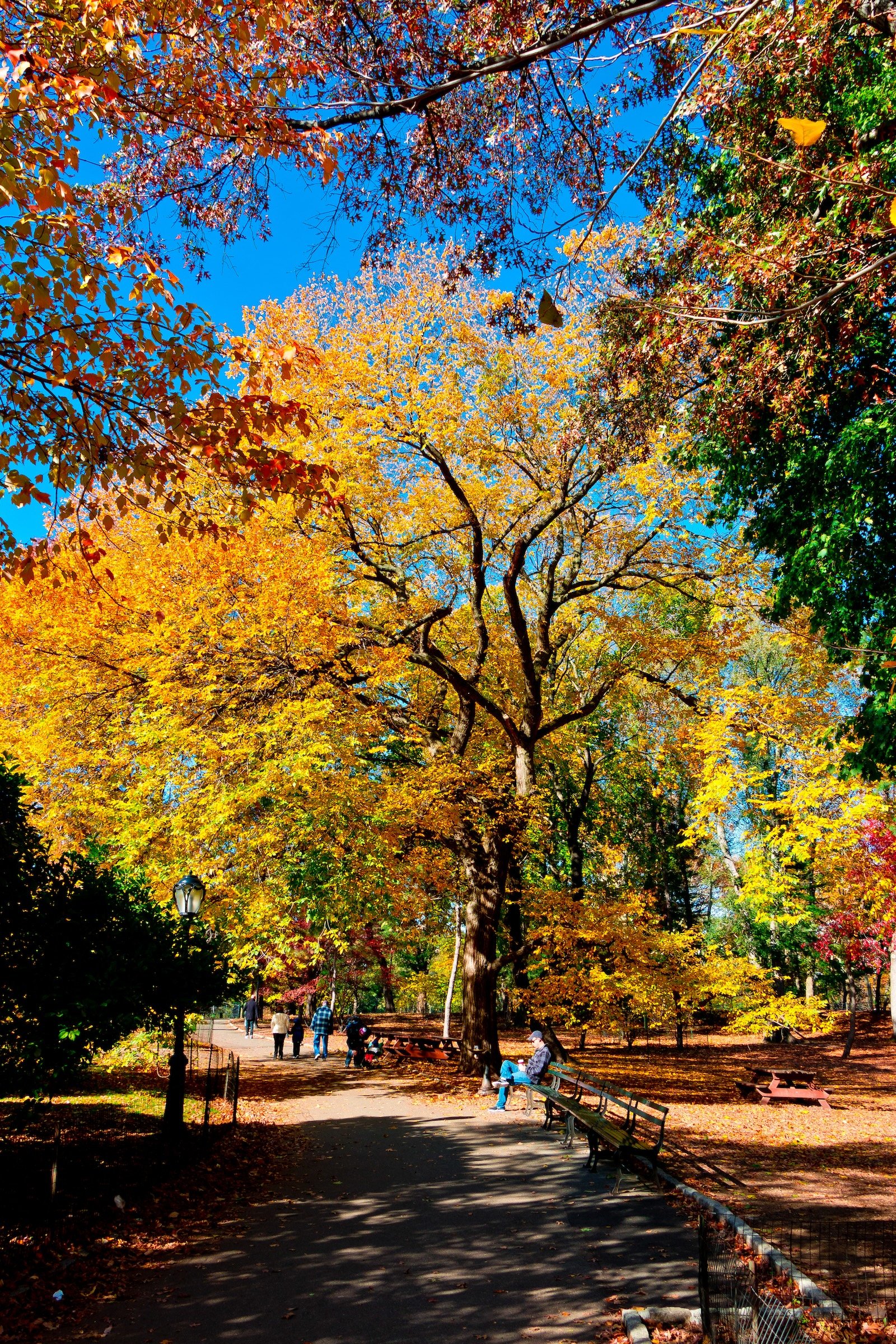
Its small size is part of its identity. The surrounding Mid-Park landscape is dominated by enormous gestures—the Great Lawn, the Metropolitan Museum and the Reservoir—but East Pinetum compresses the experience into a shaded stand of evergreens, picnic tables and paths. Contemporary descriptions specifically note its shade and arboretum-like character
Etymology
East Pinetum takes its name from the compact stand of evergreens east of the Great Lawn. Unlike the larger Arthur Ross Pinetum across the lawn, it is not generally presented as a major named destination by the Central Park Conservancy, but the name has established contemporary use: CentralPark.com identifies East Pinetum as an arboretum between East 84th and 85th Streets, NYC Parks has used “East Pinetum” as a location for public programming, and the NYC Bird Alliance distinguishes it from the Arthur Ross Pinetum when describing routes across this part of the park.
The name is therefore appropriately literal: a smaller eastern counterpart to the much larger evergreen landscape on the opposite side of the Great Lawn.
History
1858–1873: Greensward Plan & Construction
There was no East Pinetum in Olmsted and Vaux’s original Central Park. This section of Mid-Park was instead shaped by one of the major pieces of infrastructure the designers inherited: the old Croton Receiving Reservoir, completed in 1842 before Central Park existed. Olmsted and Vaux had to incorporate that massive utilitarian structure into their landscape rather than remove it.
The broader evergreen idea does, however, belong to their design vocabulary. Elsewhere along this part of the park they deliberately planted pines, spruces and firs to provide color and shelter through winter—the nineteenth-century precedent eventually revived much more explicitly in the Arthur Ross Pinetum.
1858–1899: Early History & Grand Openings
During Central Park’s nineteenth-century life, this area remained closely associated with the old Receiving Reservoir rather than with a separate wooded landscape. The reservoir dominated the center of the park from roughly the low 80s to 85th Street, leaving the surrounding paths and plantings to negotiate its immense masonry presence.
So unlike many Central Park neighborhoods whose nineteenth-century identity remains recognizable today, East Pinetum is fundamentally a later landscape layered onto a radically transformed part of the park.
20th Century: Transformation & Restoration
The decisive transformation came after the old Reservoir was drained in 1931. During the 1930s, Robert Moses’ Parks Department redeveloped the former reservoir site into what became the Great Lawn and a surrounding recreational complex. A 1936 Parks Department announcement describes the northeast corner of the former reservoir site as containing basketball and other game courts—the recreational landscape still evident beside East Pinetum today.
Evergreen planting subsequently gave this eastern edge a softer counterpoint to those courts and the enormous open lawn. While the Arthur Ross Pinetum across the Great Lawn developed into a formal four-acre collection beginning in the 1970s, the smaller eastern stand emerged as its quieter companion rather than as a destination of comparable scale. Modern sources nevertheless recognize it independently as East Pinetum.
Explore
21st Century: Renovation & Modernization
Today, East Pinetum is a blink-and-you’ll-miss-it oasis at the edge of some of Mid-Park’s largest spaces.
Evergreens create shade and enclosure beside the Great Lawn, while picnic tables offer places to stop beneath the canopy. Step only a short distance west and the trees give way to the vast openness of the lawn; move east and the Metropolitan Museum becomes the dominant presence; continue north and the landscape quickly transitions again toward the Reservoir.
That contrast is what gives East Pinetum its value. It is not trying to compete with Arthur Ross Pinetum as a major arboretum. Instead, it works almost as a coda to it—a smaller echo of evergreen landscape on the opposite side of the Great Lawn, bringing texture and seasonal continuity to the eastern edge of The Heart.
The area has also occasionally served as a flexible public gathering space. In 2017, NYC Parks used the East Pinetum field as one of the sites for its 50th-anniversary celebration of the Art in the Parks program, demonstrating that even this modest landscape can operate as more than simple connective woodland.
Waypoints
East Pinetum does not need individual Waypoints to justify itself. The landscape itself is the destination: a small evergreen refuge whose significance comes from the contrast it creates with the Great Lawn, recreational courts, Metropolitan Museum and Reservoir surrounding it.
This may actually be one of the best examples in the taxonomy of a neighborhood that is important precisely because it is small. Without East Pinetum, this corner of Mid-Park would read mostly as Great Lawn infrastructure and museum edge. The evergreens create a distinct pause between those much larger landscapes.
Photography
Visual Identity
Central Park has no single visual identity. It moves between open meadow and enclosed woodland, exposed bedrock and carefully planted garden, reflective water and hard-edged skyline. Its paths can narrow into shade beneath old trees, then open suddenly toward towers, lakes, monuments, or a broad field filled with people. The Park’s character is made from those transitions: the designed discovery of one landscape giving way to another.
Water and horizon recur throughout its geography. The Lake, Reservoir, ponds, fountains, and seasonal pools of light create places of reflection—sometimes literal, sometimes figurative—where the city appears fractured, softened, or enlarged. Beyond them, Manhattan’s towers remain present as a constant reminder that this cultivated landscape exists within, not apart from, one of the world’s densest cities.
Its visual language also changes dramatically with the seasons. Winter exposes branches, stone, and skyline; spring briefly turns the Park into blossom and color; summer fills its lawns and paths with activity; autumn intensifies the drama of canopy, water, and light. Central Park is designed to be revisited, and its identity is never fixed for long.