
CEDAR HILL & THE GLADE
Location
Geographic Setting
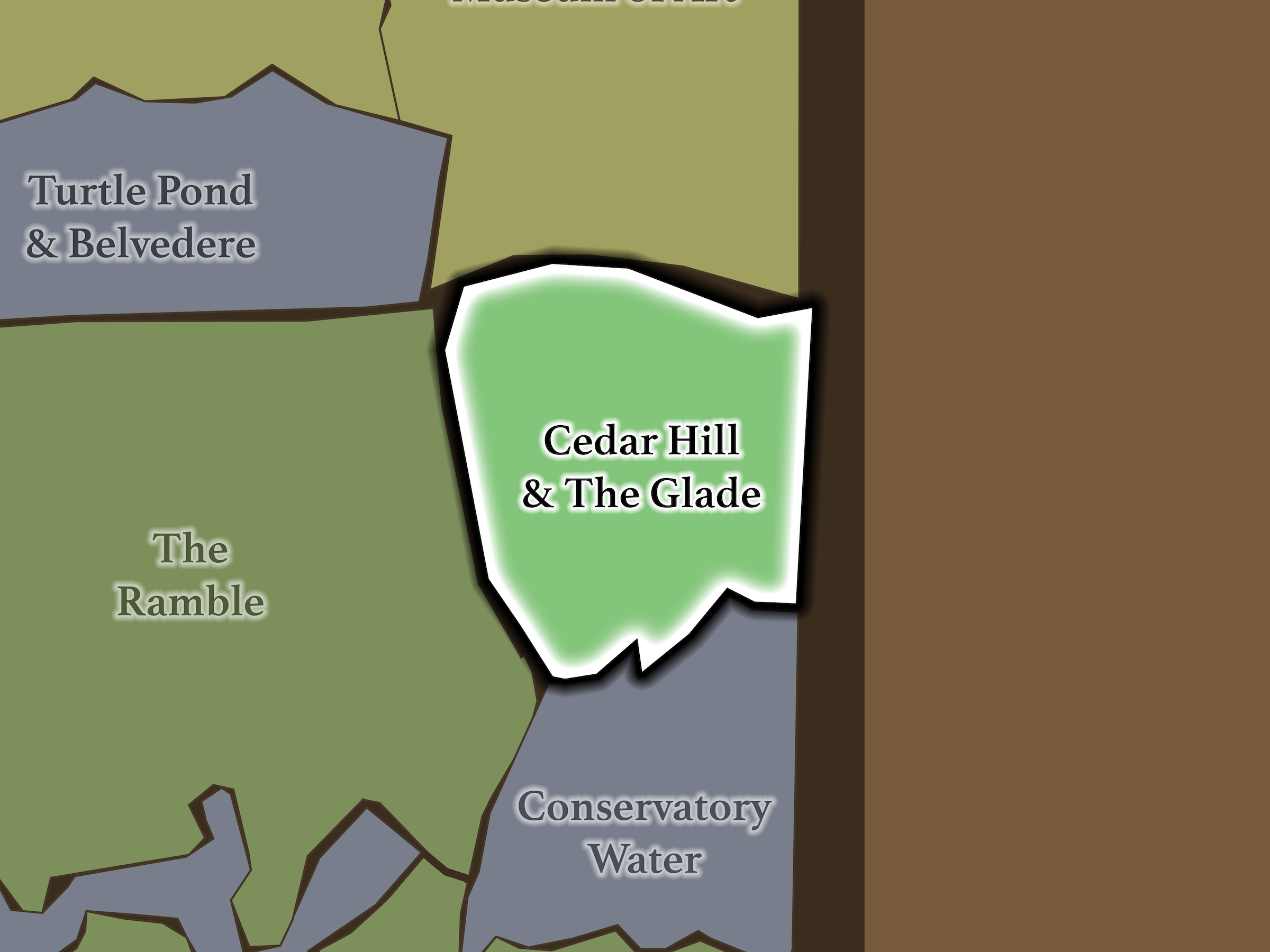
Cedar Hill & The Glade occupies the eastern side of Mid-Park South between approximately East 76th and 79th Streets. The Ramble lies across East Drive to the west; The Metropolitan Museum of Art begins beyond the 79th Street Transverse; Fifth Avenue separates the park from Lenox Hill and Metropolitan Hill; and Conservatory Water lies immediately to the south.
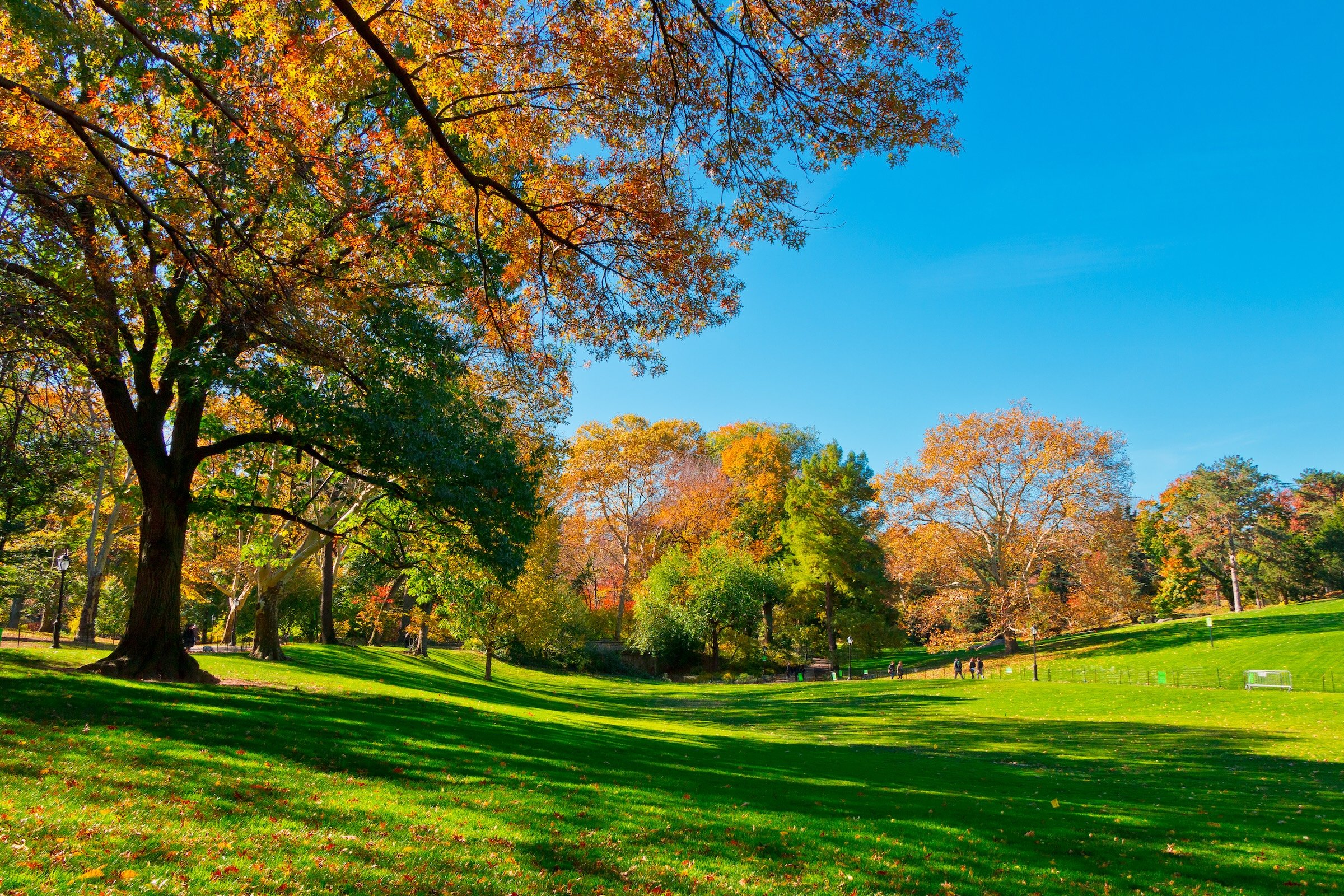
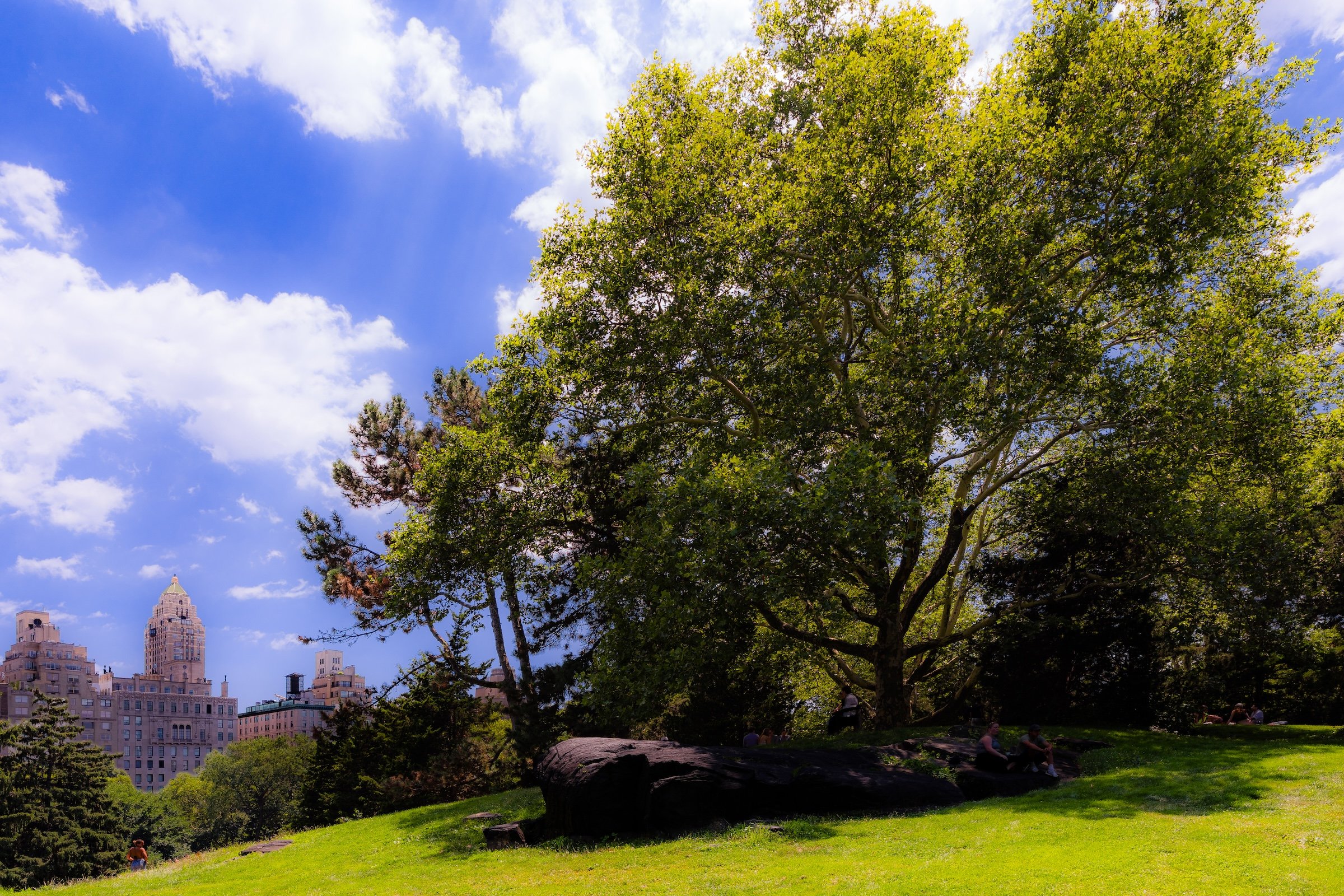
The landscape moves continually between enclosure and openness. Lower, more shaded ground around Glade Arch gives way to broad sloping lawns, exposed rock and mature trees before reaching Cedar Hill’s higher ground.
That variation is the neighborhood’s defining quality: glade becomes slope, slope becomes hill, canopy opens into lawn and then closes again.
Etymology
Cedar Hill & The Glade joins two historically connected landscapes on Central Park’s eastern side.
Cedar Hill takes its name from the red cedars that once crowned its crest; other evergreens remain scattered across the slope today. The Central Park Conservancy describes it as a classic pastoral landscape of sloping lawn, rock outcrops and cedar trees.
The Glade occupies the lower landscape toward Conservatory Water. Its name survives most visibly in Glade Arch, which the Conservancy describes as standing at the foot of Cedar Hill and explicitly notes was named for the surrounding landscape.
Combining the two recognizes what is already apparent on foot: rather than two sharply separated places, The Glade rises naturally into Cedar Hill through a continuous landscape of lawn, trees, rock and changing elevation.
History
1858–1873: Greensward Plan & Construction
Olmsted and Vaux designed this eastern landscape as part of Central Park’s pastoral scenery while simultaneously threading an intricate circulation system through it.
The hill’s natural topography provided precisely the kind of irregular ground they favored—rock outcrops, changes in elevation and broad grassy slopes could be shaped without losing the underlying character of the land.
At its southern edge, Glade Arch demonstrates how carefully Navigation was embedded into that Landscape. Originally, it carried both carriage traffic and a pedestrian path at different levels, allowing visitors to move through the same terrain without conflicting routes. The Conservancy notes that Central Park’s arches were designed specifically to separate pedestrian, equestrian and carriage traffic while preserving the experience of the surrounding scenery.
1858–1899: Early History & Grand Openings
By Central Park’s early decades, a park road entered from the eastern side near 79th Street, passed Cedar Hill and crossed The Glade by means of Glade Arch. The arch therefore did not merely sit beside these landscapes—it physically connected their circulation.
The hill itself offered a deliberately pastoral experience: open turf, trees and rock contrasting with the formal structures and drives nearby. That basic relationship remains remarkably intact today.
Cedar Hill’s red cedars also gave the landscape a stronger year-round character than a purely deciduous lawn. Even in winter, evergreen foliage helped preserve some of the green and enclosure central to Olmsted and Vaux’s scenic vocabulary.
20th Century: Transformation & Restoration
Like many Central Park landscapes, Cedar Hill and The Glade suffered from heavy use and changing circulation during the twentieth century.
Automobile accommodation eventually intruded into portions of the landscape. During the Conservancy’s restoration era, that process was reversed. Its 1995 annual report specifically described Glade Arch at Cedar Hill and noted that a parking area west of the arch had recently been reclaimed as green parkland.
Recreation also became more prominent. Playgrounds were inserted along the Fifth Avenue edge, while Cedar Hill developed an especially strong winter identity. The Conservancy now considers it one of Central Park’s premier sledding landscapes—indeed, it describes Cedar Hill as arguably the park’s best sledding hill.
Explore
21st Century: Renovation & Modernization
Today, Cedar Hill & The Glade is one of Central Park’s quieter examples of landscape through variation.
Winding paths rise and fall beneath mature trees. Open lawns alternate with shady pockets. Rock outcrops interrupt the grass, while Glade Arch appears almost embedded into the terrain at the bottom of the hill.
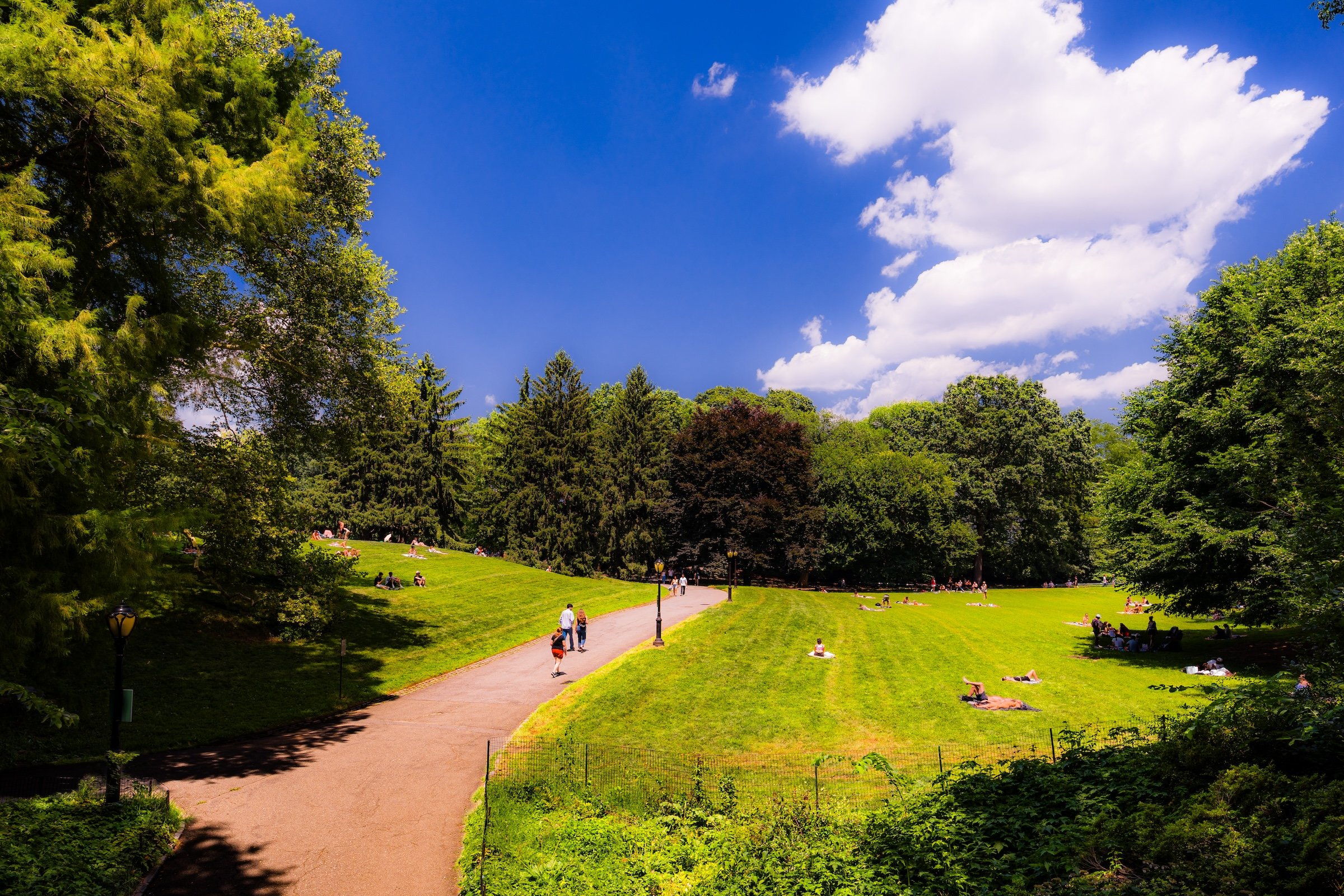
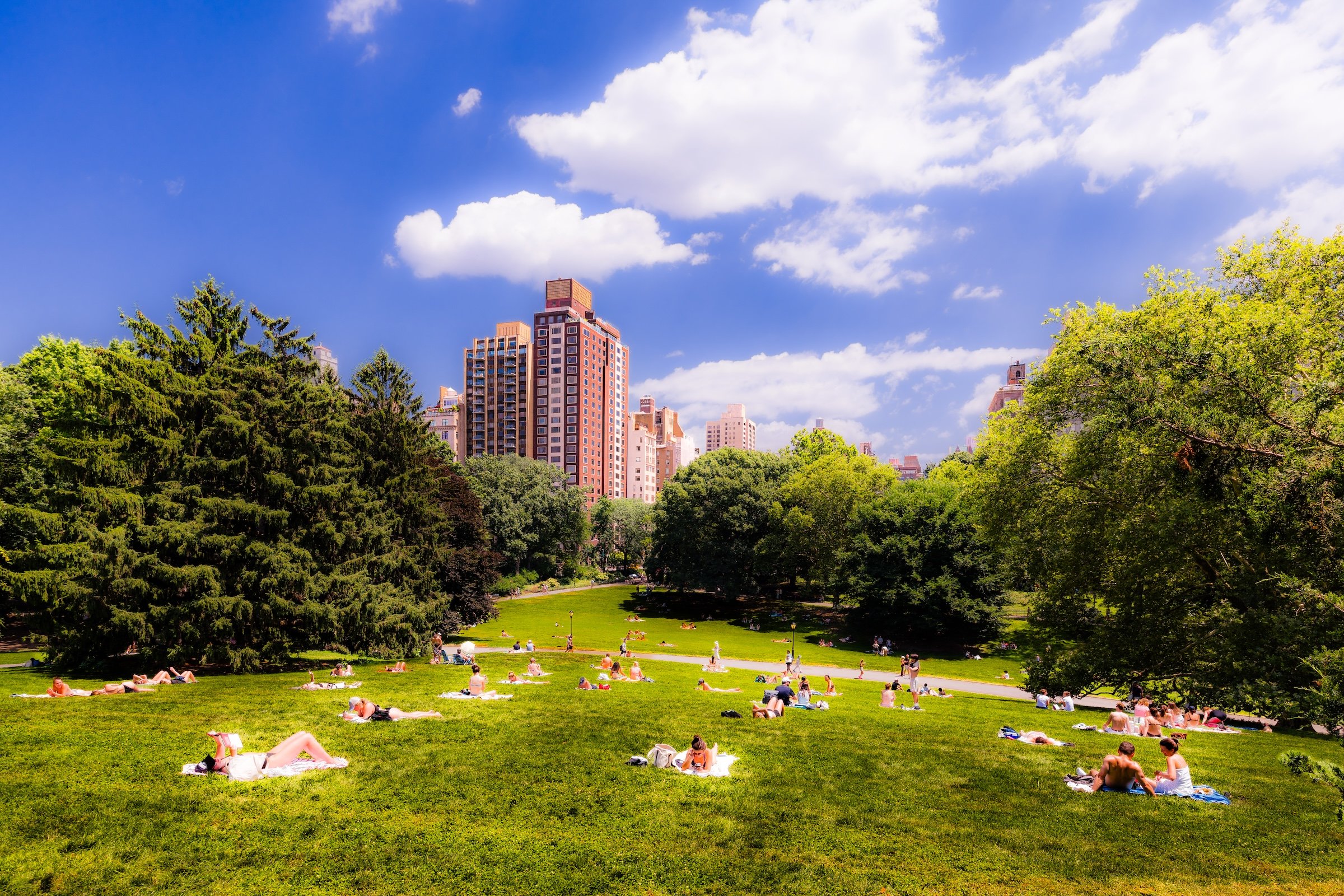
Cedar Hill’s slope gives the neighborhood much of its recreational identity. In warm weather it is used for picnicking, reading, sunbathing and simply lying beneath the trees. In winter, sufficient snowfall transforms that same pastoral hillside into one of Central Park’s busiest sledding destinations.
The lower Glade provides the quieter counterpoint. Its shade and lower elevation create a softer transition toward Conservatory Water, while Glade Arch marks the point where terrain and circulation become inseparable.
The combination is what makes the merged neighborhood work. The Glade is not merely ground below Cedar Hill, and Cedar Hill is not simply a grassy slope above The Glade. Together they form one continuous sequence of elevation, enclosure and openness.
Waypoints
-
This Fifth Avenue entrance provides a direct eastern approach into the Glade and Cedar Hill landscape, appropriately opening near some of the neighborhood’s most child-oriented spaces.
-
Located at the foot of Cedar Hill, this sandstone arch originally separated carriage and pedestrian traffic. Changing circulation has left it carrying one pedestrian path above another, producing an unusually broad, almost plaza-like space on top.
-
Set into a hilly landscape shaded by large trees, this playground includes climbing equipment, swings, sand and water play. The Conservancy rebuilt it in 2010 while maintaining its close relationship with the surrounding park terrain.
-
Frederick Roth’s whimsical granite fountain depicts 13 characters from Alice’s Adventures in Wonderland and Through the Looking-Glass. Created in 1936 as a memorial to journalist and child-welfare advocate Sophie Irene Loeb, it was moved here in 1986 and converted from a drinking fountain into a water-play feature.
Photography
Visual Identity
Central Park has no single visual identity. It moves between open meadow and enclosed woodland, exposed bedrock and carefully planted garden, reflective water and hard-edged skyline. Its paths can narrow into shade beneath old trees, then open suddenly toward towers, lakes, monuments, or a broad field filled with people. The Park’s character is made from those transitions: the designed discovery of one landscape giving way to another.
Water and horizon recur throughout its geography. The Lake, Reservoir, ponds, fountains, and seasonal pools of light create places of reflection—sometimes literal, sometimes figurative—where the city appears fractured, softened, or enlarged. Beyond them, Manhattan’s towers remain present as a constant reminder that this cultivated landscape exists within, not apart from, one of the world’s densest cities.
Its visual language also changes dramatically with the seasons. Winter exposes branches, stone, and skyline; spring briefly turns the Park into blossom and color; summer fills its lawns and paths with activity; autumn intensifies the drama of canopy, water, and light. Central Park is designed to be revisited, and its identity is never fixed for long.