
THE POND
Location
Geographic Setting
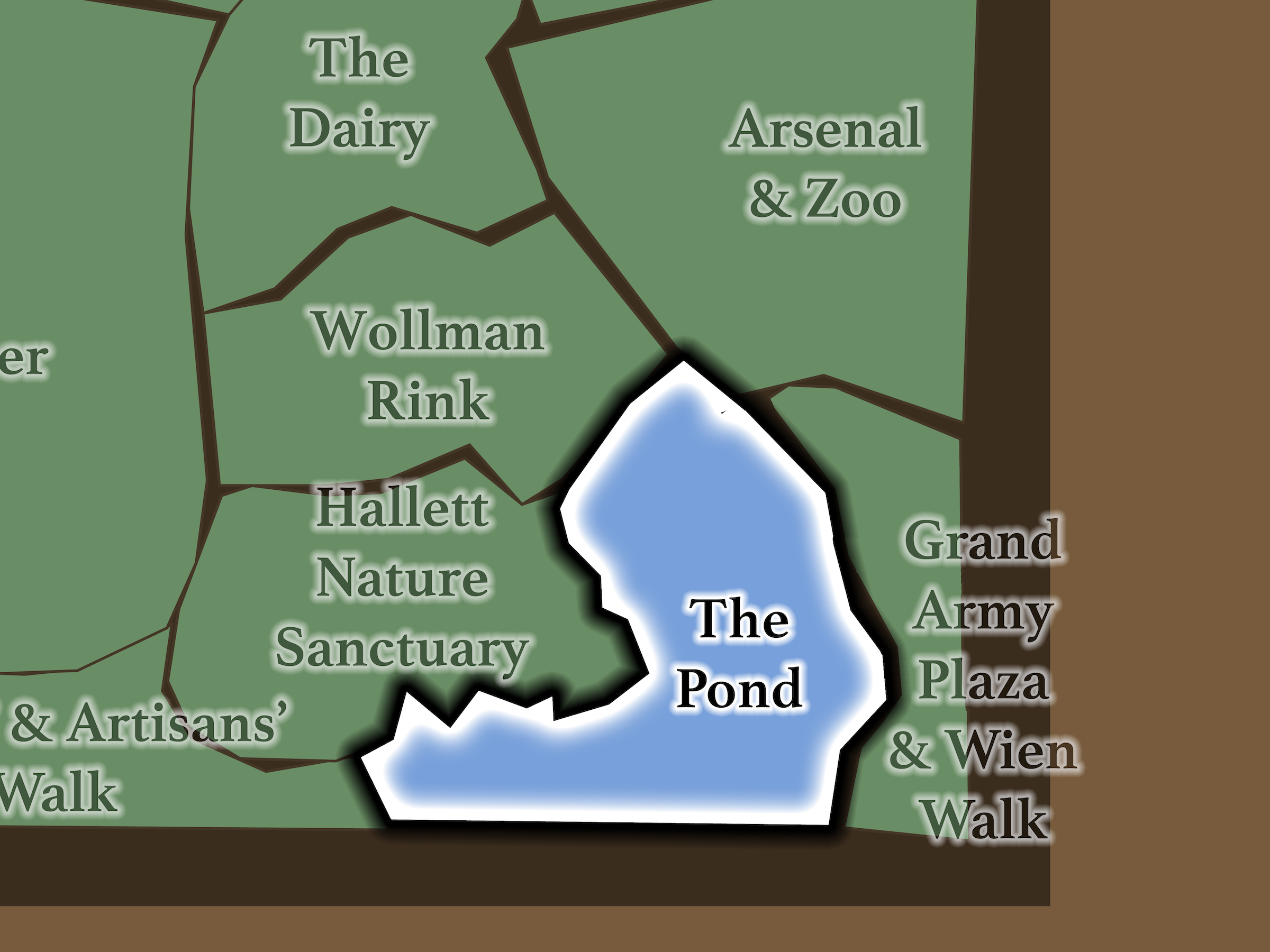
The Pond occupies the lowest ground in the southeastern corner of the South End. Hallett Nature Sanctuary rises immediately to the west; Wollman Rink lies to the northwest; Central Park Zoo & Arsenal begin above East Drive; Grand Army Plaza sits to the southeast; and Fifth Avenue and Central Park South separate the landscape from Lenox Hill and Midtown.
Its defining spatial quality comes from being set below street level. Visitors descend almost immediately from the surrounding city into a landscape of water, rock, trees and winding shoreline paths. The city remains visually present—often dramatically so—but much of its noise and movement recede.
Etymology
The Pond takes its name from the small, naturalistic body of water tucked into Central Park’s southeastern corner. It is one of the park’s seven naturalistic water bodies and has long served as one of the first landscapes encountered by visitors entering from Fifth Avenue and Central Park South.
History
The Greensward Plan
Olmsted and Vaux deliberately used one of the deepest natural depressions in the future park for what their Greensward Plan called the Lower Lake, today’s Pond. Rather than attempting to erase the difficult, swampy terrain they inherited, they transformed it into ornamental water surrounded by rocky slopes and planting. The Pond and the larger Lake farther north were created from the site’s deepest valleys, turning problematic low ground into some of Central Park’s most picturesque scenery.
That decision also served the park’s larger purpose especially well at the southeast corner. Visitors arriving from the rapidly developing city would immediately descend toward water and vegetation, experiencing a dramatic visual and psychological transition from Manhattan into the rural landscape Olmsted and Vaux wanted Central Park to provide.
The Grand Opening
Construction of the Pond was already well advanced during the park’s first major building season in 1858. By the park’s early decades, its shoreline and surrounding Promontory had become one of the South End’s signature picturesque compositions.
The landscape acquired its most famous architectural feature in 1874, when Jacob Wrey Mould designed the original Gapstow Bridge across the narrow northern neck of the Pond. That bridge was more elaborate than the structure seen today, combining wooden arches with decorative cast iron. Weather and deterioration eventually required its replacement in 1896 with the simpler stone bridge that remains.
The Pond also became part of Central Park’s growing commemorative landscape. The bronze bust of Irish poet Thomas Moore was dedicated along its eastern side in 1880, one of several monuments donated by immigrant communities seeking to represent their cultural heritage within the park
20th Century
Like much of Central Park, The Pond suffered from declining maintenance during the twentieth century. By the late 1970s, the water body required dredging and substantial rehabilitation; restoration of the 59th Street Pond and its surrounding southeast landscape became one of the early projects undertaken as the park began emerging from its period of severe deterioration.
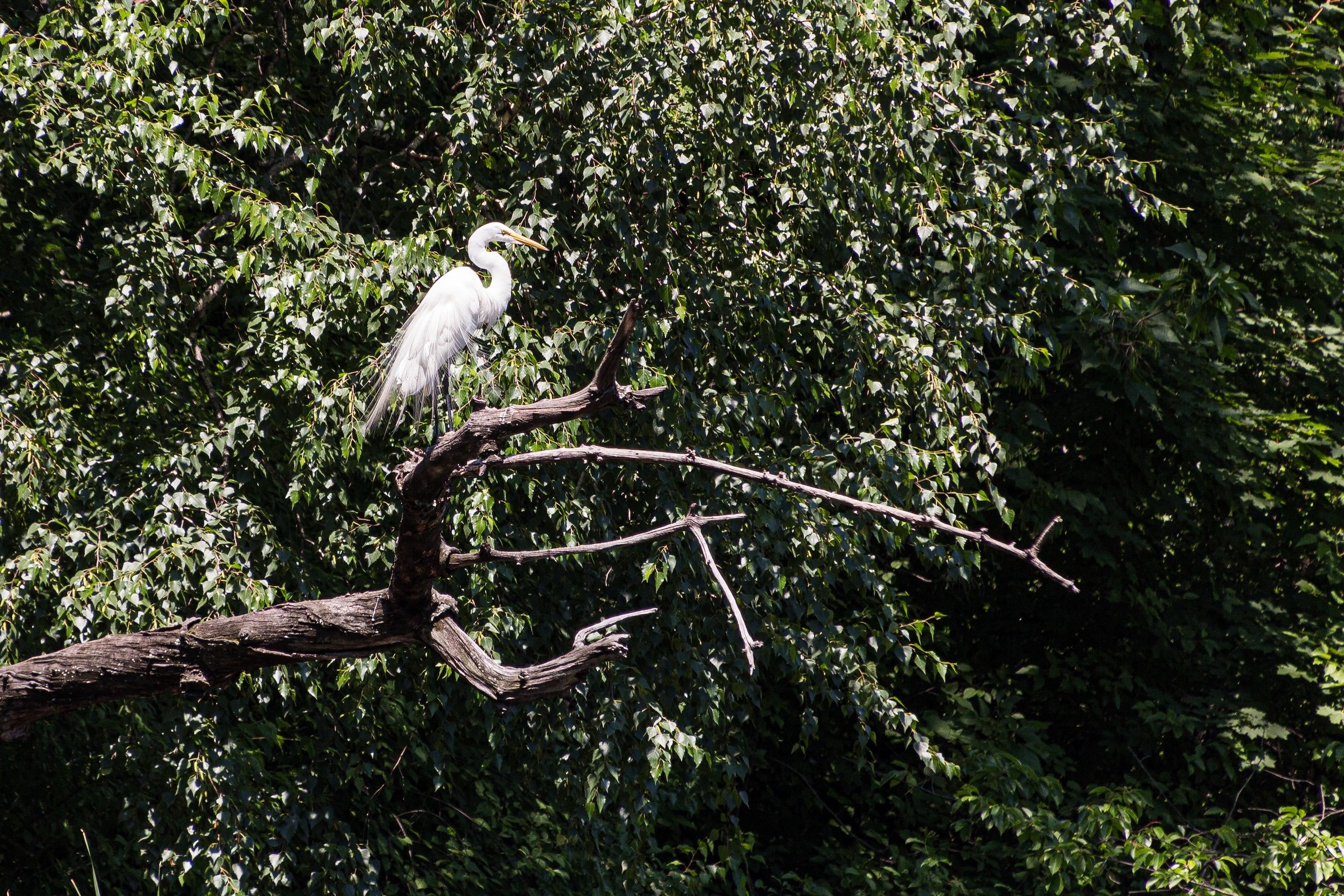
A comprehensive restoration completed in 2001 renewed paths, plantings and shoreline conditions, while also introducing a new waterfall and cascades on the western arm of the Pond. The project restored the landscape not simply as ornamental scenery but as habitat for birds, turtles, fish and other wildlife
Explore
Contemporary Landscape
Today, The Pond remains one of Central Park’s most immediate and recognizable transformations from city into landscape.
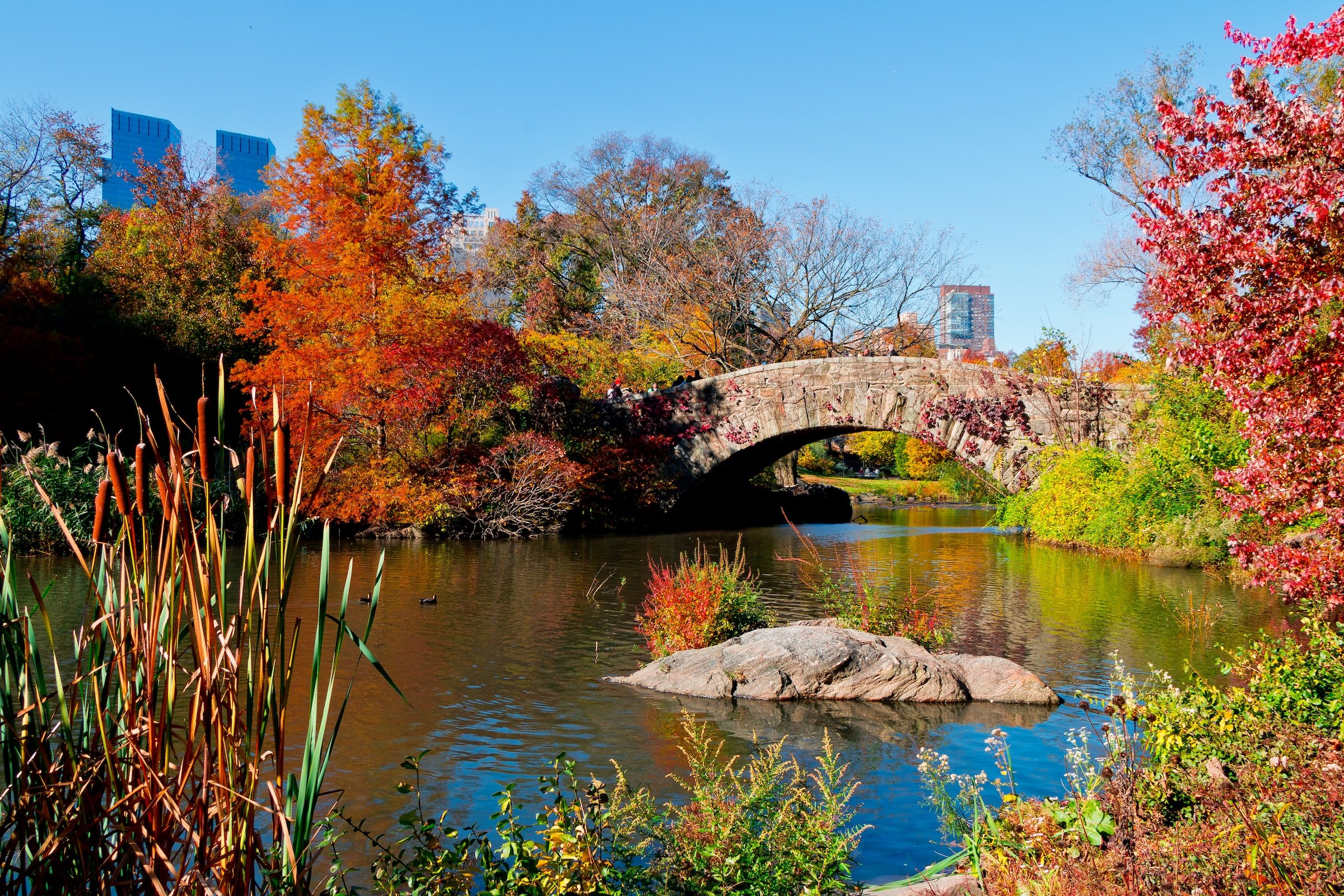
For many visitors it is literally their first Central Park view: water framed by rock, trees and Gapstow Bridge, with the towers of Central Park South rising dramatically behind them. The small scale of the water makes the experience more intimate than The Lake farther north. Paths hug the shoreline, ducks and turtles remain close at hand, and the wooded mass of Hallett Nature Sanctuary rises directly from the western edge.
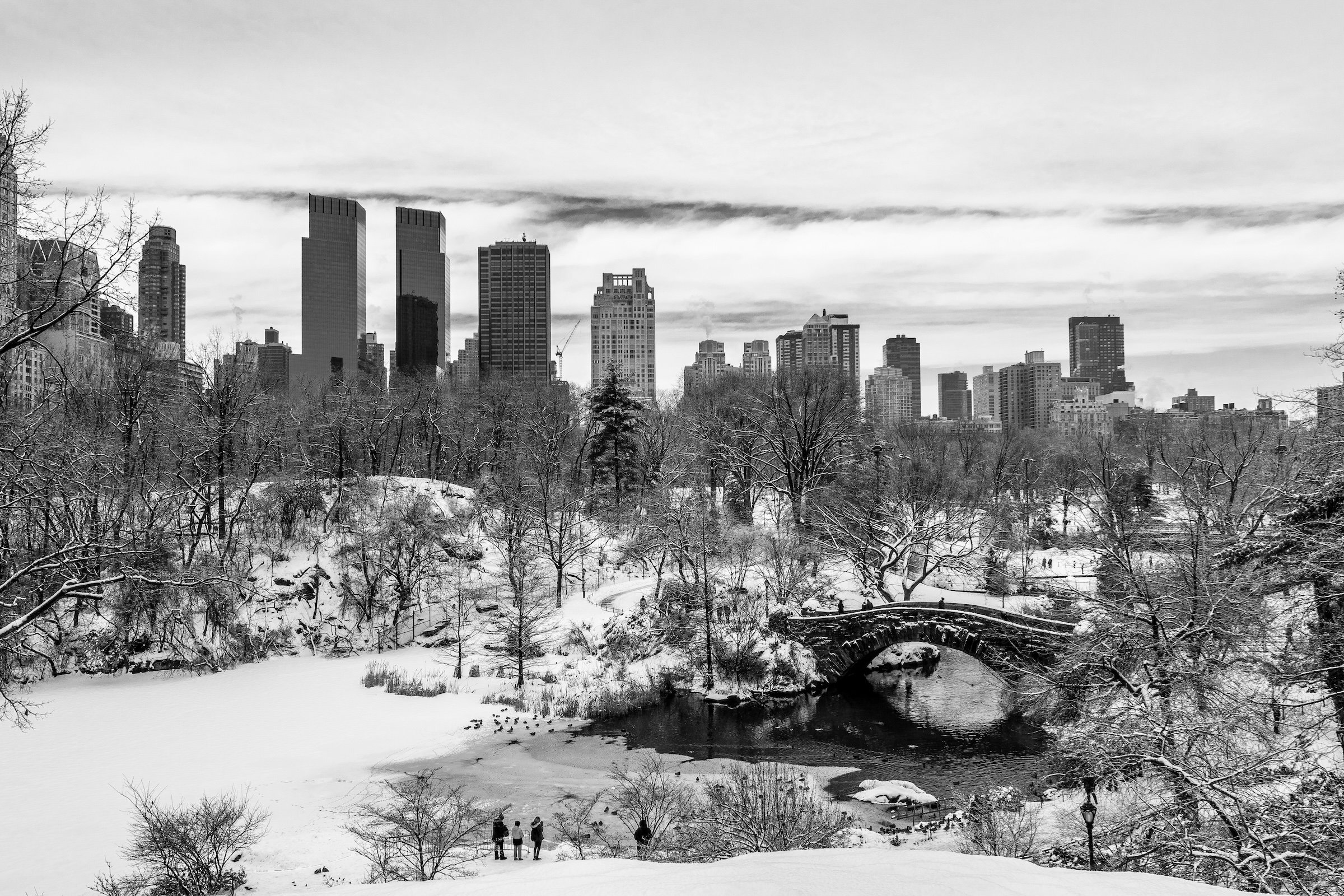
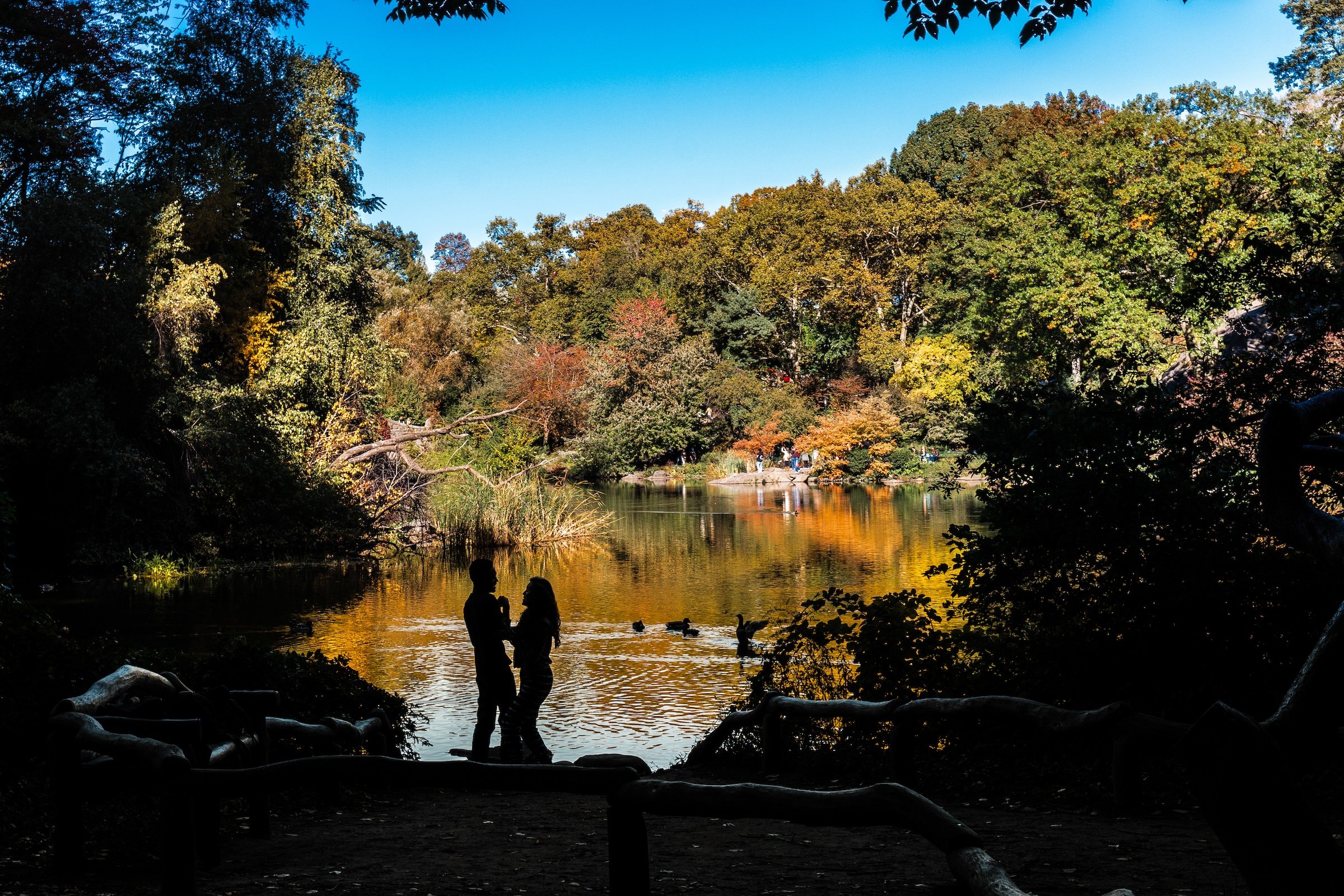
Its appearance also changes dramatically with season. Spring flowering trees soften the shoreline; summer foliage encloses it; autumn turns the water into a reflection of color; and winter can reduce the landscape to stone bridge, bare branches, water and skyline.
And unlike many of Central Park’s landscapes, The Pond never entirely asks you to forget New York. Its most famous views depend on the city remaining visible. The result is not escape through concealment so much as a carefully composed conversation between park and skyline.
Waypoints
-
The present stone bridge, built in 1896 to replace Mould’s earlier 1874 structure, spans the narrow northern neck of The Pond. Its view toward Central Park South is among the park’s most photographed compositions.
-
Hidden beneath East Drive, Inscope carries roadway traffic above the pedestrian connection between The Pond and the Central Park Zoo, another compact example of Olmsted and Vaux’s layered circulation system.
-
A high schist outcrop above The Pond offers one of the neighborhood’s less obvious but most rewarding perspectives, looking across the water toward Gapstow Bridge and the Midtown skyline.
-
Dedicated in 1880, Dennis B. Sheahan’s bronze bust honors the Irish poet and songwriter and reflects the nineteenth-century tradition of immigrant communities adding their cultural heroes to Central Park’s landscape.
Photography
Visual Identity
Central Park has no single visual identity. It moves between open meadow and enclosed woodland, exposed bedrock and carefully planted garden, reflective water and hard-edged skyline. Its paths can narrow into shade beneath old trees, then open suddenly toward towers, lakes, monuments, or a broad field filled with people. The Park’s character is made from those transitions: the designed discovery of one landscape giving way to another.
Water and horizon recur throughout its geography. The Lake, Reservoir, ponds, fountains, and seasonal pools of light create places of reflection—sometimes literal, sometimes figurative—where the city appears fractured, softened, or enlarged. Beyond them, Manhattan’s towers remain present as a constant reminder that this cultivated landscape exists within, not apart from, one of the world’s densest cities.
Its visual language also changes dramatically with the seasons. Winter exposes branches, stone, and skyline; spring briefly turns the Park into blossom and color; summer fills its lawns and paths with activity; autumn intensifies the drama of canopy, water, and light. Central Park is designed to be revisited, and its identity is never fixed for long.