
THE MALL
Location
Geographic Setting
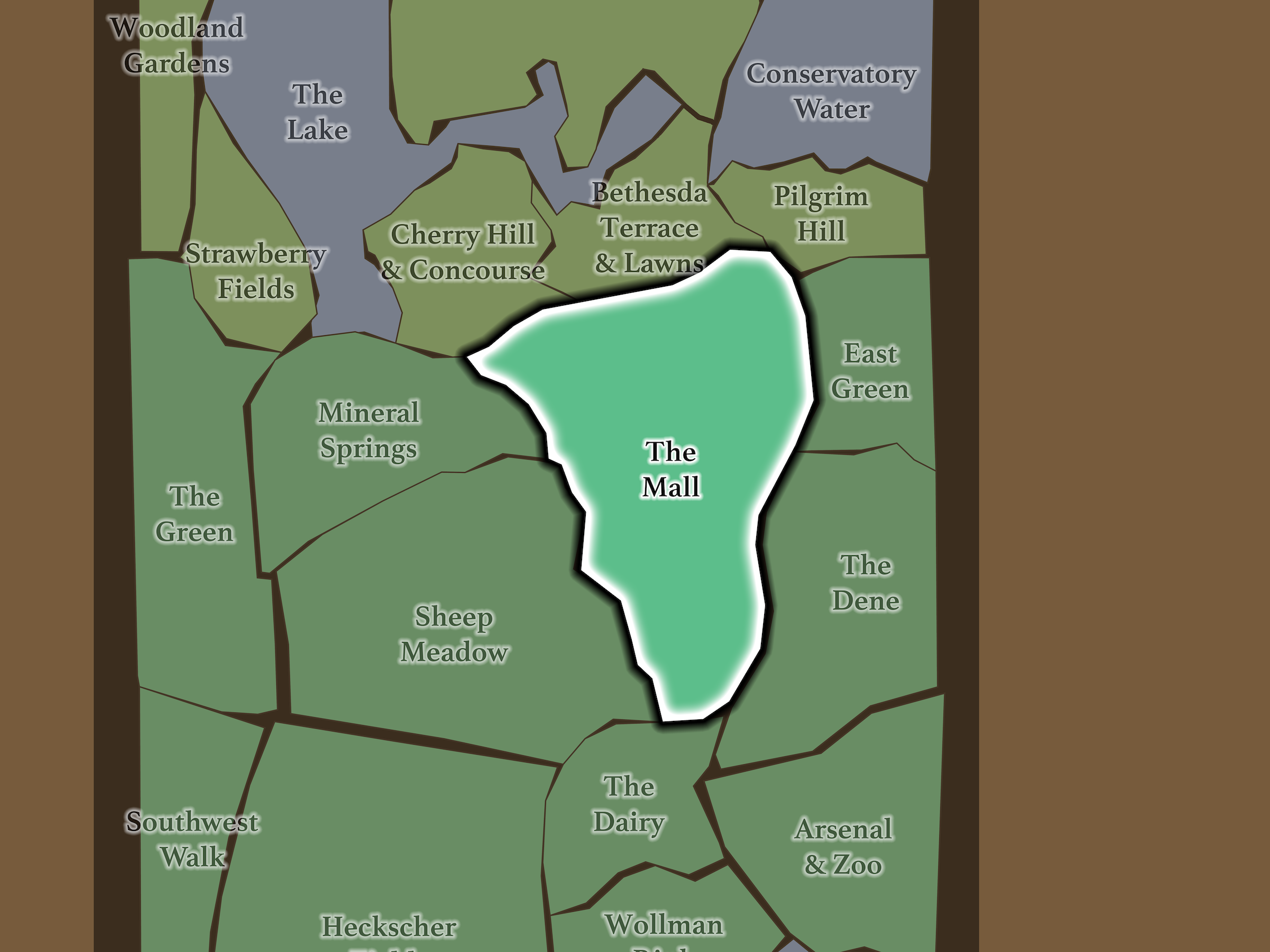
The Mall occupies the center of the South End, running north from the Olmsted Flower Bed toward Bethesda Terrace. East Green and The Dene lie across East Drive; The Dairy begins below Center Drive; Sheep Meadow and Mineral Springs open to the west; and Cherry Hill and Bethesda Terrace begin beyond Terrace Drive to the north.
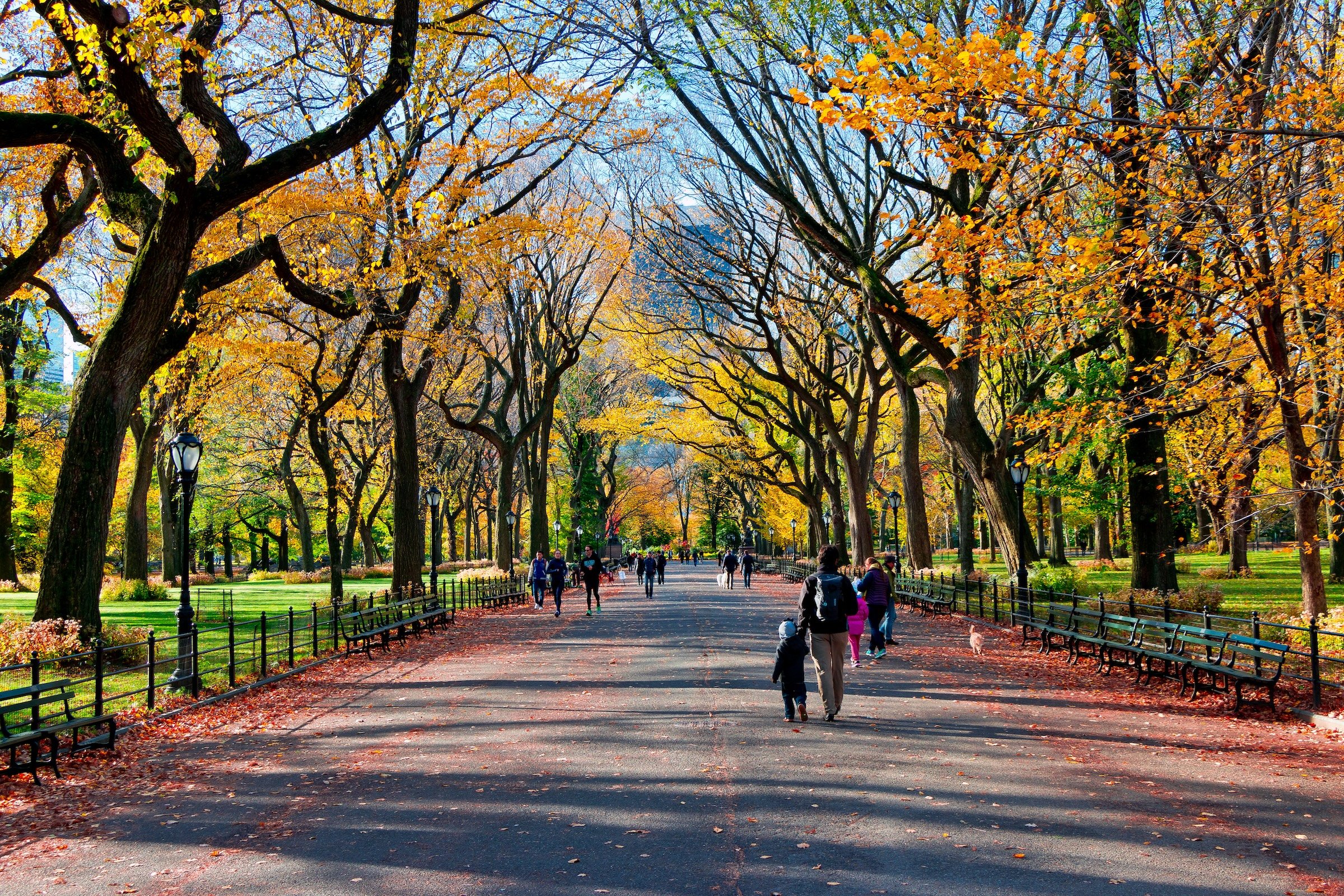
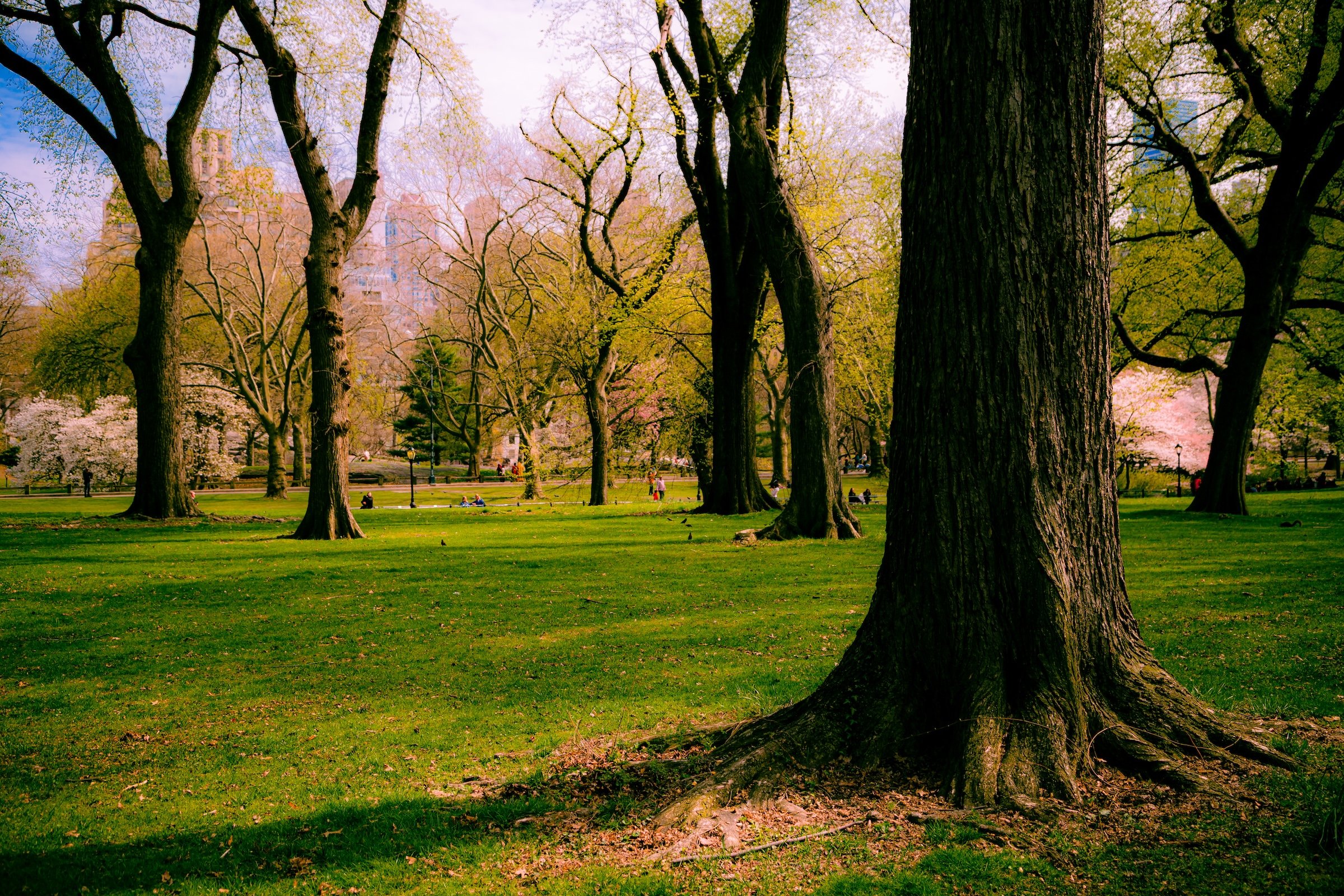
Its form is unusually deliberate. The Mall is one of the park’s only intentional straight lines and extends for roughly 1,500 feet. Rows of American elms create a high, arching canopy over the promenade, while lawns, monuments, paths and the Concert Ground spread outward to either side.
Etymology
The Mall is named for its broad, formal promenade—the straight, tree-lined walk that leads north toward Bethesda Terrace. Olmsted and Vaux conceived it as one of Central Park’s principal gathering spaces, an “open-air hall of reception” where people from across the city could stroll, sit, watch one another, and gather beneath a vaulted canopy of American elms.
History
The Greensward Plan
Olmsted and Vaux designed the Mall as Central Park’s great social promenade. Most of the park’s walks curve and disperse visitors through naturalistic scenery; the Mall does the opposite. It gathers people together along a broad, straight axis and directs them toward Bethesda Terrace, creating a formal civic room within the larger pastoral landscape.
The elms were central to that effect. Their high, spreading branches were chosen to create an architectural canopy over the promenade—less a row of trees than a living vaulted ceiling. That combination of formal geometry, shade and collective movement made the Mall one of the clearest expressions of Central Park’s democratic intent.
The Grand Opening
The Mall quickly became one of Central Park’s principal gathering places. Music arrived almost immediately: by 1862, Jacob Wrey Mould had designed an ornamental cast-iron bandstand for the Concert Ground at the northern end, and Saturday performances regularly drew large crowds. Vaux subsequently redesigned the surrounding landscape in 1873 with additional lawns, benches and walks to better accommodate them.
The southern end also became Central Park’s principal setting for commemorative sculpture. Shakespeare and Sir Walter Scott were dedicated in 1872, Fitz-Greene Halleck in 1877, Robert Burns in 1880, and additional monuments followed. By the 1870s, park administrators were intentionally steering commemorative sculpture toward the Mall because its formal character could accommodate monuments more comfortably than the park’s naturalistic landscapes.
20th Century
The Mall remained a cultural center throughout the twentieth century. In 1923, the original Mould bandstand was replaced by the Naumburg Bandshell, a larger Neoclassical venue funded by Elkan Naumburg. Music continued there for decades, while Rumsey Playfield eventually became the home of SummerStage, which began in 1986 and moved there in 1990.
The landscape itself required major preservation. Dutch elm disease devastated American elm populations across the country, making the Mall’s surviving collection increasingly rare. Conservancy restoration in the late twentieth century renewed paving, plantings, benches and the Concert Ground while intensive tree care protected the historic canopy.
Explore
Contemporary Landscape
Today, The Mall remains one of Central Park’s most recognizable and theatrical spaces.
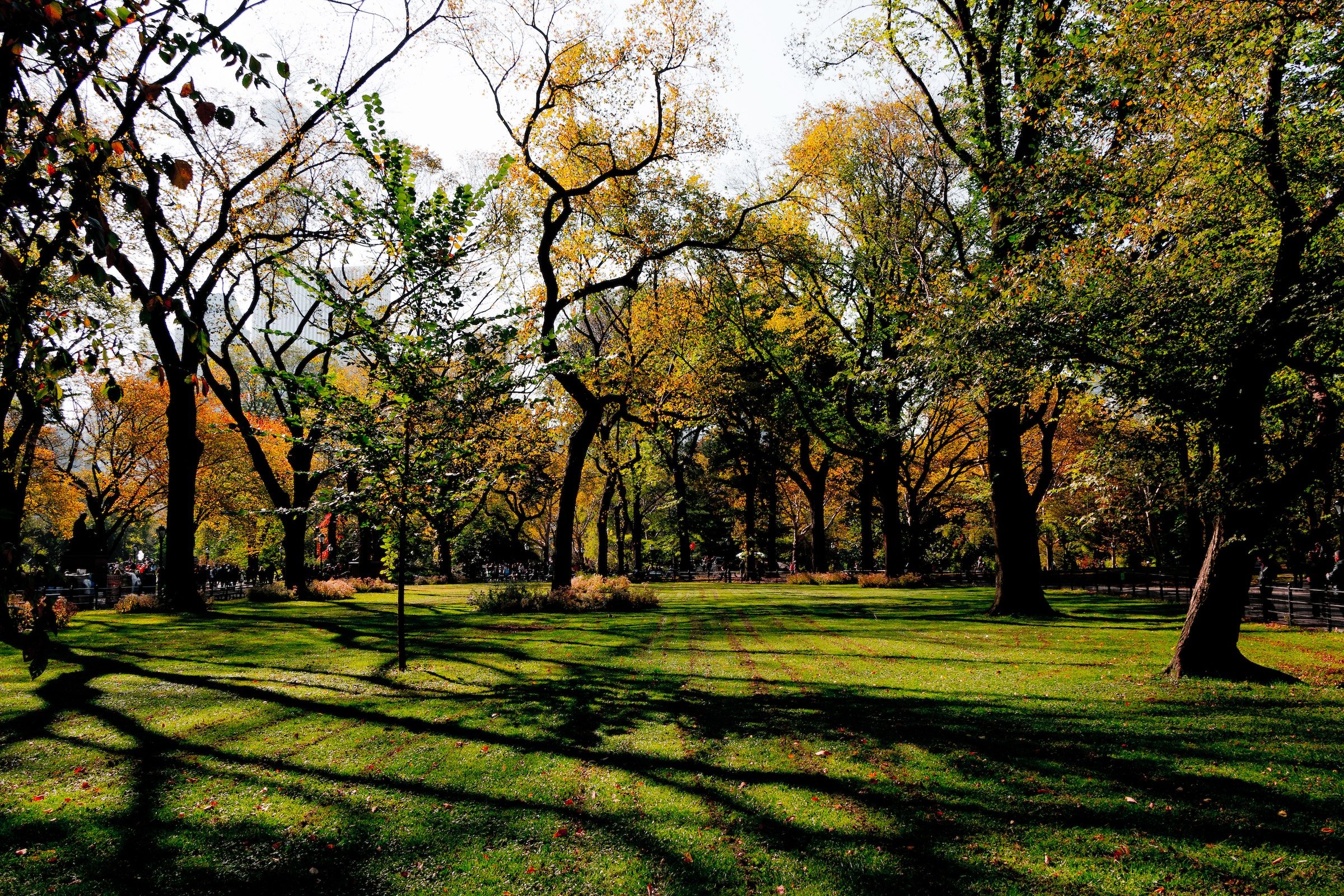
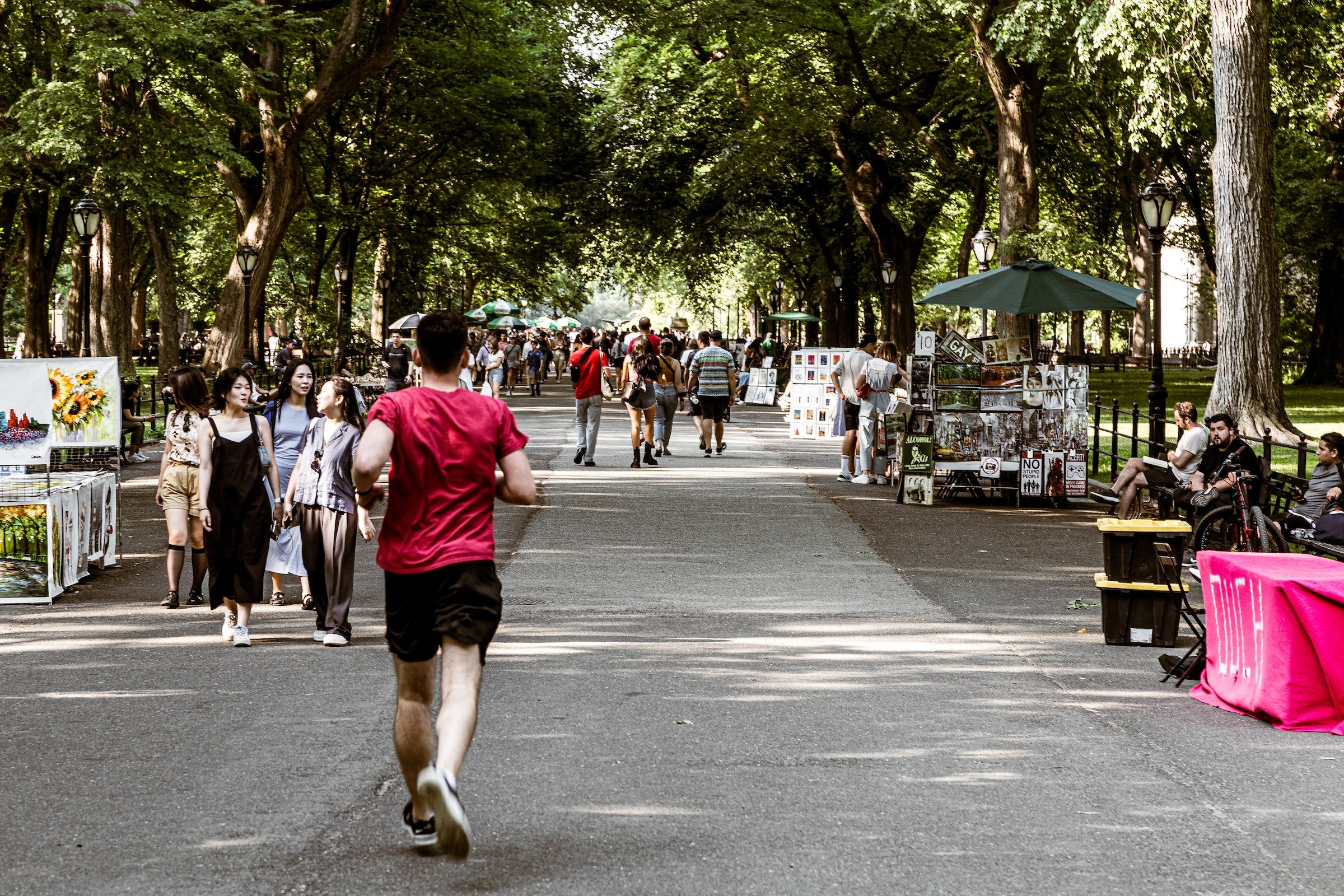
Its character changes continuously with season, weather and light. In summer, the elms create deep green shade and bands of dappled light across the promenade. Autumn opens the canopy into gold and bronze. Winter exposes the extraordinary structure of the branches, while snow can turn the Mall into one of the park’s most dramatic axial views.
The promenade itself remains intensely social: walkers, musicians, artists, vendors, runners and tourists all occupy the same long civic room. At the same time, the surrounding lawns and elm islands provide quieter edges from which to watch the movement along the center.
The southern Literary Walk was repaved and refurbished again in 2026, while restoration work is currently underway on the historic benches of the Concert Ground.
Waypoints
-
Fourteen surviving plaques and a memorial boulder commemorate members of the 307th Infantry Regiment killed in World War I. Veterans planted the original grove between 1920 and 1922.
-
Jeronimo Suñol’s monument, installed in 1894, is one of several historical figures lining the southern Mall. Its imagery was controversial even at the time of installation.
-
Christophe Fratin’s dramatic 1850 sculpture of two eagles attacking a goat was installed in 1863 and is the oldest known work of art on New York City parkland.
-
Dedicated in 1877 before an estimated crowd of 10,000, this seated portrait honors a poet once enormously popular but now largely forgotten; it was the first Central Park monument to an American literary figure.
-
The monument to the German poet and playwright extends the Mall’s concentration of literary and cultural figures into the Concert Ground landscape.
-
Dedicated in 1884 by a German American choir society, Beethoven’s monument reflects the Mall’s long association with public music and immigrant cultural representation.
-
Installed in 1938 at the entrance to Rumsey Playfield, Frederick George Richard Roth’s playful sculpture marks the twentieth-century transformation of this eastern edge into a children’s recreational landscape.
-
Built in 1923 to replace the original cast-iron bandstand, the Bandshell remains the architectural centerpiece of the Concert Ground and the only Neoclassical building in Central Park.
-
Created in 1972 to mark Frederick Law Olmsted’s 150th birthday, the flower bed forms a colorful southern threshold to the Mall beneath some of his favorite trees: American elms.
-
Dedicated in 1880, the Scottish poet faces Sir Walter Scott across the Mall, reinforcing the symmetry of Literary Walk.
-
Installed in 1872, Scott’s monument was one of several nineteenth-century gifts through which immigrant communities asserted cultural presence in New York’s premier public park
-
These paired cast-stone figures were installed with Mother Goose in 1938 and still perch above the entrance gates to Rumsey Playfield.
-
SummerStage has made Rumsey Playfield Central Park’s principal contemporary outdoor performance venue, continuing a musical tradition that began on the Mall in the 1860s.
-
John Quincy Adams Ward’s 1872 monument helped establish the southern Mall as what would become Literary Walk.
-
At the eastern edge of the Mall, Willowdell carries East Drive above the pedestrian connection toward The Dene, demonstrating how the formal promenade remains embedded in Central Park’s layered circulation system.
-
Unveiled in 2020, Meredith Bergmann’s monument to Sojourner Truth, Susan B. Anthony and Elizabeth Cady Stanton became the first Central Park monument depicting real women.
Photography
Visual Identity
Central Park has no single visual identity. It moves between open meadow and enclosed woodland, exposed bedrock and carefully planted garden, reflective water and hard-edged skyline. Its paths can narrow into shade beneath old trees, then open suddenly toward towers, lakes, monuments, or a broad field filled with people. The Park’s character is made from those transitions: the designed discovery of one landscape giving way to another.
Water and horizon recur throughout its geography. The Lake, Reservoir, ponds, fountains, and seasonal pools of light create places of reflection—sometimes literal, sometimes figurative—where the city appears fractured, softened, or enlarged. Beyond them, Manhattan’s towers remain present as a constant reminder that this cultivated landscape exists within, not apart from, one of the world’s densest cities.
Its visual language also changes dramatically with the seasons. Winter exposes branches, stone, and skyline; spring briefly turns the Park into blossom and color; summer fills its lawns and paths with activity; autumn intensifies the drama of canopy, water, and light. Central Park is designed to be revisited, and its identity is never fixed for long.