
THE GREEN
Location
Geographic Setting
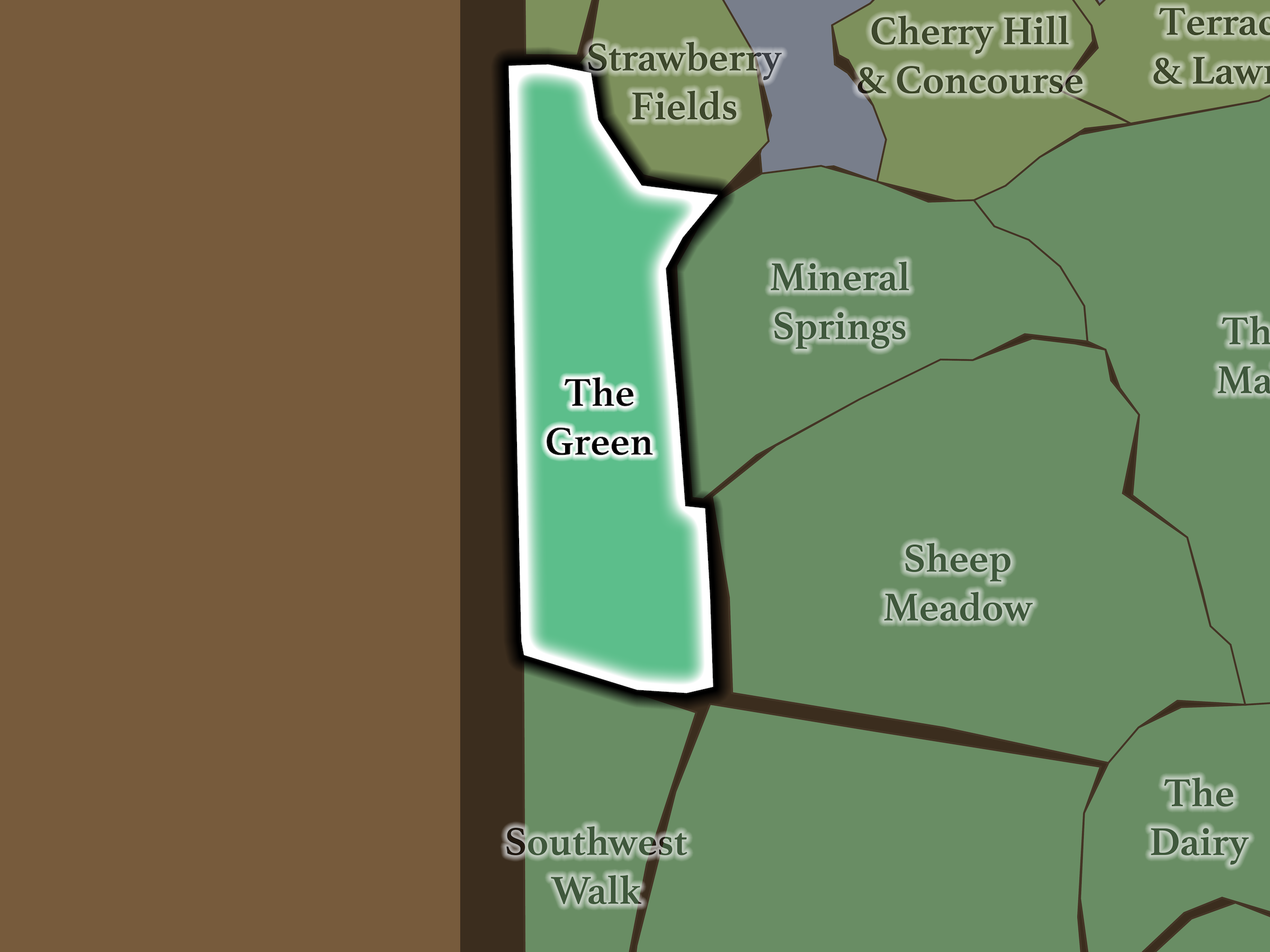
The Green preserves one of Central Park’s earliest landscape names. Nineteenth-century descriptions used The Green for the broad pastoral lawn west of The Mall—the landscape from which today’s Sheep Meadow ultimately emerged. Contemporary Central Park gives the great open lawn its much more faaThe Green occupies the western edge of the South End between West 66th Street and Terrace Drive. Mineral Springs and Sheep Meadow lie across West Drive to the east; Southwest Walk continues south below West 66th Street; Central Park West separates the landscape from Lincoln Square; and Woodland Gardens and Strawberry Fields begin beyond Terrace Drive to the north.
Unlike Sheep Meadow, The Green is experienced primarily through movement rather than open lawn. Pedestrian walks and the Bridle Path wind beneath mature trees and through smaller lawns, rocky ground and recreational spaces. The Bridle Path itself begins near Central Park’s southwest corner and continues north through the park, preserving one of the original modes of circulation envisioned for riders.miliar Sheep Meadow identity; within the CNCentralPark taxonomy, the historic name is retained for the adjoining western landscape between West Drive and Central Park West. An 1872 description characterized The Green simply as the beautiful lawn west of The Mall, illustrating how fundamental the name once was to the lower park.
Etymology
The Green preserves one of Central Park’s earliest landscape names. Nineteenth-century descriptions used The Green for the broad pastoral lawn west of The Mall—the landscape from which today’s Sheep Meadow ultimately emerged. Contemporary Central Park gives the great open lawn its much more familiar Sheep Meadow identity; within the CNCentralPark taxonomy, the historic name is retained for the adjoining western landscape between West Drive and Central Park West. An 1872 description characterized The Green simply as the beautiful lawn west of The Mall, illustrating how fundamental the name once was to the lower park.
History
The Greensward Plan
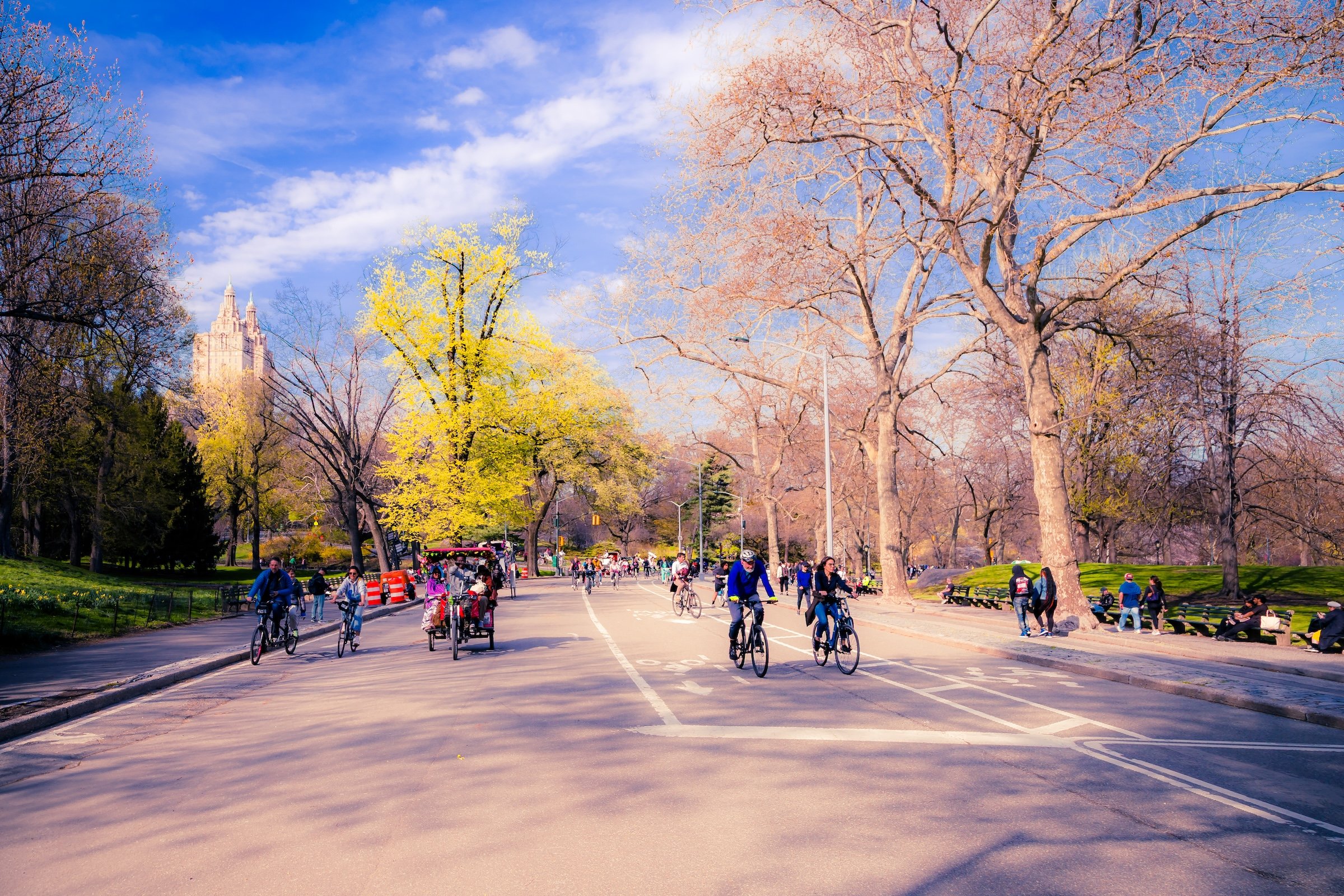
In Olmsted and Vaux’s original conception, this western landscape formed the edge of the large pastoral greensward to its east while also carrying important circulation systems along the park’s perimeter. West Drive, pedestrian walks and the Bridle Path allowed carriage riders, pedestrians and equestrians to move north through the park while remaining separated from one another.
The adjoining meadow was one of the Greensward Plan’s great exercises in manufactured pastoralism: rock was blasted away, soil was brought in and the terrain was reshaped into the apparently effortless lawn now known as Sheep Meadow. The quieter western edge provided circulation and enclosure around that expansive open landscape.
The Grand Opening
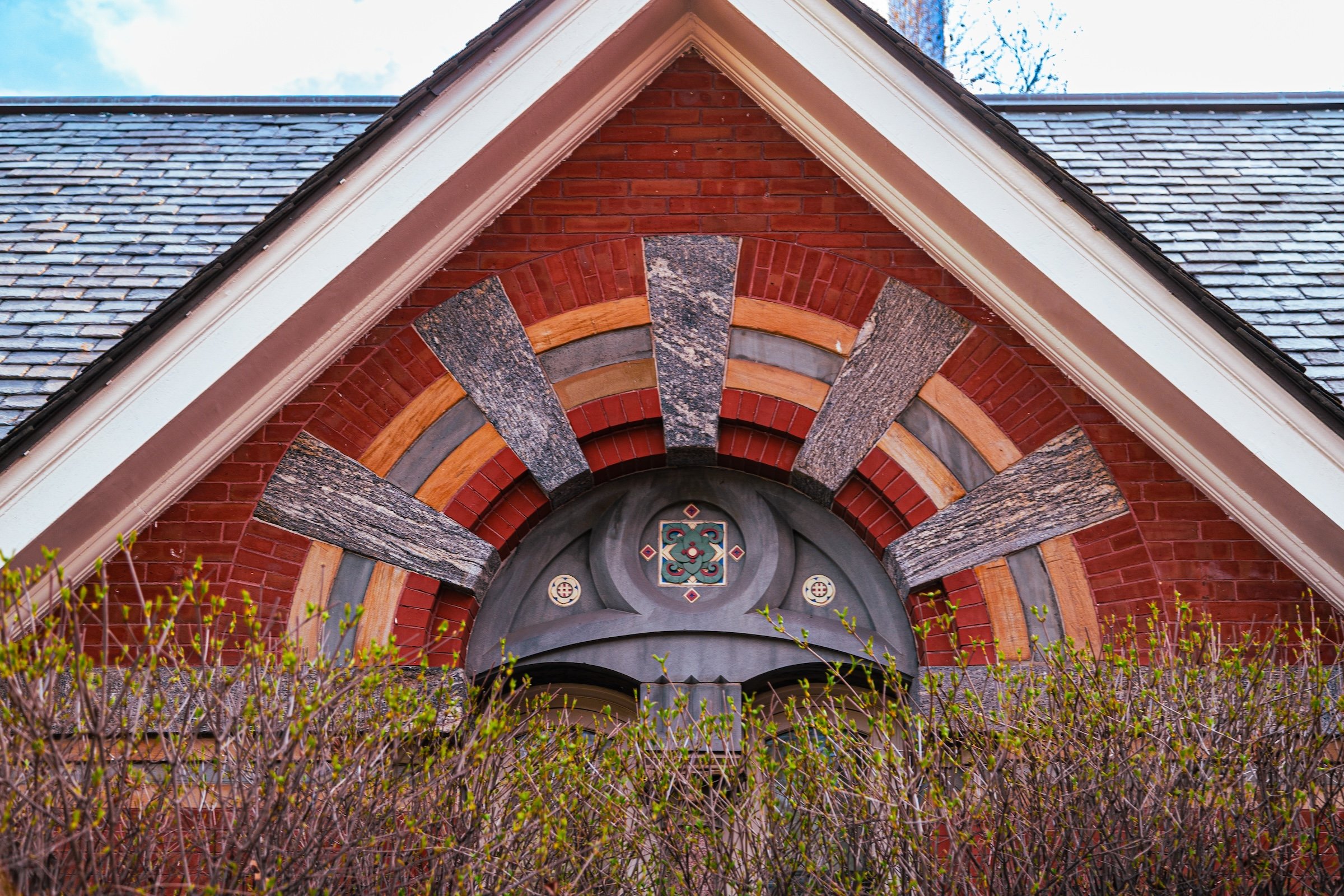
The landscape acquired one of its defining structures in 1870, when Jacob Wrey Mould’s Sheepfold was constructed beside West Drive to house the flock grazing on the meadow. Twice each day, the shepherd stopped carriage traffic so the sheep could cross between their pasture and the fold.
The western edge also became an early setting for civic memorials. John Quincy Adams Ward’s 7th Regiment Memorial, honoring 58 members of the regiment who died during the Civil War, was dedicated along West Drive in the 1870s. Giovanni Turini’s bust of Italian nationalist Giuseppe Mazzini followed in 1878, becoming the first monument to an Italian American subject in New York City.
20th Century
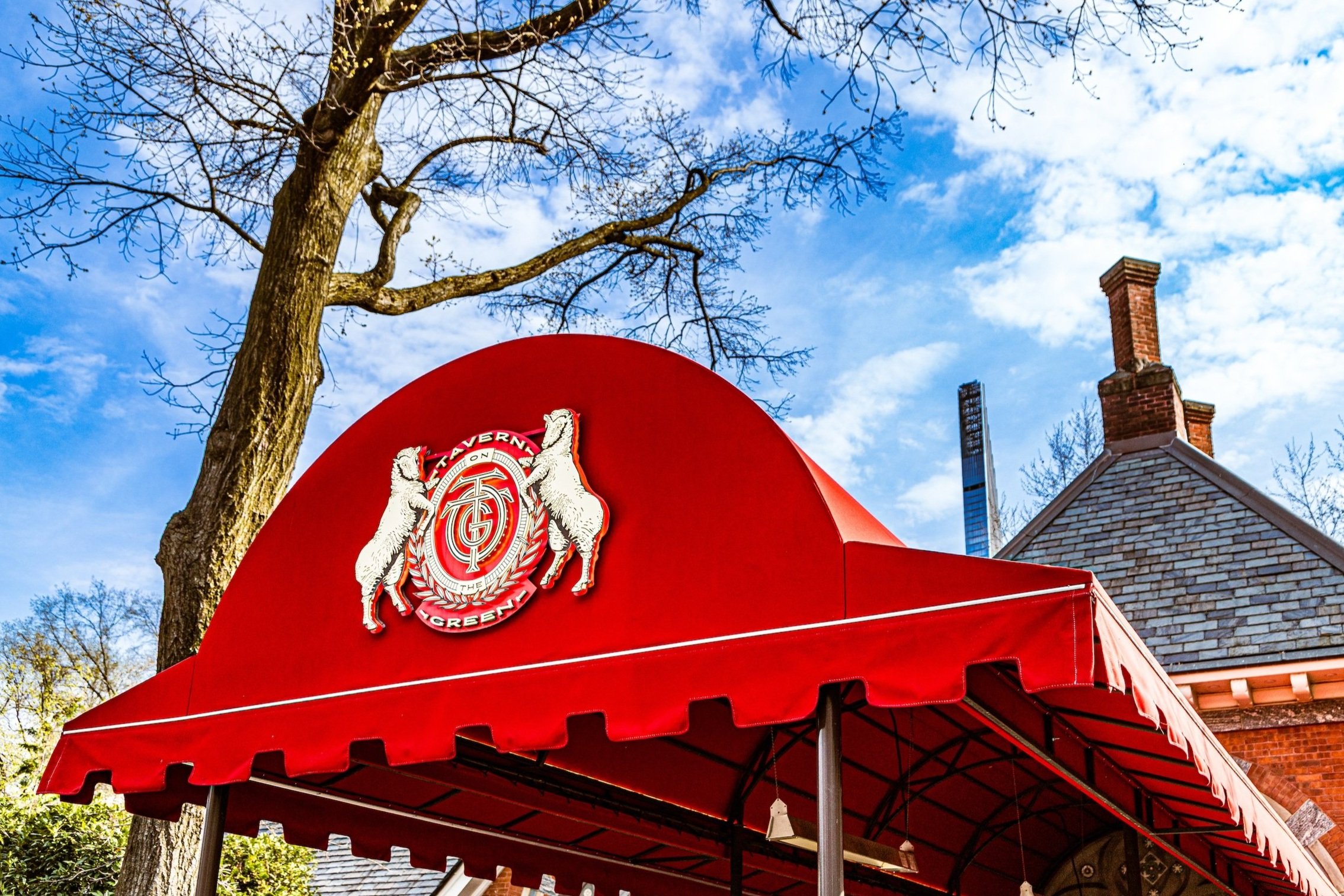
The neighborhood’s identity changed dramatically in 1934, when the sheep were removed and the Sheepfold was converted into Tavern on the Green. What had been a functional piece of the pastoral landscape became one of Central Park’s best-known restaurants, eventually acquiring elaborate dining rooms, gardens and a glamorous reputation before undergoing a substantial restoration and reopening in 2014.
The twentieth century also brought children’s recreation to the park edge—and one of Central Park’s most remarkable episodes of community activism. In 1956, Robert Moses proposed an 80-car parking lot for Tavern on the Green on land near West 67th Street. Local parents successfully fought the project in the celebrated “Battle of Central Park.” The altered site subsequently became a playground; nearby, Richard Dattner redesigned West 67th Street Playground as Central Park’s first adventure-style playground in 1967.
Explore
Contemporary Landscape
Today, The Green is quieter and more linear than its famous neighbor across West Drive. Paths and the unpaved Bridle Path pass beneath mature canopy, through smaller lawns and flowering trees, and past playgrounds, monuments and rocky edges. In that sense it shares some of the visual character of Southwest Walk to the south: a place understood most naturally by walking through it.
Yet Tavern on the Green gives the neighborhood an unmistakable focal point. The former Sheepfold still faces the meadow its occupants once maintained, preserving one of Central Park’s clearest surviving relationships between original function and contemporary landmark. Nearby, the landscape has also become closely associated with running: the New York City Marathon finishes beside Tavern on the Green, while the wooded area around West 67th Street is commonly known as Runners’ Grove.
Waypoints
-
John Quincy Adams Ward’s contemplative citizen-soldier honors the 58 members of New York’s Seventh Regiment who died during the Civil War.
-
Richard Dattner’s groundbreaking 1967 design replaced conventional playground equipment with tunnels, mounds, mazes, water and structures intended to encourage imaginative exploration. It was rebuilt by the Conservancy in 2015 while preserving that original concept.
-
Giovanni Turini’s 1878 bust honors the Italian political thinker and leader of the movement for Italian unification. Its inscriptions translate as “Thought and Action” and “God and the People.”
-
The wooded landscape near West 67th Street has become a familiar gathering and viewing area for runners, particularly around the New York City Marathon, whose finish lies beside Tavern on the Green.
-
This small playground exists because neighborhood families defeated Robert Moses’ proposed Tavern on the Green parking lot in 1956. The Conservancy rebuilt the space in 2013 as an intimate playground scaled to young children.
-
Built in 1870 to house Central Park’s flock and shepherd, the Sheepfold was converted into Tavern on the Green in 1934. Its relationship with Sheep Meadow remains visible across West Drive.
Photography
Visual Identity
Central Park has no single visual identity. It moves between open meadow and enclosed woodland, exposed bedrock and carefully planted garden, reflective water and hard-edged skyline. Its paths can narrow into shade beneath old trees, then open suddenly toward towers, lakes, monuments, or a broad field filled with people. The Park’s character is made from those transitions: the designed discovery of one landscape giving way to another.
Water and horizon recur throughout its geography. The Lake, Reservoir, ponds, fountains, and seasonal pools of light create places of reflection—sometimes literal, sometimes figurative—where the city appears fractured, softened, or enlarged. Beyond them, Manhattan’s towers remain present as a constant reminder that this cultivated landscape exists within, not apart from, one of the world’s densest cities.
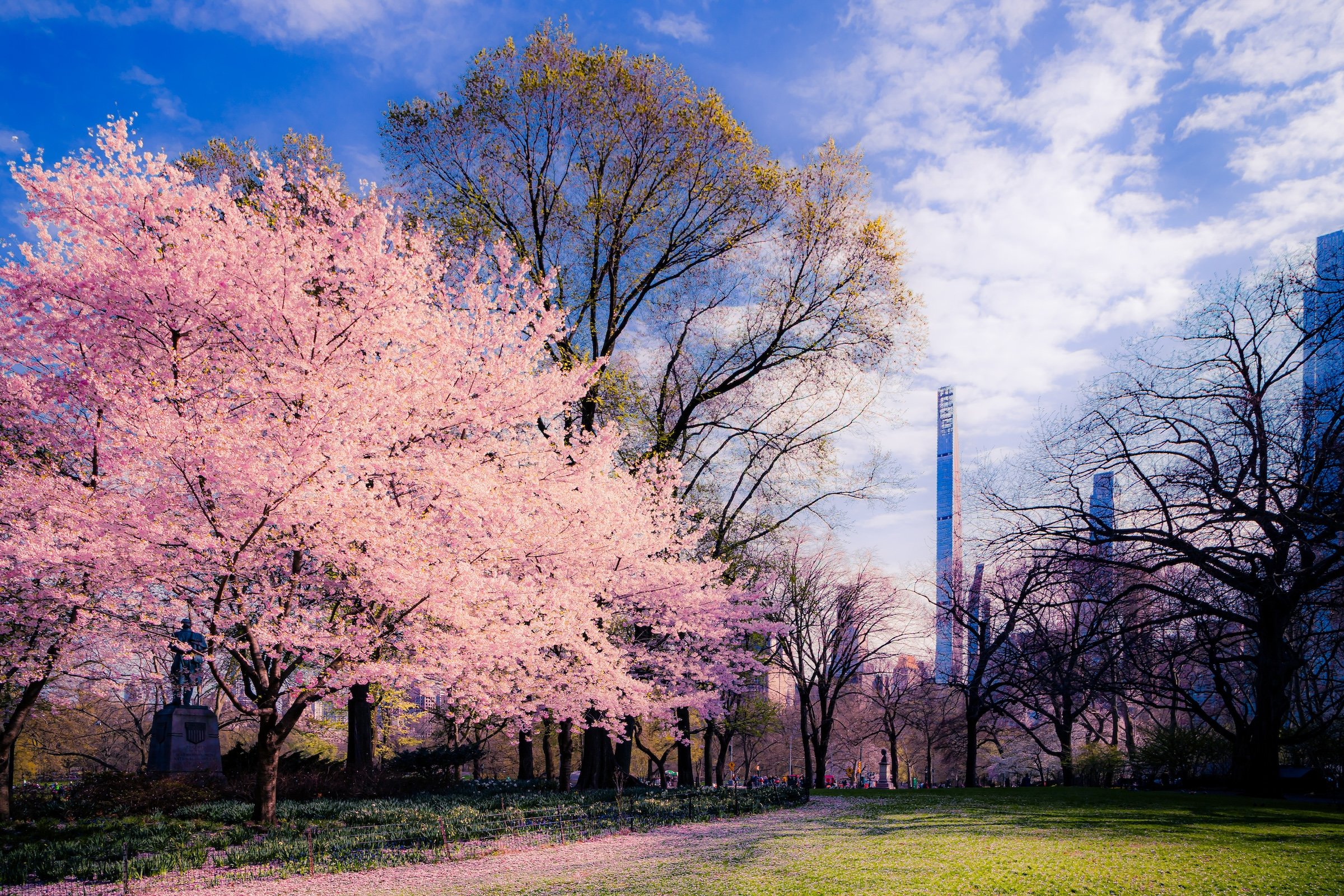
Its visual language also changes dramatically with the seasons. Winter exposes branches, stone, and skyline; spring briefly turns the Park into blossom and color; summer fills its lawns and paths with activity; autumn intensifies the drama of canopy, water, and light. Central Park is designed to be revisited, and its identity is never fixed for long.