
CONSERVATORY WATER
Location
Geographic Setting
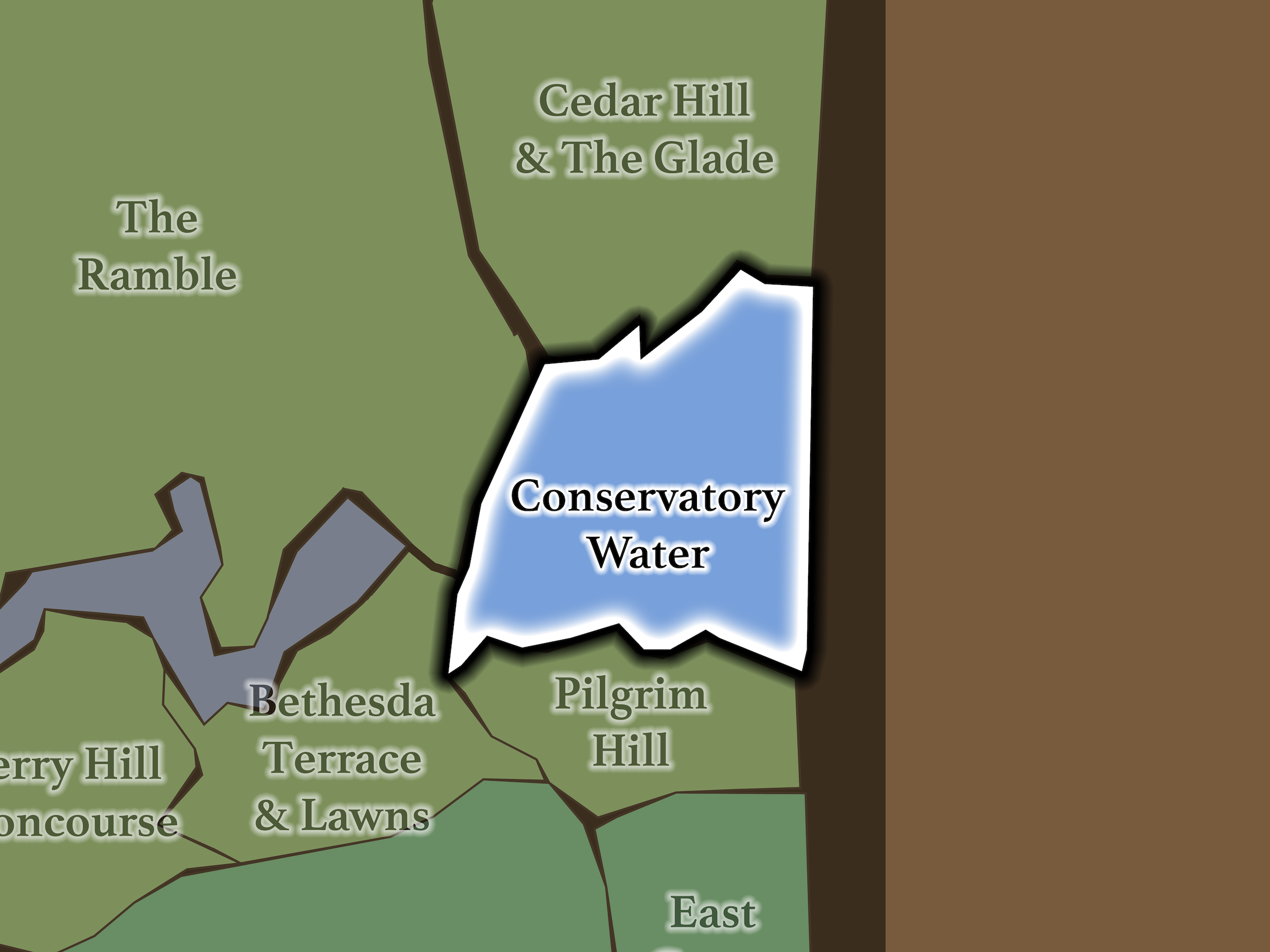
Conservatory Water occupies a formal, rectilinear basin on the eastern side of Mid-Park South. Pilgrim Hill rises to the south; the Lake and Boathouse landscape lie west beyond East Drive; The Glade & Cedar Hill begin to the north; and Fifth Avenue separates the park from Lenox Hill.
Its regular geometry makes it distinctive among Central Park’s water bodies. The Pond, Lake and Meer were designed to appear naturalistic; Conservatory Water is unapologetically architectural—a broad reflecting pool bordered by stone edges, benches and paths.
East Drive might appear to separate it from the Lake, but Trefoil Arch creates an intentional pedestrian connection beneath the roadway, linking Conservatory Water directly with the Boathouse and Lake landscape
Etymology
Conservatory Water takes its name from a glass-and-metal conservatory that Olmsted and Vaux originally intended to build at this location. The ornamental basin was constructed during the 1860s as a reflecting pool for that conservatory, but the building itself was never realized. The water survived without it, leaving the name attached to a landscape whose intended architectural centerpiece never appeared.
Its other familiar name, the Model Boat Pond, reflects the activity that ultimately gave the water its enduring identity. Model sailing began here almost from the pond’s earliest years, drawing on traditions already popular in European parks such as Paris’s Jardin du Luxembourg.
History
1858–1873: Greensward Plan & Construction
Conservatory Water represents one of Olmsted and Vaux’s unrealized formal ideas.
Their design called for a large glass conservatory overlooking an ornamental reflecting pool. Although the conservatory was never built, the basin itself was completed during the 1860s. Its geometric form therefore preserves the architectural logic of a building that exists today only through the water designed to accompany it.
This also explains why the landscape feels so different from much of Central Park. Here, the designers were not attempting to disguise human intervention as wilderness. The straight edges and regular basin were intended to complement formal architecture.
1858–1899: Early History & Grand Openings
Without its conservatory, the pool quickly acquired another purpose.
Model boating had become fashionable in London and Paris during the nineteenth century and reached New York by the middle of the century. Conservatory Water became a natural venue, and miniature boats were sailing its surface almost from the time the basin was completed.
That recreational identity deepened over time. In 1916, enthusiasts established the Central Park Model Yacht Club, organizing races that became increasingly popular during the first half of the twentieth century.
The pond therefore underwent an unusually organic transformation: a reflecting pool awaiting a conservatory became a destination because New Yorkers found another use for it.
20th Century: Transformation & Restoration
During the 1950s, Parks Commissioner Robert Moses reshaped the surrounding landscape around children and recreation. The Kerbs Memorial Boathouse was constructed beside the pond to provide storage and rentals for model boats, while new sculpture reinforced the area’s increasingly playful identity.
In 1956, Georg Lober’s monument to Hans Christian Andersen was unveiled beside the water to mark the writer’s 150th birthday. The statue became the setting for a longstanding summer storytelling program.
Three years later, philanthropist and publisher George Delacorte gave the City José de Creeft’s enormous Alice in Wonderland sculpture. Dedicated in 1959, the climbable bronze depicts Alice surrounded by the Mad Hatter, White Rabbit, Cheshire Cat and other characters and quickly became one of Central Park’s most popular works of art.
Together, boating, sculpture and recreation transformed Conservatory Water into one of Central Park’s most distinctly child-oriented landscapes.
Explore
21st Century: Renovation & Modernization
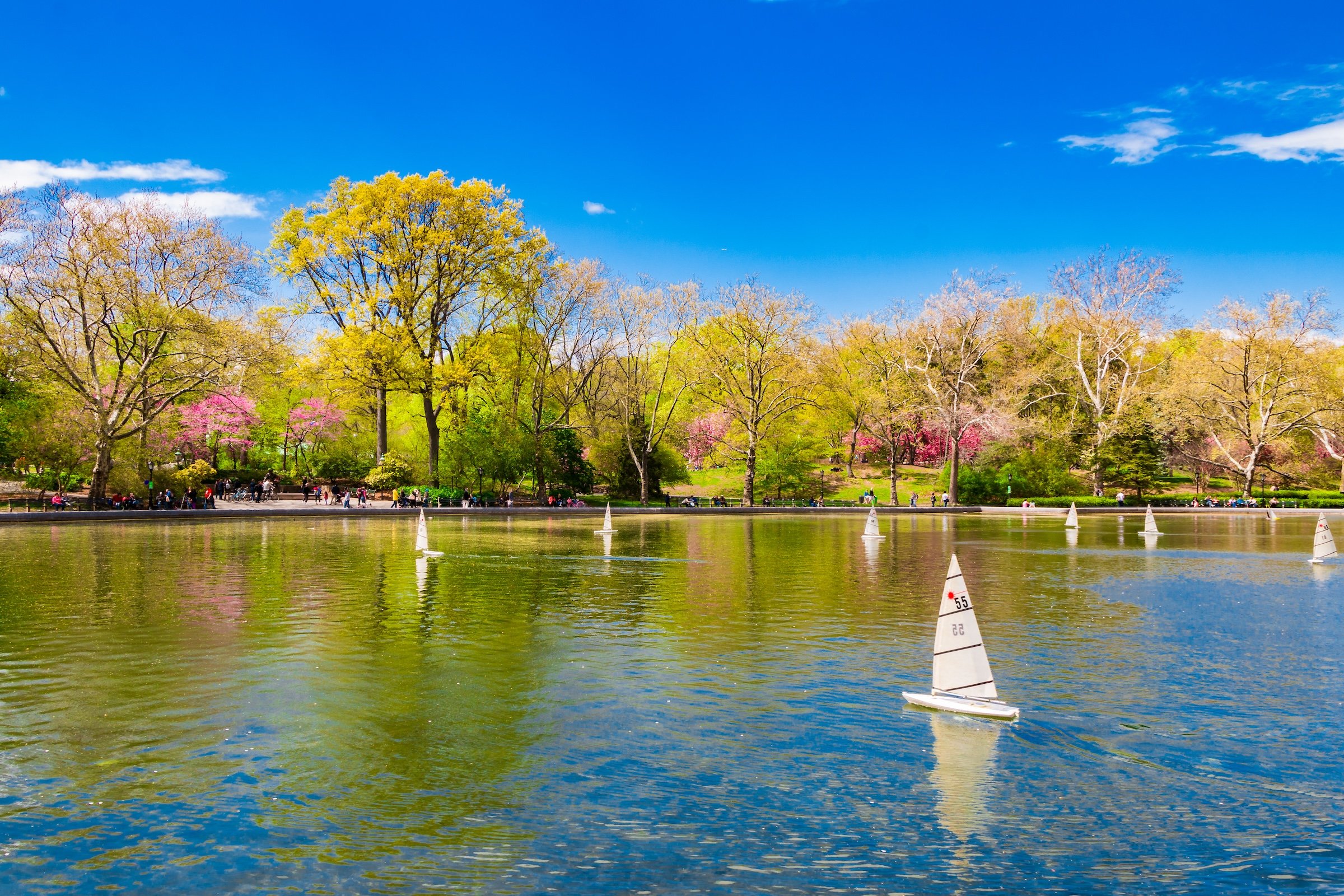
Today, Conservatory Water can feel like a picture postcard brought to life.
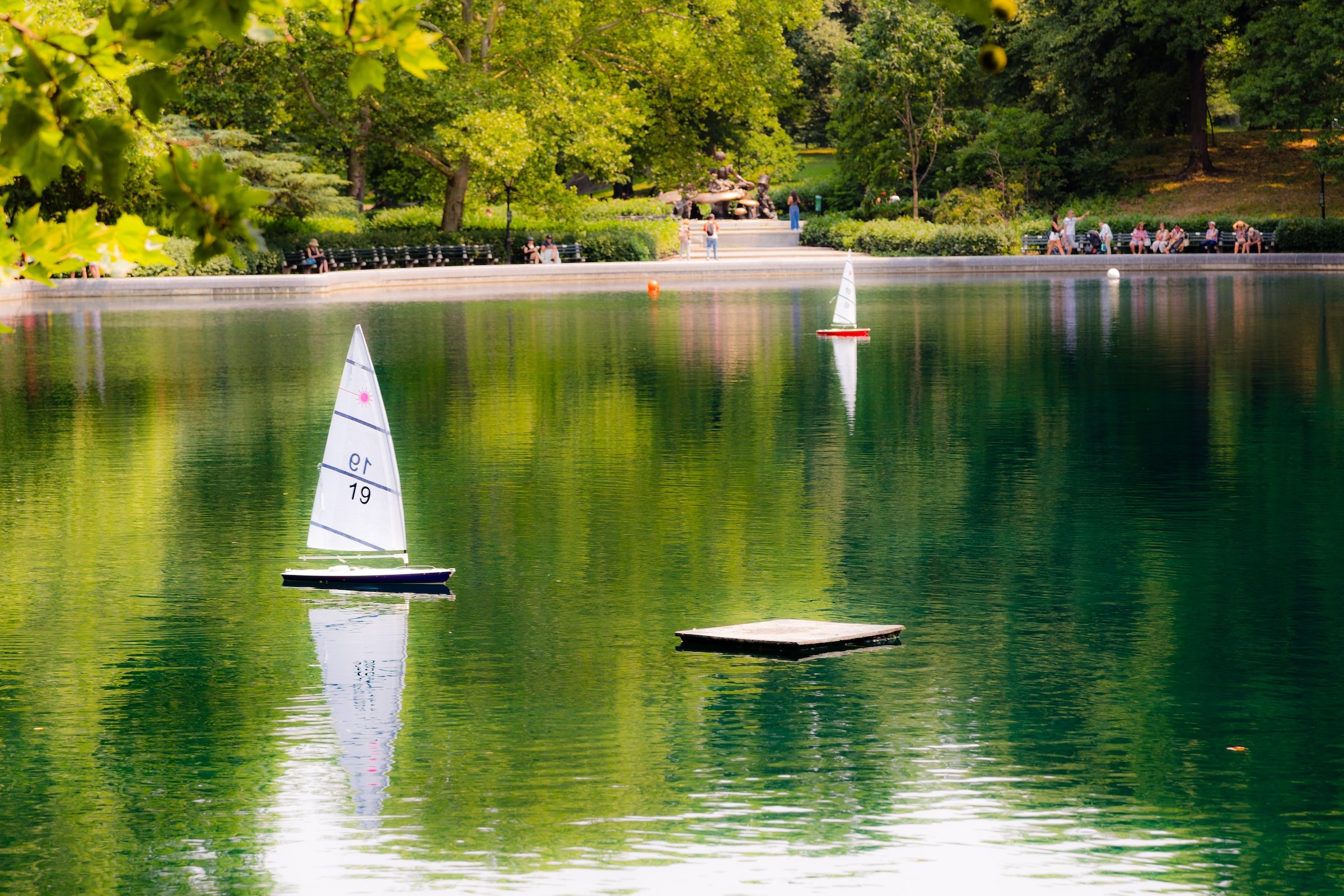
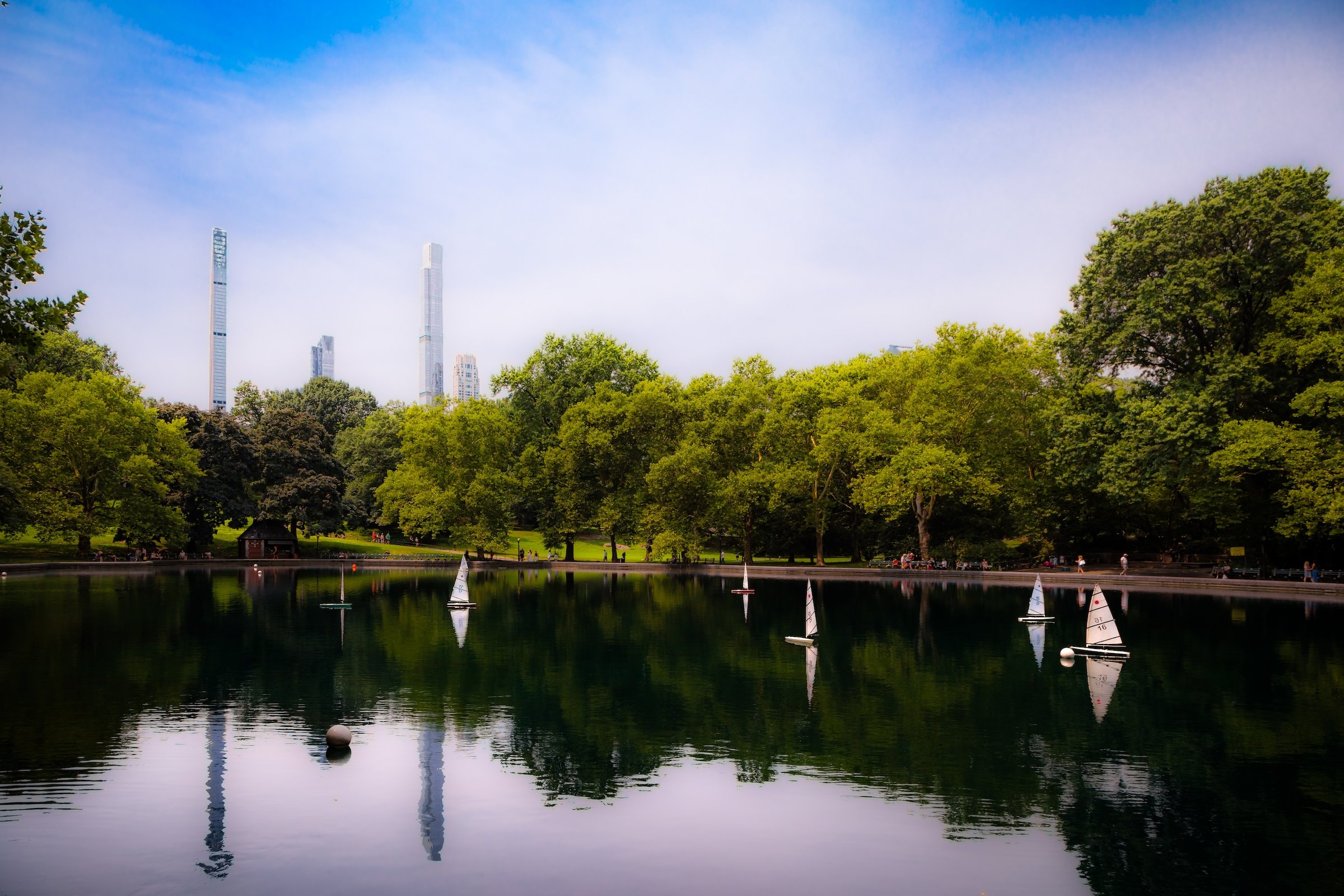
Miniature sailboats cross the water while trees and nearby buildings ripple in reflection. Benches line the perimeter, pathways circle the basin, and the distant towers of Manhattan rise beyond the foliage. Because the pond is relatively small and geometrically contained, everything feels close: boats, water, sculpture, trees and people all share the same visual field.
Yet the landscape changes as you move around it. Alice in Wonderland turns the northern edge into a playful sculptural garden. Hans Christian Andersen makes the eastern shore a storytelling place. Kerbs Boathouse provides a gathering point for boating, refreshments and watching the pond. Trefoil Arch then offers a passage beneath East Drive toward the larger and more naturalistic waters of The Lake.
And Conservatory Water is entering another major chapter. In late 2026, the Central Park Conservancy is scheduled to begin rebuilding the aging pond basin, which has developed substantial leaks. A comprehensive renovation of Kerbs Boathouse is scheduled to follow in spring 2027, improving accessibility, restrooms, circulation and building systems. Both phases are expected to be completed by spring 2028.
Waypoints
-
José de Creeft’s 1959 bronze was commissioned by George Delacorte as a gift to New York’s children and a memorial to his wife, Margarita. Its oversized mushroom and storybook characters were deliberately designed to be climbed, making the sculpture as much playground as monument.
-
Georg Lober’s 1956 bronze depicts the Danish storyteller seated with a book and a duck at his feet. During summer, children still gather around it for the storytelling program that has become part of Conservatory Water’s identity.
-
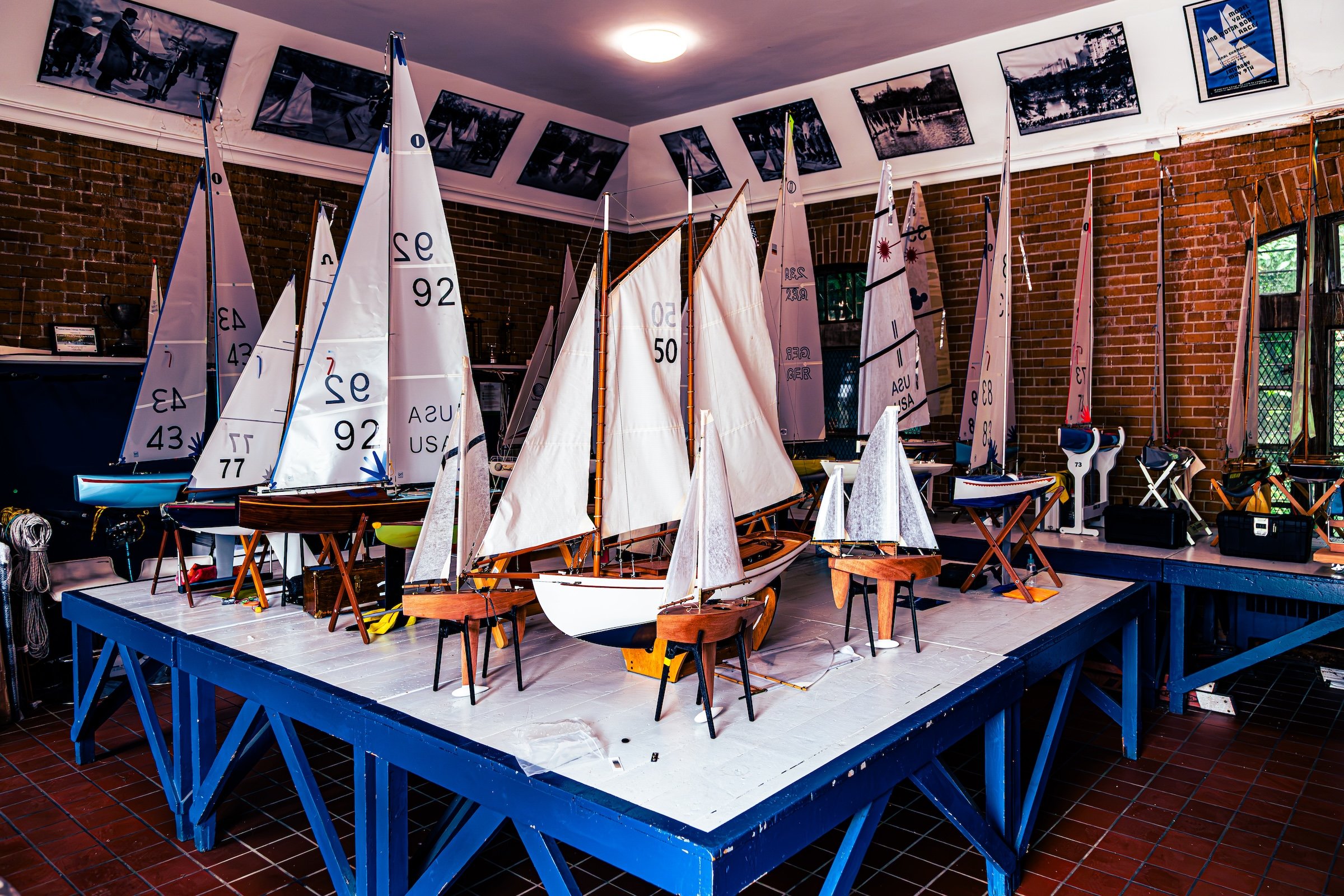
Built in the early 1950s, the small waterside structure provides storage and rentals for model boats along with refreshments and restrooms. It is scheduled for its first comprehensive renovation beginning in 2027
-
The ornamental basin itself is the neighborhood’s defining feature. Model yachts have sailed here since the nineteenth century, and organized racing dates to the founding of the Central Park Model Yacht Club in 1916.
-
East Drive passes above this unusual pedestrian arch connecting Conservatory Water with the Lake and Boathouse. Its eastern façade has the three-lobed opening that gives the arch its name, while its western side uses an entirely different rounded design—the only Central Park arch with two distinct façades.
Photography
Visual Identity
Central Park has no single visual identity. It moves between open meadow and enclosed woodland, exposed bedrock and carefully planted garden, reflective water and hard-edged skyline. Its paths can narrow into shade beneath old trees, then open suddenly toward towers, lakes, monuments, or a broad field filled with people. The Park’s character is made from those transitions: the designed discovery of one landscape giving way to another.
Water and horizon recur throughout its geography. The Lake, Reservoir, ponds, fountains, and seasonal pools of light create places of reflection—sometimes literal, sometimes figurative—where the city appears fractured, softened, or enlarged. Beyond them, Manhattan’s towers remain present as a constant reminder that this cultivated landscape exists within, not apart from, one of the world’s densest cities.
Its visual language also changes dramatically with the seasons. Winter exposes branches, stone, and skyline; spring briefly turns the Park into blossom and color; summer fills its lawns and paths with activity; autumn intensifies the drama of canopy, water, and light. Central Park is designed to be revisited, and its identity is never fixed for long.