
ARTHUR ROSS PINETUM
Location
Geographic Setting
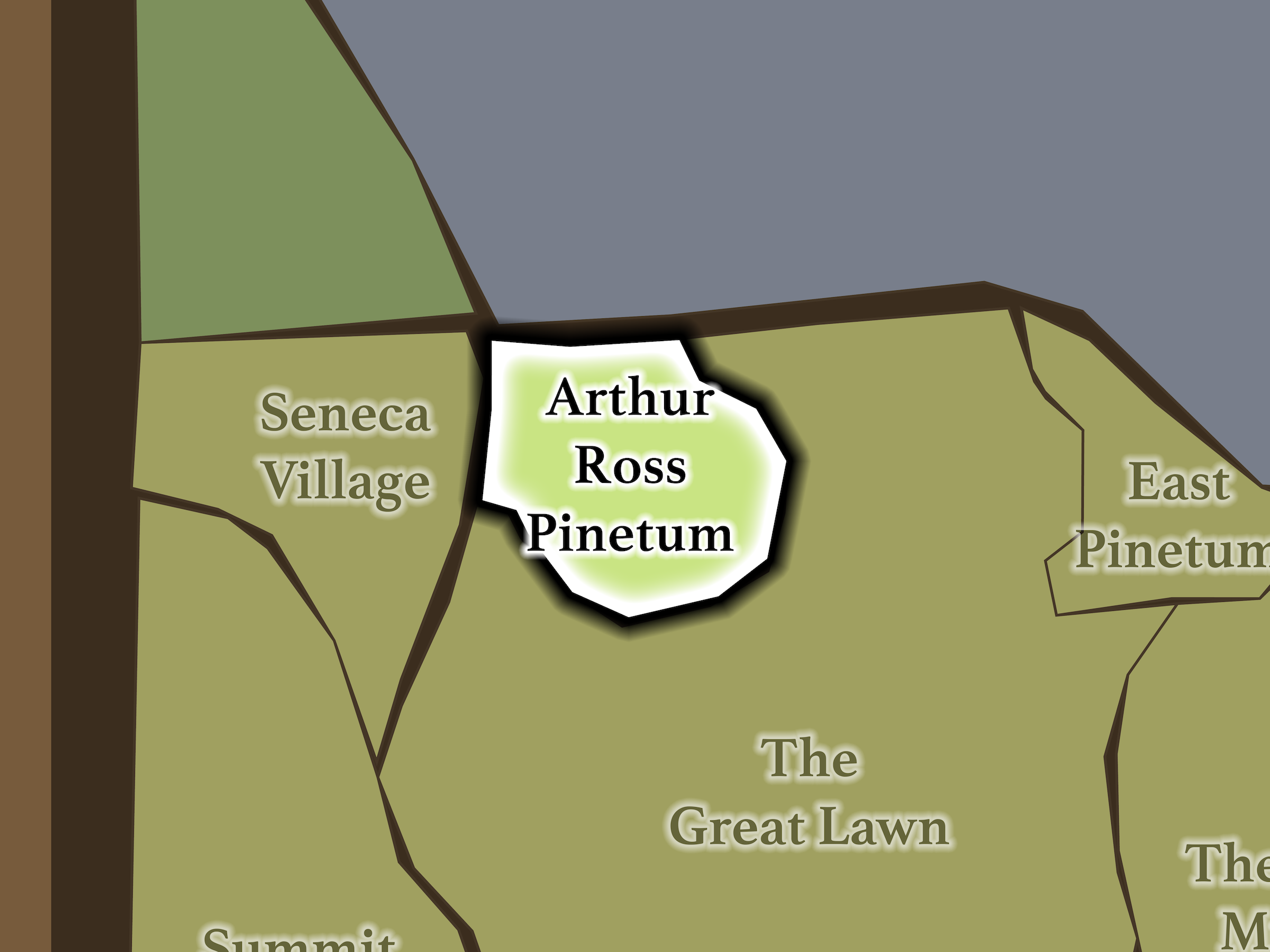
Arthur Ross Pinetum occupies a compact four-acre landscape at the northwestern corner of the Great Lawn, between approximately West 84th and 86th Streets. Seneca Village lies beyond West Drive to the west; The Reservoir begins above the 86th Street Transverse; and the Great Lawn opens immediately to the east and south beyond Pinetum Circle.
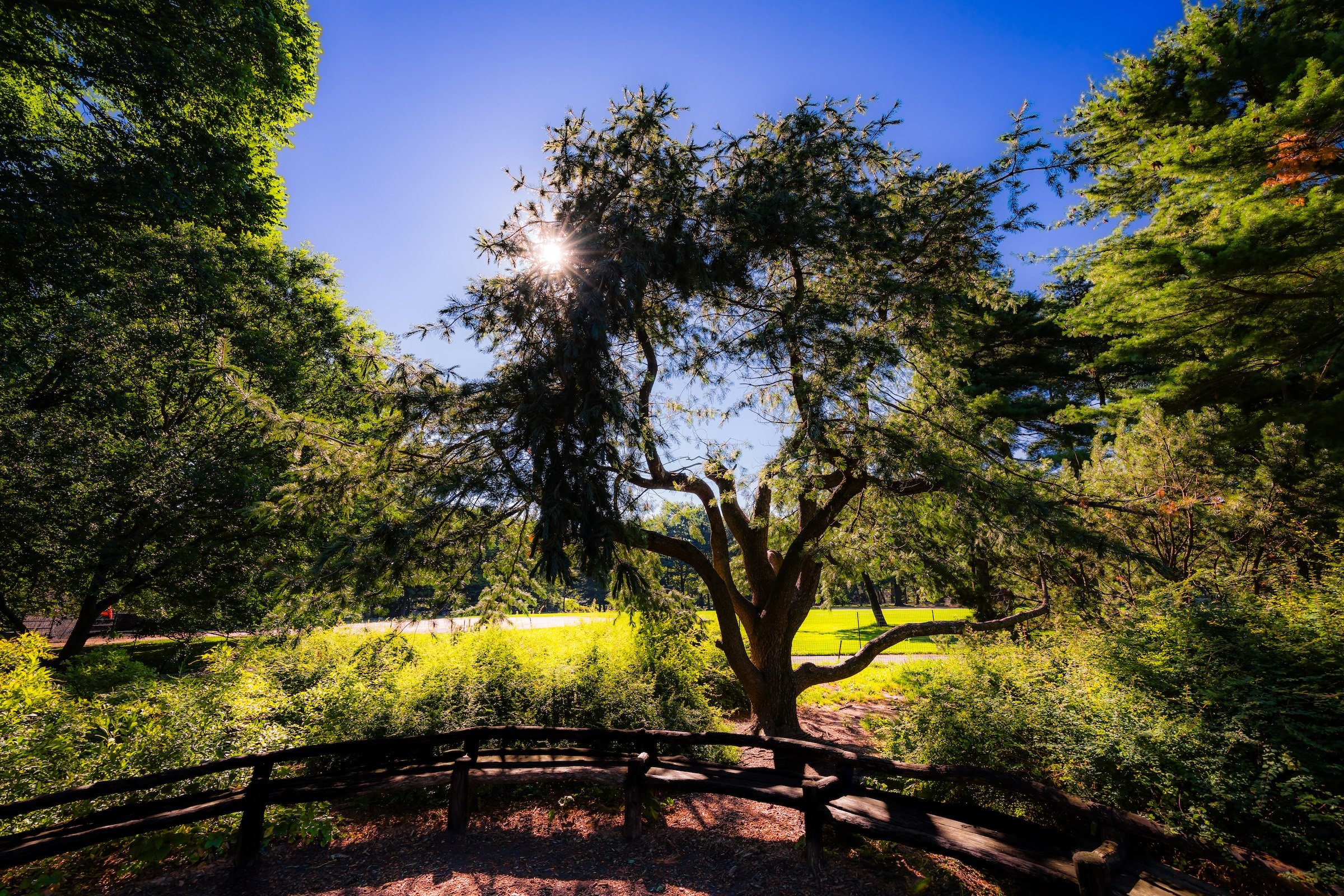
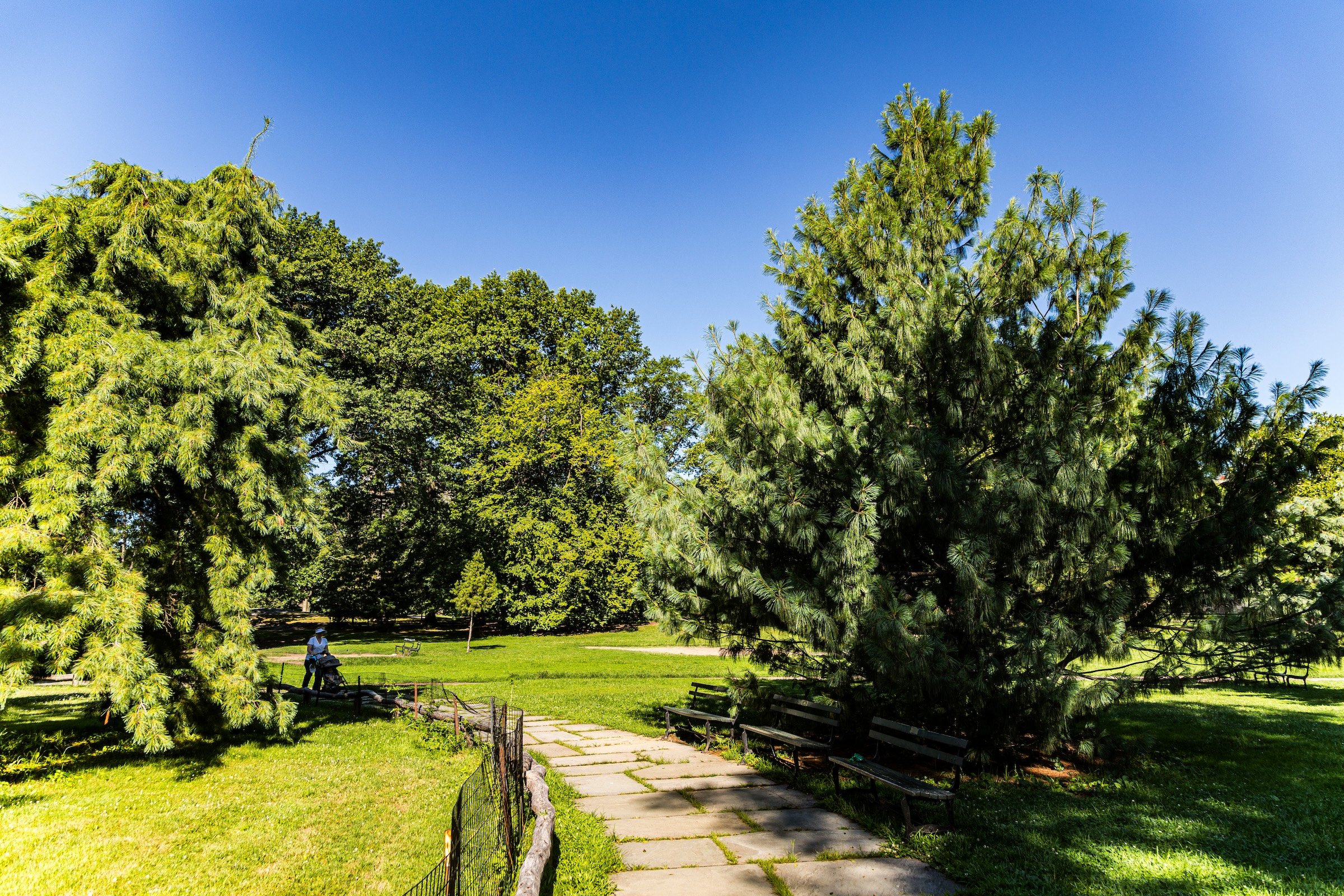
The physical contrast with the Great Lawn is immediate. Where the lawn emphasizes openness, long views and active recreation, the Pinetum creates a small evergreen enclosure. Pines rise closely together above paths, picnic tables and swings, producing a cooler and more sheltered environment in summer and an unusually green landscape in winter.
Etymology
Arthur Ross Pinetum is named for philanthropist and longtime Central Park supporter Arthur Ross, who began restoring pine trees to this part of the park in the 1970s. Ross established the Pinetum in 1971 and continued adding trees over subsequent years; the landscape now contains one of Central Park’s most concentrated collections of evergreens.
The word pinetum describes an arboretum devoted principally to pines and other conifers—an especially appropriate name for a landscape intended to remain green when much of Central Park’s deciduous canopy is bare.
History
1858–1873: Greensward Plan & Construction
Arthur Ross Pinetum is a modern landscape, but its underlying idea reaches directly back to Olmsted and Vaux.
Their original Central Park design included a “Winter Drive” extending along the western side of the park from roughly 72nd to 102nd Streets. Pines, spruces and firs were planted along the route so visitors traveling by carriage or sleigh could experience greenery and picturesque scenery even during winter. Winterdale Arch, farther south, still preserves that original landscape vocabulary in its name.
This landscape also sat near one of the places most profoundly overwritten by the creation of Central Park. Seneca Village, the nineteenth-century predominantly African American community displaced during park construction, extended eastward toward Seventh Avenue and bordered the area occupied today by the Pinetum.
1858–1899: Early History & Grand Openings
During Central Park’s early decades, this part of the western park was therefore experienced not as a formal Pinetum but as part of the larger Winter Drive landscape. Evergreens framed the carriage route and supplied color and enclosure through seasons when most of the surrounding trees were bare.
That original effect proved temporary. By the late nineteenth century, aging conifers were replaced largely with deciduous trees, and the distinctive evergreen character of the Winter Drive gradually disappeared.
20th Century: Transformation & Restoration
The landscape was reinvented beginning in 1971, when Arthur Ross began funding new pine plantings near the 86th Street Transverse. His motivation was partly aesthetic and practical: evergreen trees restored year-round greenery while also screening unattractive service and maintenance structures along the transverse road.
Ross subsequently expanded the collection, adding roughly 35 trees each year and introducing varieties from places including Macedonia, Japan and the Himalayas. Although Conservancy historians note that Ross may not initially have known about Olmsted and Vaux’s lost Winter Drive, his project effectively revived the designers’ original evergreen idea in almost the same landscape.
The area gained another unusual feature in 1997, when Pinetum Playground was created among the trees rather than enclosed within a conventional paved playground.
Explore
21st Century: Renovation & Modernization
Today, Arthur Ross Pinetum feels almost like a small biome embedded within the larger Mid-Park landscape.
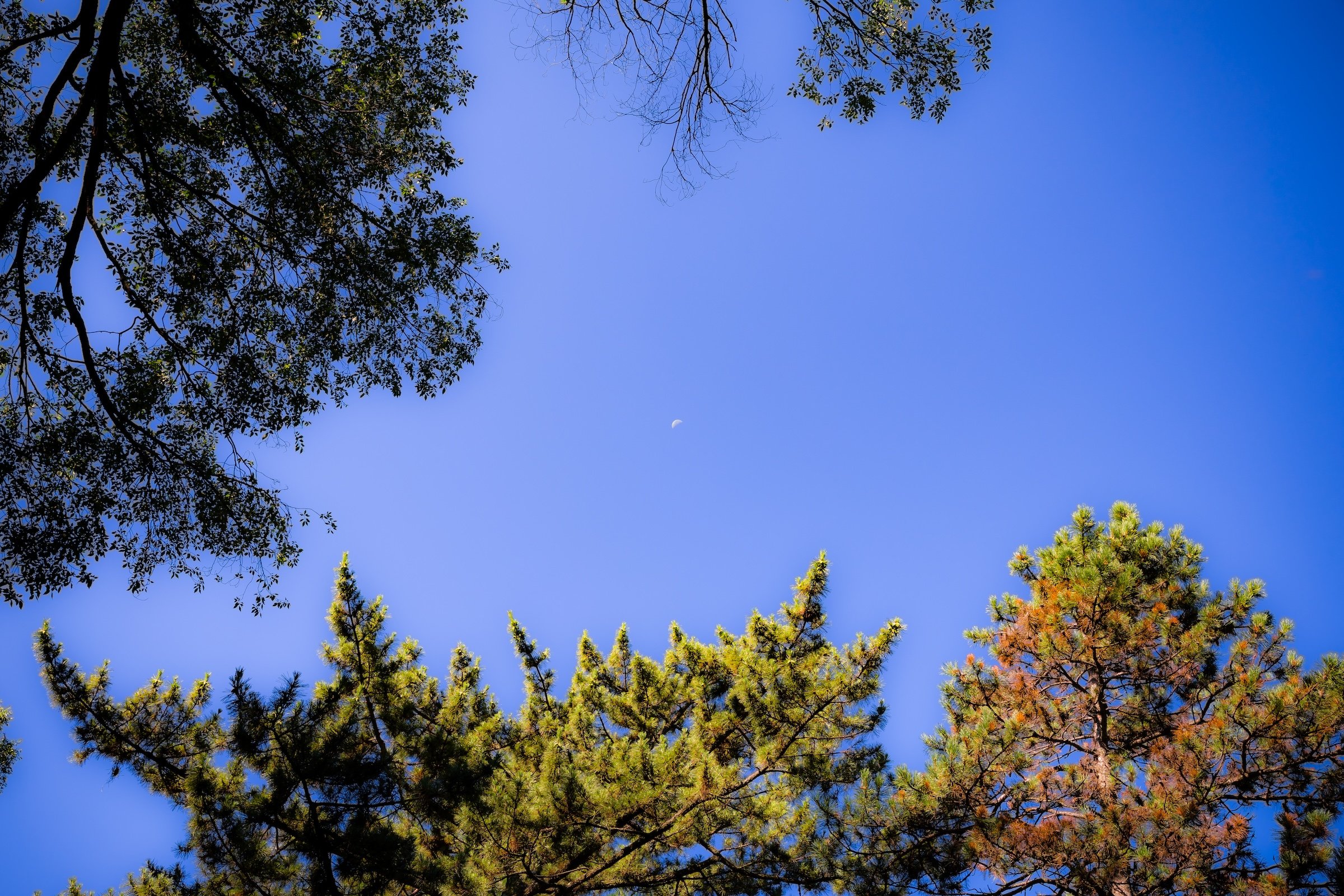
Seventeen species of pine create a dense evergreen canopy that contrasts sharply with the open grass and ballfields of the Great Lawn immediately beside it. Some of Ross’s original Himalayan pines now stand 50 to 60 feet tall, producing a convincing sense of woodland enclosure despite the Pinetum’s small footprint.
Its seasonal character is especially distinctive. In summer, the pines create shade and a cool refuge from the exposed Great Lawn; in winter, they retain their color when much of Central Park has become bare. Picnic tables and swings encourage visitors to linger beneath the trees, making the Pinetum feel quieter and more intimate than the recreational landscape surrounding it.
In that sense, Arthur Ross Pinetum is not simply an arboretum. It is a twentieth-century reconstruction of an idea that had largely disappeared from Central Park—the designers’ conviction that evergreens should give the park color, shelter and visual richness throughout the winter.
Waypoints
-
Created in 1997, this unusual unfenced playground places swings, exercise bars and picnic tables directly among the evergreen trees. Its deliberately informal design allows play to remain part of the Pinetum landscape rather than separating children into a conventional paved enclosure.
Photography
Visual Identity
Central Park has no single visual identity. It moves between open meadow and enclosed woodland, exposed bedrock and carefully planted garden, reflective water and hard-edged skyline. Its paths can narrow into shade beneath old trees, then open suddenly toward towers, lakes, monuments, or a broad field filled with people. The Park’s character is made from those transitions: the designed discovery of one landscape giving way to another.
Water and horizon recur throughout its geography. The Lake, Reservoir, ponds, fountains, and seasonal pools of light create places of reflection—sometimes literal, sometimes figurative—where the city appears fractured, softened, or enlarged. Beyond them, Manhattan’s towers remain present as a constant reminder that this cultivated landscape exists within, not apart from, one of the world’s densest cities.
Its visual language also changes dramatically with the seasons. Winter exposes branches, stone, and skyline; spring briefly turns the Park into blossom and color; summer fills its lawns and paths with activity; autumn intensifies the drama of canopy, water, and light. Central Park is designed to be revisited, and its identity is never fixed for long.