
THE GREAT LAWN
Location
Geographic Setting
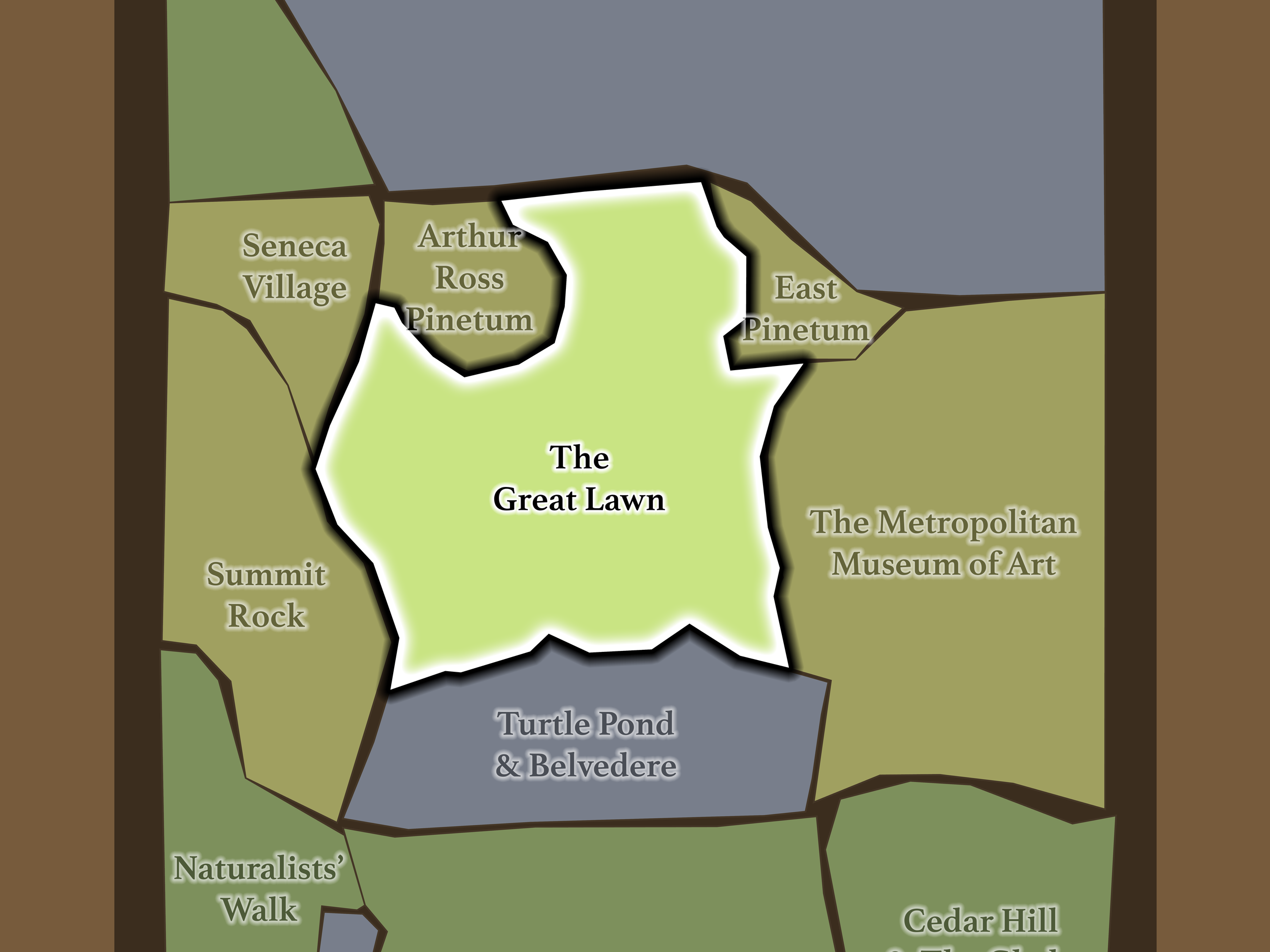
The Great Lawn sits at the very heart of Mid-Park—and effectively at the heart of Central Park itself. Summit Rock and Seneca Village lie across West Drive; Arthur Ross Pinetum encloses its northwestern corner; The Reservoir begins beyond the 86th Street Transverse; East Pinetum and the basketball and volleyball courts occupy the northeastern edge; the Metropolitan Museum of Art rises to the east; and Turtle Pond & Belvedere form the landscape immediately south of the oval.
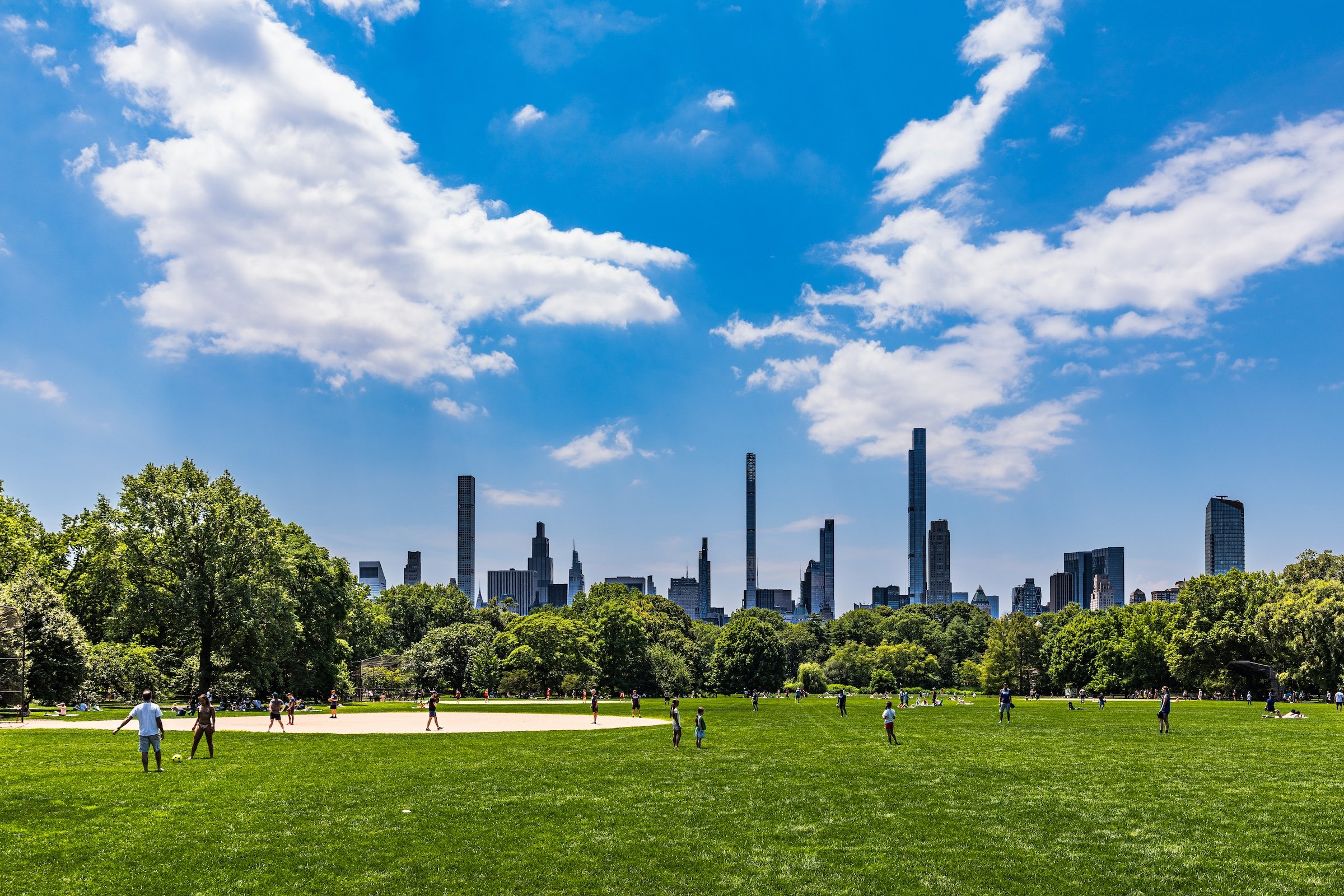
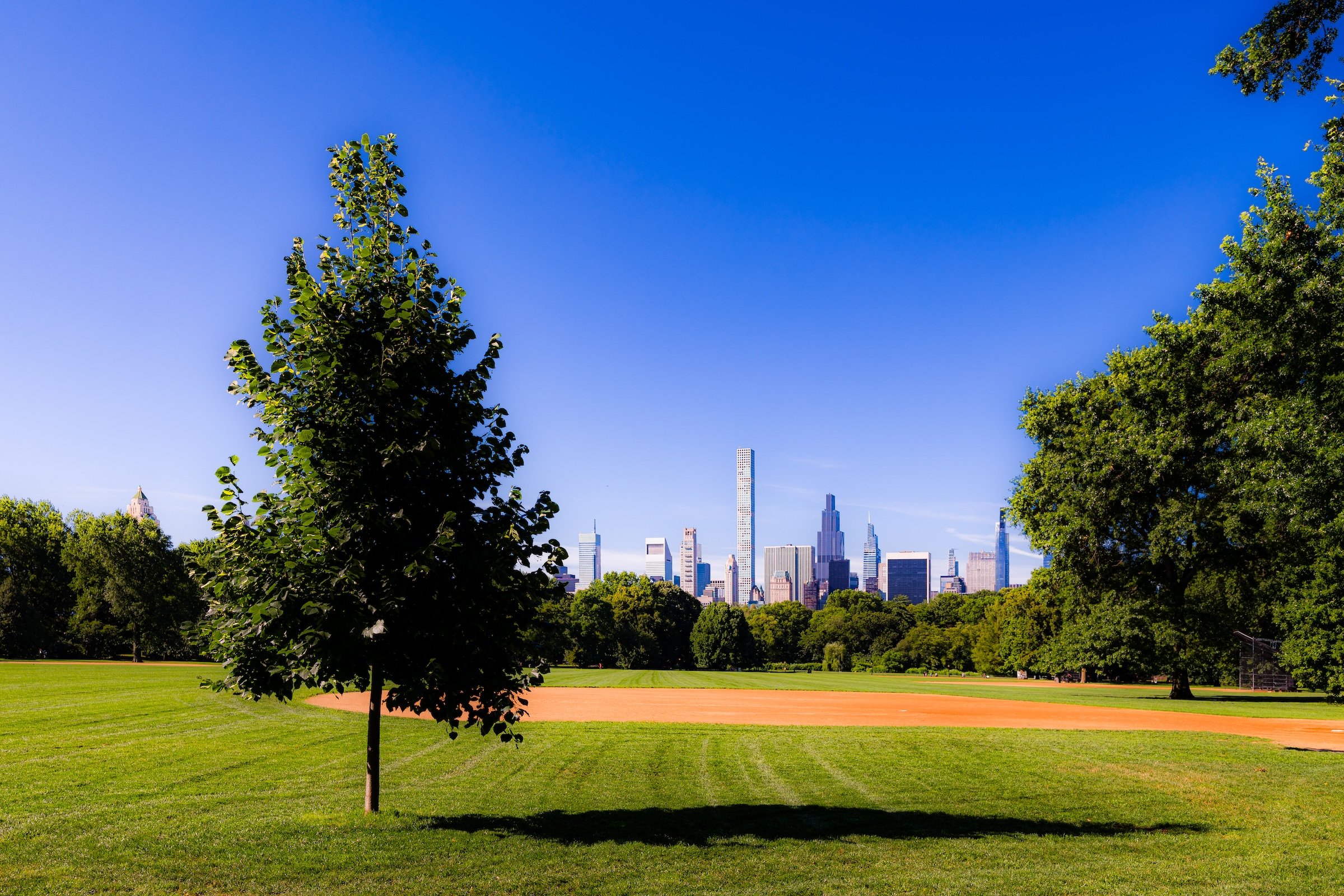
The dominant feature is the enormous, nearly level lawn itself. Eight ballfields are arranged around the oval, while the surrounding tree line, Pinetums and rocky margins create a broad green enclosure. From its center, the park opens farther than almost anywhere else in Mid-Park, allowing towers on both sides of Manhattan to rise above the trees.
Etymology
The Great Lawn takes its name from the enormous oval greensward occupying the geographic center of Central Park. When the landscape was created during the 1930s, it was conceived as the “Great Lawn for Play”—a name that captured its deliberate combination of active recreation and the quieter enjoyment traditionally associated with the park’s lawns.
Unlike Sheep Meadow or many of Central Park’s other great landscapes, however, the Great Lawn was not part of Olmsted and Vaux’s original park. Its very existence reflects one of the largest physical transformations in Central Park history.
History
1858–1873: Greensward Plan & Construction
Olmsted and Vaux could not design this landscape as open parkland because a massive piece of New York City infrastructure already occupied it.
Between 1838 and 1842, the Croton Aqueduct system constructed a rectangular Receiving Reservoir between roughly 79th and 86th Streets. The 35-acre stone structure held approximately 180 million gallons of water arriving from the Croton River before it continued downtown. It stood where the Great Lawn and Turtle Pond are today and was already a commanding presence beside nearby Seneca Village before Central Park was conceived.
Olmsted and Vaux therefore incorporated the reservoir into their design rather than removing it. Together with the newer Reservoir to its north, the enormous structure divided what the designers regarded as Central Park’s upper and lower landscapes.
1858–1899: Early History & Grand Openings
For Central Park’s first generations, visitors standing here would have encountered waterworks rather than lawn.
The Receiving Reservoir was a monumental rectangular basin bounded by massive masonry walls. A promenade ran along its edges—including a popular path on its southern side informally known as Lovers’ Lane—but the structure itself remained an active component of New York’s drinking-water system.
This made the heart of nineteenth-century Central Park markedly different from what visitors know today. Rather than one continuous central landscape, the reservoir created an enormous physical barrier between the picturesque scenery surrounding Belvedere to the south and the newer Reservoir farther north.
20th Century: Transformation & Restoration
The new landscape eventually became one of New York’s extraordinary stages for mass public life.
On September 19, 1981, an estimated 500,000 people filled the Great Lawn for the reunion of Queens natives Simon & Garfunkel—their first performance together in eleven years. Diana Ross drew another enormous crowd in 1983, only for a torrential storm to interrupt her first concert; she returned the following evening. And in 1986, approximately 800,000 people attended a New York Philharmonic concert celebrating the Statue of Liberty centennial.
That popularity came at a cost. Heavy recreation, poor drainage and massive events helped reduce the landscape to what became known as the “Great Dust Bowl.” The Central Park Conservancy undertook a major two-year reconstruction in the 1990s, rebuilding drainage and infrastructure, restoring the lawn and ballfields, enlarging Turtle Pond and creating new courts and pathways. The restored Great Lawn reopened in 1997. Sections of the old reservoir walls remain buried beneath it.
Explore
21st Century: Renovation & Modernization
Today, the Great Lawn performs several roles simultaneously—and unusually well.
It is a major sports landscape, with eight ballfields and adjoining basketball and volleyball courts. It is a cultural landscape, continuing to host large public performances including the New York Philharmonic’s Concerts in the Parks and the Global Citizen Festival. And when none of those activities dominates it, it becomes something much simpler: an immense place to lie in the grass, meet friends, watch the clouds or look outward toward Manhattan.
That versatility is what makes the Great Lawn unusual among Central Park neighborhoods. Many park landscapes encourage a particular experience—woodland exploration, promenading, boating, contemplation. The Great Lawn works equally well as destination, playing field, gathering ground and place of reverie.
Standing near its center makes that especially apparent. The flat terrain and broad oval push the tree line into the distance, and buildings beyond the park emerge over the canopy. It is one of the few places where Central Park feels enormous and Manhattan feels simultaneously close at hand.
There is also a compelling historical inversion beneath your feet: one of the park’s widest expanses of dry, open ground occupies the bottom of what was once a vast municipal reservoir.
Waypoints
-
Eight softball diamonds ring the Great Lawn oval, making this one of Central Park’s principal organized-sports landscapes. Permits are required for organized play, helping balance the fields’ intensive recreational use with preservation of the surrounding turf.
-
Located north of the main lawn near East Pinetum and the 86th Street Transverse, these courts extend the Great Lawn’s recreational landscape beyond its eight ballfields.
-
Rocky outcrops and surrounding vegetation along the western side of the Great Lawn create a small habitat especially valued by birders during migration. Its low rocks, shrubs and trees offer a striking contrast with the vast open lawn only steps away.
Photography
Visual Identity
Central Park has no single visual identity. It moves between open meadow and enclosed woodland, exposed bedrock and carefully planted garden, reflective water and hard-edged skyline. Its paths can narrow into shade beneath old trees, then open suddenly toward towers, lakes, monuments, or a broad field filled with people. The Park’s character is made from those transitions: the designed discovery of one landscape giving way to another.
Water and horizon recur throughout its geography. The Lake, Reservoir, ponds, fountains, and seasonal pools of light create places of reflection—sometimes literal, sometimes figurative—where the city appears fractured, softened, or enlarged. Beyond them, Manhattan’s towers remain present as a constant reminder that this cultivated landscape exists within, not apart from, one of the world’s densest cities.
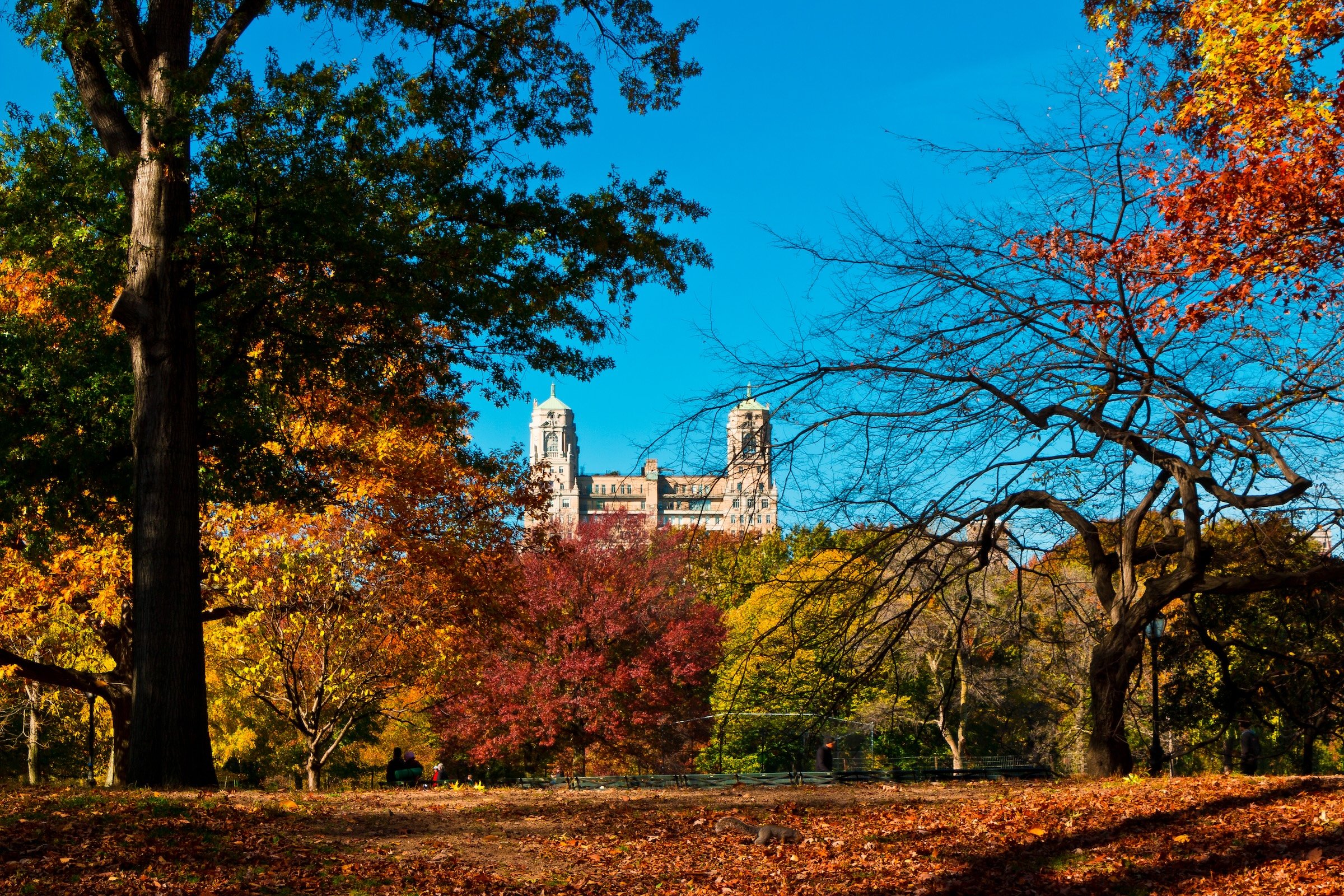
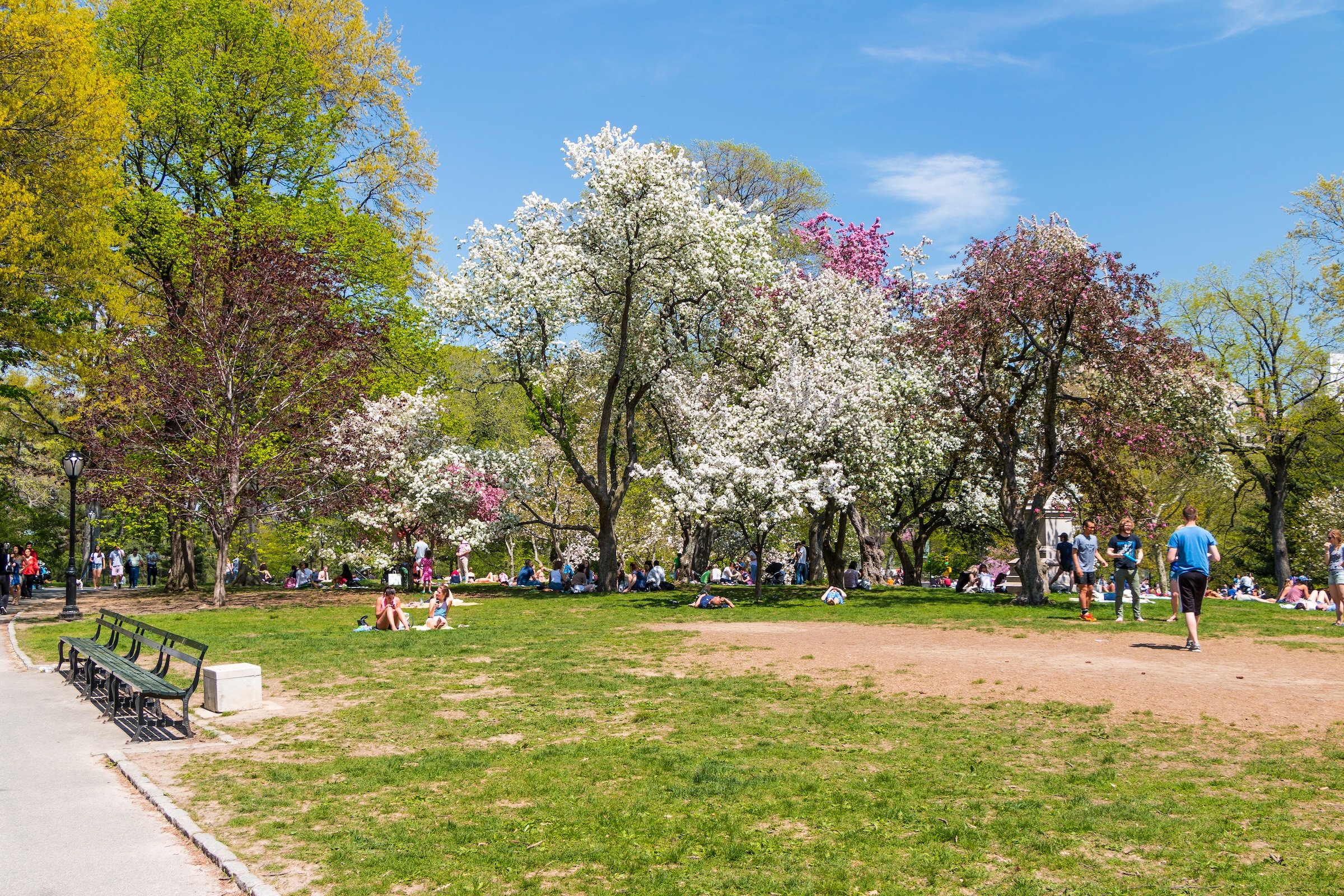
Its visual language also changes dramatically with the seasons. Winter exposes branches, stone, and skyline; spring briefly turns the Park into blossom and color; summer fills its lawns and paths with activity; autumn intensifies the drama of canopy, water, and light. Central Park is designed to be revisited, and its identity is never fixed for long.