
MID-PARK NORTH
(86th-97th Streets)
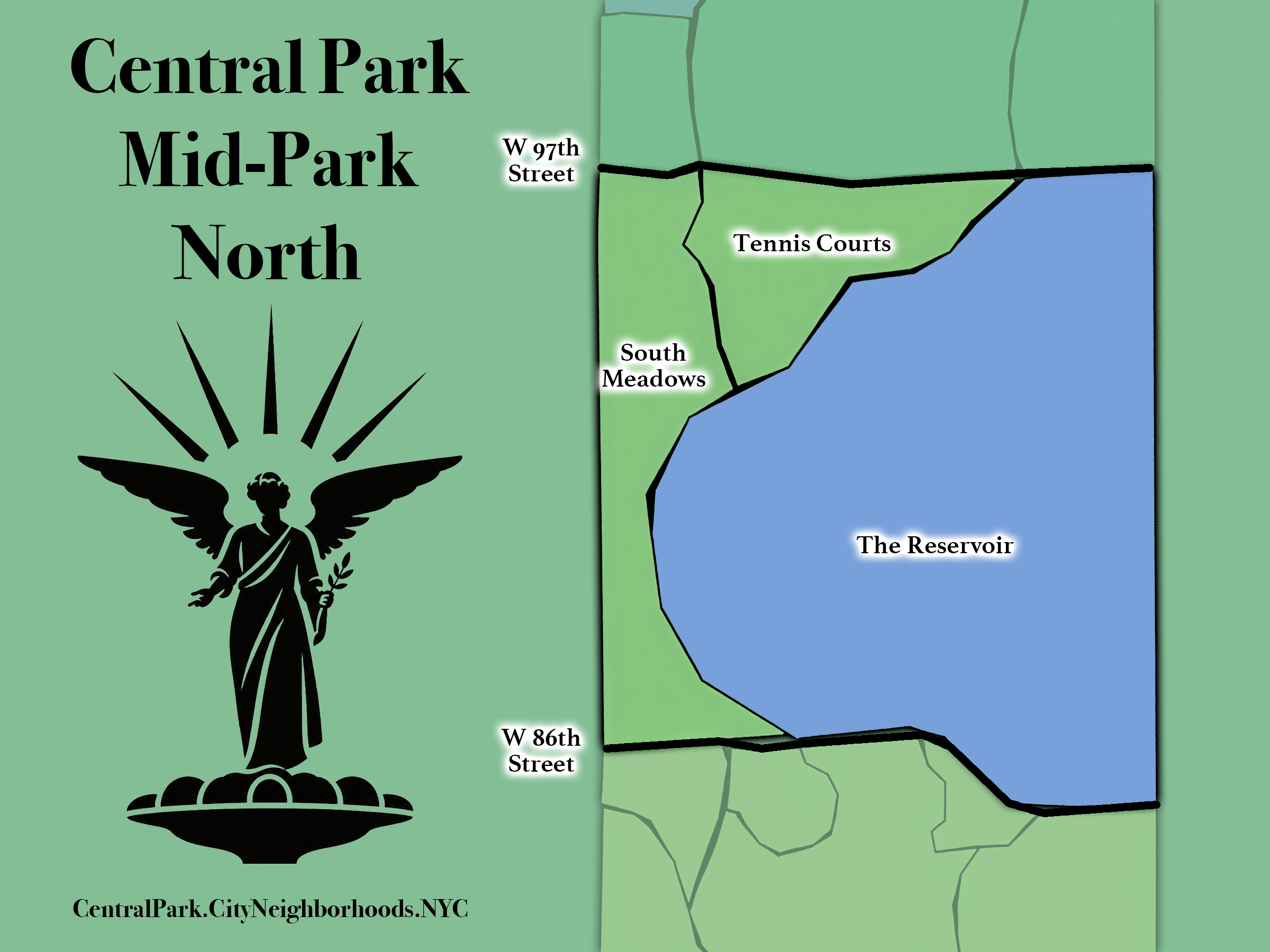
From 86th - 97th Streets; includes The Reservoir and The Tennis Courts.
The Map
Geographic Setting
Mid-Park North extends from 86th Street to 97th Street and is the most spatially unified of Central Park’s five regions. Its neighborhoods are The Reservoir, South Meadows, and Tennis Courts, with the vast surface of the Reservoir occupying much of the region’s geography.
That dominance gives Mid-Park North an unusually consistent character. Open water, perimeter paths, meadows, and recreational spaces replace the more intricate sequence of landscapes found farther south. Long sightlines become a defining feature, allowing the Park and the surrounding Manhattan skyline to be experienced at a scale rarely possible elsewhere within Central Park.
The Reflections
Etymology and Function
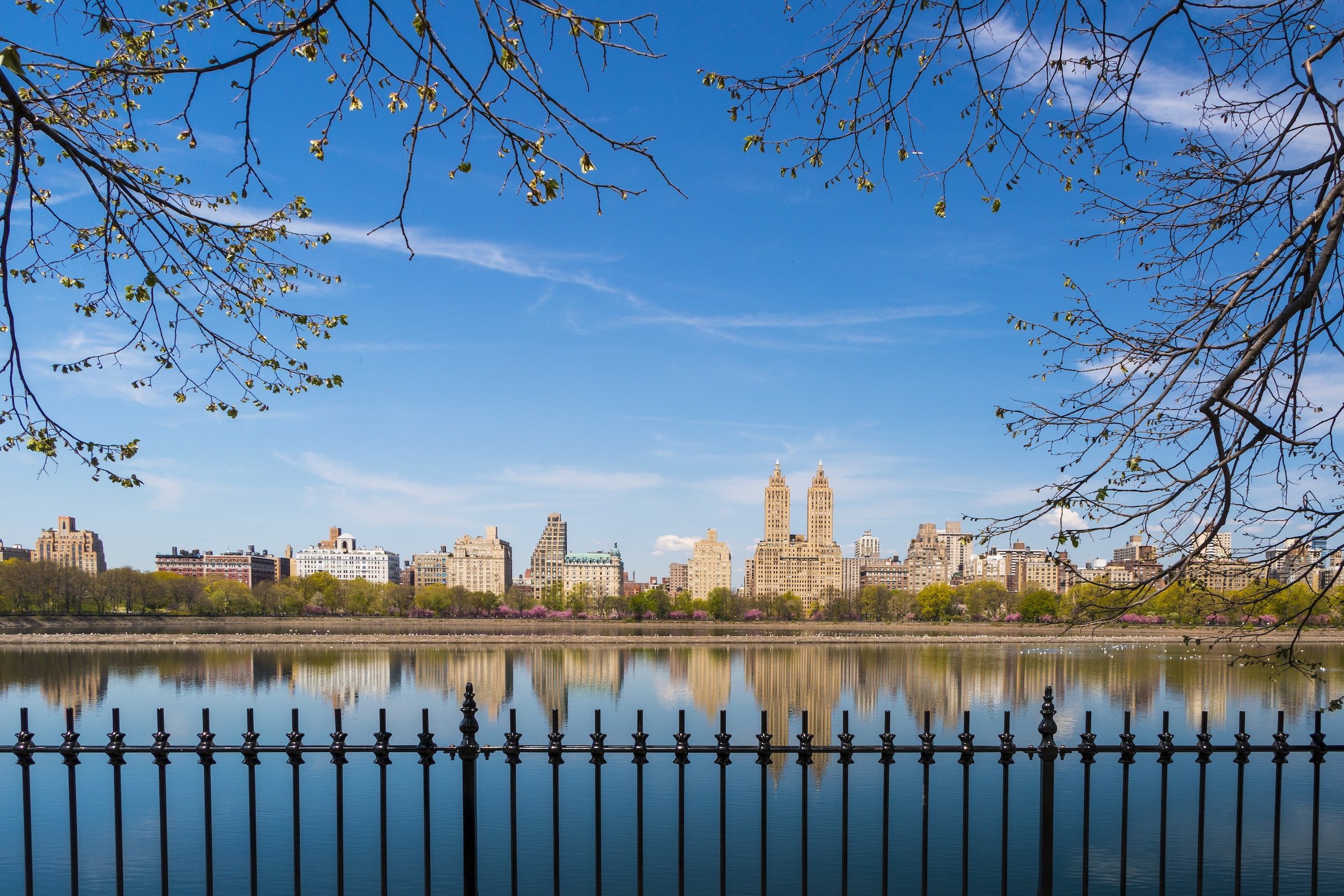
The Reflections takes its name from the great expanse of water at the center of the region. The Reservoir creates one of Central Park’s broadest visual fields, its surface reflecting sky, trees, and the skyline of Manhattan while allowing uninterrupted views in nearly every direction from its perimeter.
The name also reflects the region’s quieter function within the Park. Away from the activity of the Reservoir’s running path, the surrounding bridle paths and meadows create a comparatively calm landscape. Here, Central Park seems to slow down. The Reflections is monumental without being crowded with monuments—a region whose identity comes from openness, repetition, distance, and the quiet presence of water.
Connections & Transitions
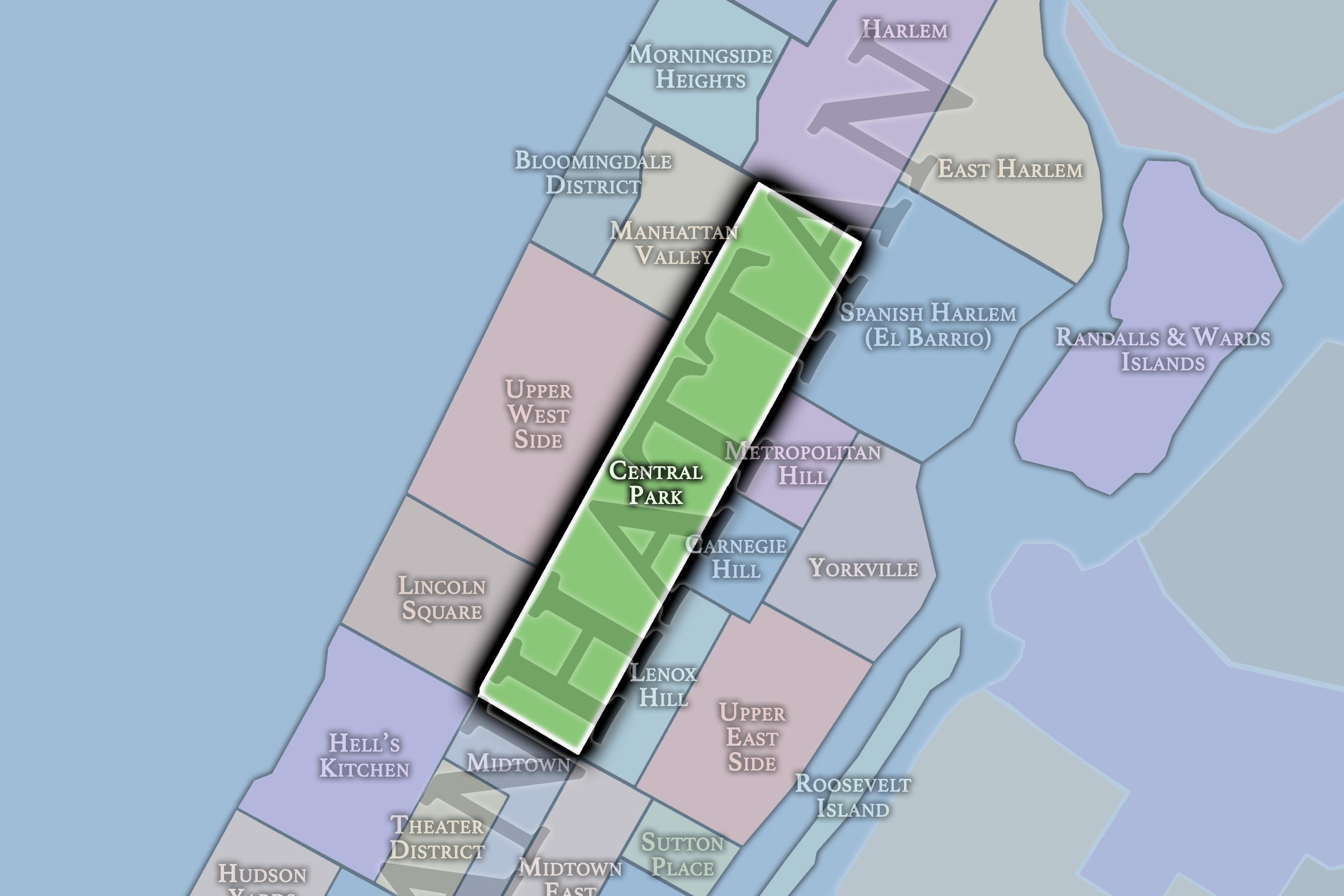
To the west, Mid-Park North meets the Upper West Side, where prominent residential landmarks such as the El Dorado and St. Urban rise beyond Central Park West. To the east lies Carnegie Hill and the northern reaches of Museum Mile, including the Guggenheim Museum and Cooper Hewitt, Smithsonian Design Museum. The openness of the Reservoir allows these surrounding pieces of Manhattan to remain unusually present within the experience of the Park itself.
From south to north, The Reflections changes less dramatically than any other Central Park region. That consistency is itself one of its defining characteristics. Because the Reservoir occupies such a large portion of the landscape, water, perimeter paths, and long views remain persistent throughout the region. Rather than progressing through a succession of sharply different environments, Mid-Park North sustains a singular spatial experience before giving way at 97th Street to the more varied terrain of the North End.
The Neighborhoods
The Neighborhoods:
-
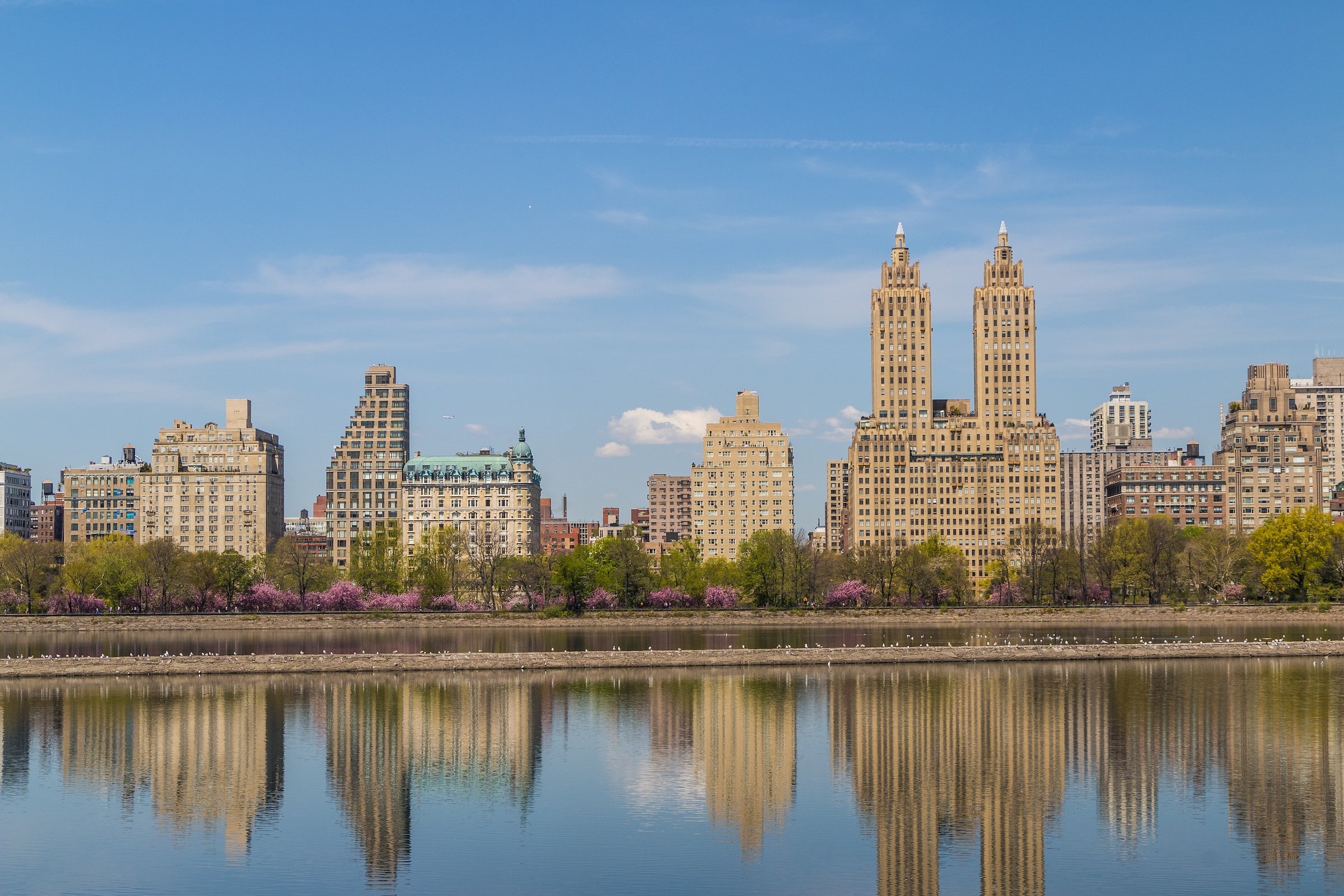
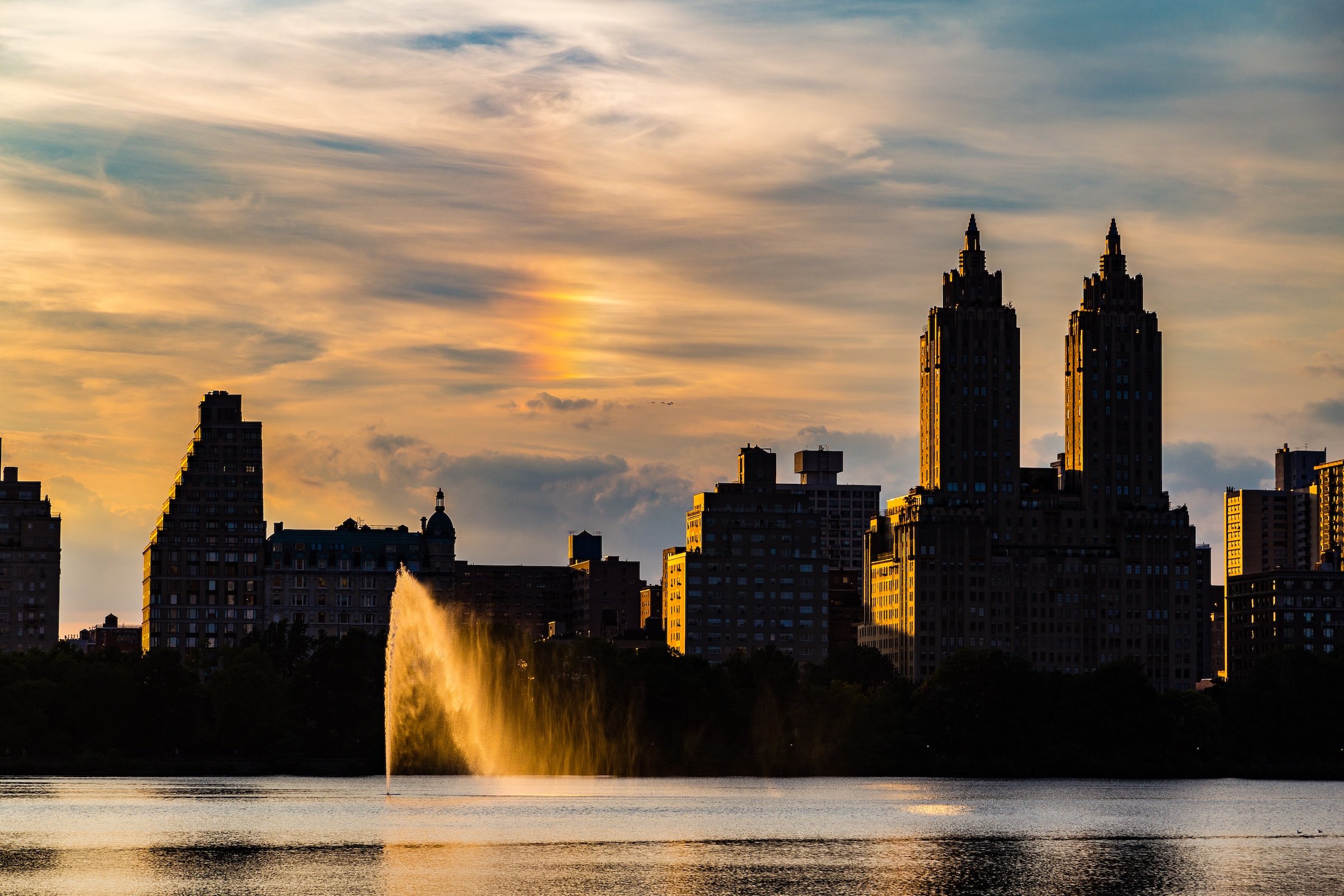
The Reservoir
-
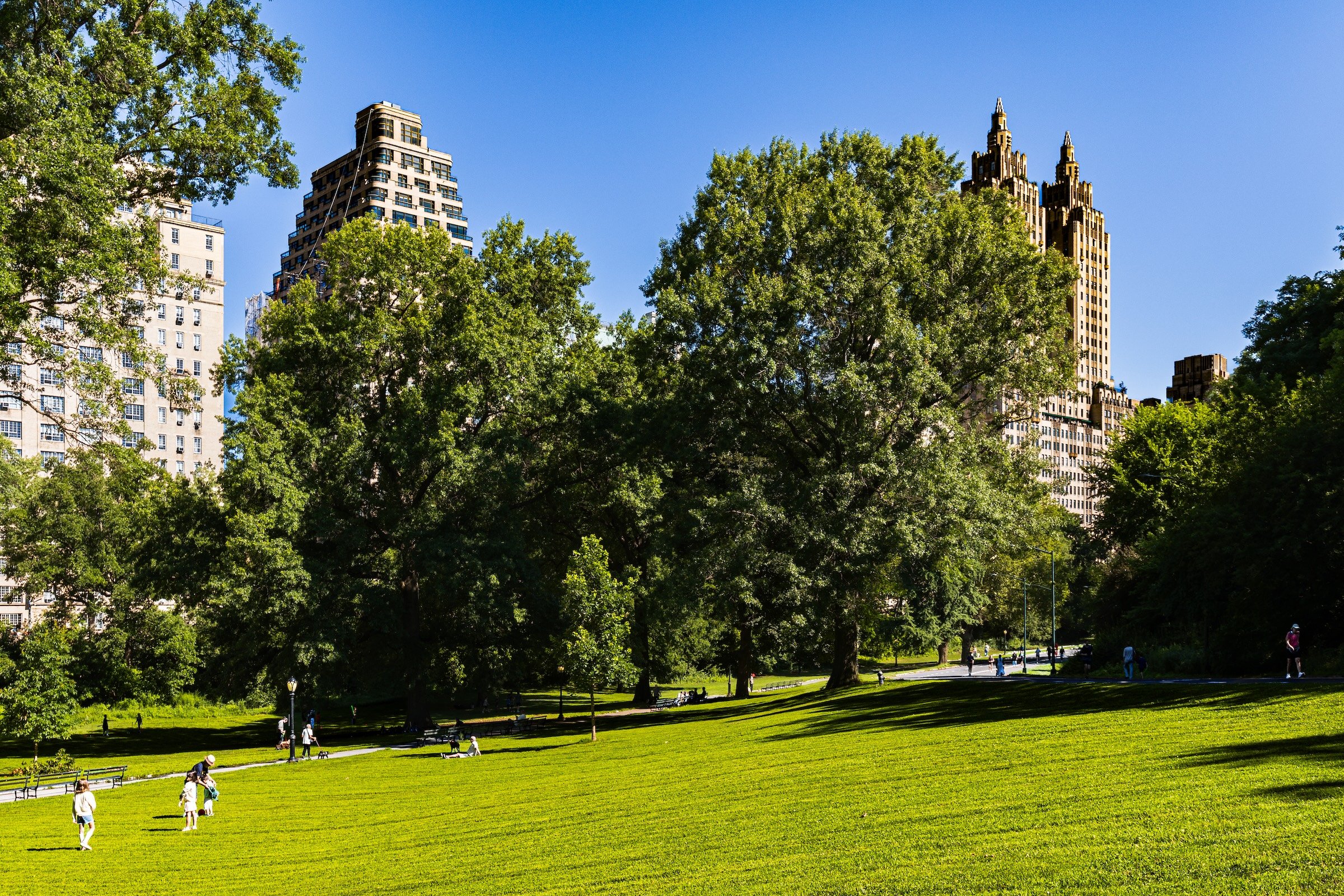
South Meadows
-
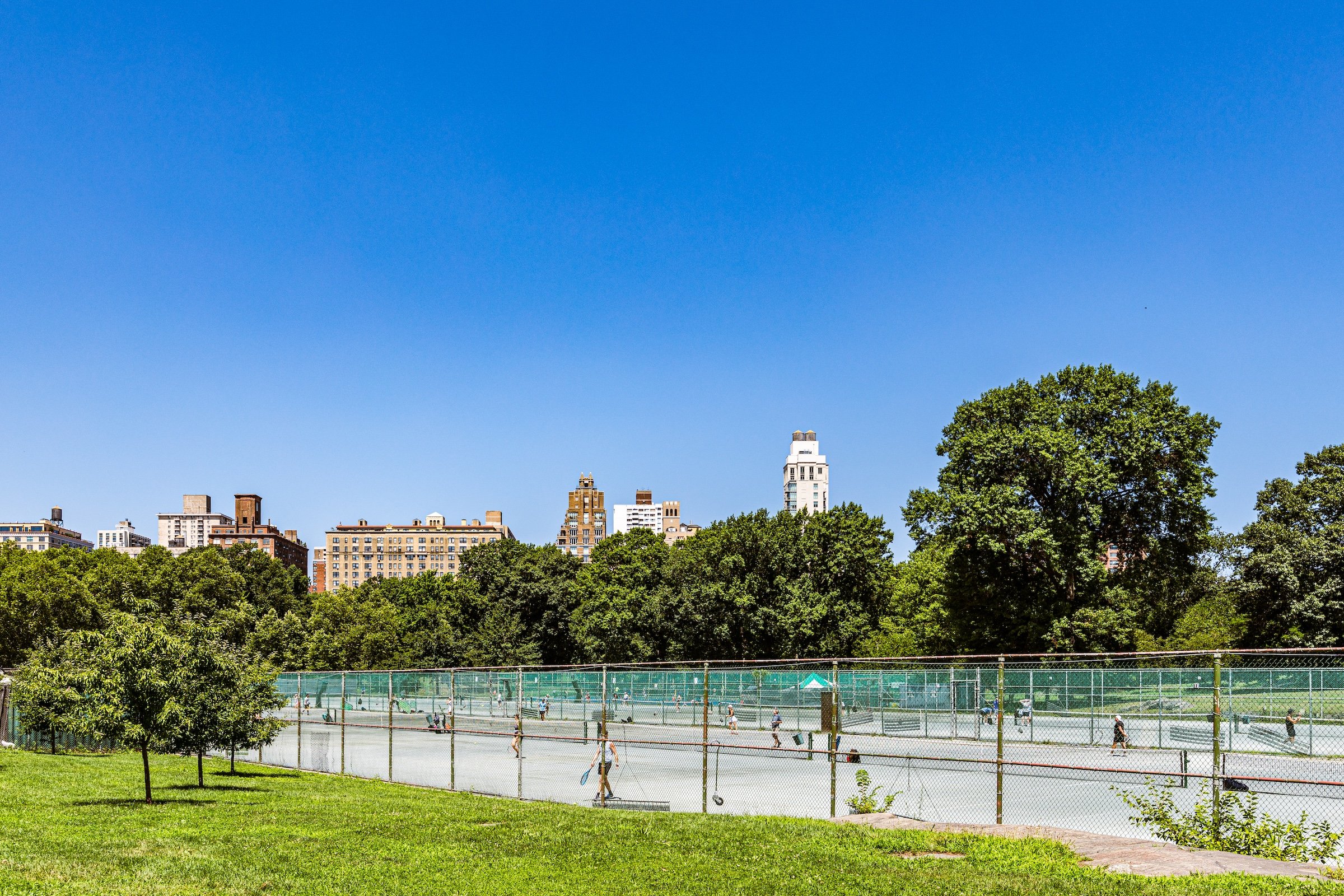
Tennis Courts
The Iconography
Geographic Icons
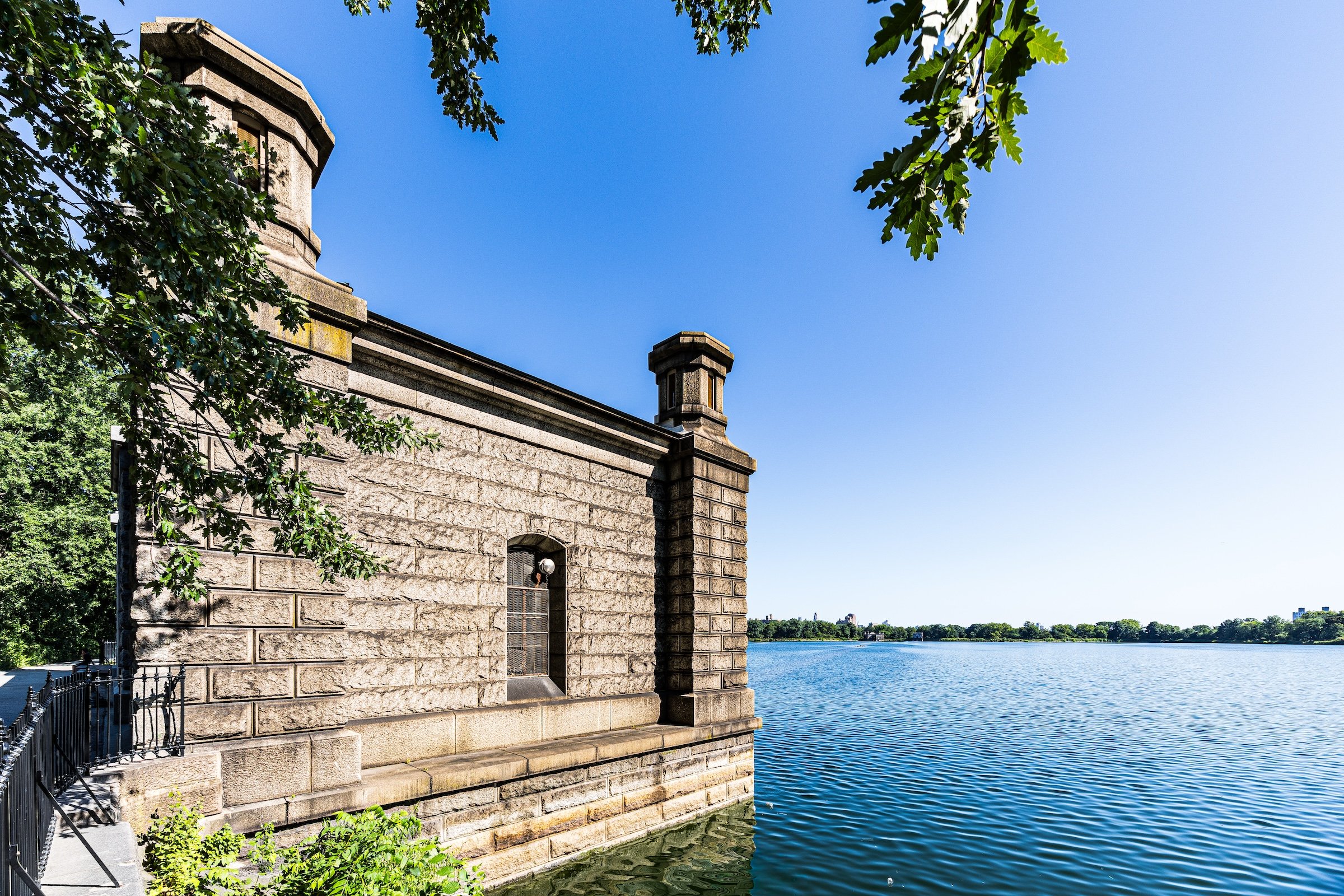
The Reservoir is the defining geographic landmark of Mid-Park North and the feature around which the entire region is organized. Its scale separates this section of Central Park from every other region, creating broad expanses of water, sky, and skyline that can be experienced from almost any point along its perimeter.
More than simply a body of water, the Reservoir determines the visual rhythm of The Reflections. Its uninterrupted surface and long sightlines create the monumental sense of openness that gives the region its distinctive character.
Civic Icons
The region’s civic landscape is quieter and more recreational than institutional. The Tennis Courts provide its principal concentrated recreational destination, while the Bridle Paths form part of the circulation system that shapes movement around the Reservoir and through the surrounding landscape.
Together, they reinforce the distinctive function of Mid-Park North: less a collection of civic monuments than a place structured around movement, recreation, and the experience of open space.
The Photography
Visual Identity
Central Park has no single visual identity. It moves between open meadow and enclosed woodland, exposed bedrock and carefully planted garden, reflective water and hard-edged skyline. Its paths can narrow into shade beneath old trees, then open suddenly toward towers, lakes, monuments, or a broad field filled with people. The Park’s character is made from those transitions: the designed discovery of one landscape giving way to another.
Water and horizon recur throughout its geography. The Lake, Reservoir, ponds, fountains, and seasonal pools of light create places of reflection—sometimes literal, sometimes figurative—where the city appears fractured, softened, or enlarged. Beyond them, Manhattan’s towers remain present as a constant reminder that this cultivated landscape exists within, not apart from, one of the world’s densest cities.
Its visual language also changes dramatically with the seasons. Winter exposes branches, stone, and skyline; spring briefly turns the Park into blossom and color; summer fills its lawns and paths with activity; autumn intensifies the drama of canopy, water, and light. Central Park is designed to be revisited, and its identity is never fixed for long.
Through The Lens
Photographing Central Park means photographing a dialogue between nature and construction. The camera finds the Park’s deliberate artifice in bridges, arches, terraces, fountains, paths, and carefully framed views—but it also finds moments when that design seems to disappear beneath weather, foliage, water, or human activity. A stone arch becomes a threshold. A bare tree becomes a skyline frame. A meadow becomes a public stage.
The photographs move between intimate and panoramic scales. There are close encounters with sculpture, lampposts, roots, branches, rock, and water; there are also long views across open lawns, reservoirs, and lakes toward the changing skyline. Together, they reveal Central Park as a place of layered vantage points: a landscape built not simply to be looked at, but to direct how one looks.
People remain part of that visual story. Runners, walkers, picnickers, visitors, performers, couples, children, and solitary figures animate the Park without ever fully overwhelming it. Their presence makes clear that Central Park is not an urban backdrop or preserved monument. It is a lived landscape—continually reinterpreted by the people who enter it.
Explore Central Park
-
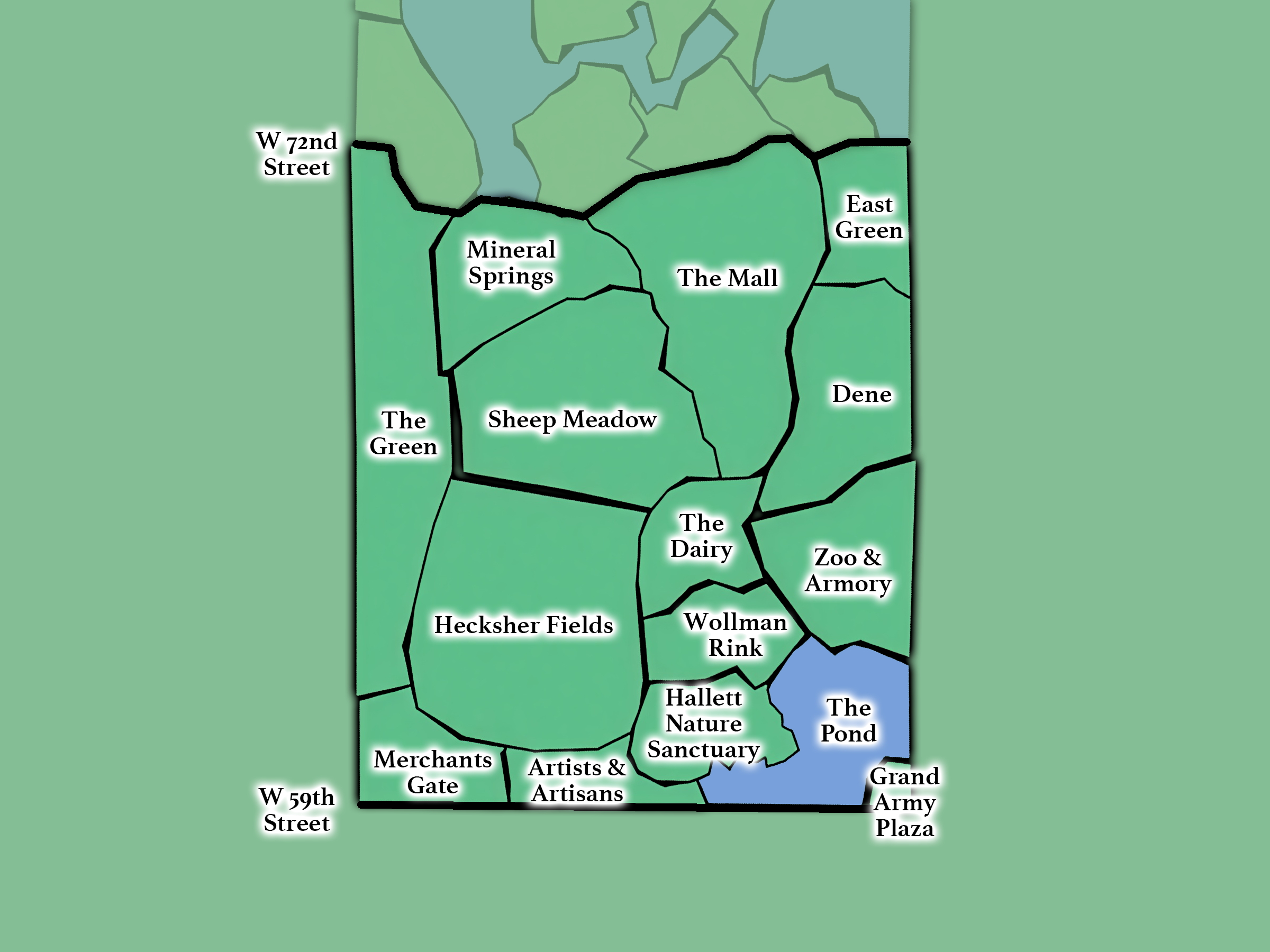
The Southern Gateway
From 59th - 72nd Streets; includes The Central Park Zoo, The Pond, Sheep Meadow, The Mall, and Tavern on the Green.
-
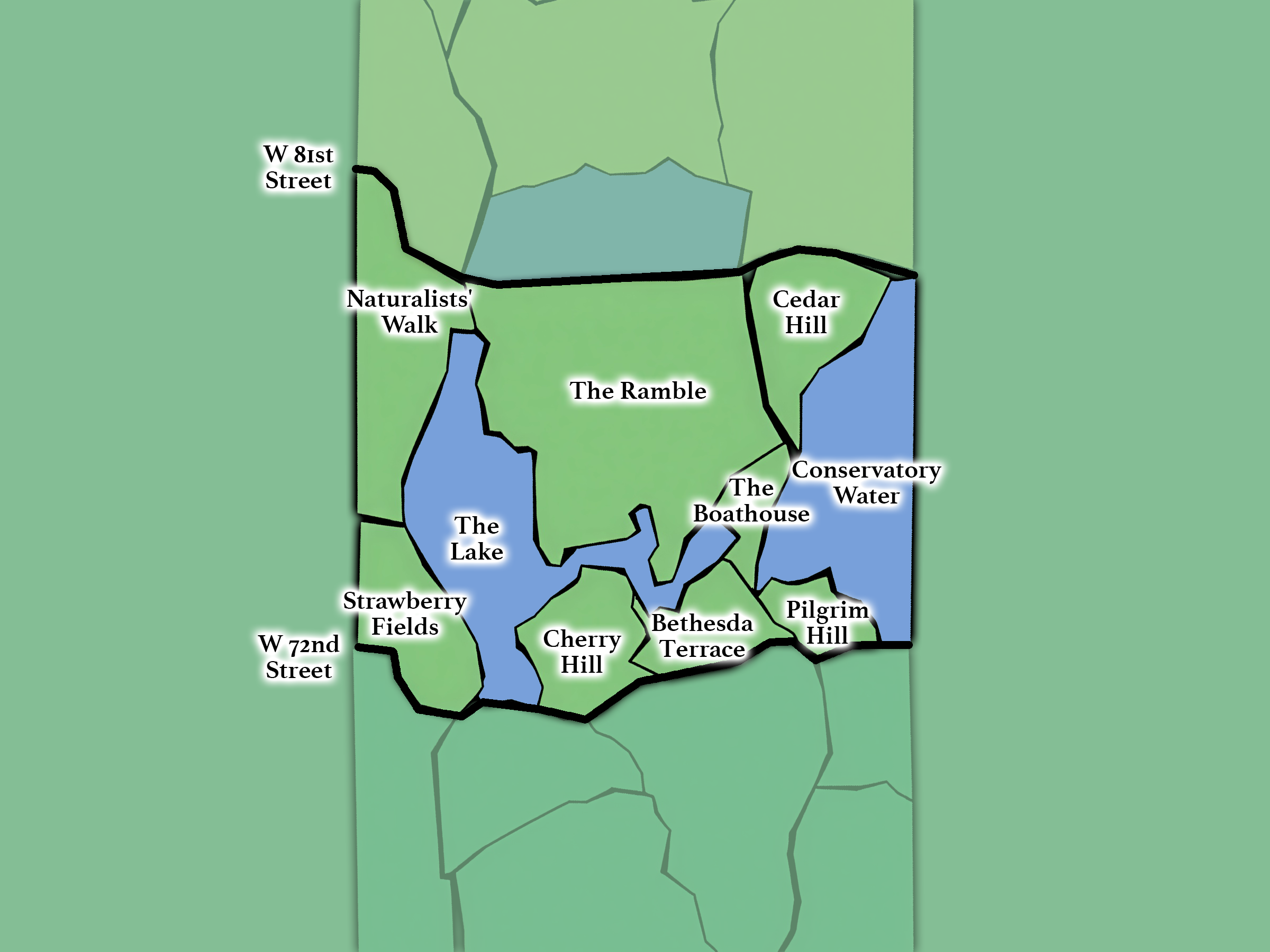
The Landmarks
From 72nd - 79th Streets; includes: The Lake, Cherry Hill, Bethesda Terrace, Conservatory Water, Strawberry Fields, and The Ramble.
-
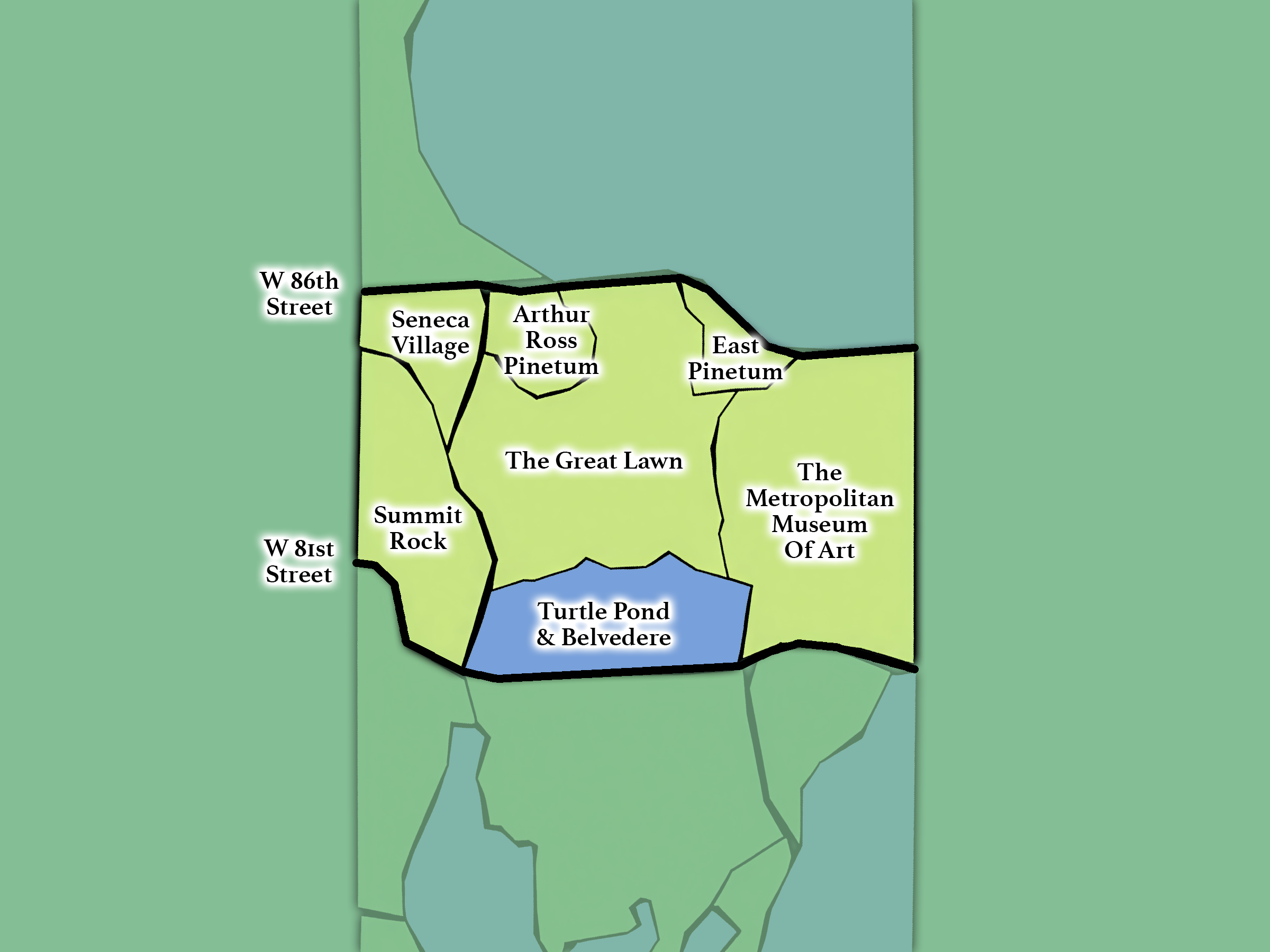
The Heart
From 79th - 86th Streets; includes Belvedere Castle, Turtle Pond, The Great Lawn, Seneca Village, and The Metropolitan Museum of Art.
-
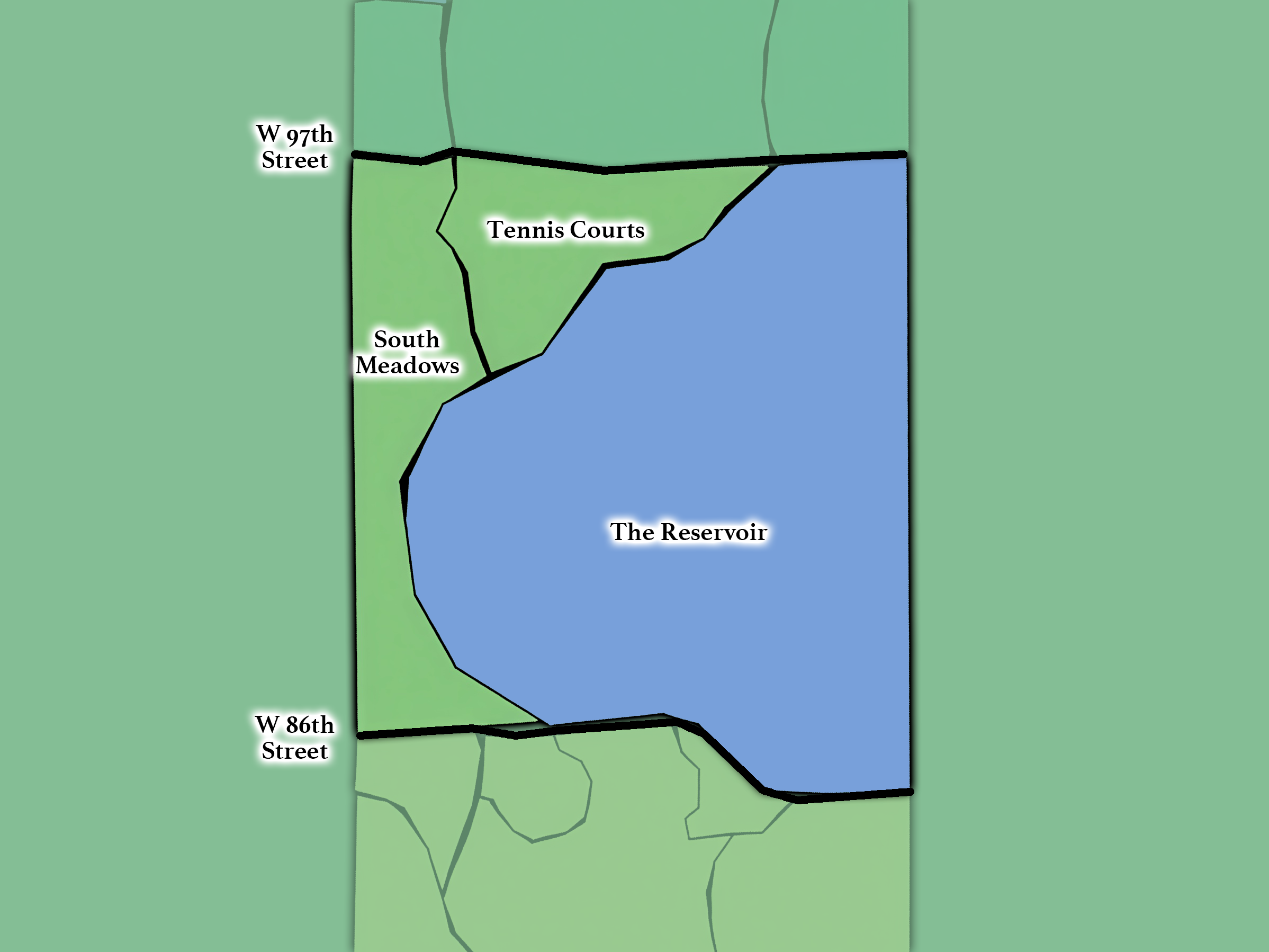
The Reflections
From 86th - 97th Streets; includes the Jacqueline Kennedy Onassis Reservoir and the South Meadows.
-
The Northern Capstone
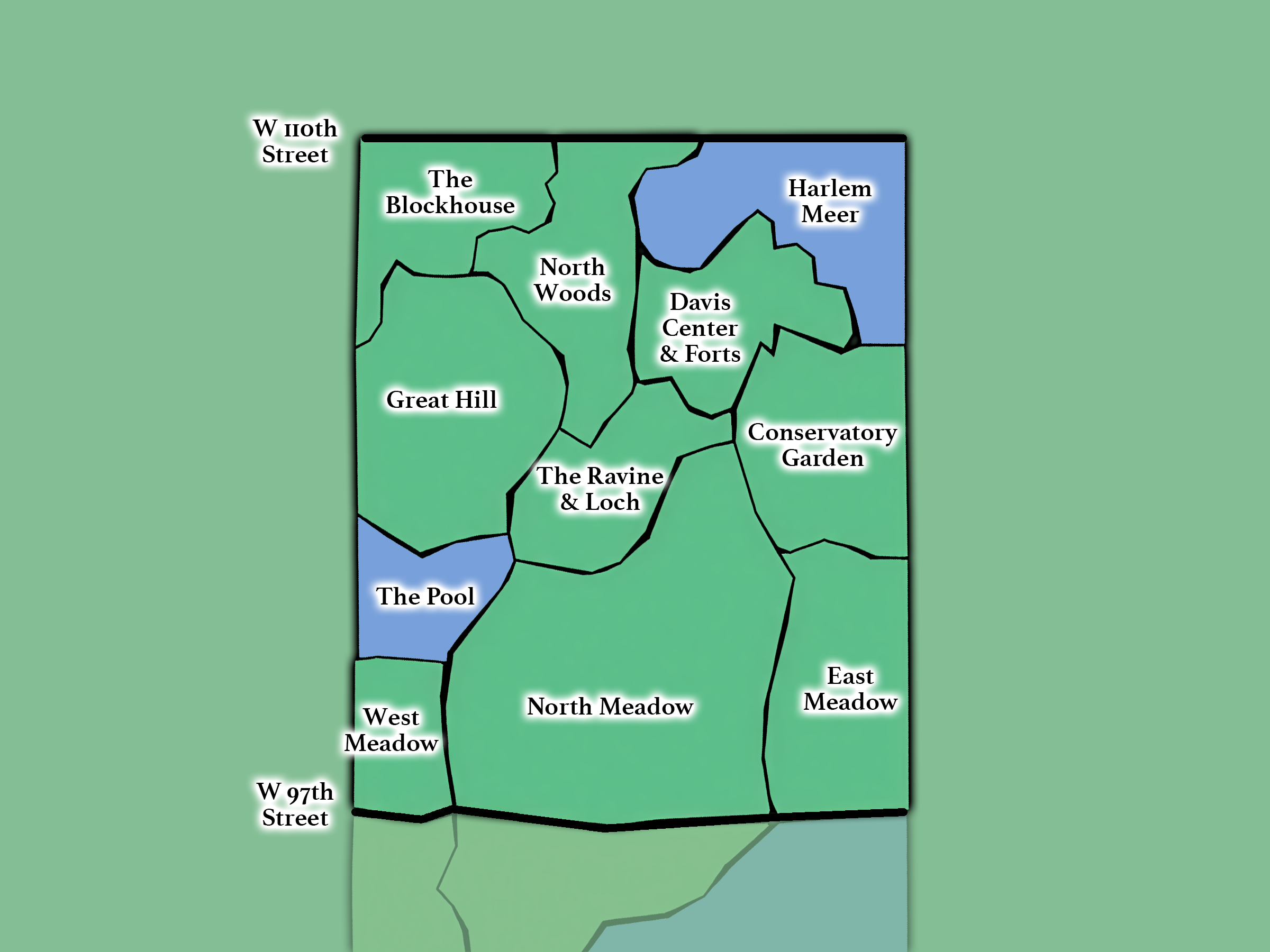
From 97th - 110th Streets; includes: the Meadows, The Pool & Loch, Harlem Meer, The Great Hill, North Woods, and Conservatory Garden.