
MINERAL SPRINGS
Location
Setting
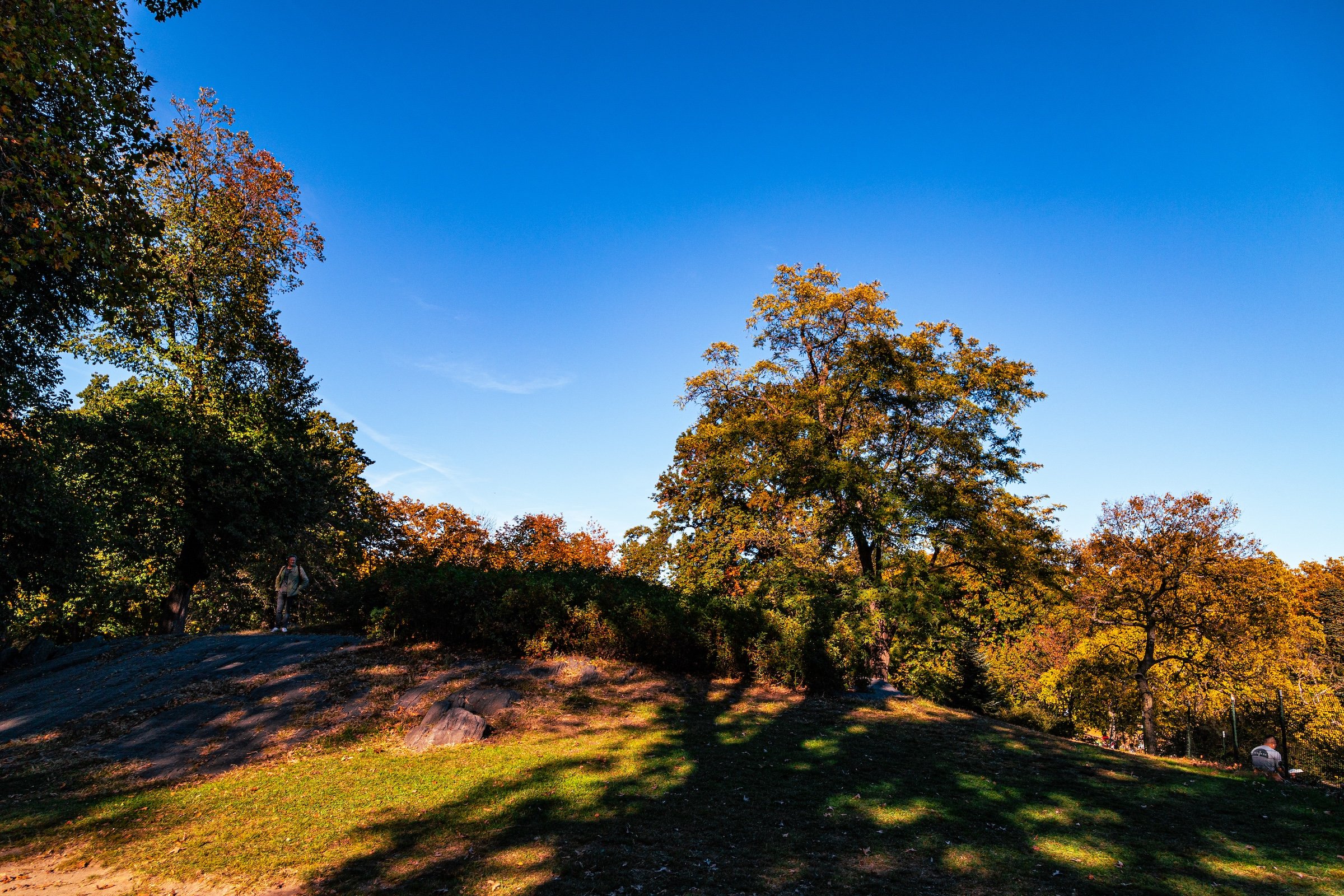
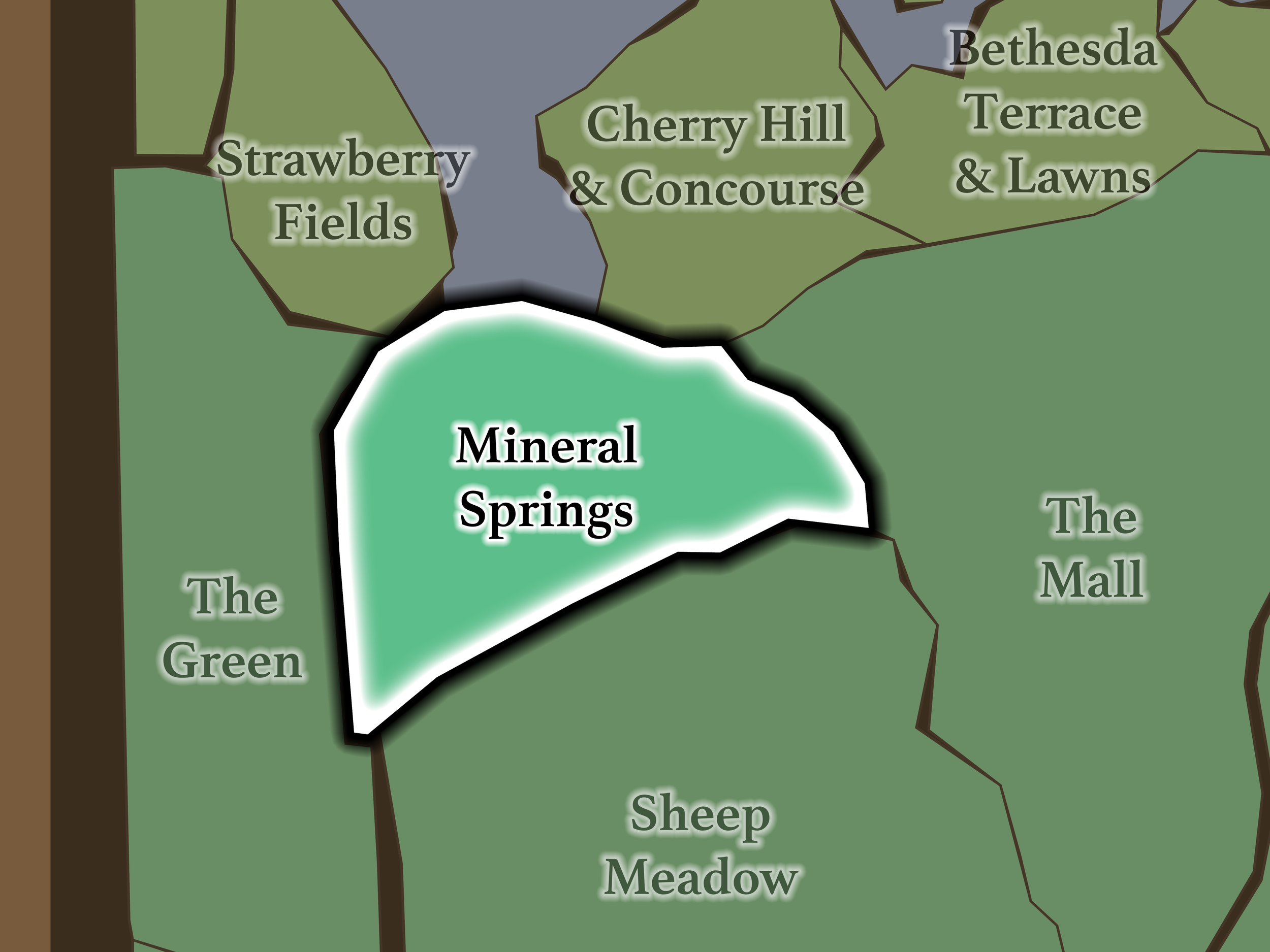
Mineral Springs occupies a hilly, rocky landscape along the western side of the South End. The Green lies across West Drive to the west; Sheep Meadow stretches immediately to the south; The Mall sits to the east; and Strawberry Fields, Cherry Hill and Bethesda Terrace begin beyond Terrace Drive to the north.
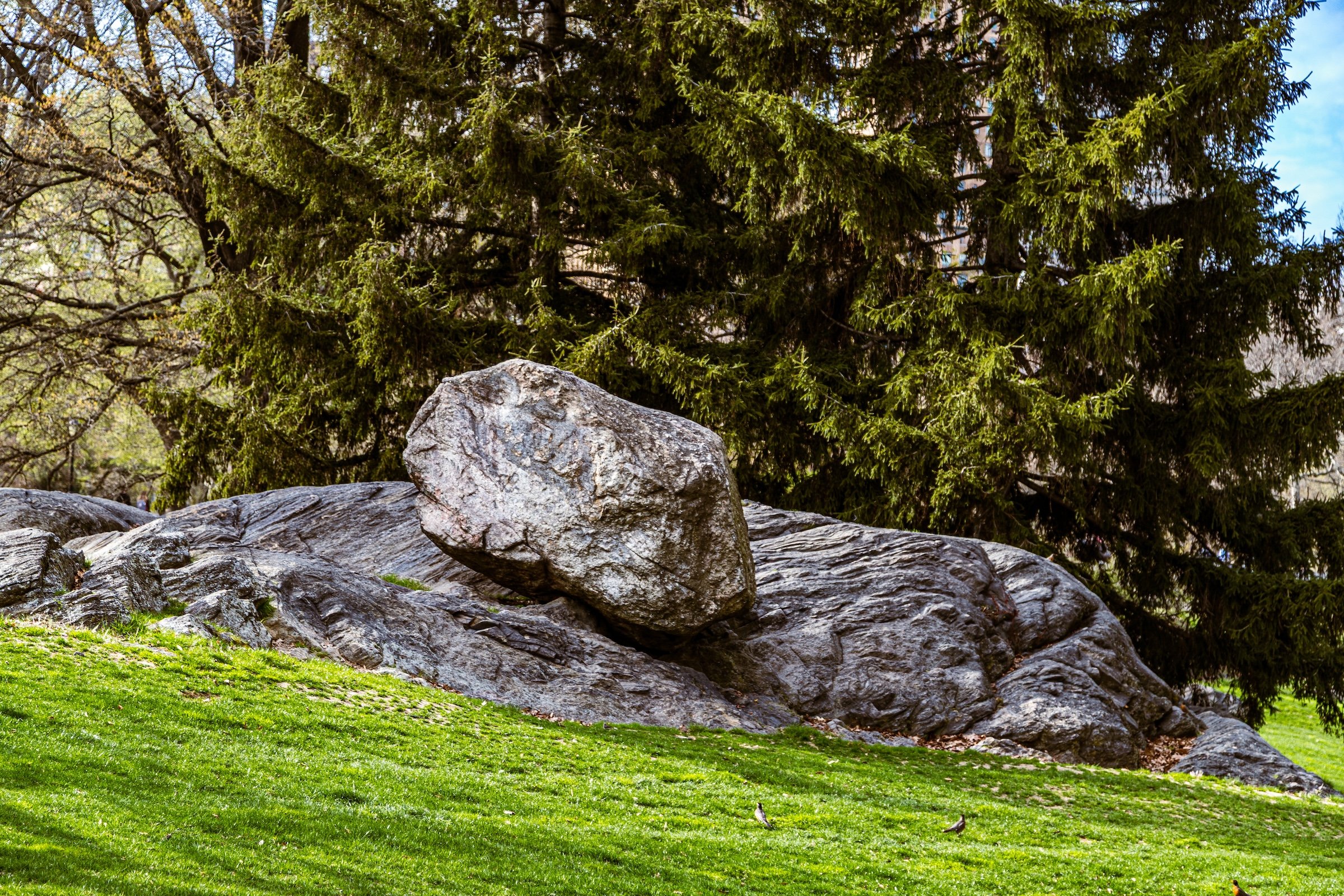
The neighborhood is defined by a mix of elevation, exposed rock, sloping lawns and recreation. Its western edge rises toward The Falconer, while the center is occupied by the historic Mineral Springs site and the lawn-sports greens just north of Sheep Meadow.
Etymology
Mineral Springs takes its name from the nineteenth-century pavilion that once stood here and dispensed mineral waters to Central Park visitors. The original structure, designed by Calvert Vaux, featured an ornate marble counter with silver faucets serving different varieties of mineral water at a time when such waters were widely believed to have therapeutic value.
History
The Greensward Plan
Olmsted and Vaux’s original design treated this portion of the park as part of the varied western landscape between the great open meadow to the south and the Lake/Terrace complex to the north. Rather than flattening its uneven ground, the design retained rock outcrops and changes in grade, allowing paths, drives and later structures to work with the terrain.
The Mineral Springs pavilion itself was not part of the earliest Greensward submission, but it grew naturally out of the park’s broader nineteenth-century emphasis on health, fresh air and water. Vaux’s Moorish-style pavilion turned those ideals into an attraction where visitors could take mineral waters in an ornamental setting.
The Grand Opening
The Mineral Springs pavilion opened in the late 1860s and quickly became a fashionable destination. Contemporary reports described large crowds arriving in the mornings to drink the waters, and concerts were staged there during the summer season.
The pavilion’s exotic architecture distinguished it from the more rustic structures elsewhere in the park, while the surrounding hills and rocks retained the pastoral character of the original landscape. The Falconer, installed nearby in 1875, added another layer to the area’s picturesque identity.
20th Century
Mineral Springs gradually shifted from a health-oriented destination toward recreation. The popularity of lawn bowling and croquet led to the creation of two dedicated greens here, the first in 1926 and a second in 1930. The New York Lawn Bowling Club was founded at the same time, establishing a recreational tradition that continues today.
The original Vaux pavilion deteriorated and was ultimately lost during the mid-twentieth century, one of several original park structures removed during that period. A simpler replacement building was constructed on the site and now serves as a café.
Explore
Contemporary Landscape
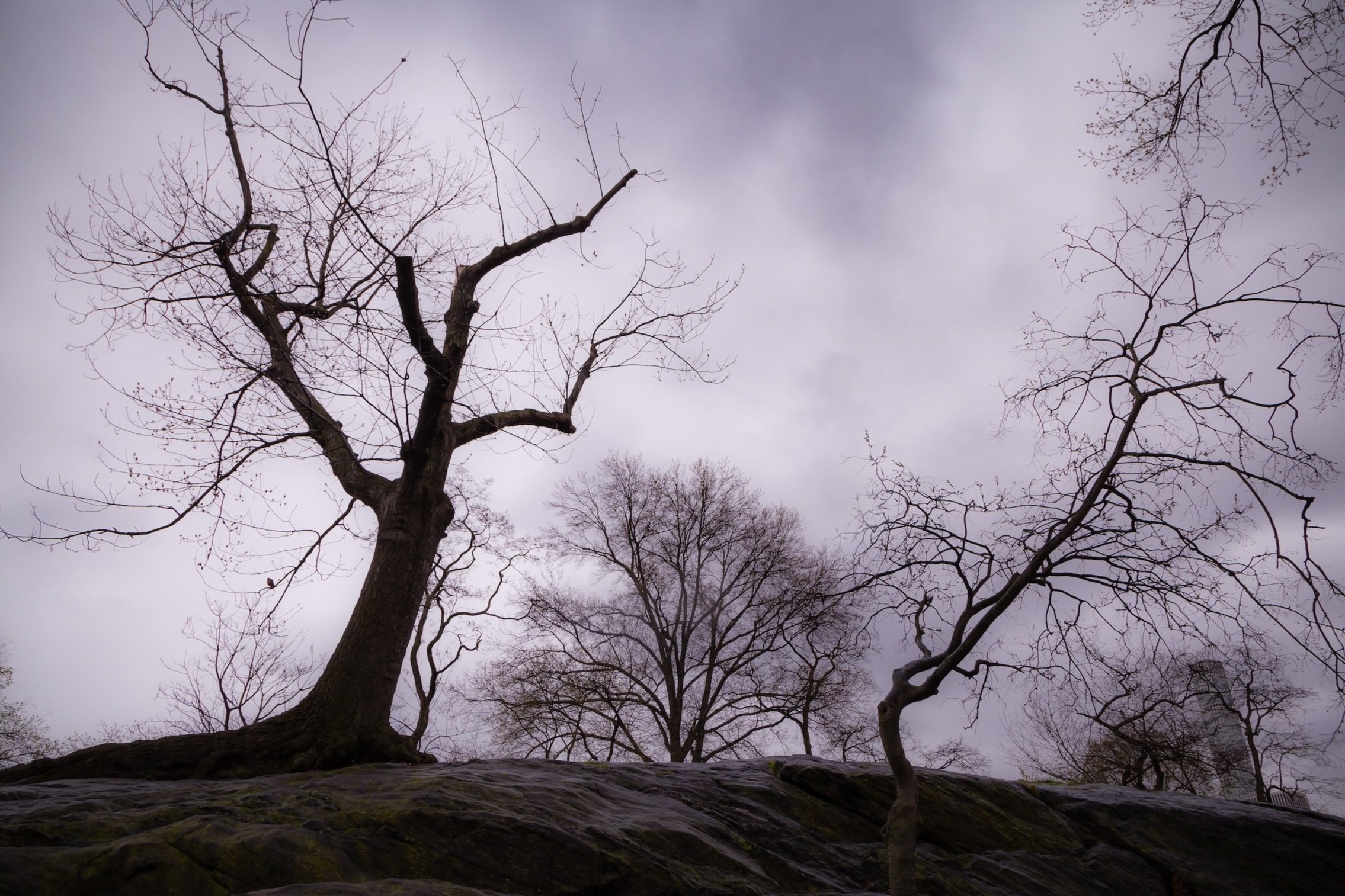
Today, Mineral Springs remains a distinctly varied piece of the South End. The terrain is hilly and rocky rather than meadow-like, with paths moving between exposed stone, sloping lawns and mature trees. The Falconer looks out from one of the neighborhood’s higher outcrops, while the Mineral Springs building and lawn-sports greens occupy the gentler ground below.
The Central Park Lawn Sports Center continues to support lawn bowling and croquet, preserving a recreational tradition that is now a century old. The New York Lawn Bowling Club and New York Croquet Club have also been pursuing restoration of the greens and surrounding Mineral Springs landscape, making this one of the South End’s places where historical use and contemporary renewal remain closely connected.
Waypoints
-
Two dedicated greens support lawn bowling and croquet just north of Sheep Meadow. The first opened in 1926, making lawn sports one of Mineral Springs’ longest-running recreational traditions.
-
The present building occupies the site of Vaux’s elaborate nineteenth-century mineral-water pavilion. Though the original Moorish structure is gone, the name preserves the area’s history as one of Central Park’s early health-and-leisure destinations.
-
Installed in 1875, George Blackall Simonds’ sculpture depicts a young falconer releasing his bird from a dramatic rock outcrop overlooking the surrounding park.
Photography
Visual Identity
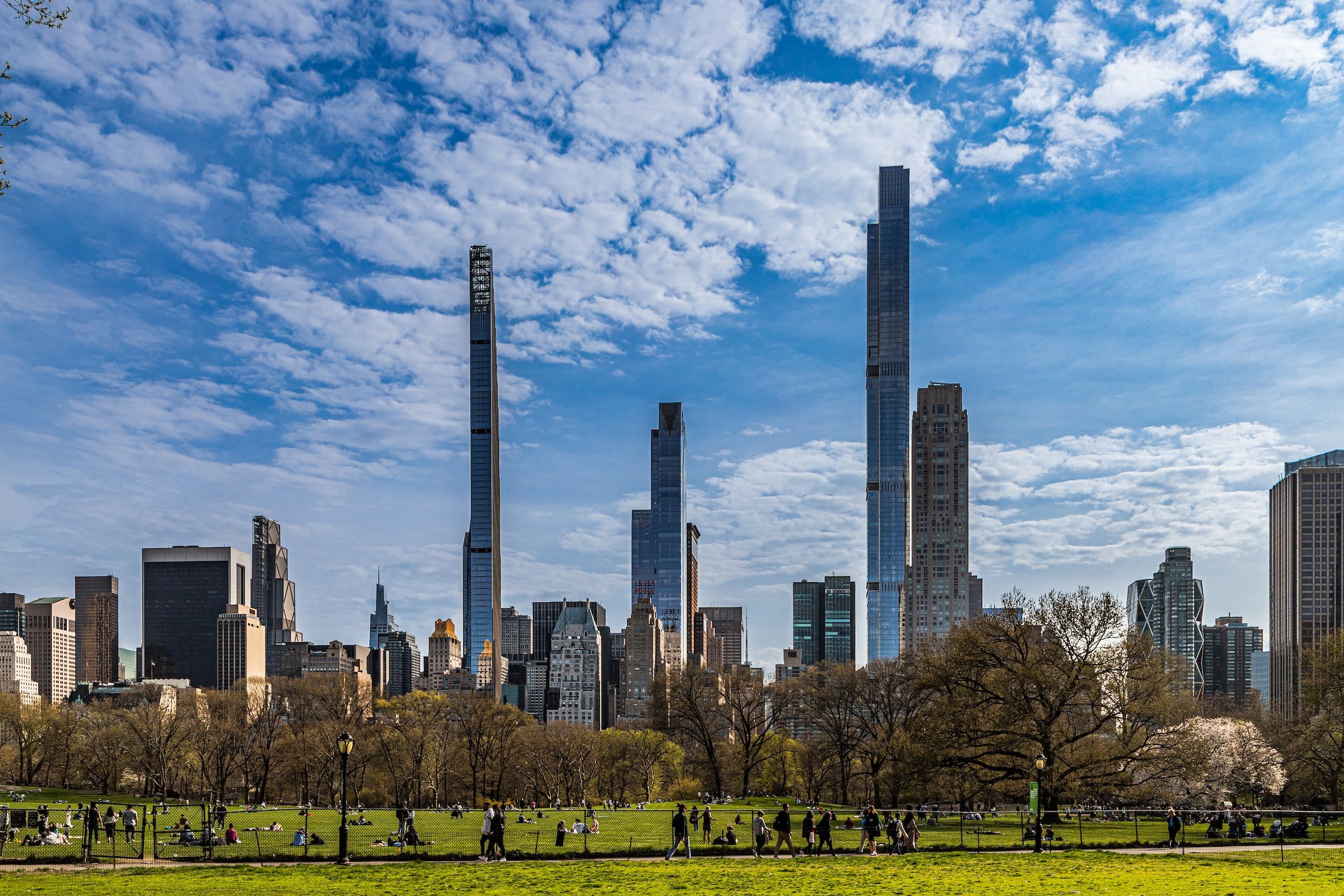
Central Park has no single visual identity. It moves between open meadow and enclosed woodland, exposed bedrock and carefully planted garden, reflective water and hard-edged skyline. Its paths can narrow into shade beneath old trees, then open suddenly toward towers, lakes, monuments, or a broad field filled with people. The Park’s character is made from those transitions: the designed discovery of one landscape giving way to another.
Water and horizon recur throughout its geography. The Lake, Reservoir, ponds, fountains, and seasonal pools of light create places of reflection—sometimes literal, sometimes figurative—where the city appears fractured, softened, or enlarged. Beyond them, Manhattan’s towers remain present as a constant reminder that this cultivated landscape exists within, not apart from, one of the world’s densest cities.
Its visual language also changes dramatically with the seasons. Winter exposes branches, stone, and skyline; spring briefly turns the Park into blossom and color; summer fills its lawns and paths with activity; autumn intensifies the drama of canopy, water, and light. Central Park is designed to be revisited, and its identity is never fixed for long.