
STRAWBERRY FIELDS
Location
Geographic Setting
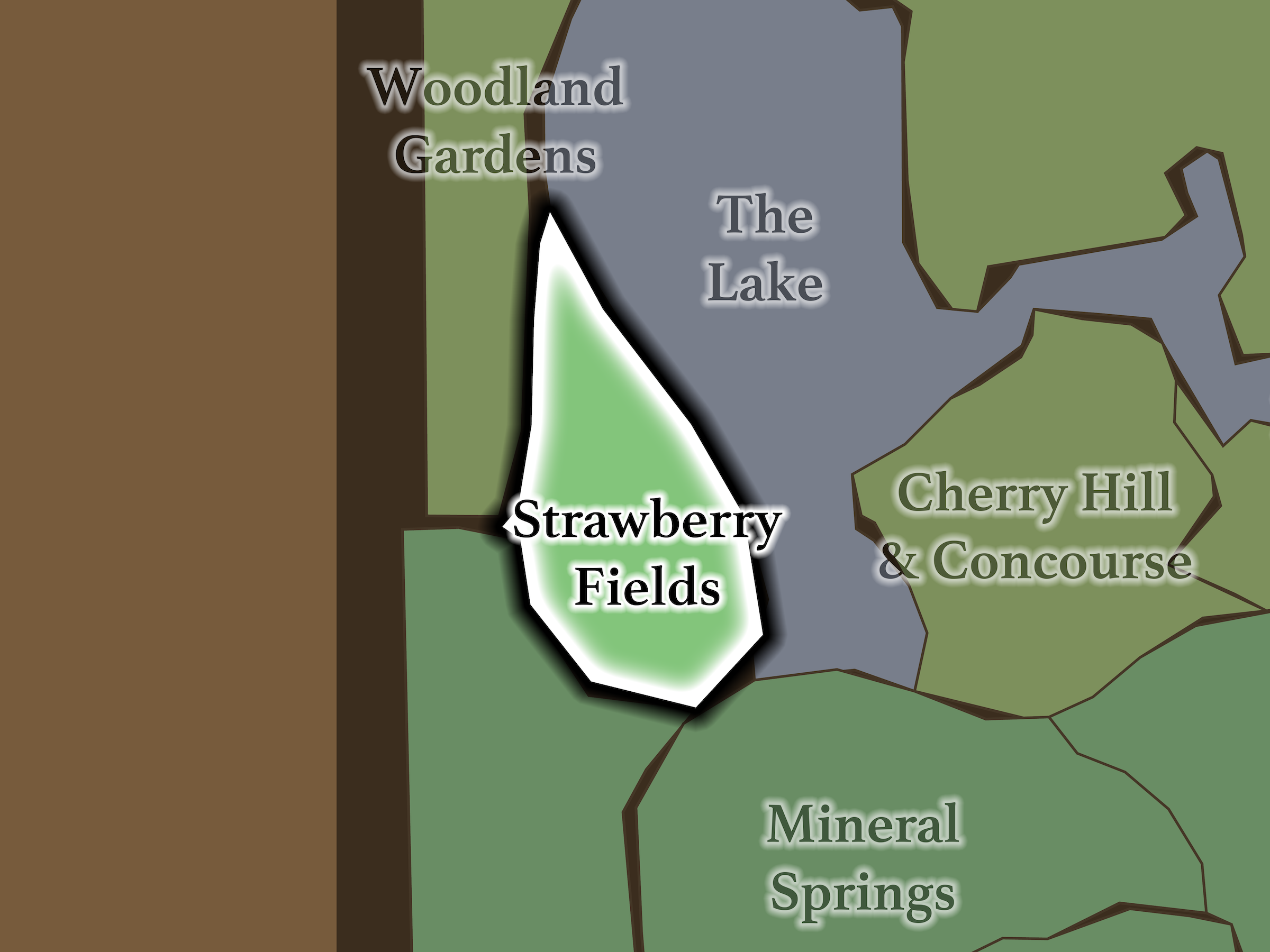
Strawberry Fields occupies approximately five acres along Central Park’s western edge between West 71st and 74th Streets. The Lake lies across West Drive to the east; The Green begins beyond Terrace Drive to the south; and Woodland Gardens lies beyond the Bridle Path to the north. Central Park West and the Dakota form its immediate urban edge.
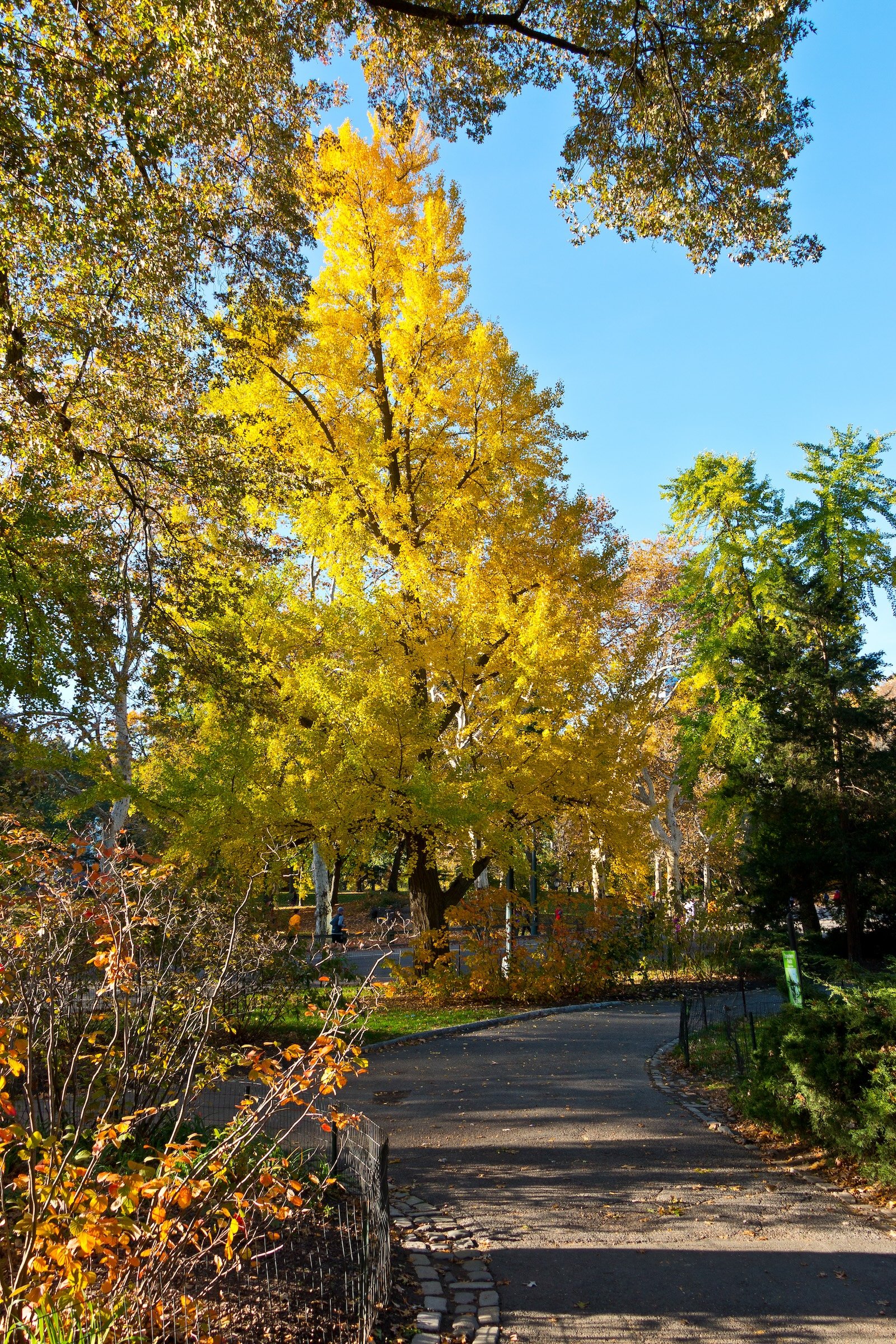
Its shape and circulation give it an unusually self-contained quality. Roads, paths and changes in elevation wrap around a landscape of small meadows, woodland, rock and dense planting. The result feels almost like an island within Central Park—an appropriate degree of enclosure for a place intended for memory and contemplation.
Etymology
Strawberry Fields takes its name from John Lennon’s 1967 Beatles song “Strawberry Fields Forever.” Lennon lived with Yoko Ono directly across Central Park West at the Dakota and frequently walked in this section of the park. After he was murdered outside the Dakota on December 8, 1980, New York City designated the nearby landscape in his memory.
What makes the name especially powerful is that it describes neither a geographic feature nor a traditional monument. Instead, a piece of popular culture became permanently attached to the landscape itself—a remarkably direct example of Central Park absorbing the history of the city around it.
History
1858–1873: Greensward Plan & Construction
There was, of course, no Strawberry Fields in Olmsted and Vaux’s original plan.
This western lakeside terrain formed part of Central Park’s broader pastoral and circulation landscape: irregular ground, paths, trees and slopes between the city edge and The Lake. Unlike Bethesda Terrace or The Mall, it was not originally conceived around a singular monumental destination.
That absence ultimately became important. When the landscape was redesigned after Lennon’s death, it could become a memorial without introducing a conventional statue or architectural monument. Instead, its existing pastoral character became the foundation of the commemoration.
1858–1899: Early History & Grand Openings
For Central Park’s first century, this landscape remained largely part of the park’s western scenery rather than a major named destination. Paths moved visitors between the West 72nd Street entrance, The Lake and the park interior, while the sloping terrain provided a quieter counterpart to the formal landscapes farther east.
Its modern identity therefore does not emerge from nineteenth-century iconography at all. Strawberry Fields is one of those Central Park neighborhoods whose defining history belongs primarily to the city that grew around the park.
20th Century: Transformation & Restoration
Everything changed after Lennon’s death in 1980.
The City chose to name the landscape across from the Dakota Strawberry Fields, and Yoko Ono began developing the idea of an international Garden of Peace rather than a conventional memorial. She invited countries around the world to contribute plants and stones, while working with the newly formed Central Park Conservancy and landscape architect Bruce Kelly on the design.
Kelly approached the project as both memorial and restoration. The existing area had deteriorated badly; a 1995 Conservancy report remembered it as an eroded bluff beside The Lake before its reconstruction. The redesigned landscape introduced small meadows, dense trees and shrubs, winding paths and a central gathering space while deliberately connecting the memorial to Central Park’s larger tradition of pastoral retreat.
The Conservancy describes Strawberry Fields as one of its first major restoration projects funded through private philanthropy. Contributions came from 121 countries, reinforcing Ono’s vision of the site as an international garden of peace.
Strawberry Fields was formally dedicated on October 9, 1985, what would have been Lennon’s 45th birthday.
Explore
21st Century: Renovation & Modernization
Today, Strawberry Fields is one of Central Park’s most recognizable examples of a living memorial.
There is no heroic statue of Lennon standing above the landscape. Instead, the memorial is the landscape: meadows, trees, rock, paths, benches, seasonal change and people gathering together. The Conservancy specifically describes the design as an alternative to conventional memorials—one intended to grow and change over time.
That gives Strawberry Fields an unusual emotional character. Visitors come specifically to remember Lennon, but the place also attracts musicians, free spirits, neighborhood regulars and people simply looking for a quieter place beside The Lake. Guitar music and impromptu singing can transform the atmosphere around the mosaic, while only a short walk away the small meadows and wooded paths become markedly quieter.
The landscape also contains one of its nicest surprises northeast of the mosaic: an open field offering a secluded view across The Lake toward Hernshead. Even the Conservancy highlights it as one of the park’s less obvious photographic viewpoints.
And the enclosure you noticed is important. Roads and paths define its edges more emphatically than many Central Park landscapes, creating the sensation that you have entered something apart. That spatial separation helps Strawberry Fields function simultaneously as neighborhood, memorial and sanctuary.
Waypoints
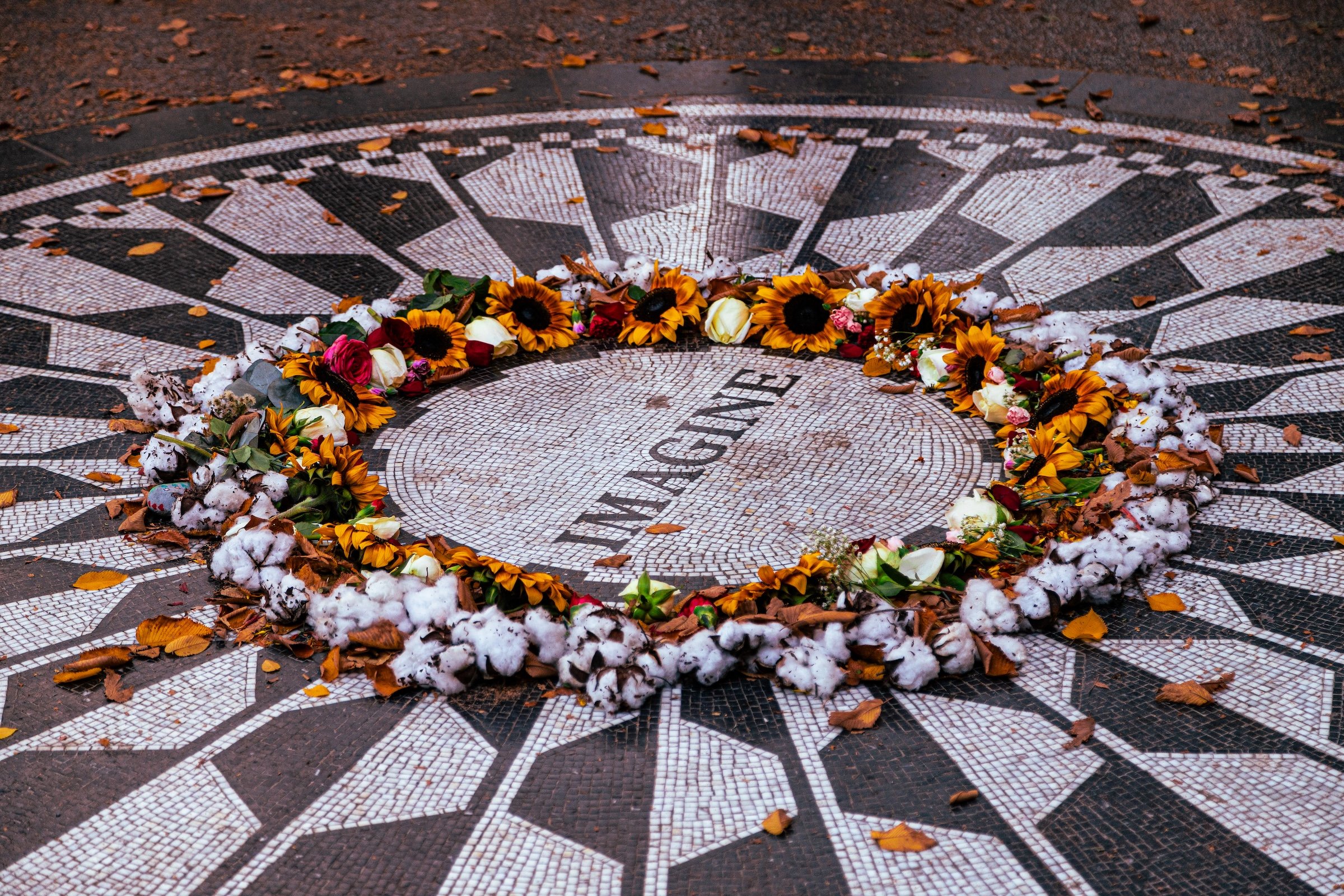
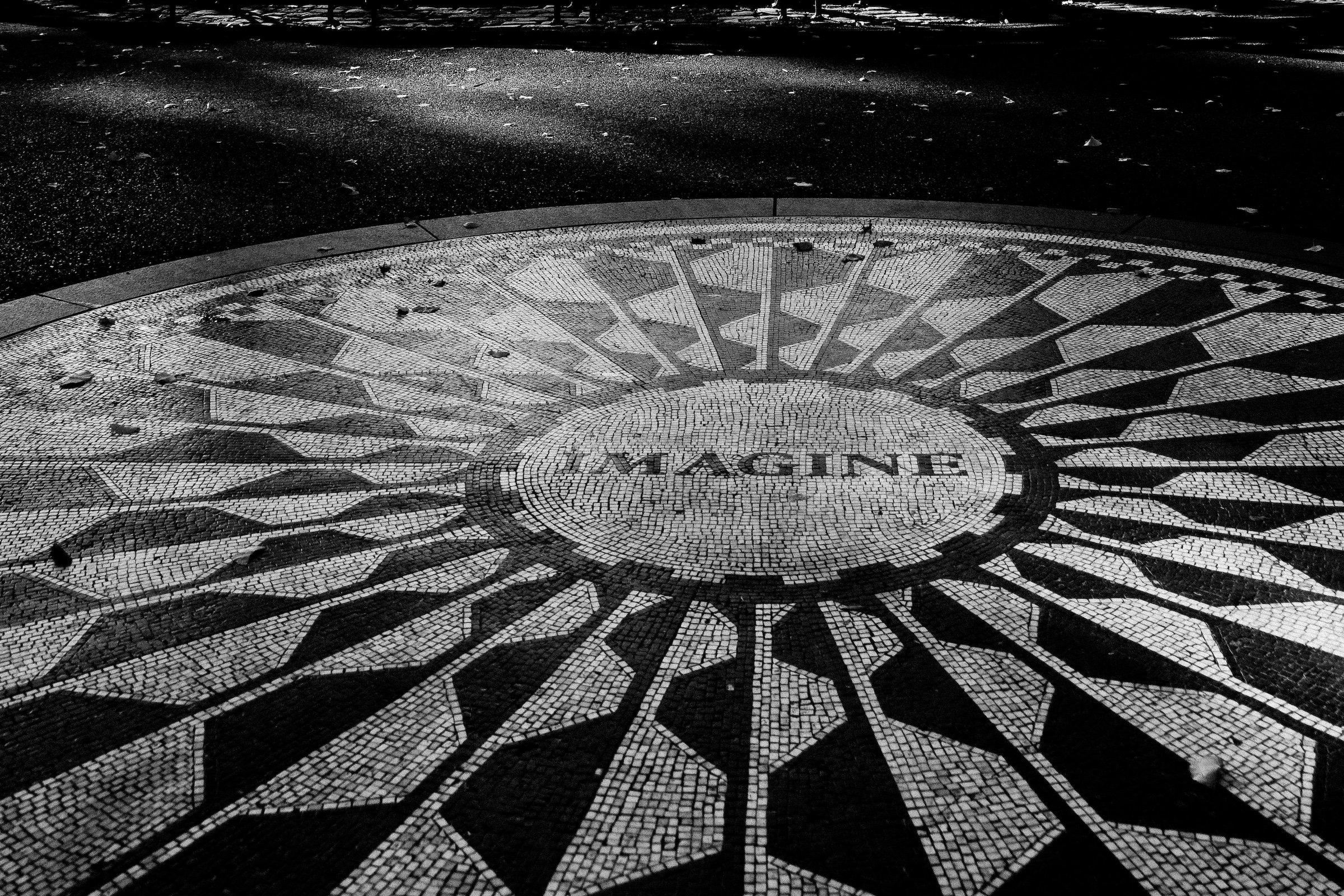
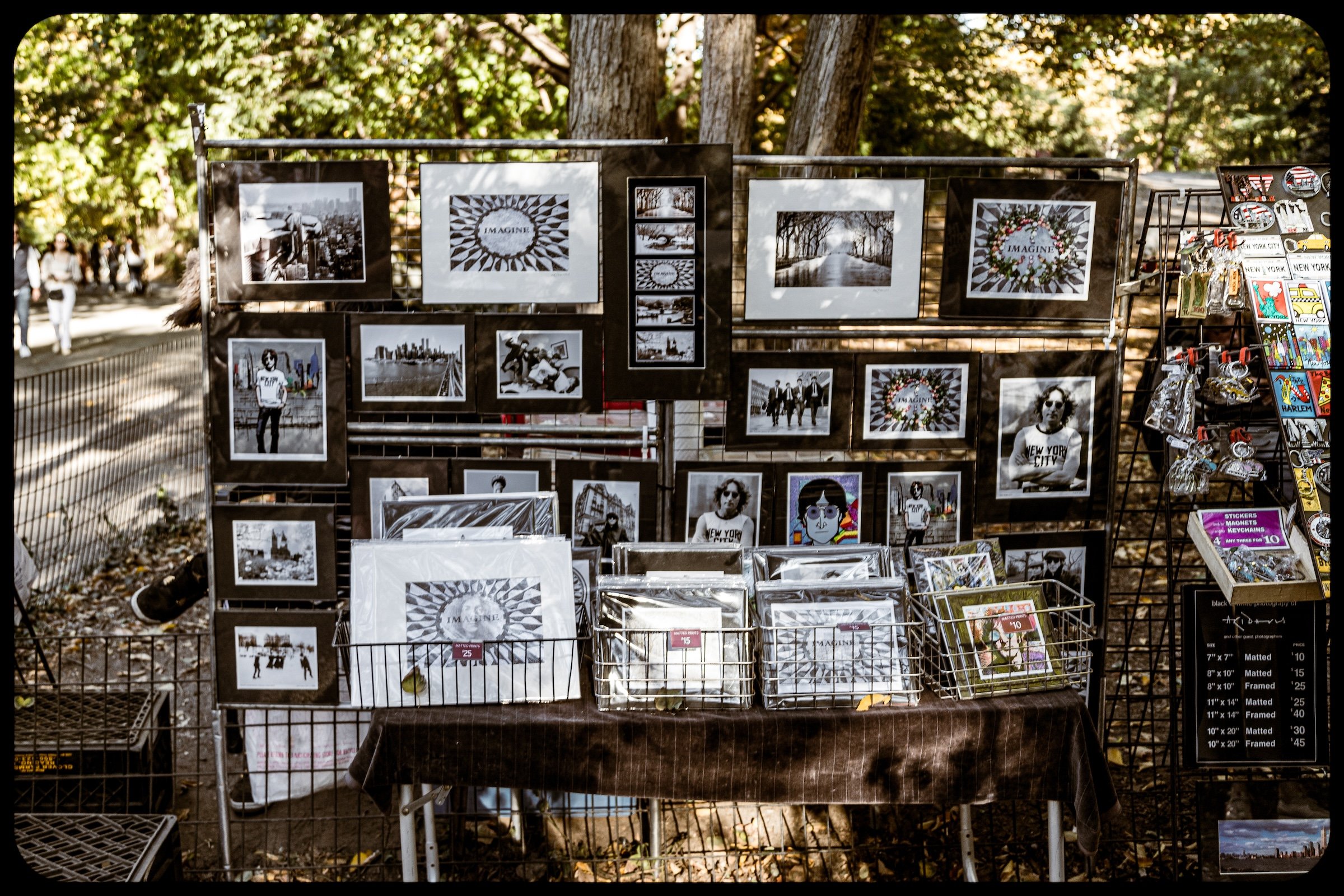
Imagine Mosaic — The black-and-white mosaic at the center of Strawberry Fields was donated by Naples, Italy and bears a single word—Imagine—from Lennon’s 1971 song. Surrounded by benches, it has become the principal gathering place for visitors paying tribute to Lennon and is the only permanent work of art added within Central Park since the park was designated a scenic landmark in 1965.
Photography
Visual Identity
Central Park has no single visual identity. It moves between open meadow and enclosed woodland, exposed bedrock and carefully planted garden, reflective water and hard-edged skyline. Its paths can narrow into shade beneath old trees, then open suddenly toward towers, lakes, monuments, or a broad field filled with people. The Park’s character is made from those transitions: the designed discovery of one landscape giving way to another.
Water and horizon recur throughout its geography. The Lake, Reservoir, ponds, fountains, and seasonal pools of light create places of reflection—sometimes literal, sometimes figurative—where the city appears fractured, softened, or enlarged. Beyond them, Manhattan’s towers remain present as a constant reminder that this cultivated landscape exists within, not apart from, one of the world’s densest cities.
Its visual language also changes dramatically with the seasons. Winter exposes branches, stone, and skyline; spring briefly turns the Park into blossom and color; summer fills its lawns and paths with activity; autumn intensifies the drama of canopy, water, and light. Central Park is designed to be revisited, and its identity is never fixed for long.