
NORTH WOODS & BLOCKHOUSE
Location
Geographic Setting
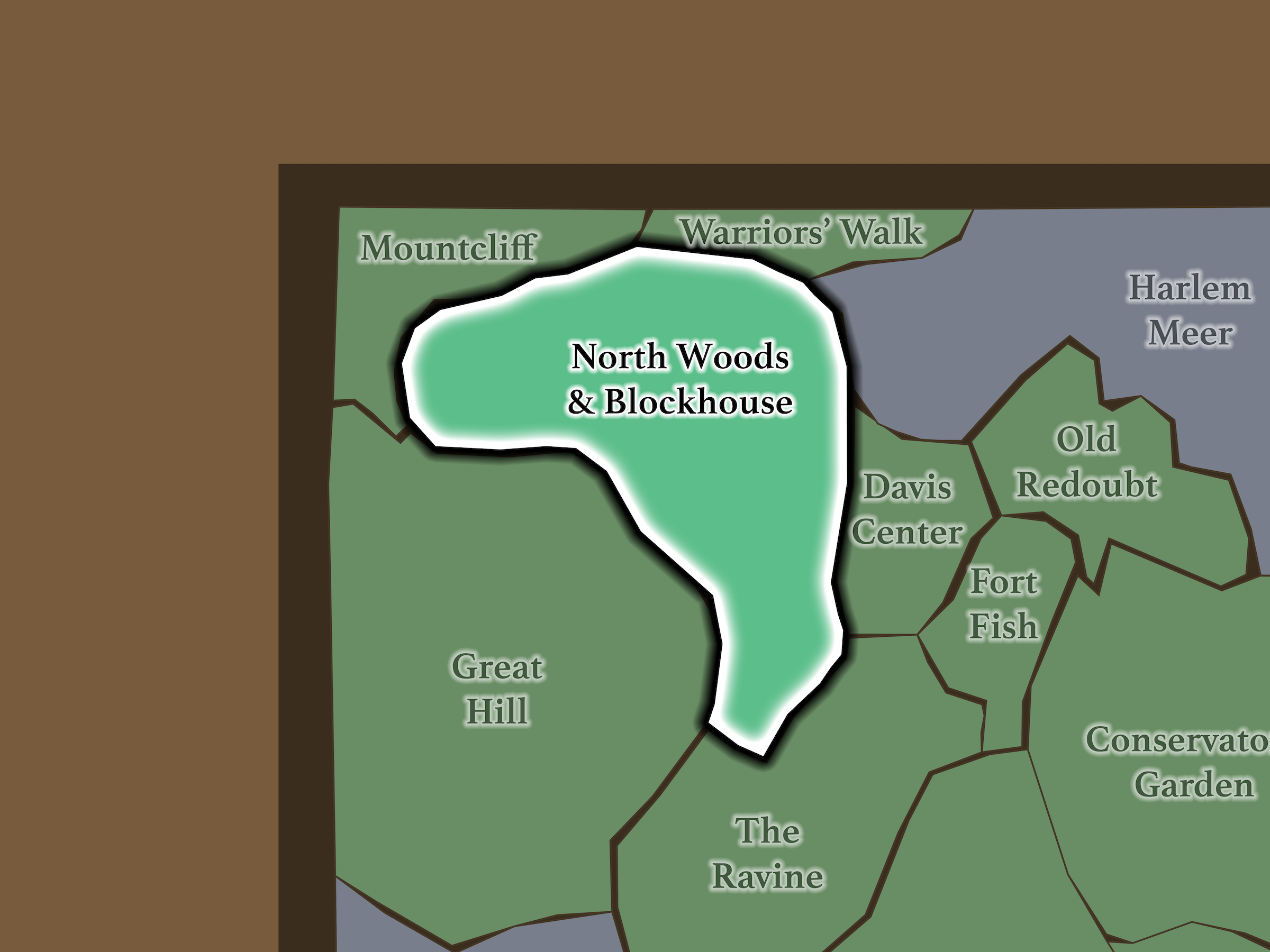
North Woods & Blockhouse occupies the rugged northwestern interior of the North End. Great Hill lies across West Drive to the west; Mountcliff begins beyond West Drive to the north; Warriors’ Walk runs along the northern edge beyond Malcolm X Boulevard; Harlem Meer and Davis Center lie across East Drive; and The Ravine begins below the Loch Walking Path.
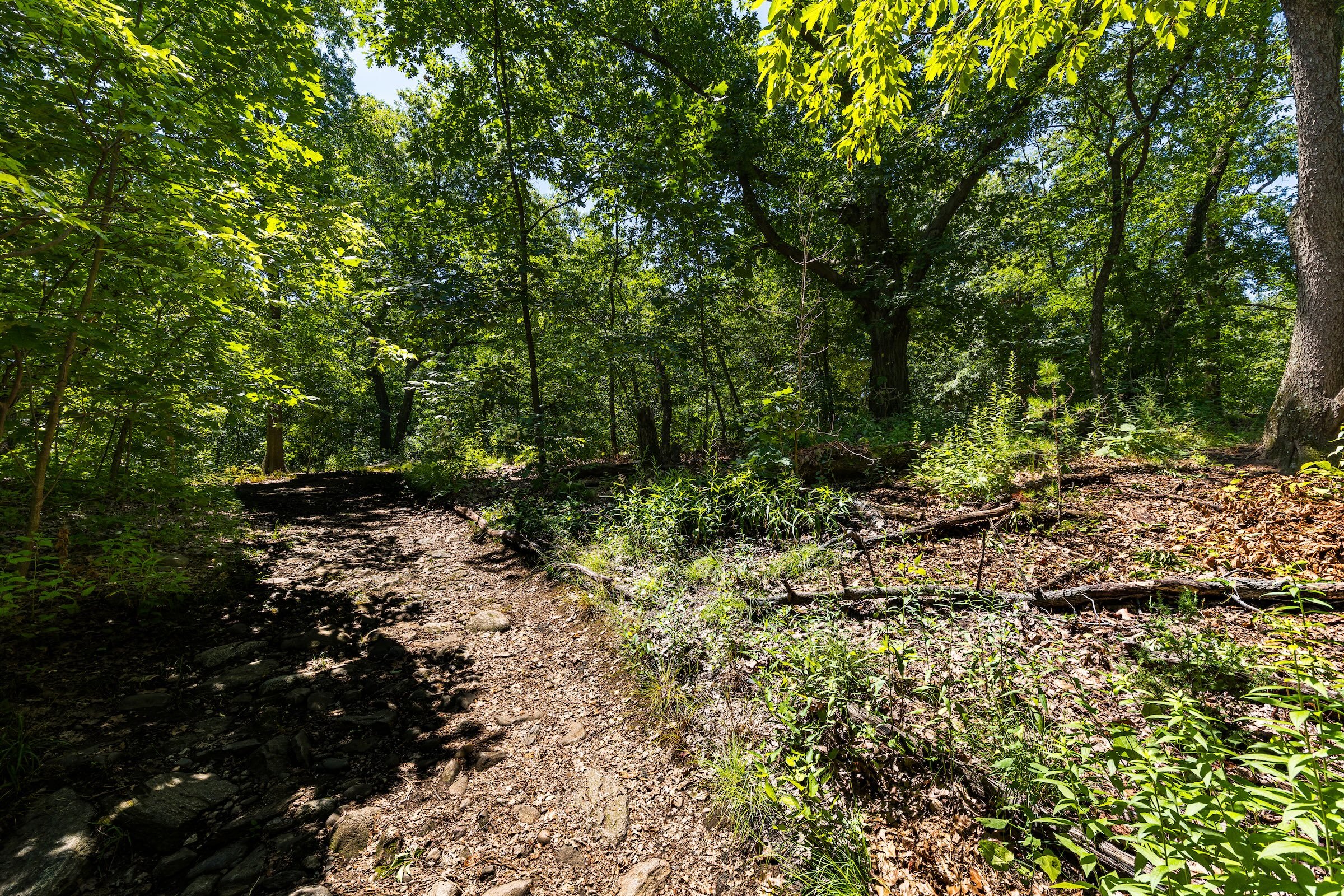
The terrain is among Central Park’s steepest and least formal. Narrow paths climb rocky slopes beneath dense tree cover, occasionally opening onto small clearings, ponds or exposed ridges. The Conservancy describes the broader North Woods as the largest of Central Park’s three woodlands and explicitly compares its character with the Adirondacks.
That ruggedness is crucial. The Ramble is intricate but highly composed; North Woods feels rougher, higher and less domesticated.
Etymology
North Woods & Blockhouse combines the name of Central Park’s largest woodland with the historic fortification standing on its northern heights.
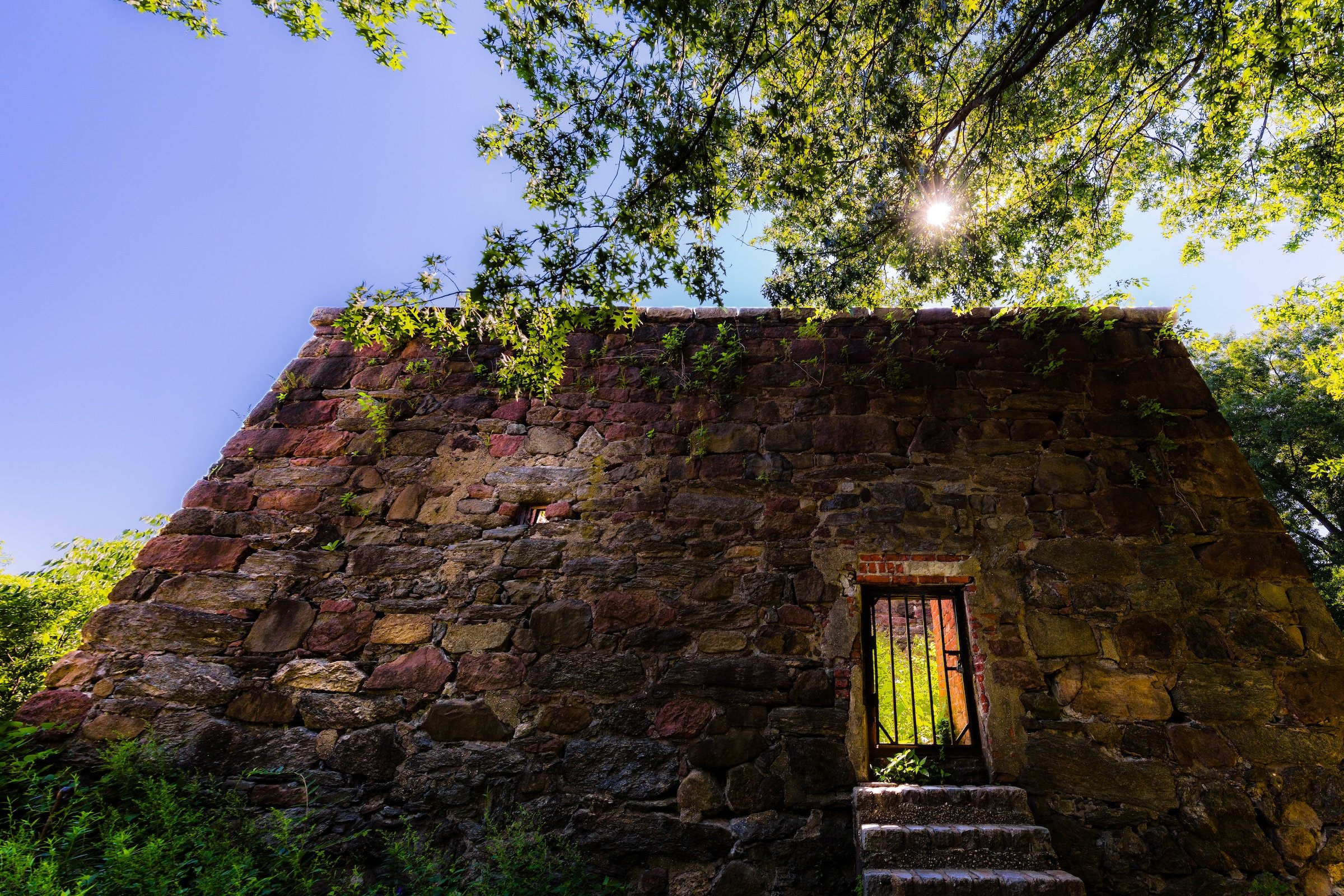
The North Woods was designed to evoke the forests of the Adirondacks—a rugged retreat of steep slopes, dense canopy, exposed rock and irregular paths. The Blockhouse, built in 1814 during the War of 1812, predates Central Park by more than four decades and is the only surviving fortification from the defensive system constructed here to protect Manhattan from a feared British invasion. The Central Park Conservancy identifies it as the park’s oldest surviving structure built on the site.
Within the CityNeighborhoods taxonomy, North Woods & Blockhouse refers specifically to the higher northern woodland surrounding the Blockhouse; the stream valley below the Loch Walking Path is treated separately as The Ravine.
History
1858–1873: Greensward Plan & Construction
The landscape already possessed an unusually dramatic history before Olmsted and Vaux began designing Central Park.
The rocky northern heights had strategic military value during both the American Revolution and War of 1812. British forces occupied elevated positions in this broader area after taking Manhattan in 1776. When war with Britain returned in 1812, New Yorkers again fortified the northern approaches to the city. More than 200 volunteers helped construct a network of defenses around McGowan’s Pass and the surrounding high ground.
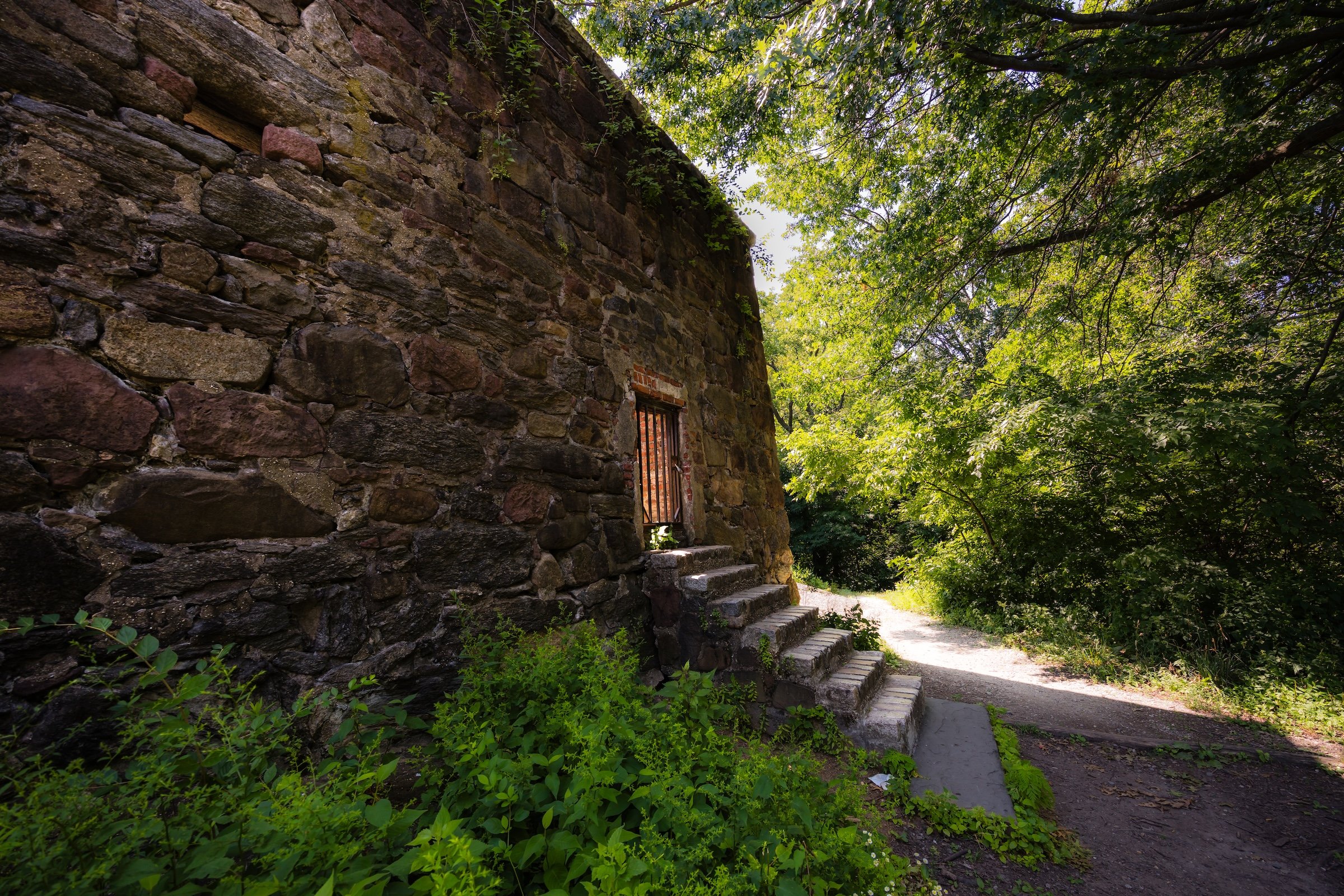
One of those defenses was the Blockhouse. Built in 1814 as one of four blockhouses in this part of Manhattan, the stone structure originally had a sunken wooden roof and movable cannon that could be rapidly deployed. The anticipated British attack never came.
When Central Park was created decades later, Olmsted and Vaux inherited both the military ruin and the rugged land around it. Rather than erase either, they incorporated them into one of the park’s most deliberately wild landscapes.
1858–1899: Early History & Grand Openings
The northern park was intended to provide an experience markedly different from the broad pastoral lawns farther south.
Steep slopes, rocky outcrops and dense planting were developed into a woodland meant to suggest something far removed from Manhattan. Olmsted and Vaux used large trees, shrubs, vines and intentionally irregular circulation to make the visitor feel increasingly enclosed as they moved inward.
The surviving Blockhouse added something that could not be manufactured: actual ruin and actual history.
Rather than building a picturesque folly as at Belvedere, the designers already had one. The old military structure stood on high ground amid woods and rock, gradually becoming part of Central Park’s scenic vocabulary rather than simply a relic of national defense.
The result was a landscape in which wilderness and history became almost inseparable.
20th Century: Transformation & Restoration
North Woods suffered badly during Central Park’s twentieth-century decline.
Woodland landscapes were particularly vulnerable because they could appear self-sustaining even while soils eroded, invasive plants spread, paths deteriorated and understory vegetation disappeared. The North Woods became increasingly degraded and, in places, difficult to navigate.
Restoration of the North End became a major Conservancy priority beginning in the late 1980s and 1990s. Work included rebuilding woodland soils, paths and streams, removing invasive vegetation and replanting native species while deliberately preserving the rugged character that distinguished the North Woods from more manicured landscapes elsewhere in the park.
Unlike a formal garden restoration, the goal was not to make the landscape look newly finished. It was to restore the conditions necessary for it to feel old, irregular and wild again.
Explore
21st Century: Renovation & Modernization
Today, North Woods & Blockhouse may be the closest Central Park comes to genuine backcountry hiking.
Paths rise sharply through trees and across exposed rock. Roots interrupt the trail. Small clearings appear unexpectedly. City streets can be only a few hundred feet away while remaining completely invisible.
The woodland is also deliberately less polished than the Ramble. Fallen trees are often allowed to remain when safe, returning nutrients to the soil and providing habitat while reinforcing the sense of a functioning forest rather than an ornamental garden. The Conservancy specifically notes this practice as part of the North Woods’ naturalistic character.
The Blockhouse provides the neighborhood’s historical climax. Reaching it requires an ascent through the woods, and the structure appears less like a monument placed in a park than something the forest has gradually grown around.
Elsewhere, features such as The Cliff, Lily Pond and the named rock formations give the woodland its own internal geography. These are not large civic destinations. They are landmarks discovered through exploration.
That distinction makes North Woods & Blockhouse especially satisfying as a neighborhood. You do not simply arrive, photograph one thing and leave. You move through it slowly, using rocks, slopes, ponds and occasional openings as orientation.
Waypoints
-
Built in 1814 during the War of 1812, the stone fortification is the only surviving structure from the defensive network constructed across northern Manhattan. It originally had a wooden roof and deployable cannon and today stands as the historical anchor of the North Woods.
-
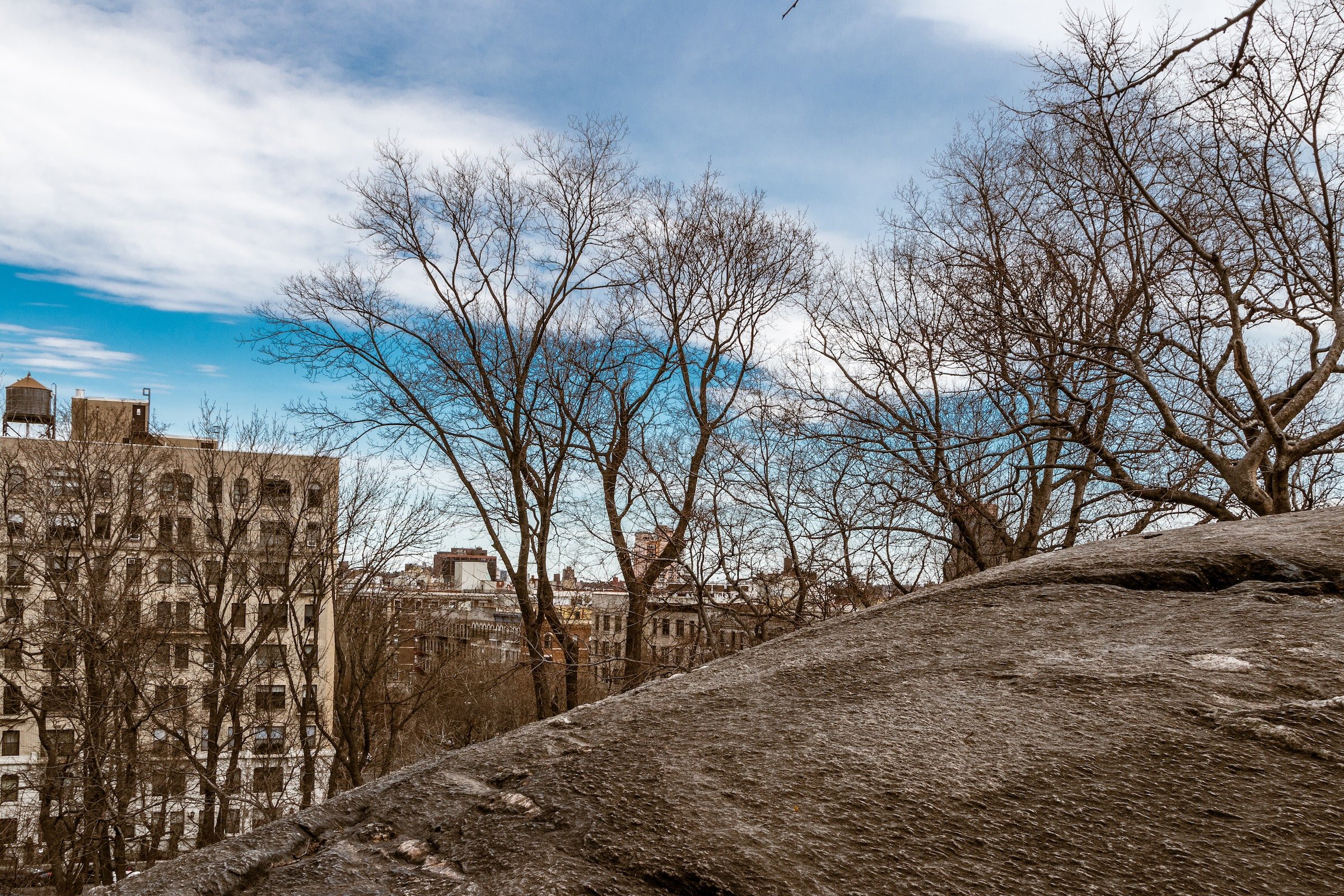
The steep rocky height associated with the Blockhouse forms one of the neighborhood’s strongest topographic features. Historical descriptions place the Blockhouse high on this escarpment, emphasizing how much the military landscape depended upon elevation.
-
Hidden among the woodland paths, Lily Pond adds another quiet water feature to the North Woods. Historical mapping also records an earlier Lily Pond and watercourse descending from the Great Hill side of the woods toward East Drive, making water part of this landscape’s older geography as well as its present experience.
-
One of the named rock formations embedded within the woodland, Lion’s Head Rock turns the North Woods’ exposed geology into a navigational landmark rather than mere background scenery.
-
Another of the woodland’s named outcrops, Wilderness Rock reinforces how frequently exposed Manhattan schist functions as both scenery and orientation within the North Woods.
Photography
Visual Identity
Central Park has no single visual identity. It moves between open meadow and enclosed woodland, exposed bedrock and carefully planted garden, reflective water and hard-edged skyline. Its paths can narrow into shade beneath old trees, then open suddenly toward towers, lakes, monuments, or a broad field filled with people. The Park’s character is made from those transitions: the designed discovery of one landscape giving way to another.
Water and horizon recur throughout its geography. The Lake, Reservoir, ponds, fountains, and seasonal pools of light create places of reflection—sometimes literal, sometimes figurative—where the city appears fractured, softened, or enlarged. Beyond them, Manhattan’s towers remain present as a constant reminder that this cultivated landscape exists within, not apart from, one of the world’s densest cities.
Its visual language also changes dramatically with the seasons. Winter exposes branches, stone, and skyline; spring briefly turns the Park into blossom and color; summer fills its lawns and paths with activity; autumn intensifies the drama of canopy, water, and light. Central Park is designed to be revisited, and its identity is never fixed for long.