
THE POOL
Location
Geographic Setting
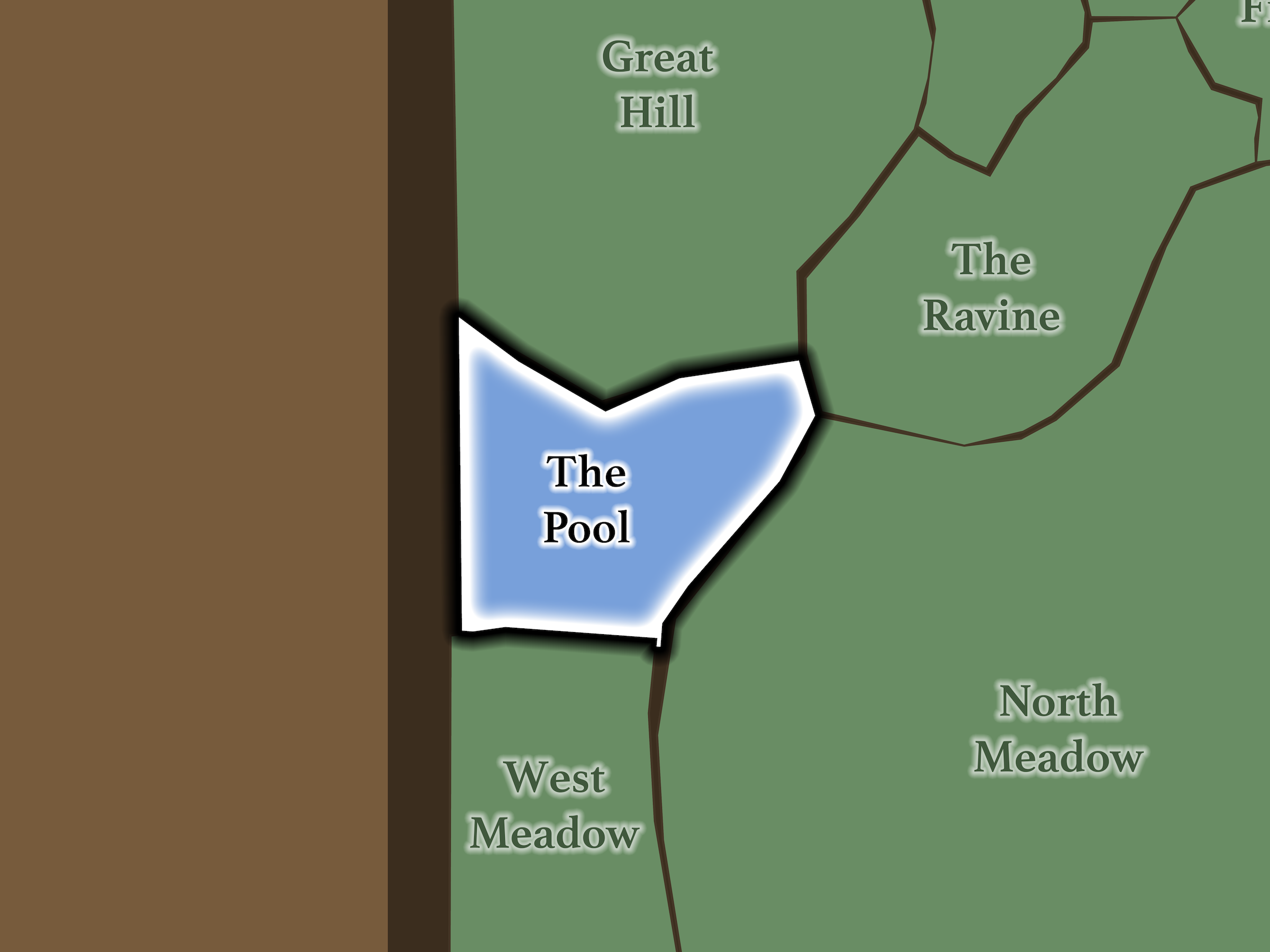
The Pool occupies a sheltered basin along Central Park’s western edge. Great Hill rises immediately to the north; The Ravine begins beyond Glen Span Arch to the northeast; North Meadow lies beyond East Drive; West Meadow begins below West 100th Street; and Central Park West separates the landscape from Manhattan Valley.
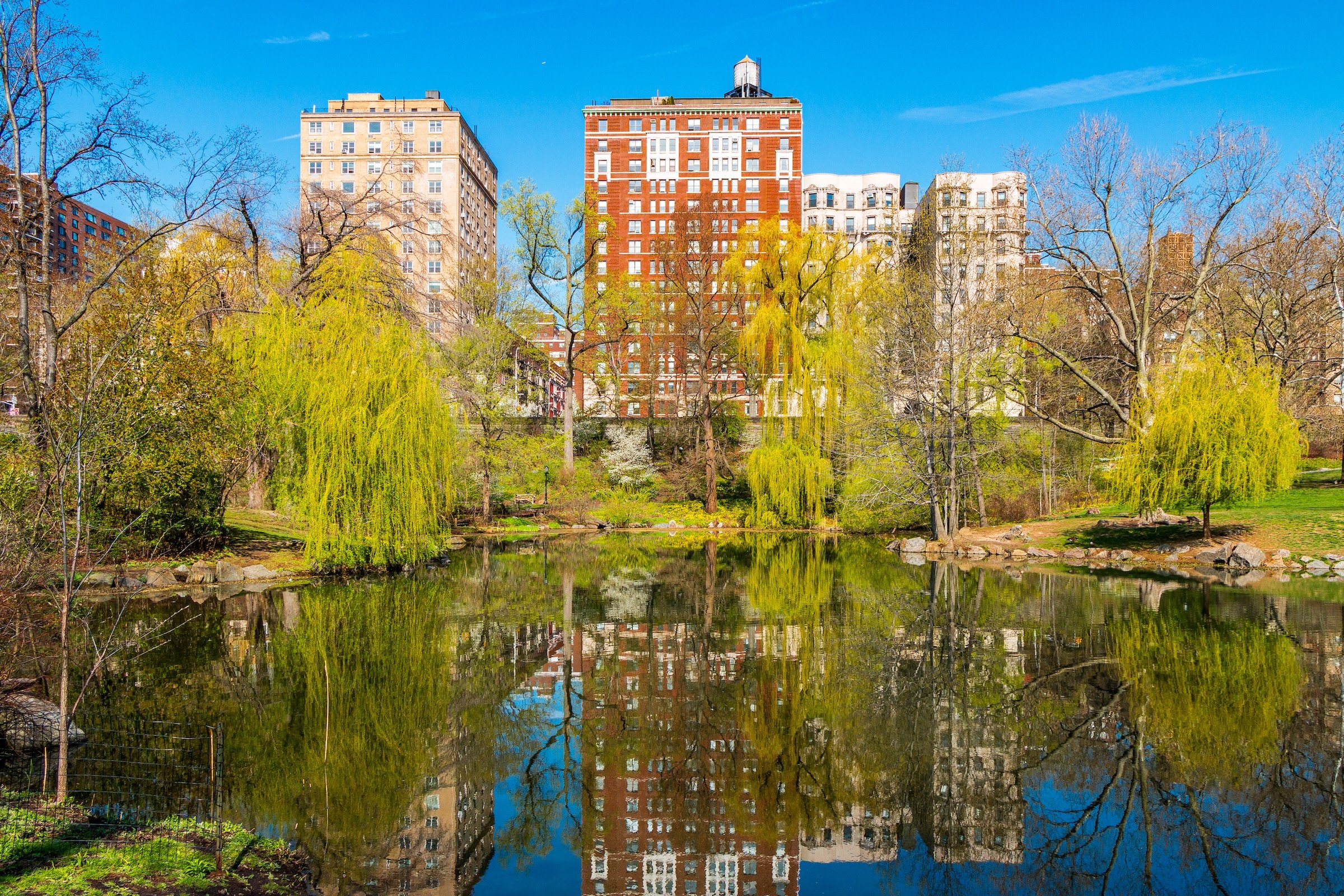
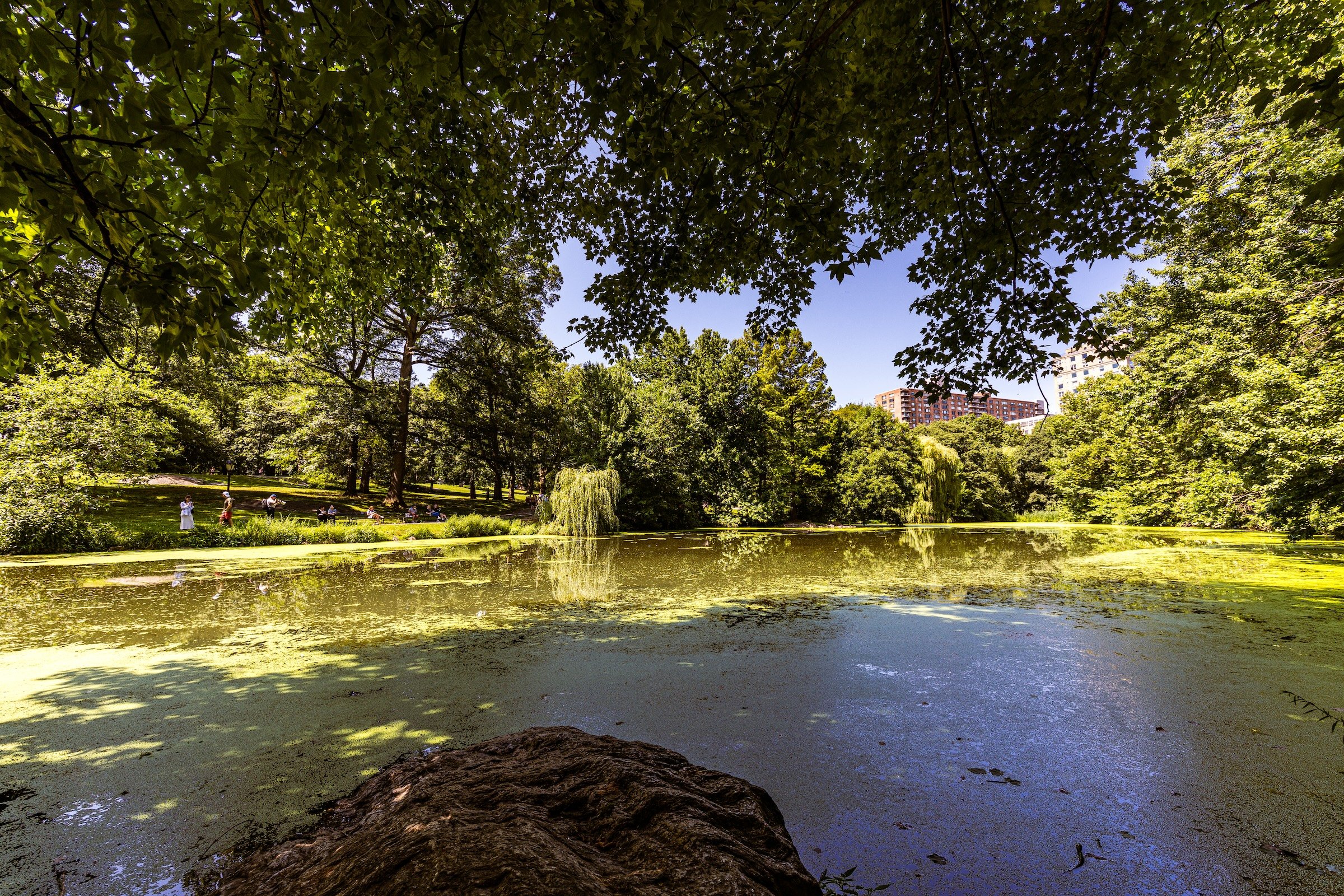
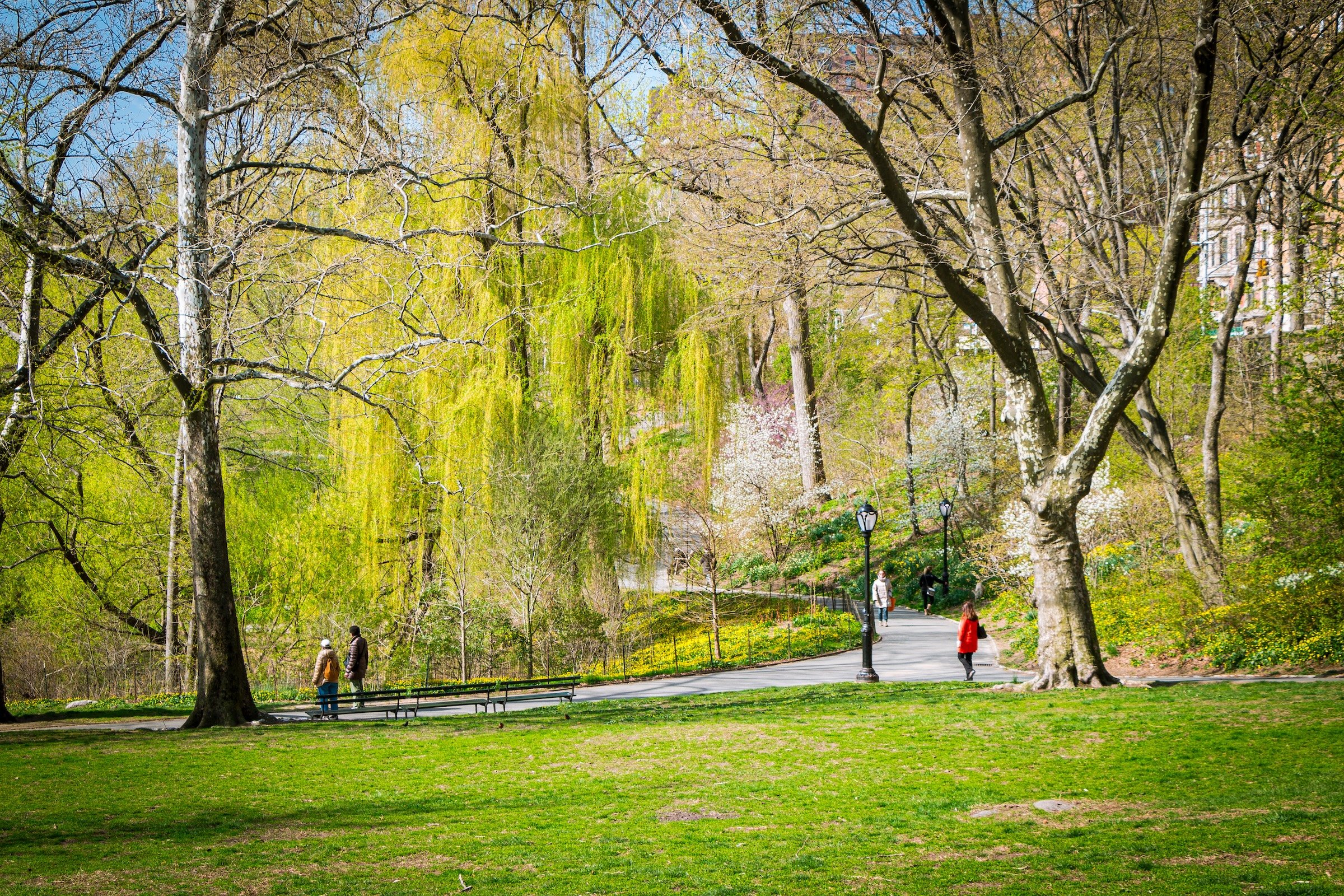
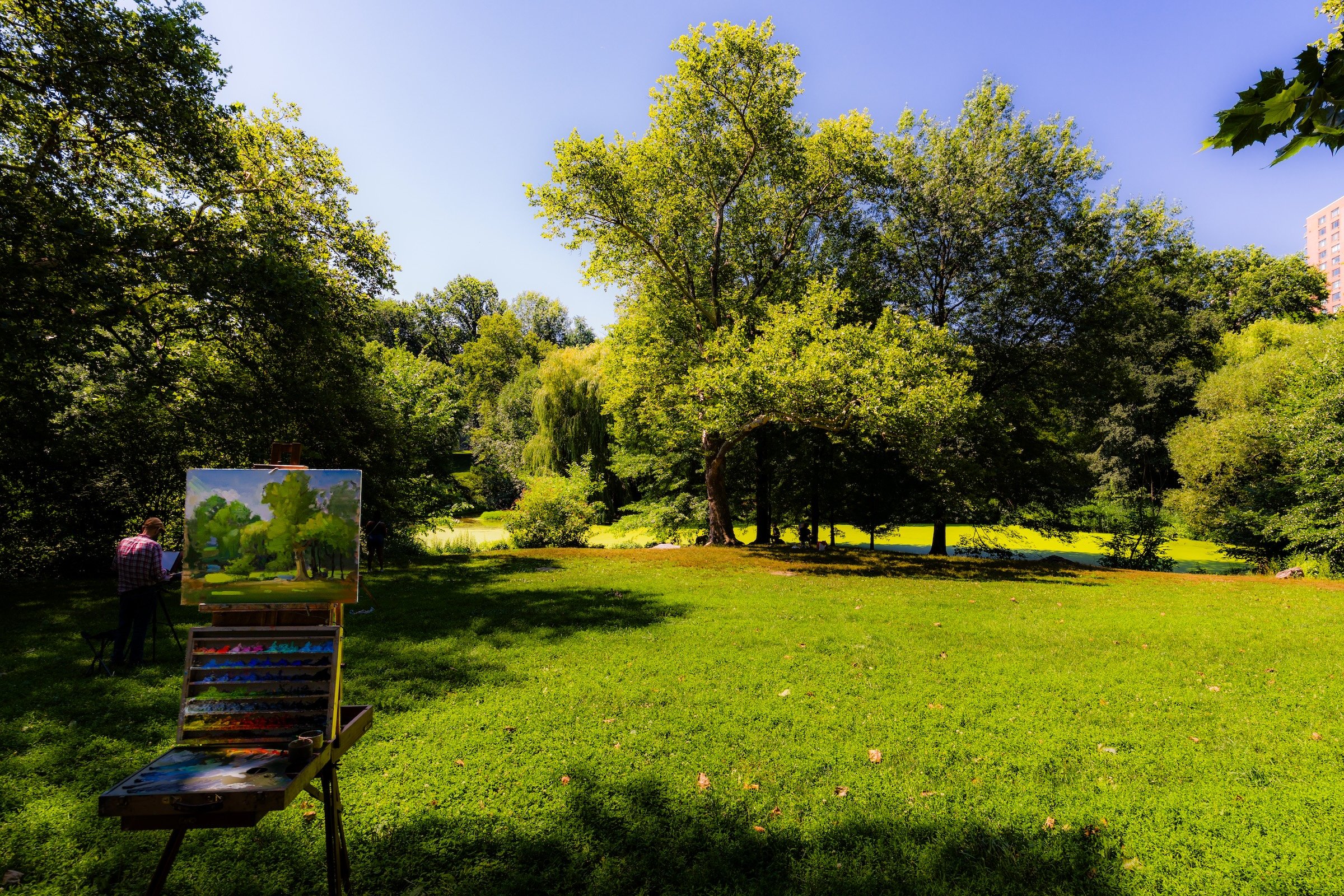
The water is surrounded by grassy banks, mature trees, reeds and low rocky edges. Weeping willows reach toward the surface while paths follow the shoreline, creating a landscape that feels unexpectedly removed from Central Park West only yards away.
At its eastern end, the still water changes character dramatically. It passes beneath a rustic bridge and spills over the Glen Span Cascade, dropping into the Loch and entering the wooded Ravine.
Etymology
The Pool takes its name from the small, still body of water tucked into the western edge of Central Park’s North End between roughly West 100th and 103rd Streets. The simplicity of the name suits the place: unlike Harlem Meer or The Lake, The Pool is intimate in scale, defined as much by its reflections, shoreline vegetation and surrounding slopes as by the water itself.
Its quiet surface also marks the beginning of something much larger. Water leaving The Pool becomes The Loch, flowing through the Ravine before ultimately reaching Harlem Meer.
History
1858–1873: Greensward Plan & Construction
Unlike many of Central Park’s constructed water bodies, The Pool and Ravine were shaped around a preexisting stream valley.
Before the park, Montayne’s Rivulet originated west of the future park near present-day Columbus Avenue and West 95th Street and entered the site around West 100th Street. Olmsted and Vaux used the existing watercourse and topography as the basis for a larger naturalistic sequence, damming and reshaping the stream to form The Pool before allowing its water to continue through the Loch and Ravine.
The designers therefore did not invent the underlying geography so much as amplify it—turning a modest Manhattan stream into a carefully composed chain of pool, cascade, woodland stream and lake.
1858–1899: Early History & Grand Openings
During Central Park’s nineteenth-century development, The Pool formed the western beginning of one of the North End’s most dramatic landscape sequences.
Water moved from the quiet basin toward Glen Span Arch, where a cascade and rustic stonework announced the entrance to the wooded Ravine. The arch carried West Drive above the stream and pedestrian path, allowing the road, water and walking route to occupy different levels within an exceptionally narrow piece of terrain.
Glen Span originally incorporated a wooden upper structure—the only Central Park bridge designed with wood substantial enough to carry the carriage drive. It deteriorated quickly and was replaced with stone in 1885, giving the arch the massive rustic appearance it retains today.
At the southern end, Boys’ Gate at West 100th Street became the western counterpart to Girls’ Gate on the opposite side of the park, part of Central Park’s original democratic system of entrances honoring groups of New Yorkers rather than individual dignitaries.
20th Century: Transformation & Restoration
The Pool remained comparatively quiet through the twentieth century, but neglect gradually damaged both the water body and surrounding landscape. Sediment accumulated, shoreline vegetation deteriorated and drainage and water-supply systems required extensive work.
The Central Park Conservancy completed a $1.5 million restoration in 2003 encompassing approximately eight acres around The Pool. The project removed excess sediment, rebuilt water and drainage systems, restored paths and the rustic bridge, replanted shoreline vegetation and renewed the landscape in the spirit of Olmsted and Vaux’s design.
That work also preserved an important piece of hidden infrastructure. Although Montayne’s Rivulet still contributes some water, The Pool is now supplied primarily by City water entering through a 48-inch pipe concealed behind a naturalistic boulder grotto on its southwestern shore.
It is a wonderfully Central Park detail: even the water source has been designed to disappear into scenery.
Explore
21st Century: Renovation & Modernization
Today, The Pool is one of Central Park’s genuine hidden gems.
Its surface is often calm enough to become a mirror. Weeping willows, maples and other shoreline trees double themselves in the water, while buildings along Central Park West rise beyond the foliage. In spring and summer, reeds and leaves soften nearly every edge; in autumn, the Conservancy specifically identifies The Pool as one of the park’s premier foliage locations, with bald cypress, hickory, red maple, sugar maple, sweetgum and tupelo contributing color around the basin.
Wildlife reinforces the impression of seclusion. Birds, fish, turtles and amphibians use the water and surrounding vegetation, making The Pool an important stopping point for naturalists as well as walkers and photographers.
But perhaps the best part of the landscape is its transition.
Stand beside the western shore and The Pool feels almost completely still. Follow the water east and it begins moving. The shoreline contracts, a rustic bridge appears, water tumbles over the cascade, and suddenly you have entered The Ravine.
So although The Pool works perfectly well as a destination, it also functions as the quiet opening movement of the North End’s great watercourse.
Waypoints
-
The West 100th Street entrance is one of Central Park’s original named gates and forms the western counterpart to Girls’ Gate at East 102nd Street. Its simple collective name belongs to the park commissioners’ larger effort to dedicate entrances to the people of New York rather than individual patrons.
-
Built of massive rough-hewn stone, Glen Span carries West Drive above both the Loch and the main pedestrian route into the Ravine. Along with its adjacent cascade, it creates a dramatic threshold between the reflective calm of The Pool and the wooded stream valley beyond.
Photography
Visual Identity
Central Park has no single visual identity. It moves between open meadow and enclosed woodland, exposed bedrock and carefully planted garden, reflective water and hard-edged skyline. Its paths can narrow into shade beneath old trees, then open suddenly toward towers, lakes, monuments, or a broad field filled with people. The Park’s character is made from those transitions: the designed discovery of one landscape giving way to another.
Water and horizon recur throughout its geography. The Lake, Reservoir, ponds, fountains, and seasonal pools of light create places of reflection—sometimes literal, sometimes figurative—where the city appears fractured, softened, or enlarged. Beyond them, Manhattan’s towers remain present as a constant reminder that this cultivated landscape exists within, not apart from, one of the world’s densest cities.
Its visual language also changes dramatically with the seasons. Winter exposes branches, stone, and skyline; spring briefly turns the Park into blossom and color; summer fills its lawns and paths with activity; autumn intensifies the drama of canopy, water, and light. Central Park is designed to be revisited, and its identity is never fixed for long.