
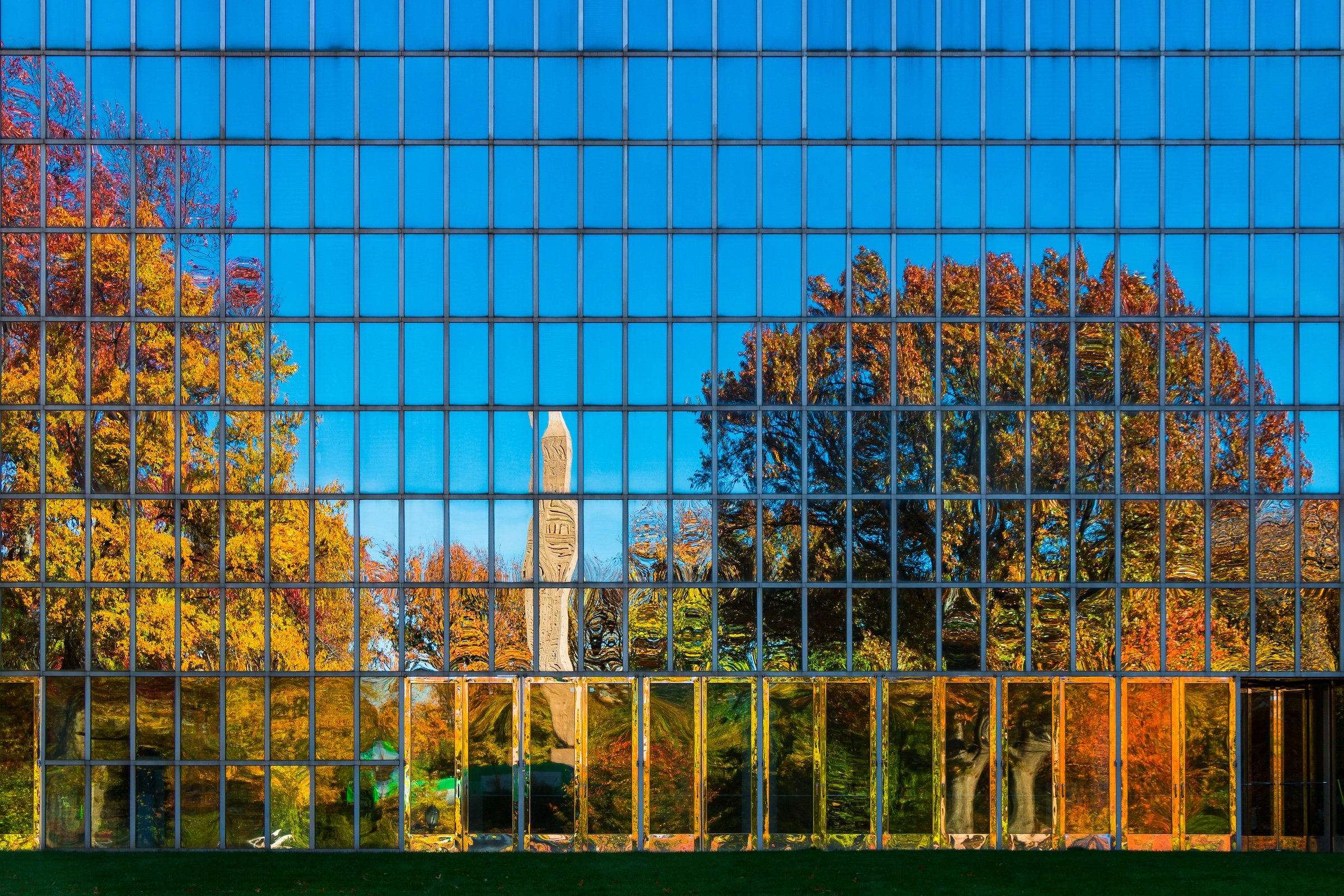
THE METROPOLITAN MUSEUM OF ART
Location
Geographic Setting
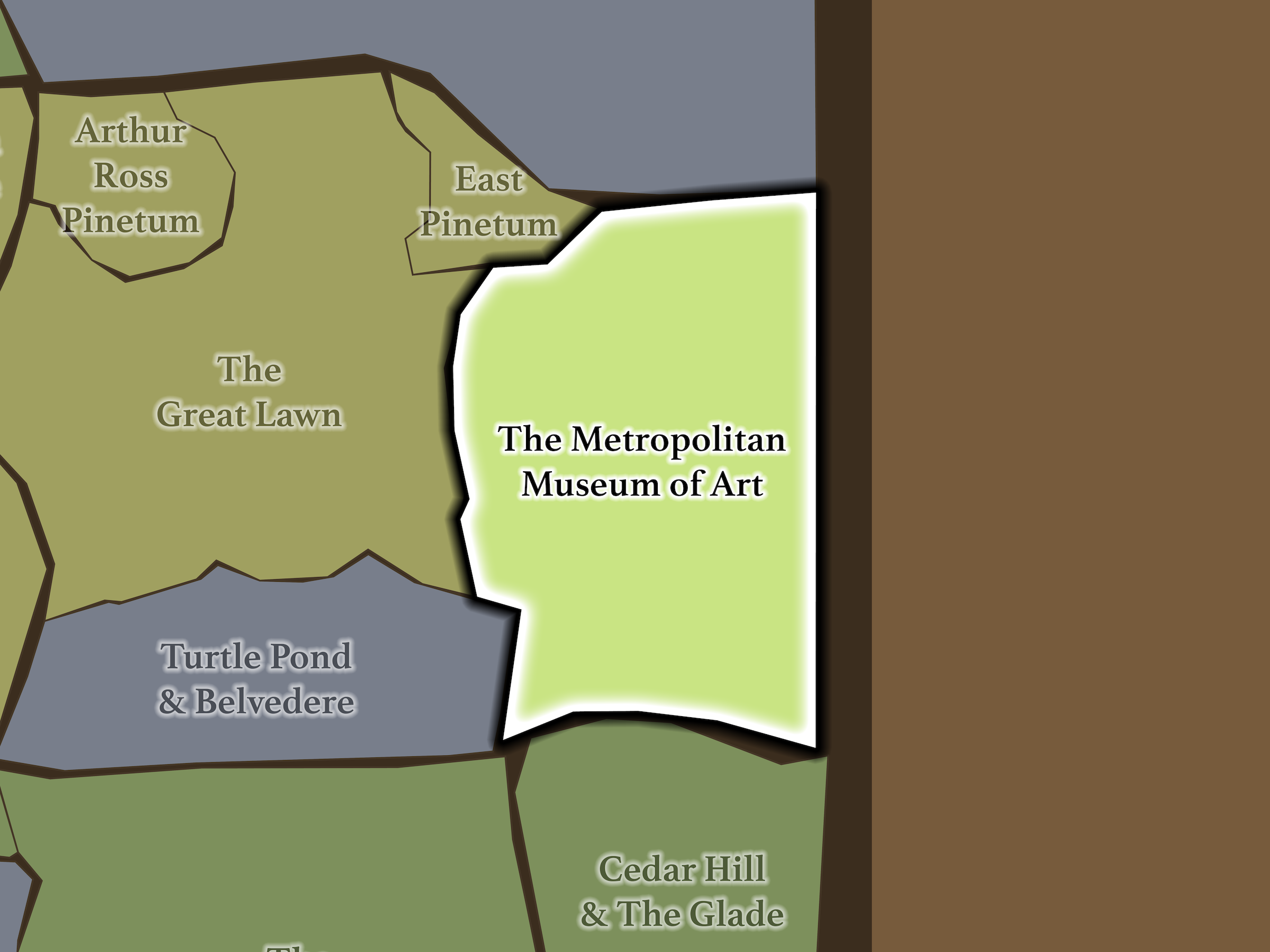
The Metropolitan Museum of Art occupies the eastern edge of Mid-Park between approximately East 79th and East 86th Streets. The Great Lawn lies across the Great Lawn Oval to the west; East Pinetum sits across East Drive; The Reservoir begins beyond the 86th Street Transverse; Metropolitan Hill lies across Fifth Avenue; and The Glade & Cedar Hill begin south of the 79th Street Transverse.
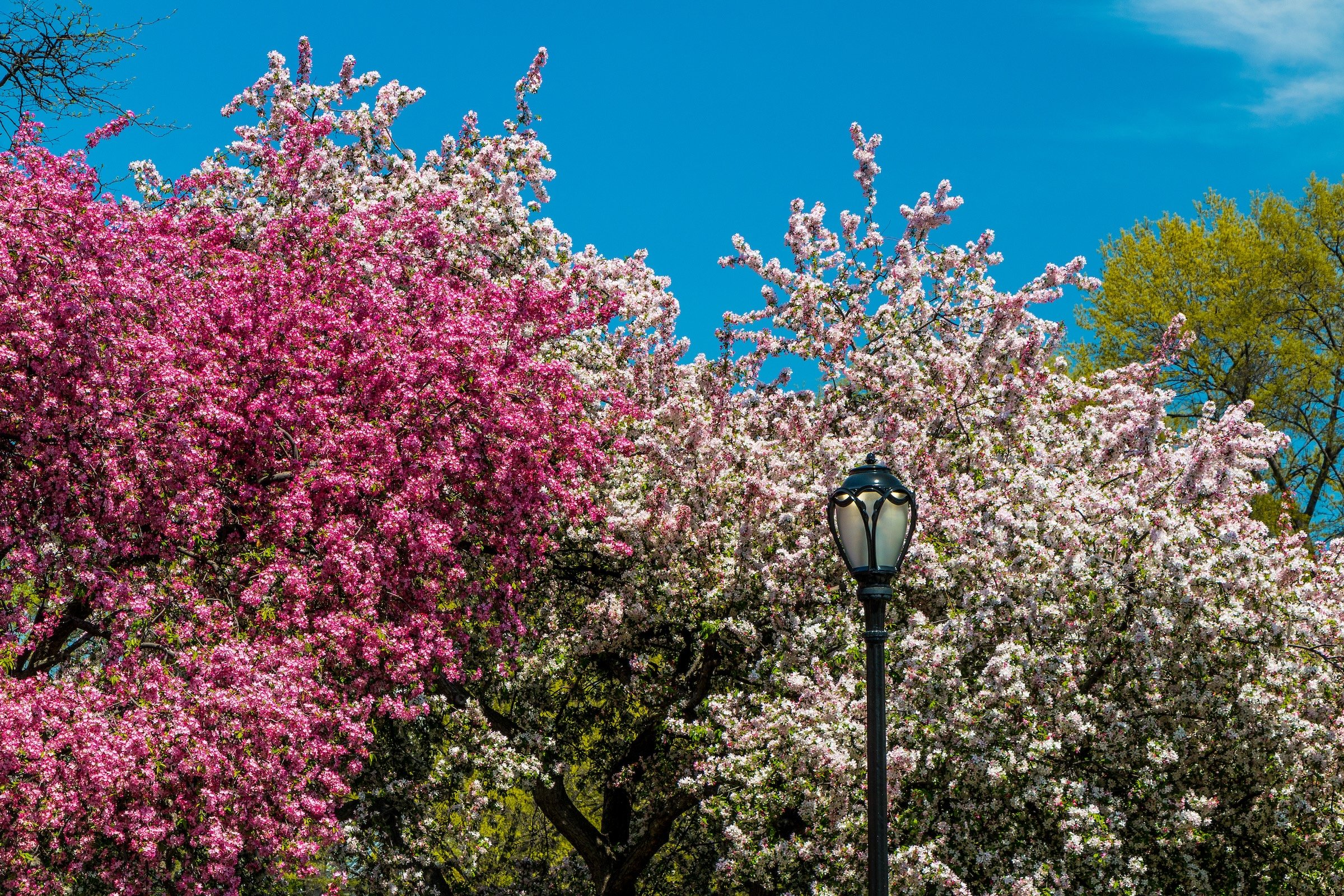
Although the Museum building dominates the neighborhood, the surrounding landscape remains distinctly park-like. Flowering trees, rock outcrops, benches and winding paths soften its enormous footprint, while East Drive and Greywacke Arch reconnect the institutional landscape with the Great Lawn beyond.
Etymology
The Metropolitan Museum of Art takes its name from the institution that dominates this stretch of Central Park’s eastern edge. The Met was founded in 1870 and moved to its permanent Central Park home in 1880, where it has expanded from a single Vaux-and-Mould building into a vast complex containing more than 1.5 million objects across roughly two million square feet.
But the neighborhood extends beyond the Museum walls. Monuments, ancient artifacts, playgrounds, arches and gathering spaces spill outward into the surrounding park, making this one of the places where Central Park and one of its great cultural institutions become difficult to separate.
History
1858–1873: Greensward Plan & Construction
A great art museum did not yet exist when Olmsted and Vaux won the Central Park competition in 1858, but the relationship between culture and parkland developed very early. The site for what became The Met was being considered even before the Museum itself was founded; by 1869, its location had been centered near Fifth Avenue and East 82nd Street.
Olmsted and Vaux regarded this eastern edge as particularly suitable for a substantial institutional building because the surrounding reservoir walls, rocky terrain and city edge limited its usefulness for the broad pastoral landscapes they preferred elsewhere. When the Museum was finally constructed, Calvert Vaux and Jacob Wrey Mould—already responsible for much of Central Park’s architectural vocabulary—designed its first building.
1858–1899: Early History & Grand Openings
The Metropolitan Museum of Art opened its Central Park building on March 30, 1880. Vaux and Mould’s original Ruskinian Gothic structure has since been almost completely enveloped by later additions, although portions remain visible from inside the modern Museum.
Almost immediately, the Museum’s cultural presence began spreading into the surrounding park.
In 1880, John C. Hamilton donated Carl H. Conrads’ granite monument to his father, Alexander Hamilton, placing another major work of historical sculpture beside the Museum landscape.
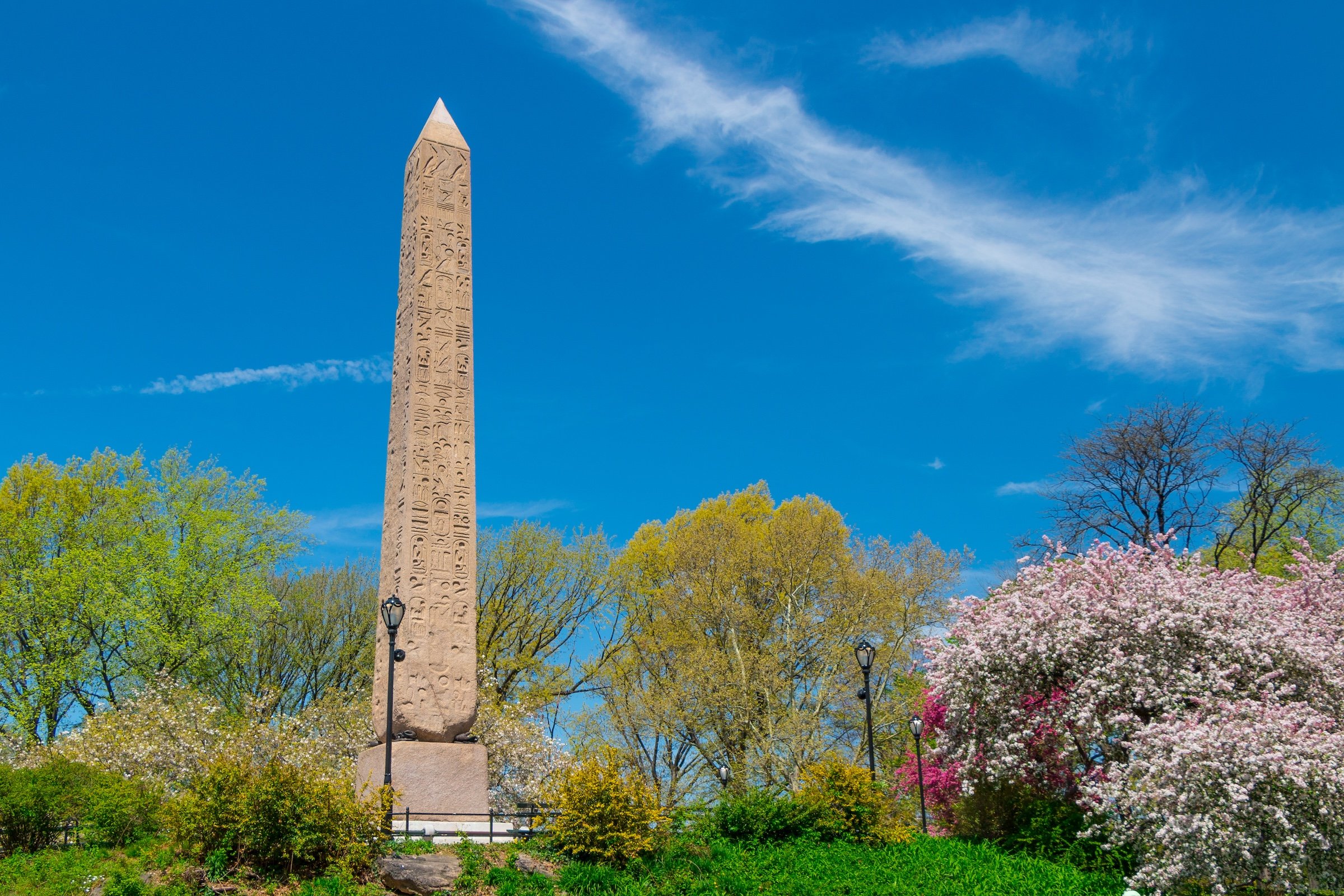
The following year brought something far older. The Egyptian Obelisk, commonly known as Cleopatra’s Needle, was erected on Greywacke Knoll in January 1881. Carved in Egypt around the fifteenth century BCE, the 220-ton monolith is both the oldest human-made object in Central Park and New York City’s oldest outdoor monument.
20th Century: Transformation & Restoration
The Met grew continually through the twentieth century, gradually surrounding Vaux and Mould’s original building with new wings and galleries. That growth repeatedly reshaped the neighboring park landscape as well.
Richard Morris Hunt’s monumental Beaux-Arts Fifth Avenue façade and Great Hall opened in 1902, creating the ceremonial face that now defines the institution from the city side.
The relationship is especially visible north and south of the Museum. A playground dedicated to former Met president William Church Osborn opened in 1953. When construction of the Museum’s Temple of Dendur wing displaced it during the 1970s, its Paul Manship gates were eventually moved to the new Ancient Playground, built in 1973 and deliberately inspired by the Museum’s Egyptian collections.
South of the Museum, another playground landscape emerged around Paul Manship’s Group of Bears. Samuel Friedman donated the sculpture in memory of his wife, designer Pat Hoffman Friedman, and it was dedicated in 1990 outside what became known as the Pat Hoffman Friedman Playground. The playground is now officially the Ruth and Arthur Smadbeck-Heckscher East Playground.
By then, the Museum was no longer simply a building placed inside Central Park. Its collections, architecture and institutional history had begun shaping the landscapes immediately around it.
Explore
21st Century: Renovation & Modernization
Today, this neighborhood operates almost like an outdoor extension of The Met.
The Museum walls may define where admission-controlled galleries begin, but they do not define where the encounter with art ends. Step outside and Cleopatra’s Needle rises from Greywacke Knoll. Alexander Hamilton stands beside East Drive. Paul Manship’s bears greet children outside a playground, while smaller versions appear on the Osborn Gates farther north. Ancient Playground translates Egyptian architecture into play structures inspired in part by the Temple of Dendur. Greywacke Arch, itself a carefully ornamented piece of nineteenth-century park architecture, carries visitors beneath East Drive toward the Great Lawn.
Between them are flowering trees, lawns, benches, rocky ground and winding pedestrian paths. Along Fifth Avenue, the Museum steps and plaza create one of New York’s great informal gathering places, augmented by food and art vendors and the constant movement of visitors between Museum, park and city.
And the landscape is still evolving. In September 2026, The Met broke ground on Frida Escobedo’s new Oscar L. Tang and H.M. Agnes Hsu-Tang Wing, scheduled to open in 2030. The project remains within the Museum’s existing footprint but will include new terraces and approximately 18,500 square feet of outdoor space, while the Central Park Conservancy is simultaneously planning new paths, lawns, trees and plantings around the building.
That project makes the relationship especially explicit: even the Museum’s newest architecture is being designed in dialogue with Central Park as both landscape and view.
Waypoints
-
Richard Dattner’s 1973 adventure playground translates the nearby Museum’s Egyptian collection into pyramids, an obelisk, water features and interconnected play structures. It was comprehensively rebuilt in 2009 while retaining that original concept.
-
Carl H. Conrads’ granite figure of Hamilton was donated by the statesman’s son and dedicated in 1880, the same year The Met opened its Central Park building
-
This ornate sandstone arch carries East Drive above the pedestrian route between the Museum landscape and Great Lawn. Its pointed opening and decorative ironwork make it one of Central Park’s more distinctive examples of Vaux’s layered circulation system.
-
Paul Manship’s bronze trio was installed in 1990 in memory of Pat Hoffman Friedman. Children are invited to climb its forms, making sculpture here something to physically encounter rather than merely observe
-
Opened at this location in 1880, The Met grew from Vaux and Mould’s original building into one of the world’s great encyclopedic museums. Its architecture itself forms a chronology, with the original structure now embedded inside more than a century of subsequent expansion.
-
This intimate playground south of The Met is commonly associated with the Pat Hoffman Friedman name and its Three Bears sculpture; the present official playground was rebuilt by the Conservancy in 2014.
-
Carved in Egypt roughly 3,500 years ago and erected in Central Park in 1881, this 220-ton granite monument stands on Greywacke Knoll behind The Met. It is the oldest human-made object in Central Park.
-
Paul Manship’s 1953 bronze gates depict scenes from Aesop’s Fables and were originally created for a playground honoring former Met president William Church Osborn. They were relocated to Ancient Playground after expansion of the Museum displaced their original setting.
Photography
Visual Identity
Central Park has no single visual identity. It moves between open meadow and enclosed woodland, exposed bedrock and carefully planted garden, reflective water and hard-edged skyline. Its paths can narrow into shade beneath old trees, then open suddenly toward towers, lakes, monuments, or a broad field filled with people. The Park’s character is made from those transitions: the designed discovery of one landscape giving way to another.
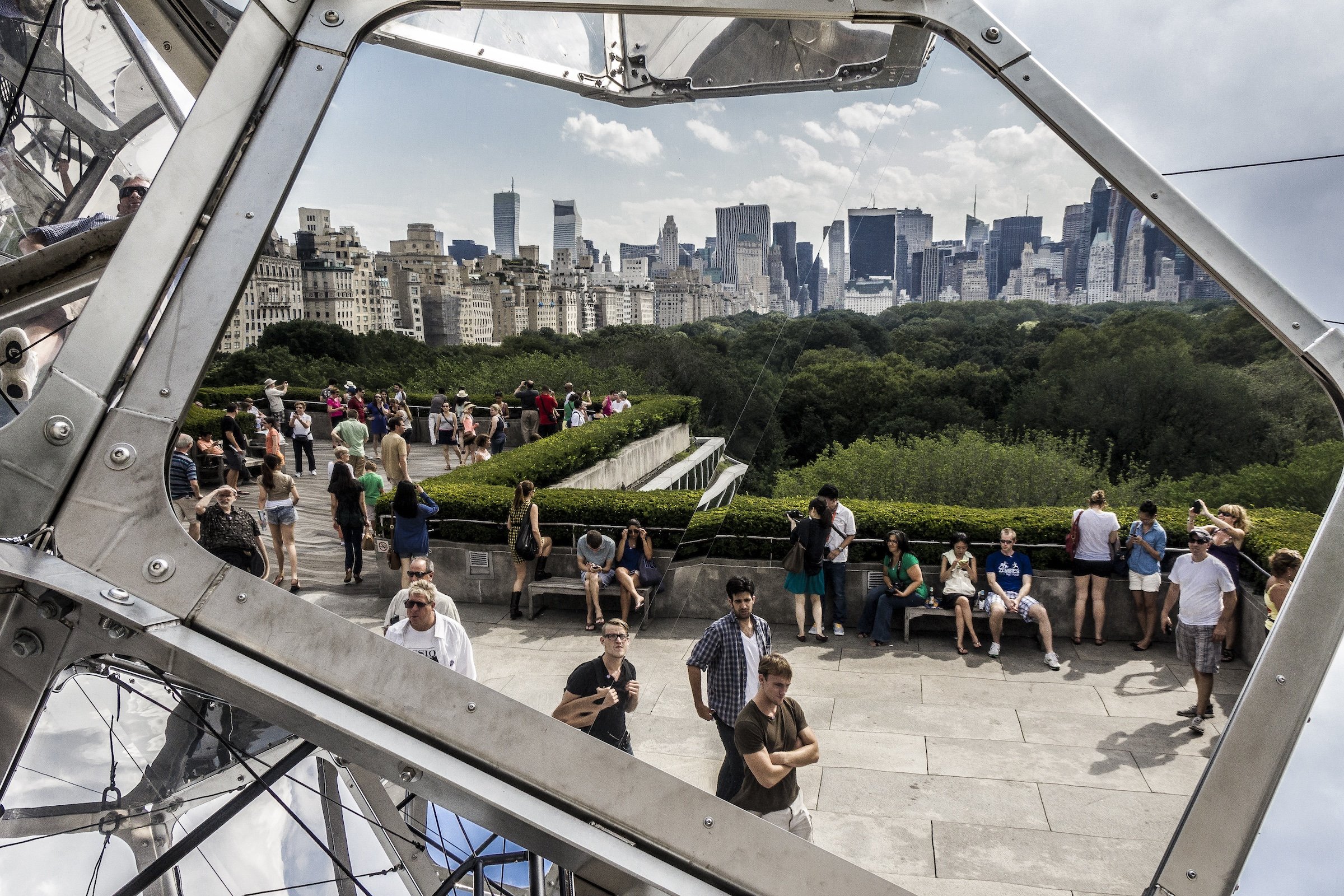
Water and horizon recur throughout its geography. The Lake, Reservoir, ponds, fountains, and seasonal pools of light create places of reflection—sometimes literal, sometimes figurative—where the city appears fractured, softened, or enlarged. Beyond them, Manhattan’s towers remain present as a constant reminder that this cultivated landscape exists within, not apart from, one of the world’s densest cities.
Its visual language also changes dramatically with the seasons. Winter exposes branches, stone, and skyline; spring briefly turns the Park into blossom and color; summer fills its lawns and paths with activity; autumn intensifies the drama of canopy, water, and light. Central Park is designed to be revisited, and its identity is never fixed for long.