
MOUNTCLIFF
Location
Geographic Setting
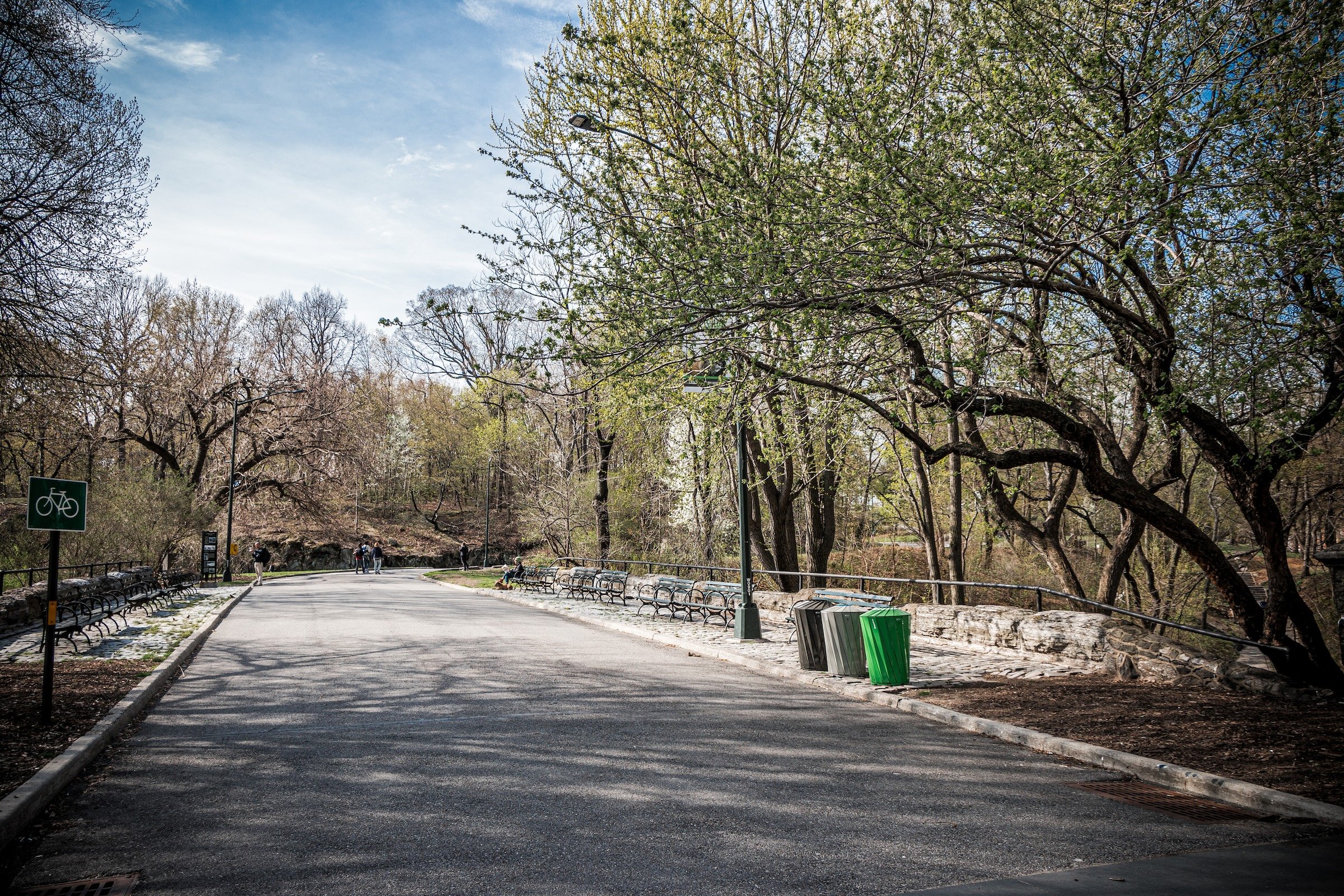
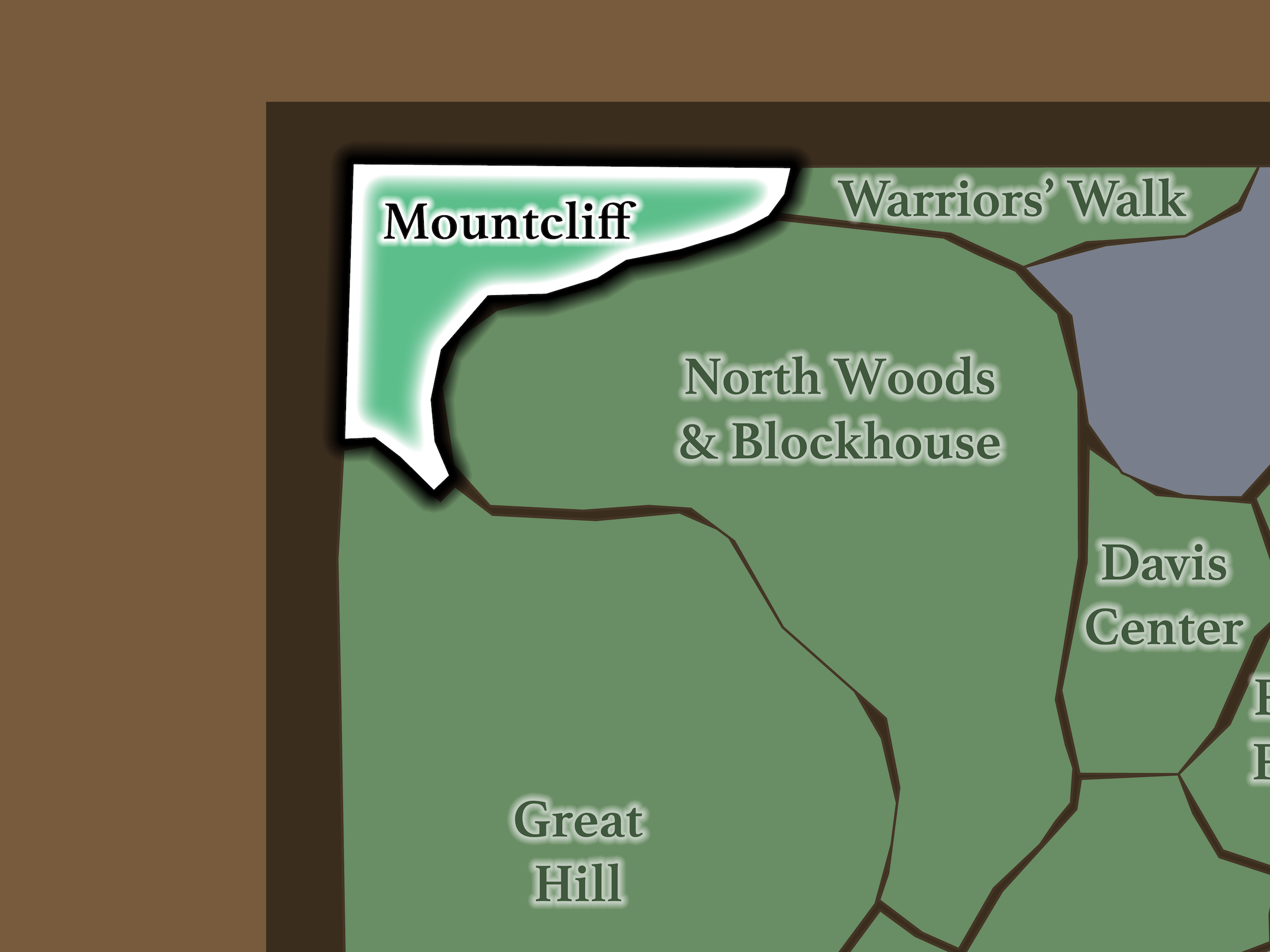
Mountcliff occupies the northwestern corner of Central Park. Warriors’ Walk and North Woods & Blockhouse lie beyond East Drive to the east and southeast; Great Hill rises to the south; Central Park West separates the neighborhood from Manhattan Valley; and Harlem begins immediately across Central Park North.
This is fundamentally a corridor of ascent.
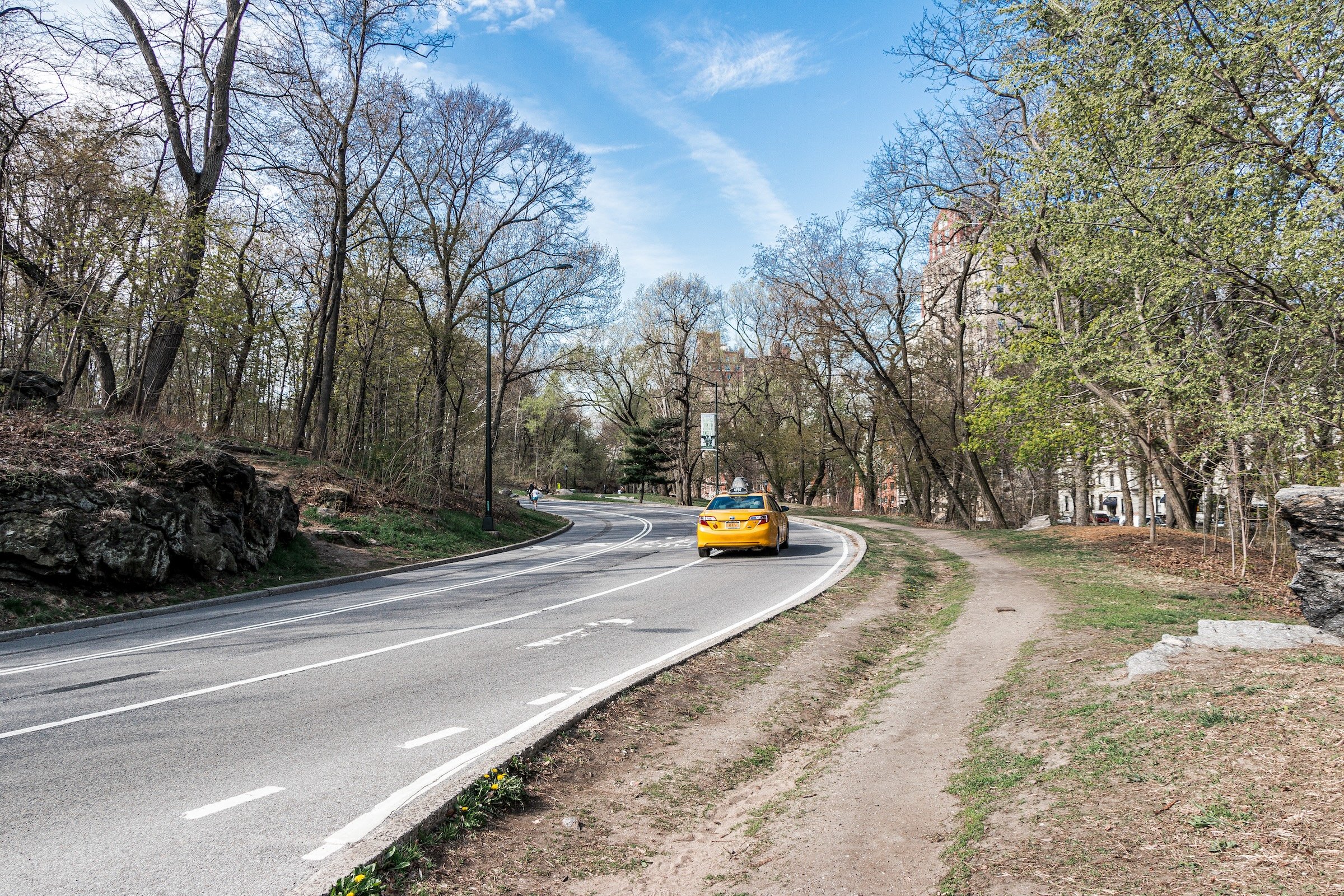
Entering from Frederick Douglass Circle, the landscape initially feels compressed between roadway, rock walls and mature trees. Paths then wind upward and eastward toward Great Hill and the Blockhouse, while small lawns and planted areas interrupt the steep terrain.
The Darlene & Julien Yoseloff Playground—the former West 110th Street Playground—is itself set in a small valley enclosed by dramatic rock outcrops and mature trees, reinforcing the neighborhood’s unusual combination of elevation and enclosure.
Etymology
Mountcliff takes its name from Mountcliff Arch, the monumental stone span at Central Park’s northwestern corner near West 110th Street. Built in 1890, the arch carries the roadway above a pedestrian approach from what is now Frederick Douglass Circle. At roughly 48 feet in overall height, it is the tallest of Central Park’s arches.
Within the CityNeighborhoods taxonomy, Mountcliff expands that architectural name to the surrounding landscape—a particularly appropriate evolution because the area itself is defined by cliff-like rock, steep ascent and the climb toward the high ground of the North Woods.
History
1858–1873: Greensward Plan & Construction
The ruggedness of Mountcliff belongs to the natural topography that made the North End fundamentally different from Central Park’s flatter southern landscapes.
Olmsted and Vaux deliberately preserved and emphasized these rocky elevations, using paths and drives to draw visitors upward into scenery intended to evoke more remote northeastern woodlands. The adjoining North Woods, today Central Park’s largest woodland, was designed specifically to suggest the Adirondacks through steep terrain, dense canopy and irregular pathways.
The land immediately east of Mountcliff also carried much older military associations. The high ground around the Blockhouse was part of the defensive system hastily constructed in 1814 during the War of 1812; the surviving Blockhouse remains the oldest standing structure in Central Park.
Mountcliff therefore functions naturally as an approach to that elevated North Woods landscape.
1858–1899: Early History & Grand Openings
During Central Park’s nineteenth-century development, visitors approaching the northwest corner encountered one of the park’s steepest transitions between city and interior landscape.
The ultimate architectural expression of that transition arrived somewhat later than the park’s initial construction. In 1890, Mountcliff Arch was built near West 110th Street, allowing the pedestrian route to pass beneath the roadway leading toward West Drive. Constructed of gneiss and rock-faced ashlar, its enormous height reflects the dramatic grade change at this corner of the park.
Rather than flattening the difficult terrain, the design exploited it. A necessary piece of circulation infrastructure became a monumental entrance into the North End.
20th Century: Transformation & Restoration
The western perimeter gradually acquired more recreational infrastructure during the twentieth century.
A playground was constructed near West 110th Street during the 1930s, part of the broader expansion of playgrounds around Central Park’s perimeter. By the early twenty-first century, however, the facility had changed little and required substantial reconstruction.
The Central Park Conservancy rebuilt it in 2006–2007, working deliberately with the unusual site rather than against it. The playground was arranged into separate play zones within the existing valley, using the steep rock cliffs and mature tree canopy as its natural backdrop.
That relationship between built recreation and rugged landscape anticipates a principle increasingly visible throughout contemporary Central Park: new interventions work best when they fit into the terrain rather than erase it.
Explore
21st Century: Renovation & Modernization
Today, Mountcliff is one of Central Park’s less obvious but most satisfying walking landscapes.
There is no singular destination commanding the neighborhood. Instead, the experience comes from movement: passing beneath or around Mountcliff Arch, following paths through flowers and trees, crossing small lawns, and continually gaining elevation toward Great Hill and the North Woods.
The rocky slopes create moments of surprising enclosure. Harlem and Manhattan Valley may be only yards away, but walls of stone and mature vegetation can quickly obscure the surrounding city. Then a path rises, the landscape opens again, and another route presents itself.
That gives Mountcliff much in common with your other Walk-oriented neighborhoods, although I think retaining the stronger historical name is the right choice. Its function is corridor, but its identity comes from the topography through which that corridor passes.
It also makes an effective western threshold into the North End. From here, visitors can climb toward the Blockhouse, descend toward the Harlem Meer, continue south toward Great Hill, or follow the northern edge toward Warriors’ Walk.
Waypoints
-
Set in a small valley surrounded by rock cliffs and mature trees, this playground occupies one of Central Park’s most dramatic recreational settings. The Conservancy substantially rebuilt it in 2006–2007, integrating separate play areas and water play into the existing terrain.
-
Located at Central Park North and Adam Clayton Powell Jr. Boulevard / Seventh Avenue, Warriors’ Gate belongs to the original system of named park entrances. Its military theme is especially appropriate beside a North End landscape containing the surviving Blockhouse and other remnants of New York’s historic defensive geography.
Photography
Visual Identity
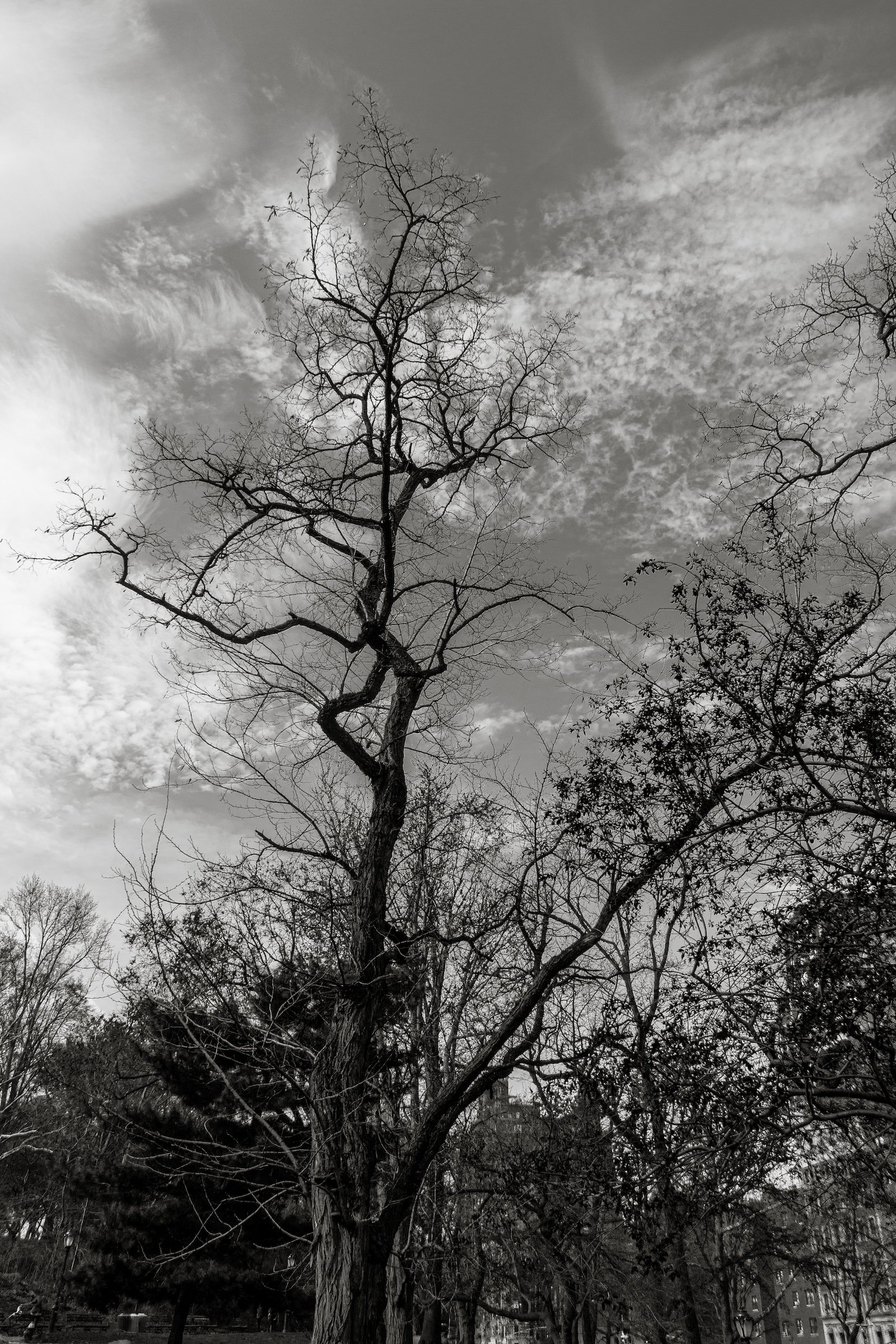
Central Park has no single visual identity. It moves between open meadow and enclosed woodland, exposed bedrock and carefully planted garden, reflective water and hard-edged skyline. Its paths can narrow into shade beneath old trees, then open suddenly toward towers, lakes, monuments, or a broad field filled with people. The Park’s character is made from those transitions: the designed discovery of one landscape giving way to another.
Water and horizon recur throughout its geography. The Lake, Reservoir, ponds, fountains, and seasonal pools of light create places of reflection—sometimes literal, sometimes figurative—where the city appears fractured, softened, or enlarged. Beyond them, Manhattan’s towers remain present as a constant reminder that this cultivated landscape exists within, not apart from, one of the world’s densest cities.
Its visual language also changes dramatically with the seasons. Winter exposes branches, stone, and skyline; spring briefly turns the Park into blossom and color; summer fills its lawns and paths with activity; autumn intensifies the drama of canopy, water, and light. Central Park is designed to be revisited, and its identity is never fixed for long.