
MERCHANTS’ GATE
Location
Geographic Setting
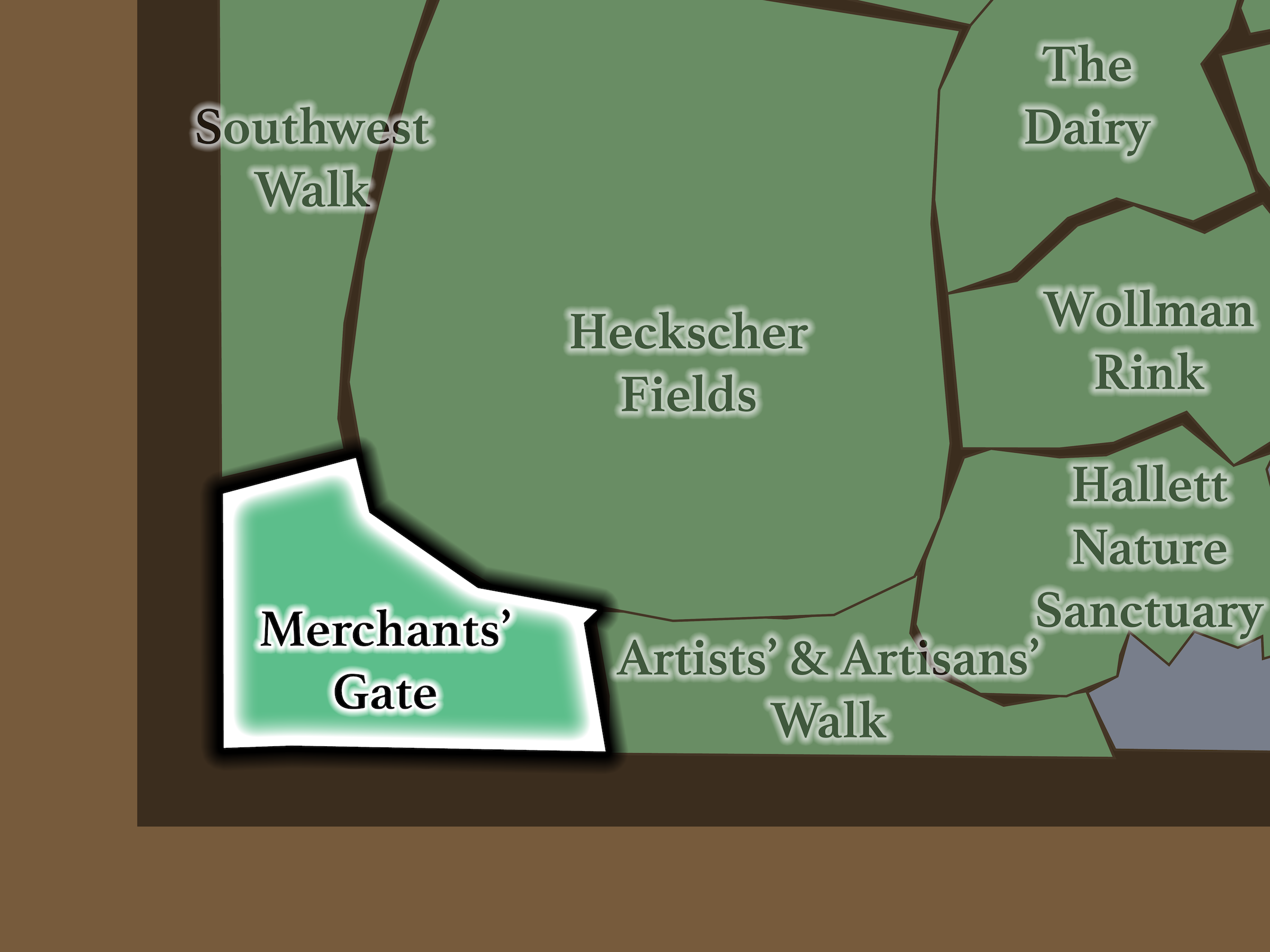
Merchants’ Gate occupies Central Park’s southwestern corner at Columbus Circle. Southwest Walk extends north along the park edge; Heckscher Fields lie beyond West Drive; Artists’ & Artisans’ Walk continues east along the South End; Midtown begins across Central Park South; and Lincoln Square lies beyond Central Park West.
It is one of Central Park’s principal points of arrival and today its most heavily used entrance, receiving nearly four million visitors annually. From the plaza, paths pass beneath and around West Drive toward Heckscher Fields, with Greyshot Arch forming one of the most important transitions from city edge into park interior.
Etymology
Merchants’ Gate takes its name from the Central Park entrance at Eighth Avenue and West 59th Street. In 1862, the Park Commissioners named the four principal southern entrances for broad groups whose work contributed to New York City: Scholars, Artists, Artisans and Merchants. The latter included bankers, importers, traders, shopkeepers and others associated with the city’s commercial life.
History
The Greensward Plan
Olmsted and Vaux conceived Central Park’s entrances as relatively understated thresholds rather than monumental gateways. The designers wanted visitors to move quickly from the surrounding city into the park landscape, while the broader circulation system separated pedestrians from carriage traffic and other forms of movement.
The southwest corner was therefore less a ceremonial plaza than an entrance into a larger recreational district. The Ball Ground and Children’s District lay immediately beyond, while Greyshot Arch allowed pedestrians approaching from the corner to pass beneath West Drive without interrupting carriage circulation.
The Grand Opening
By 1862, the entrance had formally become Merchants’ Gate, one of the named portals intended to symbolize the diversity of people and occupations that made up New York City. As with the other named gates, however, the designation initially existed mostly on maps rather than in carved stone.
In 1871, Jacob Wrey Mould designed an elaborate cast-iron Ombra near the entrance as a shelter for visitors waiting for carriages, horsecars and trolleys. Its presence emphasized the southwest corner’s role as both park entrance and transportation interchange.
20th Century
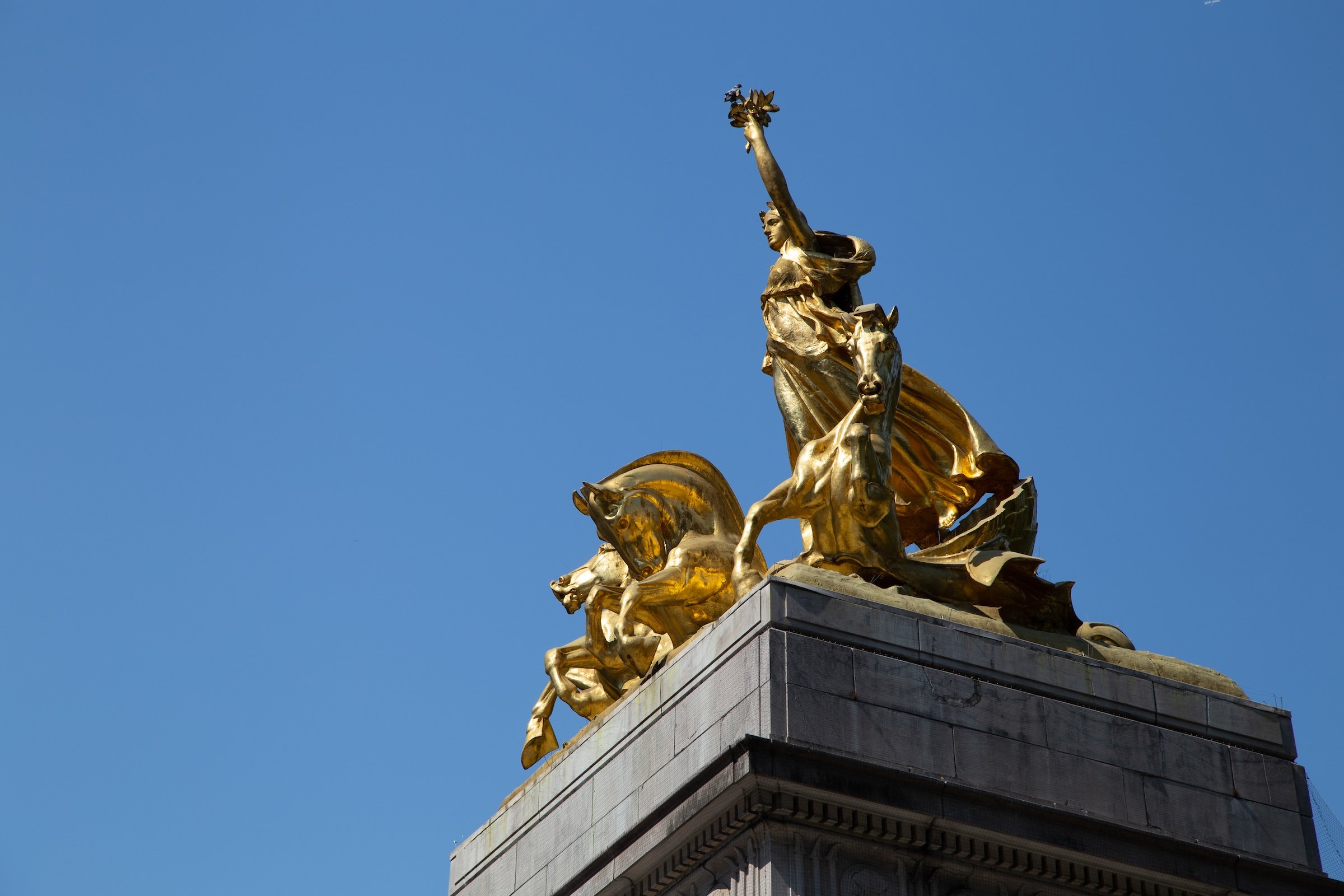
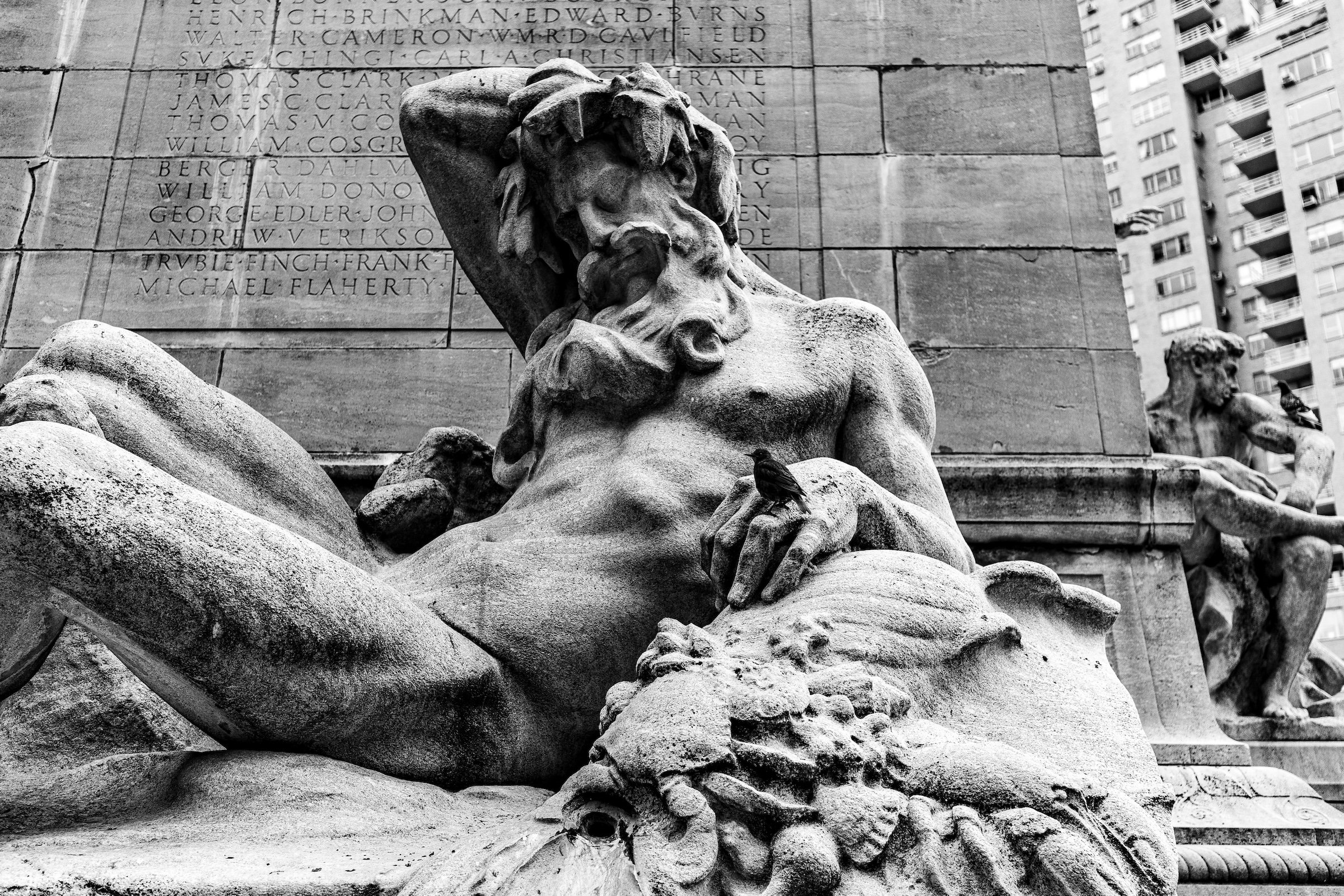
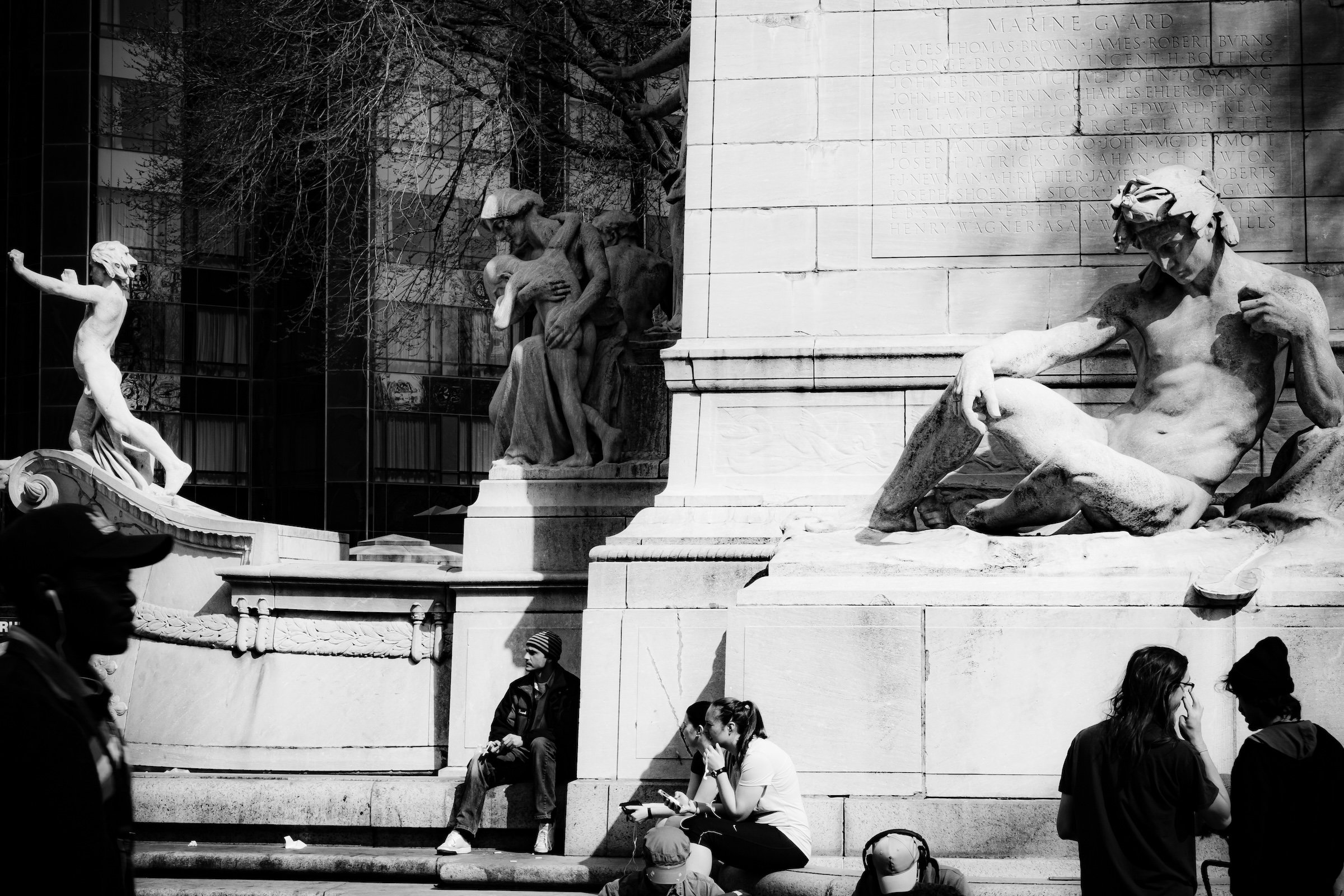
The character of the entrance changed dramatically in 1913, when the monumental U.S.S. Maine National Monument was installed at Merchants’ Gate. The 57-foot memorial commemorates the sailors killed when the battleship Maine exploded and sank in Havana Harbor in 1898. Designed by architect H. Van Buren Magonigle with sculpture by Attilio Piccirilli, it transformed the formerly restrained entrance into one of Central Park’s most conspicuous monumental gateways.
The installation displaced Mould’s Ombra, which was moved north to the Lake and became today’s Ladies Pavilion.
Like most Central Park gate names, “Merchants’ Gate” itself did not appear carved into the park wall until Conservancy work in the 1990s finally made the nineteenth-century naming system physically visible.
Explore
Contemporary Landscape
Today, Merchants’ Gate is among Central Park’s grandest entrances. The Maine Monument dominates the plaza above Columbus Circle, while pedestrian paths immediately begin drawing visitors beneath the trees and toward Heckscher Fields.
That transition is particularly effective because the monumental city-facing side quickly gives way to Central Park’s layered circulation system. Greyshot Arch carries West Drive over the pedestrian route toward the ballfields, turning the ceremonial entrance into movement through the landscape.
The plaza also acquires a completely different identity during the holiday season, when the Columbus Circle Holiday Market fills Merchants’ Gate Plaza with shops, food vendors and crowds. The Conservancy itself describes the market as an annual transformation of the entrance during December.
Waypoints
-
One of Central Park’s original circulation structures, Greyshot carries West Drive above the pedestrian route linking Merchants’ Gate with Heckscher Playground and the Ballfields. It marks the point where the monumental entrance gives way to the park’s quieter, layered system of movement.
-
Dedicated in 1913, the monumental entrance composition honors the sailors killed aboard the Maine in Havana Harbor. Its gilded sculptural group and towering architectural setting make it the defining visual landmark of Merchants’ Gate.
Photography
Visual Identity
Central Park has no single visual identity. It moves between open meadow and enclosed woodland, exposed bedrock and carefully planted garden, reflective water and hard-edged skyline. Its paths can narrow into shade beneath old trees, then open suddenly toward towers, lakes, monuments, or a broad field filled with people. The Park’s character is made from those transitions: the designed discovery of one landscape giving way to another.
Water and horizon recur throughout its geography. The Lake, Reservoir, ponds, fountains, and seasonal pools of light create places of reflection—sometimes literal, sometimes figurative—where the city appears fractured, softened, or enlarged. Beyond them, Manhattan’s towers remain present as a constant reminder that this cultivated landscape exists within, not apart from, one of the world’s densest cities.
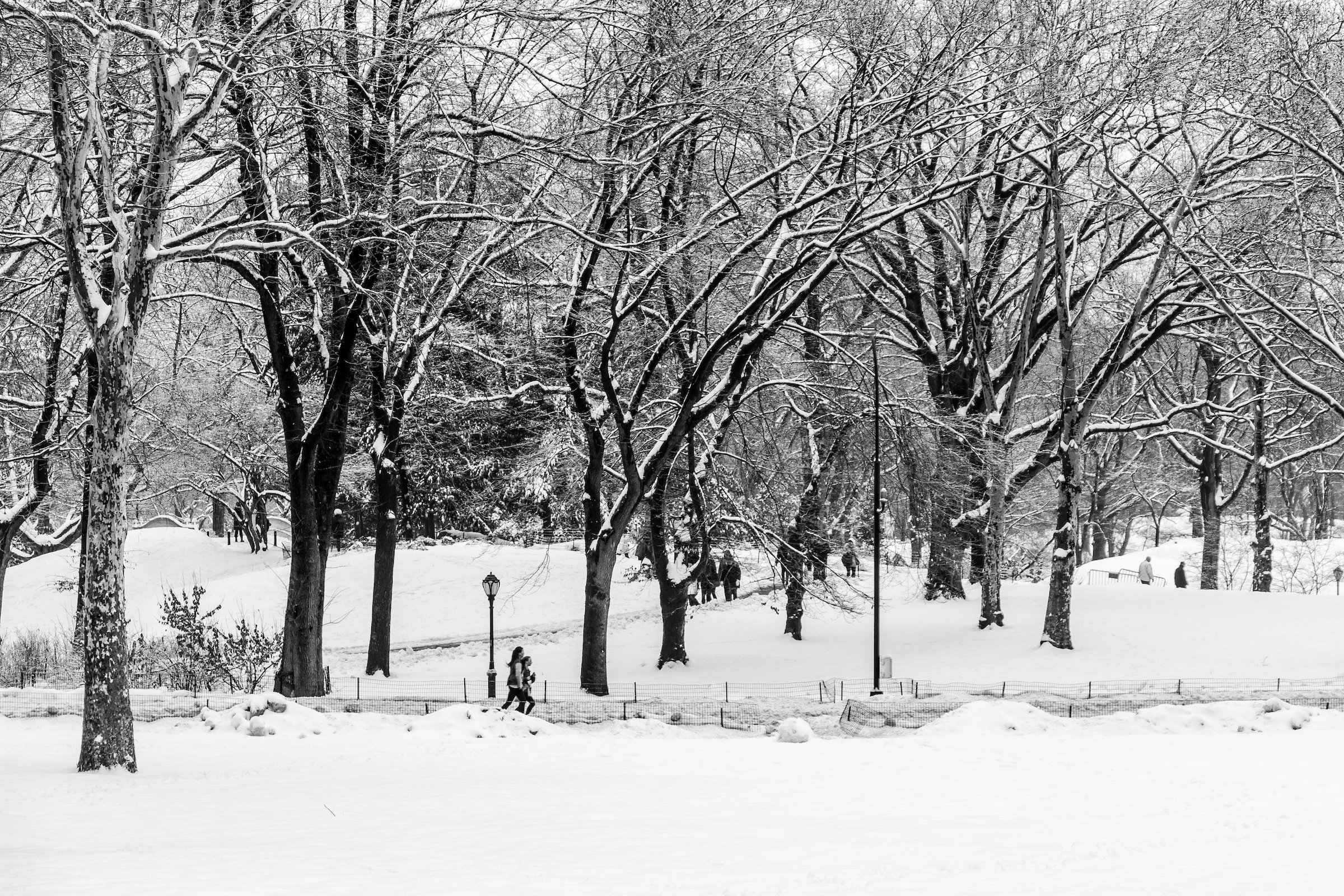
Its visual language also changes dramatically with the seasons. Winter exposes branches, stone, and skyline; spring briefly turns the Park into blossom and color; summer fills its lawns and paths with activity; autumn intensifies the drama of canopy, water, and light. Central Park is designed to be revisited, and its identity is never fixed for long.