
PILGRIM HILL
Location
Geographic Setting
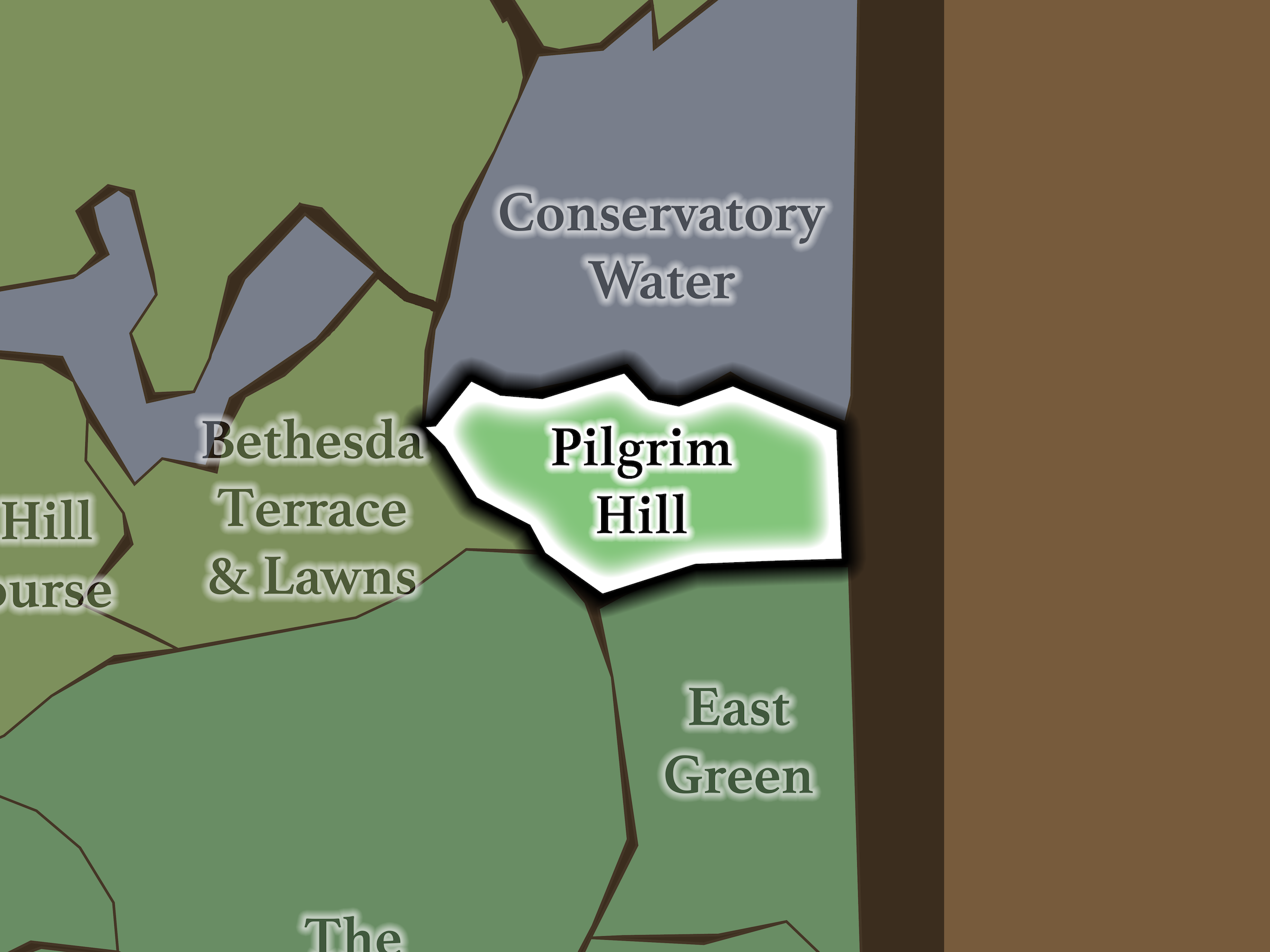
Pilgrim Hill occupies the eastern edge of Mid-Park South around East 72nd and 73rd Streets. Bethesda Terrace & Lawns lies to the west; Conservatory Water begins immediately north; Fifth Avenue separates the landscape from Lenox Hill; and The Mall and East Green lie beyond Terrace Drive to the south.
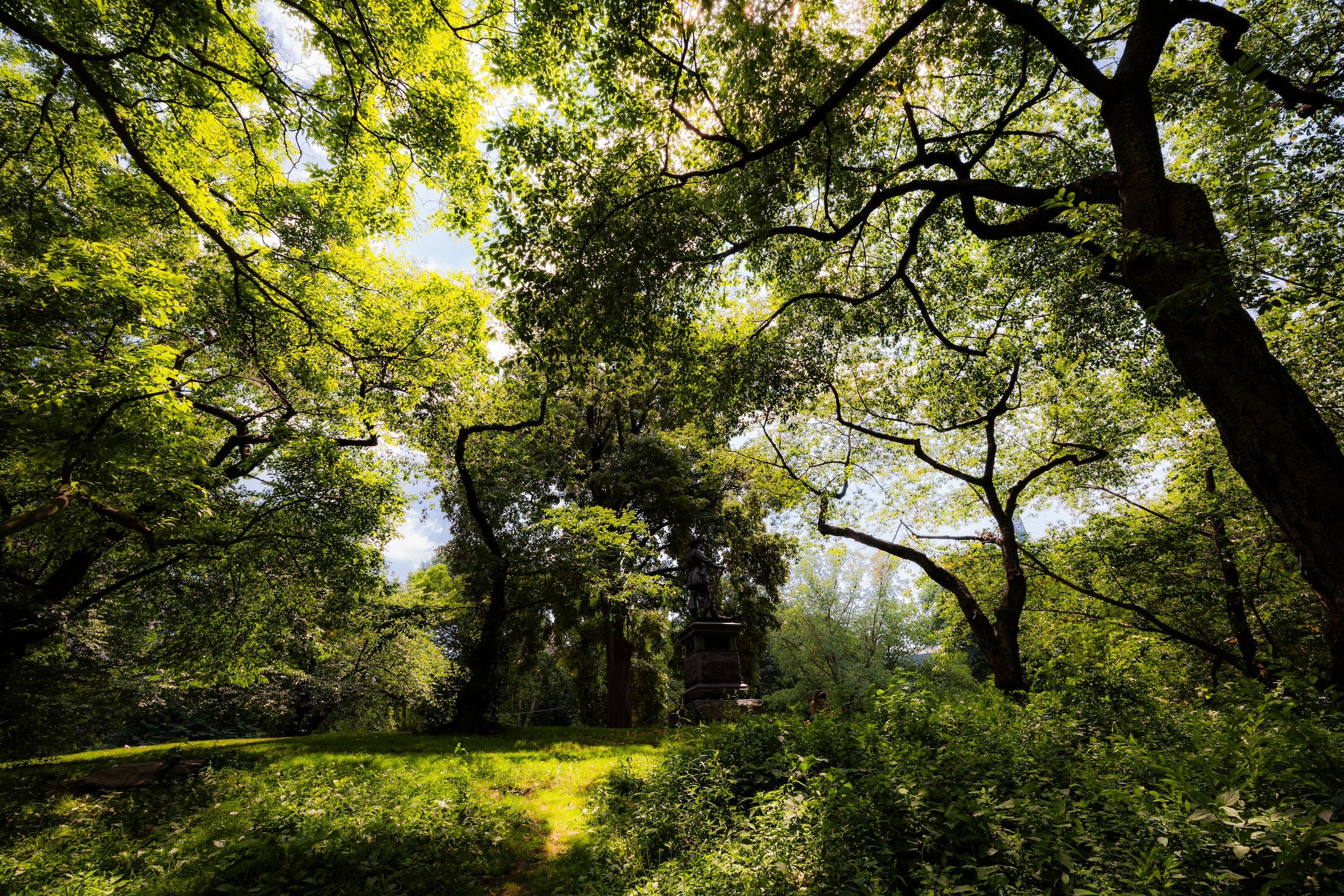
The neighborhood is defined primarily by slope. Paths rise from Terrace Drive and the Fifth Avenue edge toward the wooded crest, while lawns fall away toward Conservatory Water. Mature canopy encloses much of the landscape, punctuated in spring by Yoshino cherry trees. The Conservancy identifies Pilgrim Hill as one of Central Park’s notable cherry-blossom locations and one of its premier sledding hills in winter.
Etymology
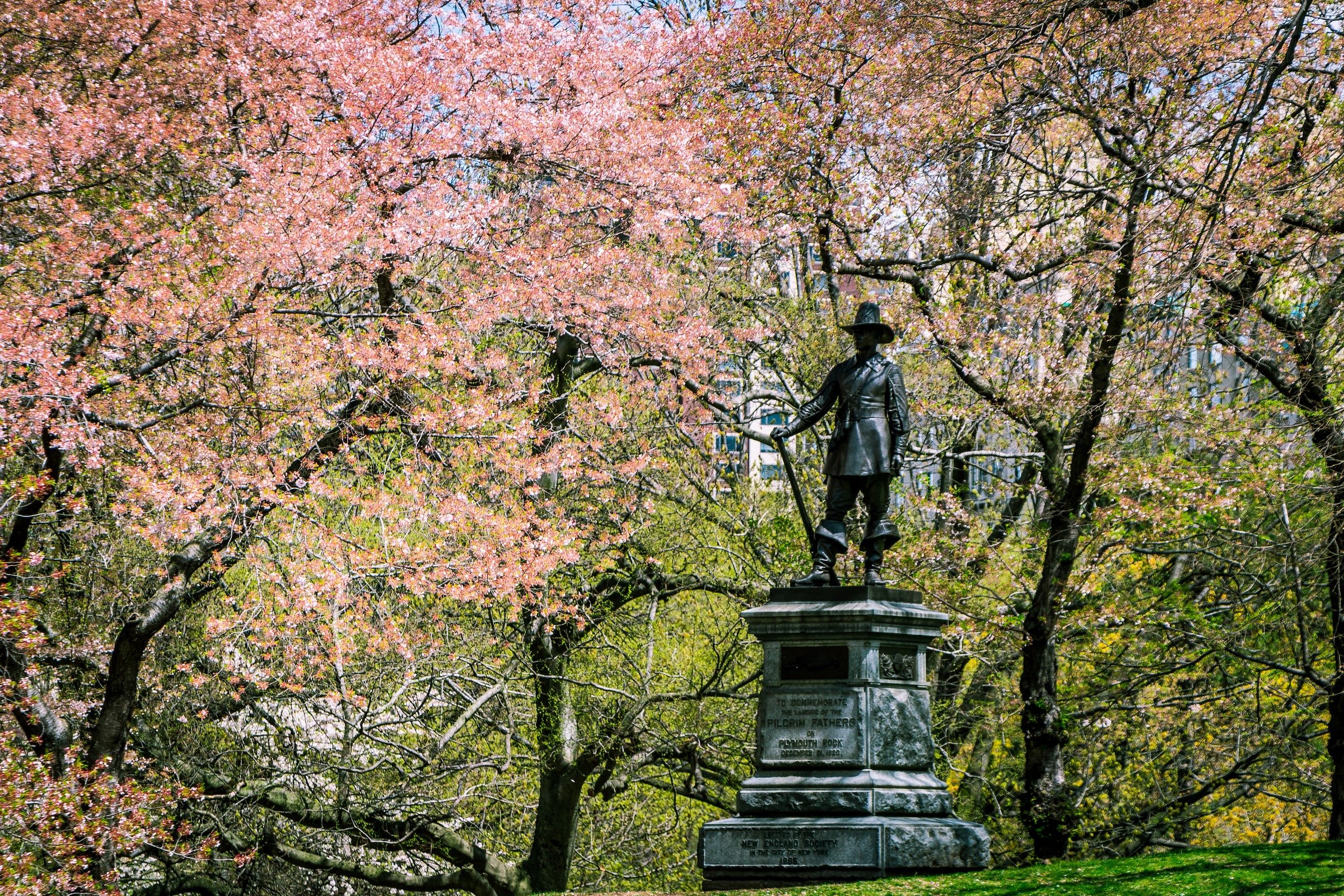
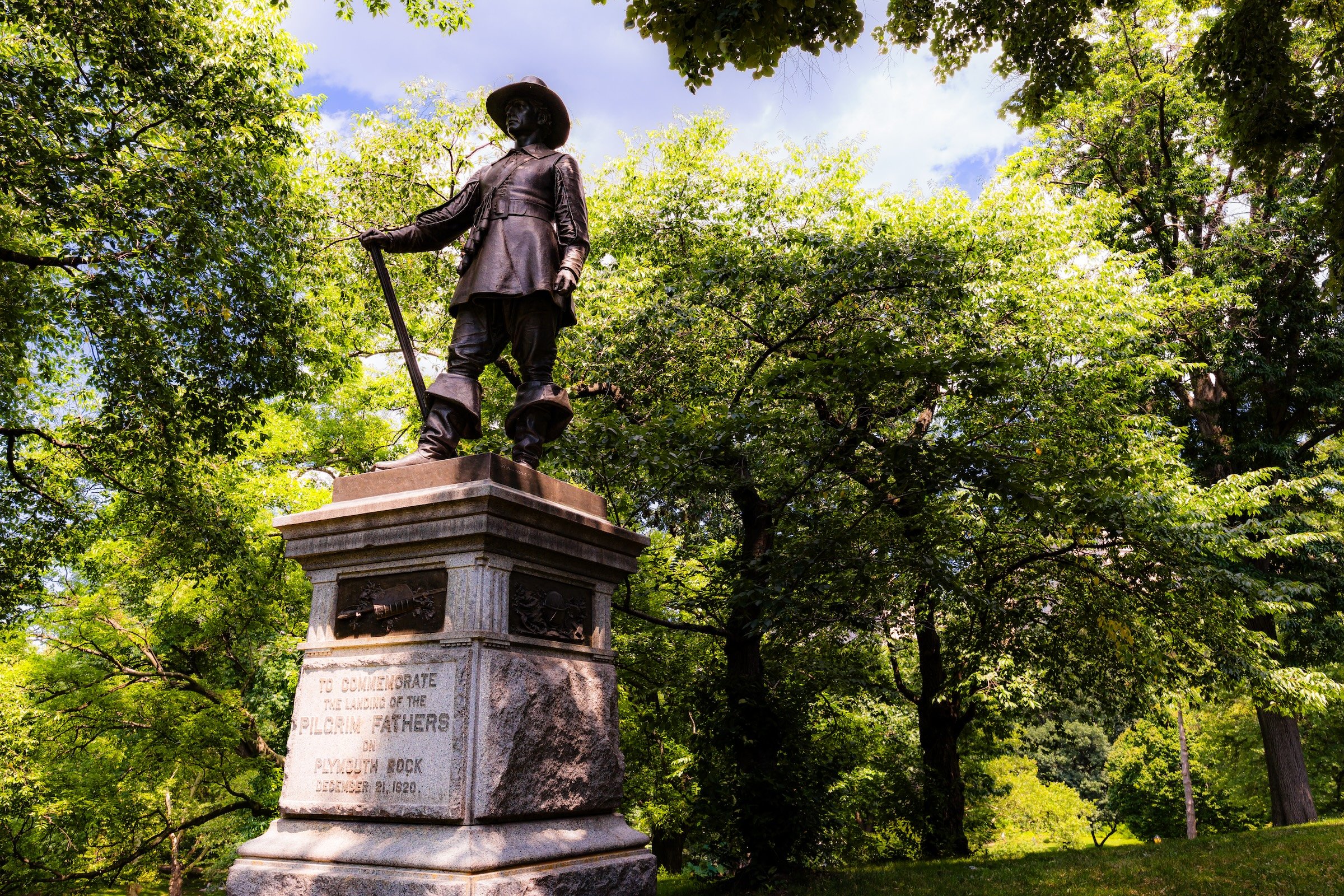
Pilgrim Hill takes its name from The Pilgrim, John Quincy Adams Ward’s bronze monument standing at its crest near East 72nd Street. The statue was unveiled in 1885 as a gift from the New England Society of the City of New York, commemorating the Pilgrims who landed at Plymouth in 1620. The hill subsequently became known by the monument overlooking it.
The sculpture does not portray a specific historical individual. Instead, Ward created an idealized seventeenth-century Puritan figure, while architect Richard Morris Hunt designed its pedestal with reliefs invoking the Mayflower, religion, navigation, industry and settlement.
History
1858–1873: Greensward Plan & Construction
There was no Pilgrim Hill in Olmsted and Vaux’s original vocabulary—the monument that ultimately gave the place its name would not arrive for nearly three decades.
The hill instead formed part of the gently rising eastern terrain between the formal landscapes surrounding The Mall and the proposed Conservatory Water. Its slopes, paths and tree cover helped mediate between Central Park’s architectural center and the Fifth Avenue edge.
That role remains legible today. Pilgrim Hill is neither formal plaza nor woodland sanctuary. It is a transitional pastoral landscape, using elevation, lawn and canopy to absorb movement between Terrace Drive, Conservatory Water and the eastern entrances.
1858–1899: Early History & Grand Openings
By Central Park’s early decades, East 72nd Street had become one of the park’s important access points. When commissioners established the park’s system of named entrances in the 1860s, the Fifth Avenue entrance here became Inventors’ Gate, honoring a category of people whose innovations had helped shape modern life.
The theme became unusually literal in 1871, when a monument to Samuel F. B. Morse was unveiled just inside the gate on his 80th birthday. Morse remains the only person to have had a Central Park monument erected during his own lifetime; afterward, park administrators adopted guidelines requiring commemorative subjects to be deceased.
Pilgrim Hill acquired its defining landmark fourteen years later. The New England Society commissioned Ward’s The Pilgrim, and more than 3,000 people attended its dedication on June 6, 1885. The Conservancy notes that the precise reason this hill was selected for the monument is uncertain, but the statue soon lent its name to the entire surrounding landscape.
20th Century: Transformation & Restoration
As monumental use settled into the landscape, Pilgrim Hill increasingly became known less for ceremony than for seasonal recreation.
Its broad slope made it a natural sledding ground, while cherry trees transformed the hill into a spring destination. The combination gave Pilgrim Hill a remarkably durable dual identity: pink blossoms when the weather warms, fast downhill runs when snow covers the ground.
The Pilgrim itself has undergone repeated conservation. A major treatment occurred in 1979, and another in 2015 used laser cleaning, steam treatment, replacement of missing details and a renewed protective coating.
Explore
21st Century: Renovation & Modernization
Today, Pilgrim Hill functions principally as a landscape of transition and pause.
Visitors approaching from Fifth Avenue climb gradually into the park beneath mature trees. Paths branch toward Bethesda Terrace & Lawns, Conservatory Water and The Mall, while the grassy slopes provide places to sit apart from the heavier pedestrian traffic of those destinations.
The hill’s character changes dramatically by season.
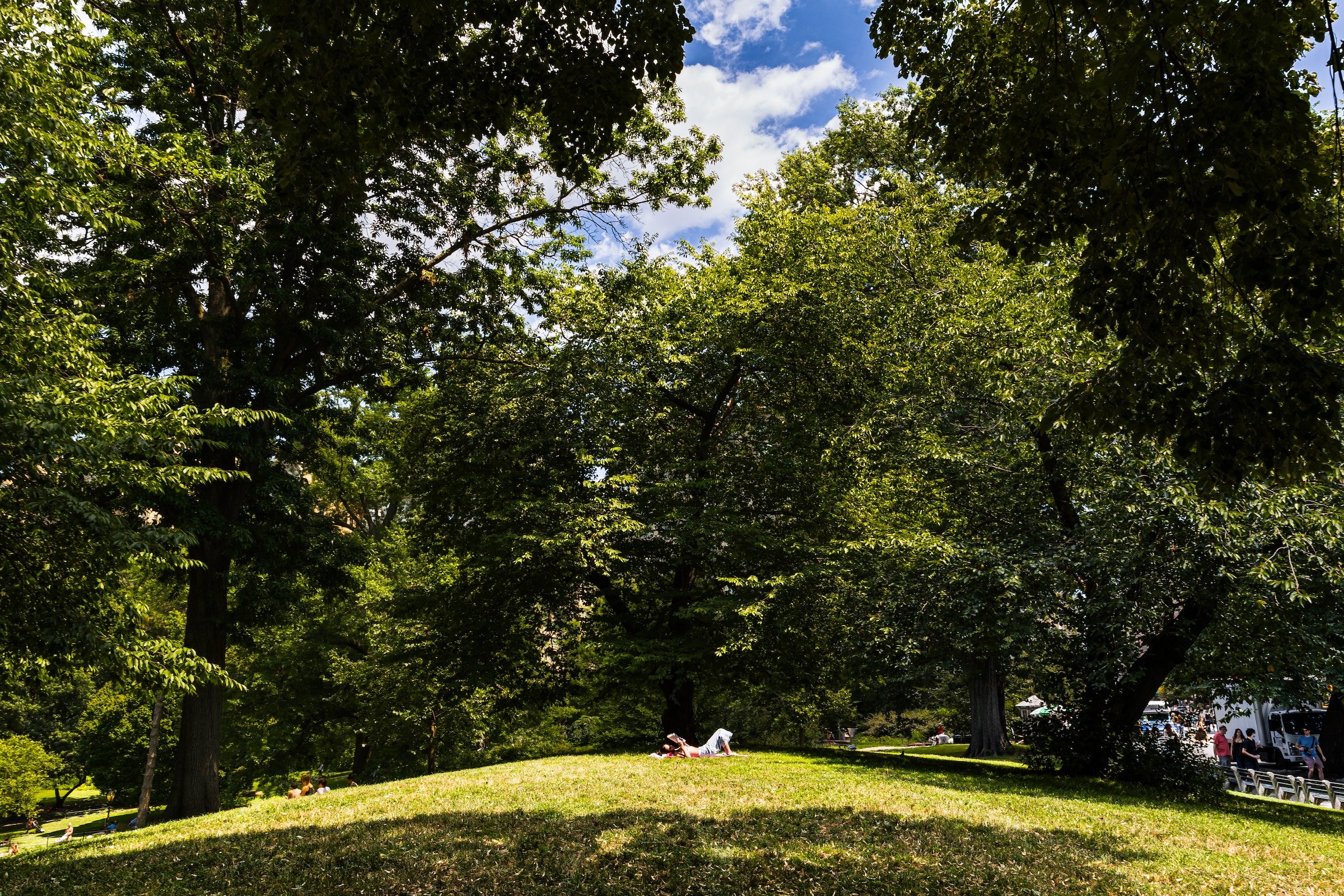
In spring, Yoshino cherries cover portions of the landscape in pink and white, linking Pilgrim Hill visually with the flowering trees surrounding Conservatory Water. Summer turns the slopes into shaded picnic and reading spaces. Autumn emphasizes the mature canopy and changes in elevation. And after sufficient snowfall, the same peaceful lawn becomes one of Central Park’s best-known sledding hills.
That versatility is what gives Pilgrim Hill its independent identity. It is surrounded by more famous destinations, but it does not feel like leftover territory between them. The hill itself is the experience—a shaded rise, a seasonal landscape and a quiet eastern threshold into the Heart of Central Park.
Waypoints
-
The Fifth Avenue entrance at East 72nd Street belongs to Central Park’s original system of gates honoring the people and occupations of New York. Its theme is reinforced by the nearby monument to Samuel F. B. Morse, creating one of the few places where the commissioners’ proposed relationship between gate name and commemorative sculpture was actually realized.
-
John Quincy Adams Ward’s 1885 bronze depicts an idealized Puritan settler standing above the landscape with musket at his side. The monument gave Pilgrim Hill its modern name and remains its unmistakable visual anchor.
Photography
Visual Identity
Central Park has no single visual identity. It moves between open meadow and enclosed woodland, exposed bedrock and carefully planted garden, reflective water and hard-edged skyline. Its paths can narrow into shade beneath old trees, then open suddenly toward towers, lakes, monuments, or a broad field filled with people. The Park’s character is made from those transitions: the designed discovery of one landscape giving way to another.
Water and horizon recur throughout its geography. The Lake, Reservoir, ponds, fountains, and seasonal pools of light create places of reflection—sometimes literal, sometimes figurative—where the city appears fractured, softened, or enlarged. Beyond them, Manhattan’s towers remain present as a constant reminder that this cultivated landscape exists within, not apart from, one of the world’s densest cities.
Its visual language also changes dramatically with the seasons. Winter exposes branches, stone, and skyline; spring briefly turns the Park into blossom and color; summer fills its lawns and paths with activity; autumn intensifies the drama of canopy, water, and light. Central Park is designed to be revisited, and its identity is never fixed for long.