
GRAND ARMY PLAZA & WIEN WALK
Location
Geographic Setting
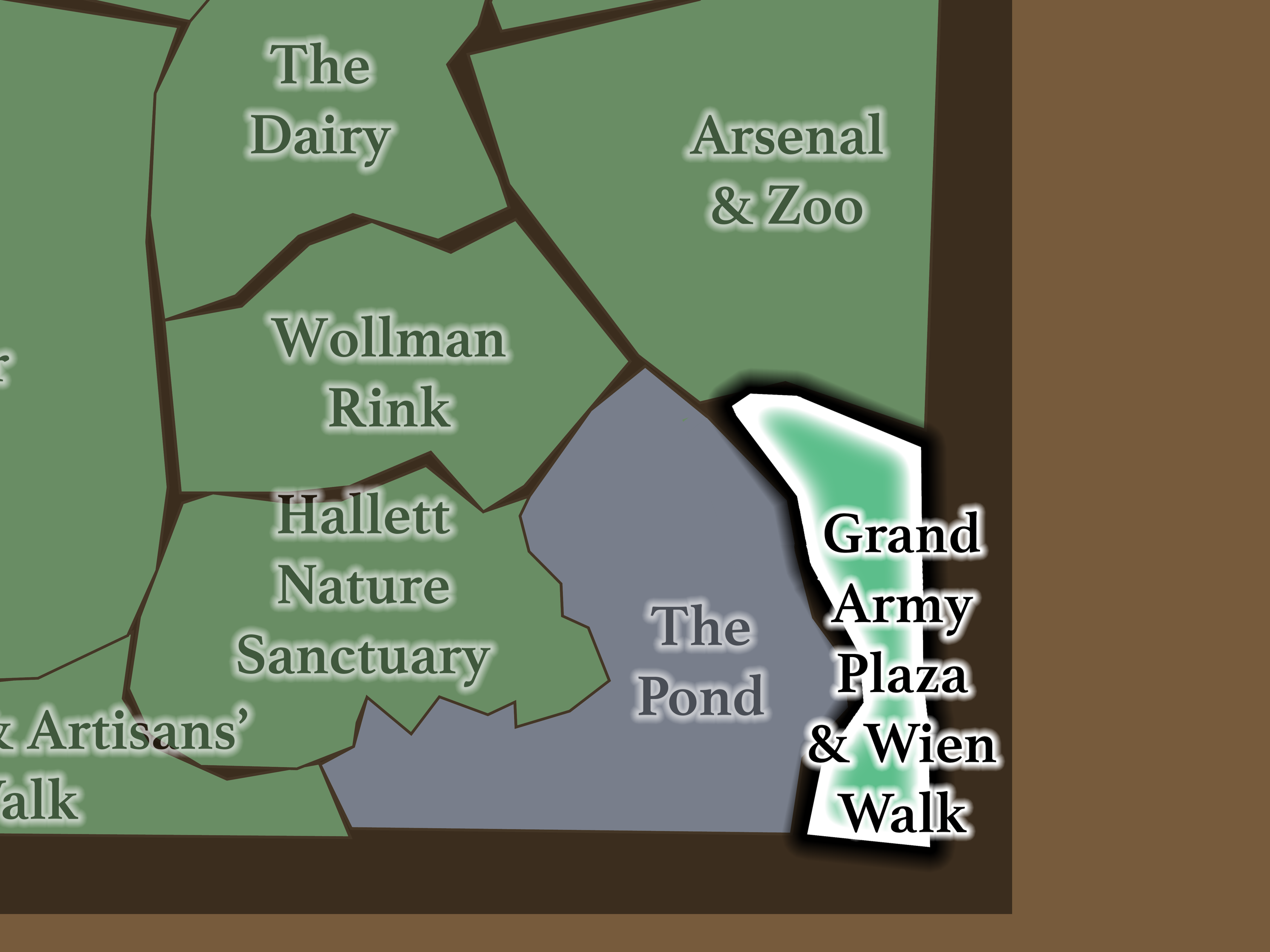
Grand Army Plaza & Wien Walk occupies the southeastern corner of the South End. Fifth Avenue separates it from Lenox Hill to the east, Central Park South marks its Midtown edge, and The Pond lies immediately to the west. Wien Walk extends north from Grand Army Plaza and Doris C. Freedman Plaza toward the Zoo and The Dene.
The landscape is defined less by enclosure than by funneling movement. Grand Army Plaza opens broadly onto Fifth Avenue and Midtown; Wien Walk then compresses that urban arrival into a narrower, planted pedestrian route that draws visitors deeper into the park.
Etymology
Grand Army Plaza & Wien Walk combines two adjoining identities at Central Park’s southeastern entrance. Grand Army Plaza commemorates the Union Army tradition, with the Central Park Conservancy describing the name as honoring the Grand Army of the Potomac. Wien Walk honors philanthropist Lawrence A. Wien, who funded restoration of the entrance path in 1988.
The compound name reflects the way the area actually functions: Grand Army Plaza is the civic point of arrival, while Wien Walk continues that arrival northward into Central Park.
History
The Greensward Plan
Olmsted and Vaux recognized the southeast corner as Central Park’s principal entrance, but deliberately resisted the European tradition of monumental gateways. Their original treatment, completed by 1860, was comparatively restrained: a circular traffic island ringed with elm trees between 59th and 60th Streets, allowing visitors to enter a rural landscape rather than pass through a triumphal architectural portal.
The circulation system behind that entrance was equally important. Paths, drives and arches—including Inscope Arch—separated pedestrians from carriage traffic while allowing movement from the southeastern entrance toward The Pond, Zoo and interior park landscapes.
The Grand Opening
By the park’s opening decades, the Fifth Avenue entrance had been designated Scholars’ Gate, one of the occupational names adopted by the Park Commissioners in 1862. “Scholars” encompassed professions whose contributions were understood as intellectual, including writers, teachers, physicians, scientists and civic leaders.
At this stage the entrance remained much closer to Olmsted and Vaux’s understated conception than to the formal plaza seen today. The monumental civic character of Grand Army Plaza would emerge only around the turn of the twentieth century.
20th Century
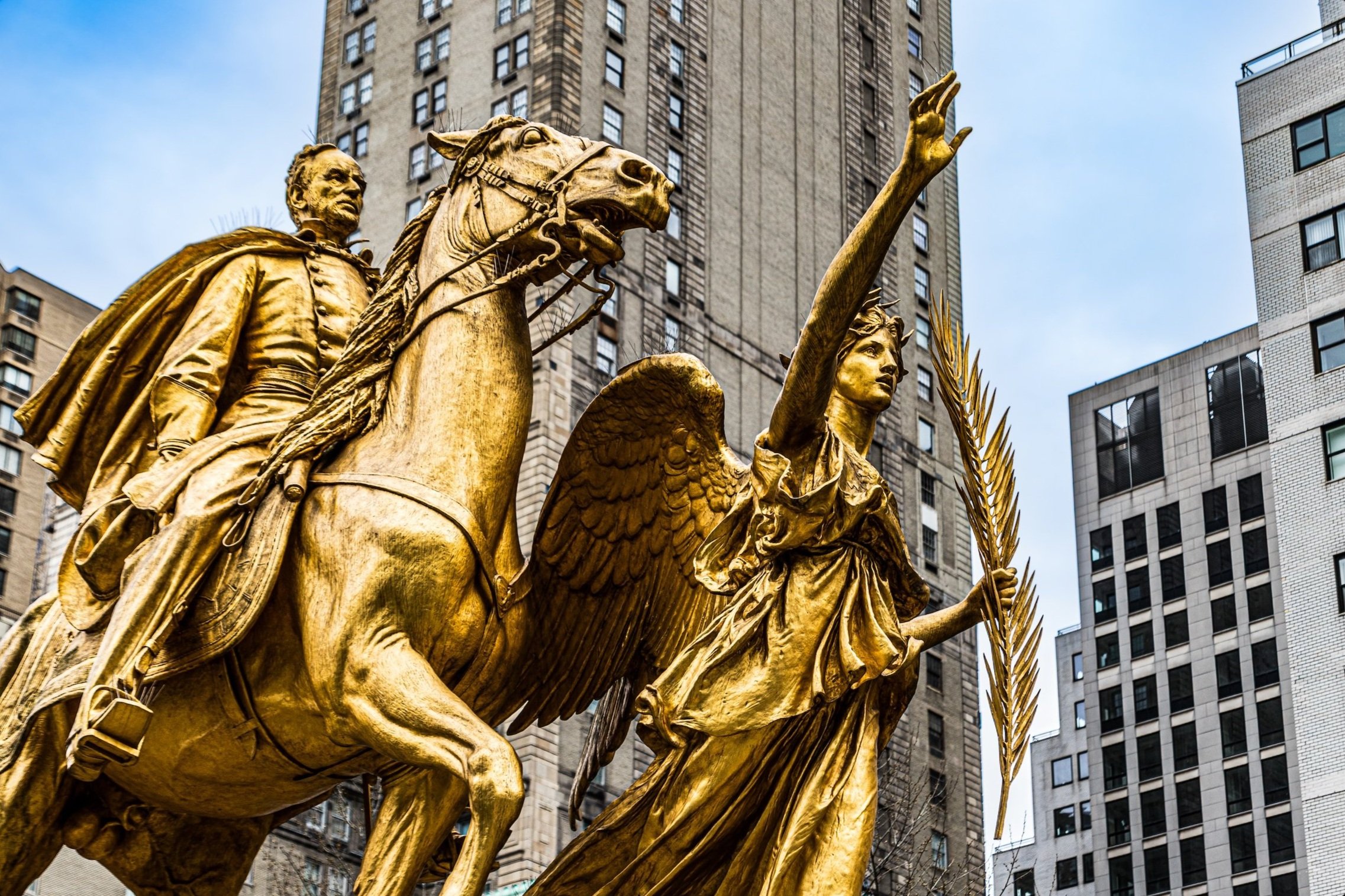
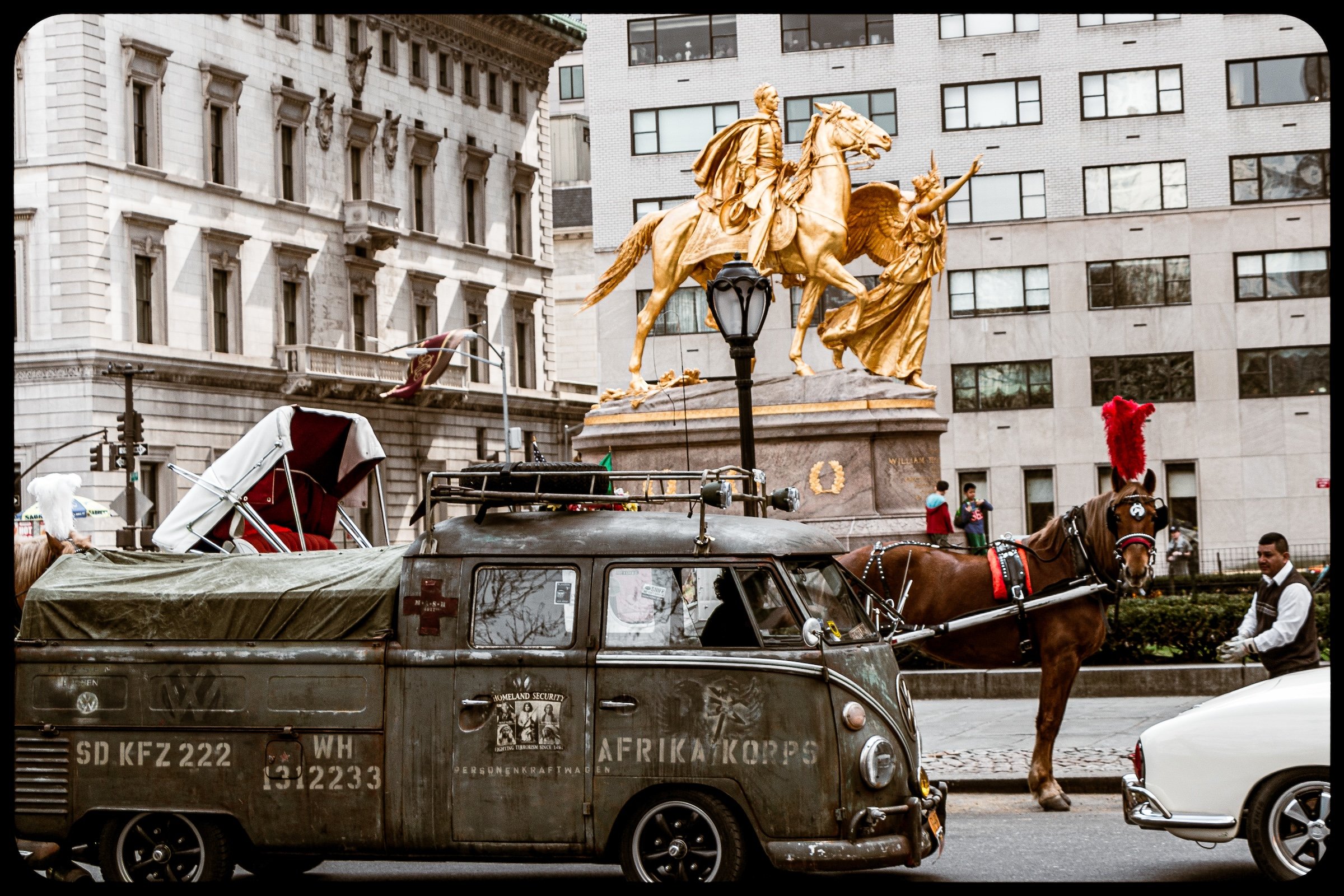
That transformation began with Augustus Saint-Gaudens’ gilded William Tecumseh Sherman monument, unveiled at the southeast corner in 1903. Sherman rides his horse Ontario behind the allegorical figure of Victory, modeled by Hettie Anderson.
The larger plaza followed. Carrère and Hastings won the design competition for the southeastern entrance in 1912, creating paired formal plazas inspired partly by European civic spaces. The south plaza was completed in 1916; construction of the north plaza, delayed by subway work, was completed in 1921.
Later additions added new layers to the entrance. Hamburg presented the ornate Lombard Lamp to New York in 1979. Doris C. Freedman Plaza was dedicated in 1981 and became a prominent setting for temporary public sculpture. In 1988, Lawrence Wien funded restoration of the entrance path that now bears his name.
Explore
Contemporary Landscape
Today, Grand Army Plaza & Wien Walk provides one of Central Park’s strongest transitions between monumental city and designed landscape.
The gilded Sherman monument dominates the Fifth Avenue approach, immediately giving the entrance a ceremonial scale that Olmsted and Vaux originally resisted. But once visitors pass through Freedman Plaza, Wien Walk changes the experience. The broad urban threshold narrows into a planted pedestrian corridor lined with benches, drawing movement north toward the Zoo and The Dene.
The north side of Grand Army Plaza was restored by the Conservancy in 2015, including the regilding of Sherman, restored paving, plantings and the reestablishment of its double row of London plane trees. Together with the recently restored southern plaza across 59th Street, the entrance once again closely reflects its early twentieth-century formal design.
Waypoints
-
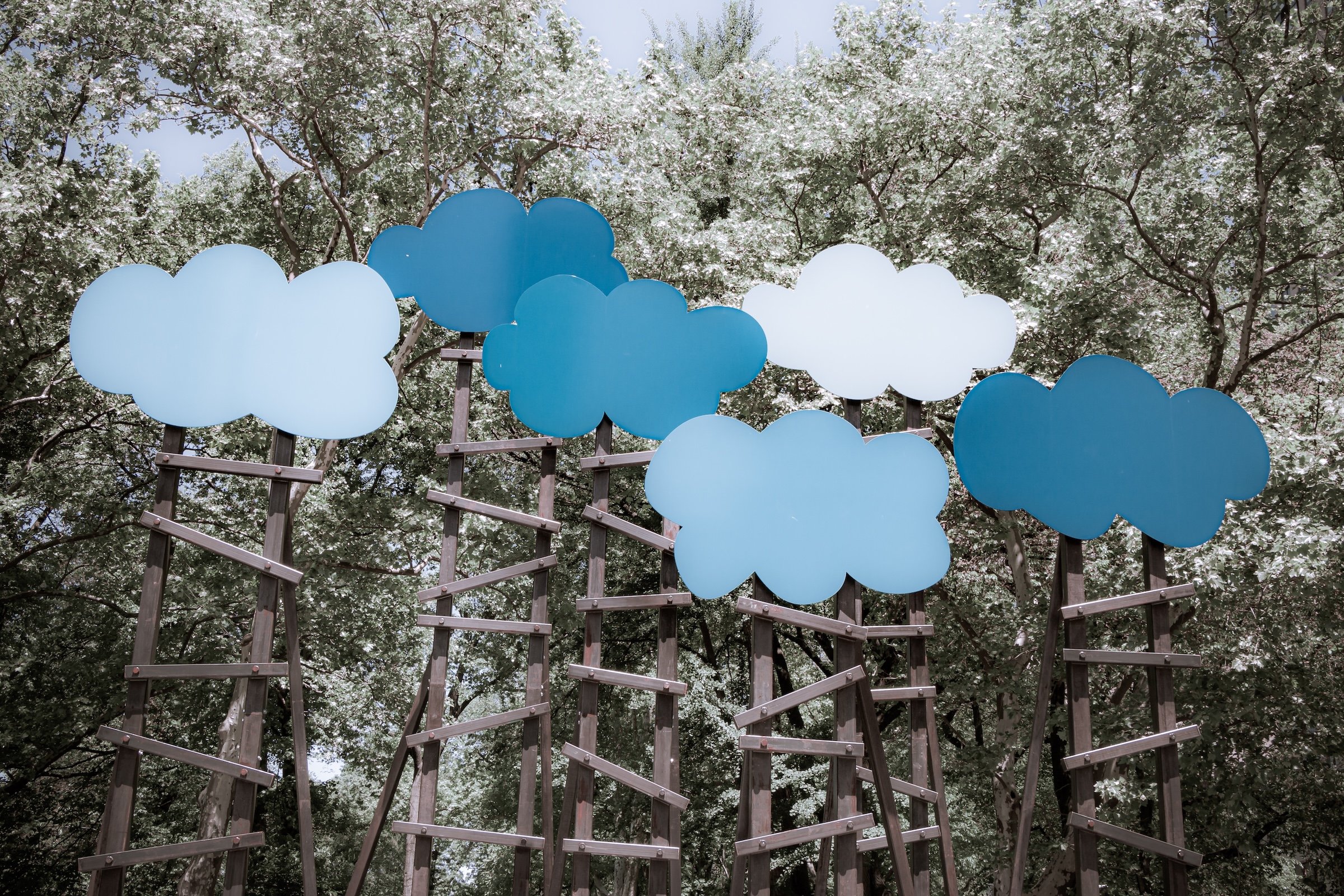
Dedicated in 1981 to the founder of the Public Art Fund, the plaza hosts rotating contemporary sculpture exhibitions and creates an intentional juxtaposition between new public art and the historic Sherman monument nearby.
-
One of Central Park’s original circulation structures, Inscope carries the drive above a pedestrian path connecting The Pond with the Zoo and demonstrates the park’s layered system of movement.
-
Presented by Hamburg in 1979, this elaborate cast-iron lamp is a replica of those lining the city’s Lombard Bridge and illuminates the staircase descending toward The Pond.
-
The Fifth Avenue entrance honors writers, teachers, scientists, physicians and others whose contributions were understood by the nineteenth-century Park Commissioners as intellectual in character.
-
Augustus Saint-Gaudens’ monumental gilded bronze, unveiled in 1903, depicts Sherman on horseback following the winged figure of Victory. Its scale, color and location make it the defining visual landmark of the southeast entrance.
Photography
Visual Identity
Central Park has no single visual identity. It moves between open meadow and enclosed woodland, exposed bedrock and carefully planted garden, reflective water and hard-edged skyline. Its paths can narrow into shade beneath old trees, then open suddenly toward towers, lakes, monuments, or a broad field filled with people. The Park’s character is made from those transitions: the designed discovery of one landscape giving way to another.
Water and horizon recur throughout its geography. The Lake, Reservoir, ponds, fountains, and seasonal pools of light create places of reflection—sometimes literal, sometimes figurative—where the city appears fractured, softened, or enlarged. Beyond them, Manhattan’s towers remain present as a constant reminder that this cultivated landscape exists within, not apart from, one of the world’s densest cities.
Its visual language also changes dramatically with the seasons. Winter exposes branches, stone, and skyline; spring briefly turns the Park into blossom and color; summer fills its lawns and paths with activity; autumn intensifies the drama of canopy, water, and light. Central Park is designed to be revisited, and its identity is never fixed for long.