
EAST GREEN
Location
Geographic Setting
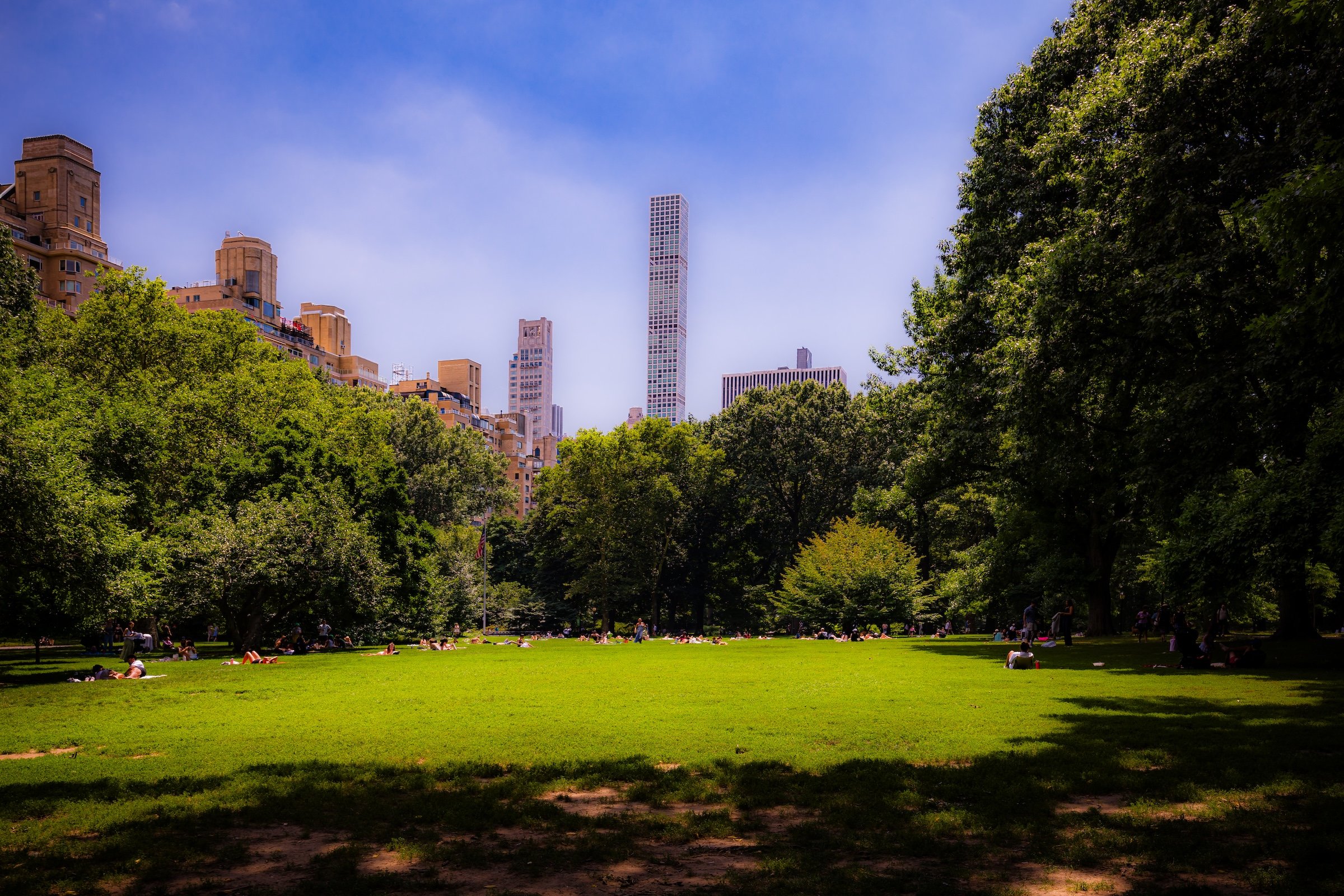
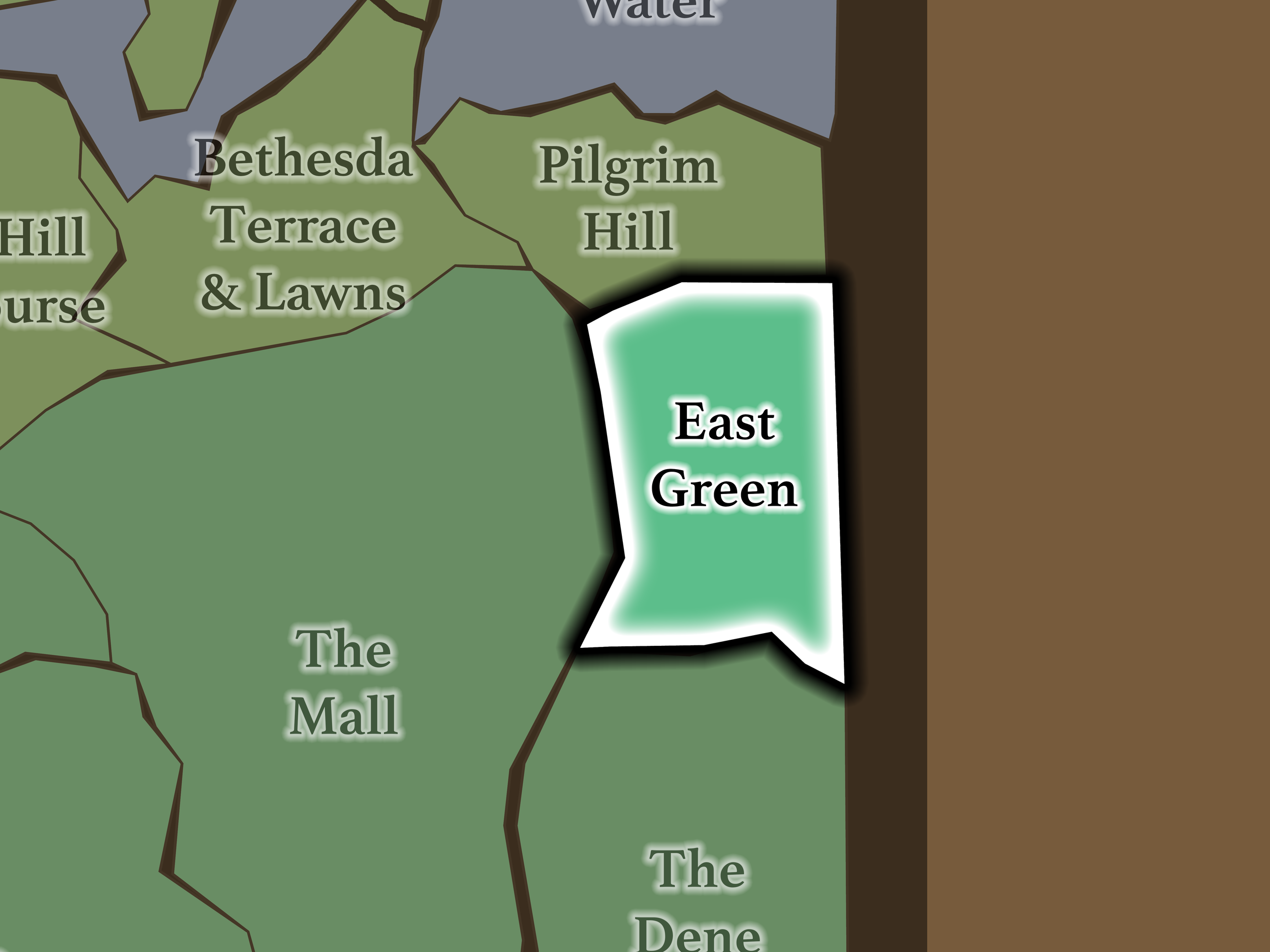
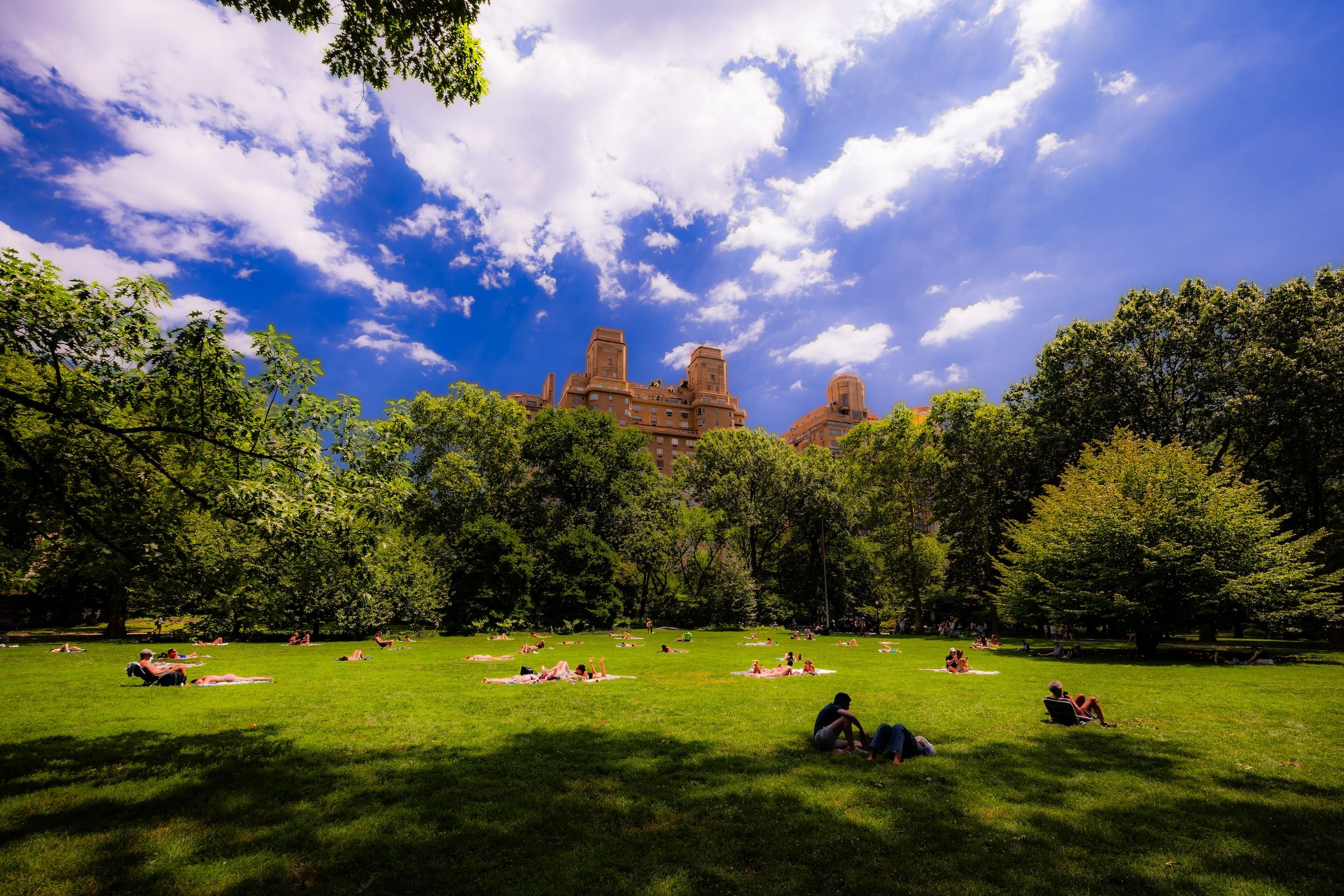
East Green occupies the northeastern corner of the South End, where an open, gently sloping lawn is enclosed by mature trees. The Dene lies immediately to the south; The Mall is across East Drive to the west; Pilgrim Hill begins beyond Terrace Drive to the north; and Fifth Avenue separates the park from Lenox Hill to the east.
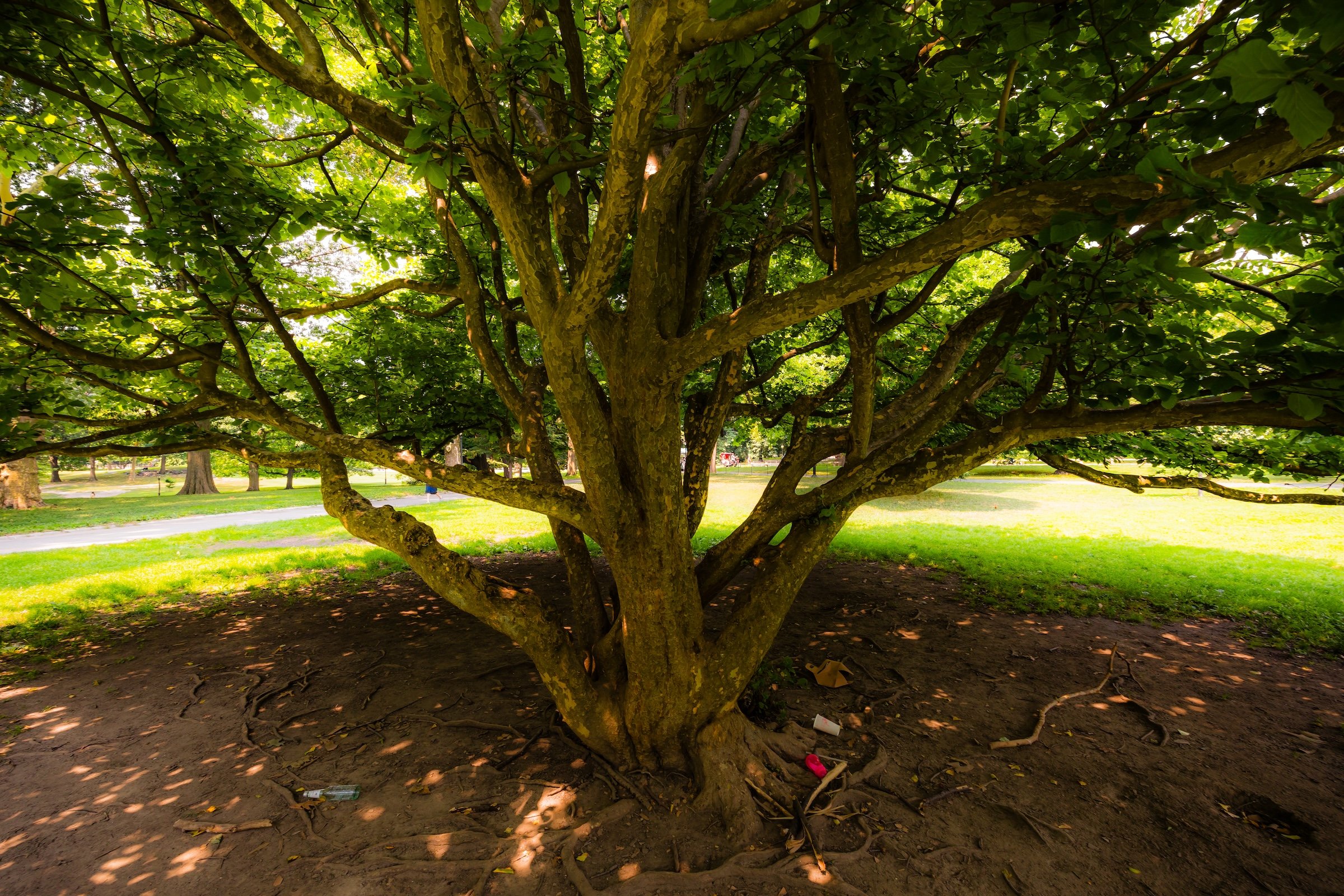
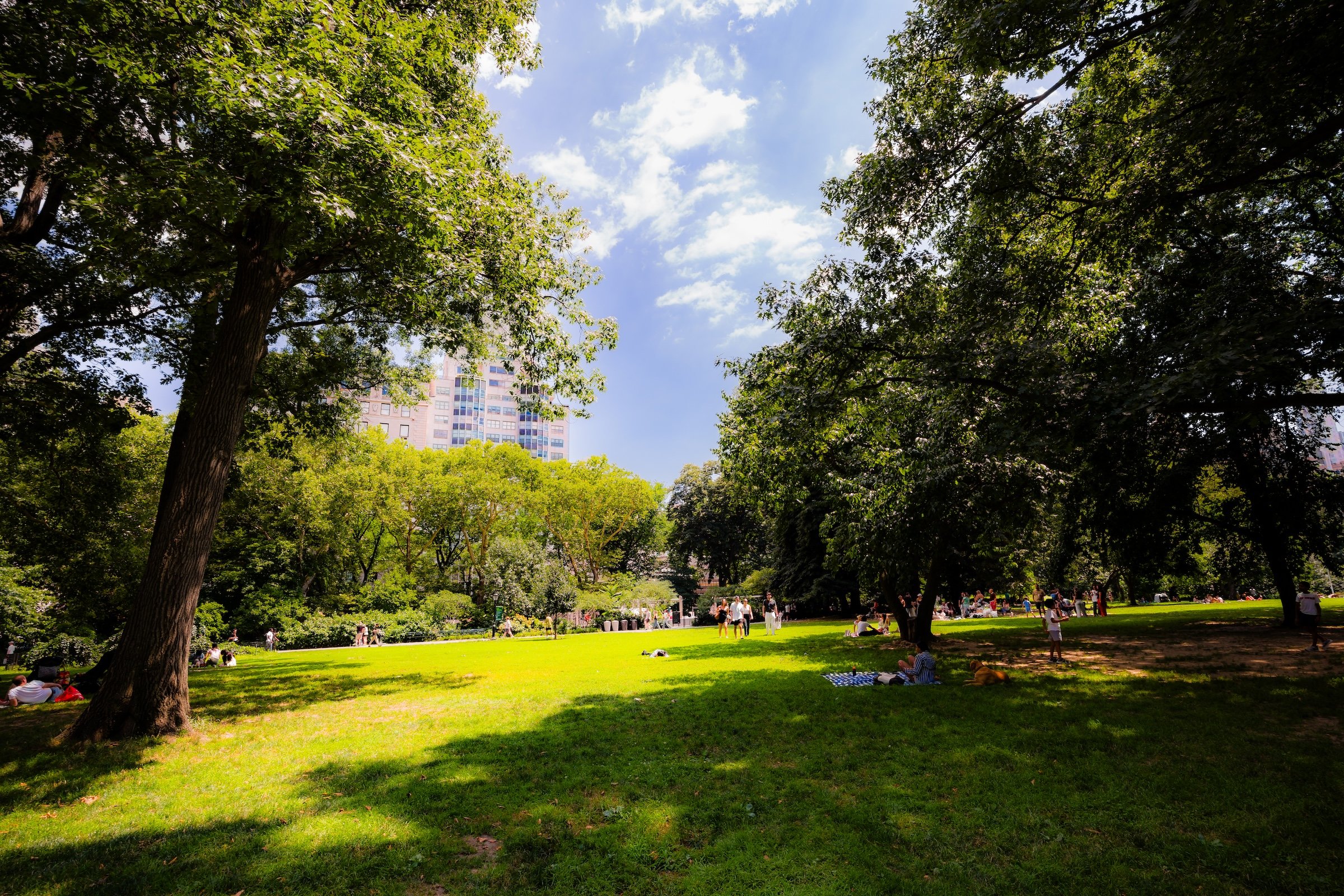
Unlike the rockier Dene below it or the steeper Pilgrim Hill above it, East Green is defined by its comparatively simple pastoral composition: lawn, slope and surrounding treeline. The Central Park Conservancy continues to describe it as a small lawn suited to quiet recreation, with magnolia, crabapple and cherry trees particularly prominent in spring.
Etymology
East Green takes its name directly from its location and landscape character: an open greensward on Central Park’s eastern side. The name has deep roots in the park’s history; an 1879 map published with an article by Frederick Law Olmsted identifies “East Green” as one of Central Park’s principal named landscapes
History
The Greensward Plan
Before Central Park, much of the future parkland on the east side below 96th Street was sparsely developed. Olmsted and Vaux transformed that uneven terrain into a sequence of deliberately composed pastoral landscapes, using open turf framed by trees as one of the defining elements of their Greensward design.
East Green became one of the smaller expressions of that idea: an open lawn relieved from the city by planting and topography, but still closely integrated with the park’s eastern entrances and circulation system.
The Grand Opening
East Green had become a recognized named landscape by the park’s early decades; it appears explicitly on nineteenth-century Central Park maps. Historical accounts also identify the lawn as having been used for cricket, adding active recreation to what was otherwise primarily a pastoral setting.
The eastern edge gradually gained civic ornamentation as well. In 1898, the Richard Morris Hunt Memorial was dedicated along Fifth Avenue at East 70th Street. Daniel Chester French created the sculptural elements, while architect Bruce Price designed the memorial’s classical setting.
20th Century
Recreation became a more formal presence when a playground was established near East 72nd Street in 1936. In 1970, architect Richard Dattner transformed it into one of Central Park’s distinctive adventure-style playgrounds, organized around interconnected structures designed to encourage exploration and imaginative play.
Like much of Central Park, East Green later suffered from heavy use and declining maintenance. It became one of the Conservancy’s earliest major lawn restorations: horticultural crews rebuilt the landscape in 1984, installing extensive drainage, irrigation, improved soil and new turf.
Explore
Contemporary Landscape
Today, East Green remains remarkably close to its original pastoral identity. Its sloping lawn sits within a surrounding wall of trees, creating a small clearing that feels removed from Fifth Avenue despite lying immediately beside it.
The lawn is now designated a quiet zone and remains particularly distinctive in spring, when magnolias, crabapples and cherry trees bloom around its edges.
Recreation remains concentrated along the eastern edge. The East 72nd Street Playground was comprehensively reconstructed in 2015 while preserving Dattner’s adventure-style concept and improving its relationship with the surrounding landscape.
Waypoints
-
Originally established in 1936 and transformed by Richard Dattner in 1970, the playground’s maze-like structures, pyramid, tunnels and water features make it one of Central Park’s classic adventure-play landscapes.
-
The East 72nd Street entrance honors inventors as one of the civic groups represented by Central Park’s named gates. Nearby stands the statue of telegraph pioneer Samuel F. B. Morse, the rare example of the original idea that the gate names might be accompanied by monuments representing the people they honored.
-
Dedicated in 1898, this elaborate Fifth Avenue memorial honors one of nineteenth-century America’s leading architects. Daniel Chester French’s sculpture is framed by a classical architectural setting designed by Bruce Price.
Photography
Visual Identity
Central Park has no single visual identity. It moves between open meadow and enclosed woodland, exposed bedrock and carefully planted garden, reflective water and hard-edged skyline. Its paths can narrow into shade beneath old trees, then open suddenly toward towers, lakes, monuments, or a broad field filled with people. The Park’s character is made from those transitions: the designed discovery of one landscape giving way to another.
Water and horizon recur throughout its geography. The Lake, Reservoir, ponds, fountains, and seasonal pools of light create places of reflection—sometimes literal, sometimes figurative—where the city appears fractured, softened, or enlarged. Beyond them, Manhattan’s towers remain present as a constant reminder that this cultivated landscape exists within, not apart from, one of the world’s densest cities.
Its visual language also changes dramatically with the seasons. Winter exposes branches, stone, and skyline; spring briefly turns the Park into blossom and color; summer fills its lawns and paths with activity; autumn intensifies the drama of canopy, water, and light. Central Park is designed to be revisited, and its identity is never fixed for long.