
WOLLMAN
Location
Geographic Setting
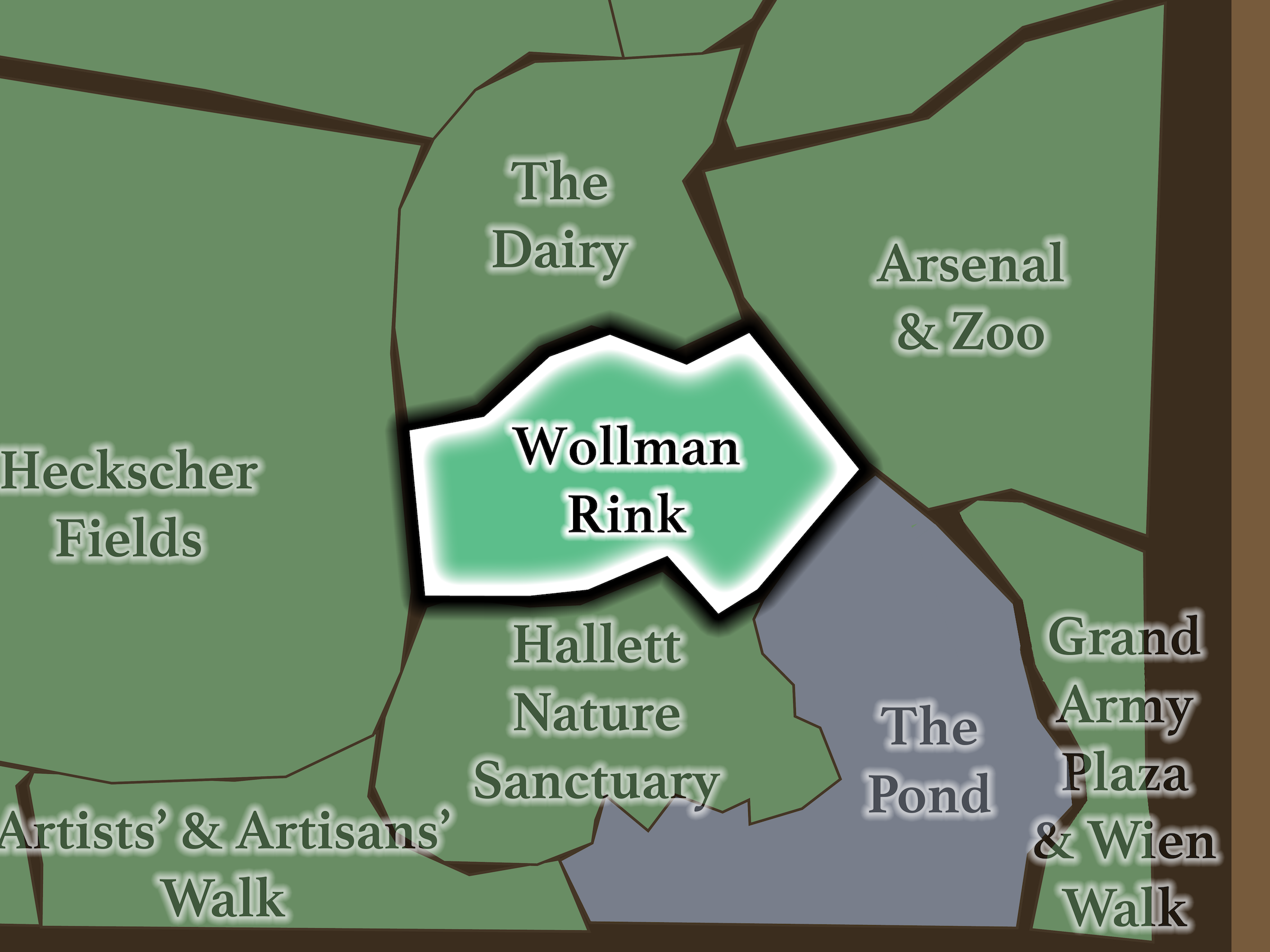
Wollman Rink occupies a broad recreational basin in the southeastern South End. Heckscher Fields lie across Center Drive to the west; The Dairy rises to the north; Central Park Zoo & Arsenal sit across East Drive; The Pond continues to the southeast; and Hallett Nature Sanctuary rises immediately to the south.
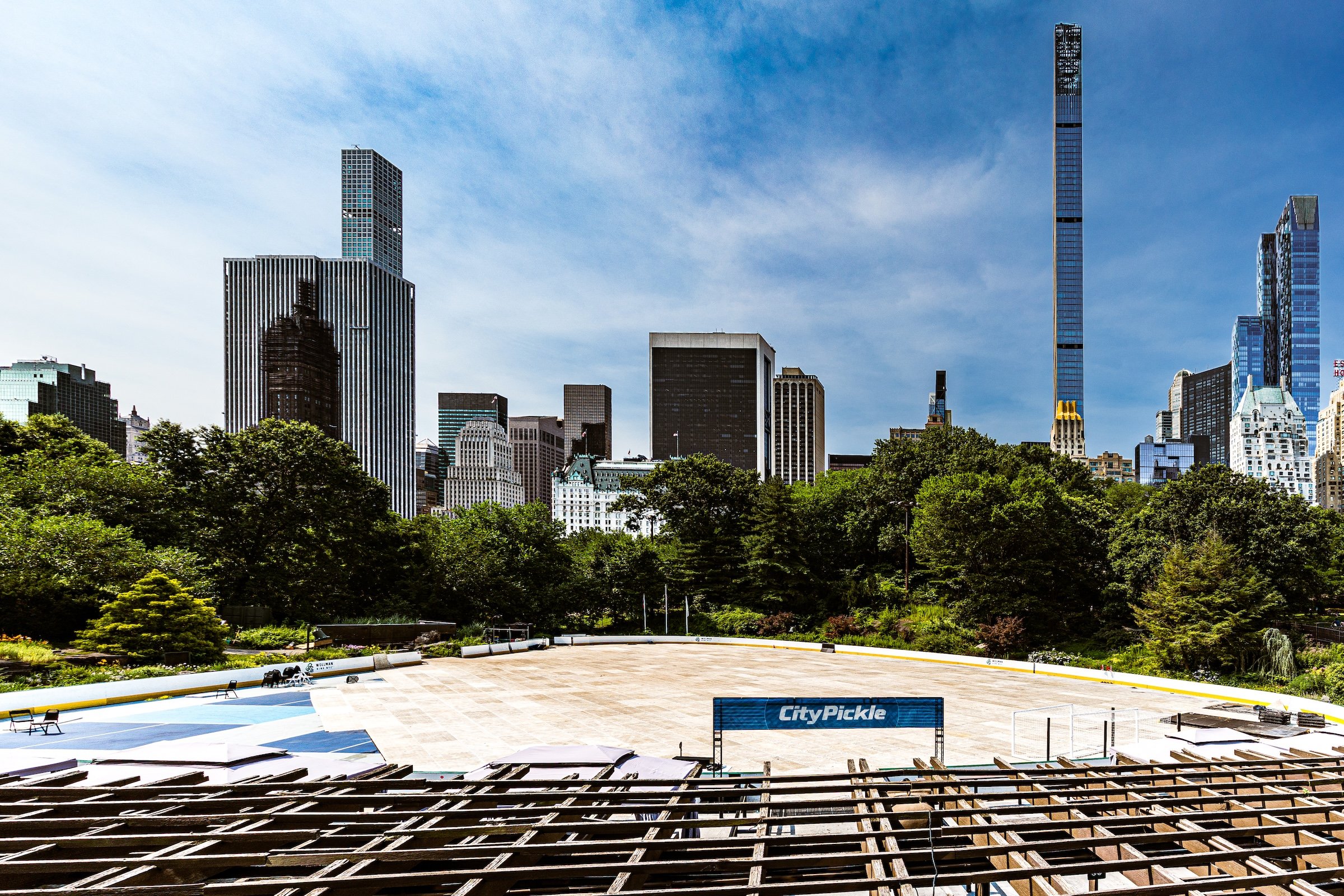
The rink occupies what was once the northern arm of The Pond, giving the neighborhood a distinctly bowl-like geography. Even after its conversion to recreation, that low setting remains legible: wooded slopes rise around the rink while Midtown towers form a dramatic skyline beyond them.
Etymology
Wollman Rink is named for philanthropist Kate Wollman, whose contribution funded the permanent skating rink that opened here in 1950. The gift honored members of her family and transformed what had been part of the Pond into a dedicated year-round recreation site.
History
The Greensward Plan
Wollman Rink did not exist in Olmsted and Vaux’s original design. This ground was part of the northern lobe of The Pond, one of the naturalistic water bodies created from the low, wet terrain of the South End.
Ice skating, however, was part of Central Park’s identity almost from the beginning. The Lake opened to skaters in the winter of 1858, and The Pond also became a popular skating location whenever cold weather produced safe natural ice.
The Grand Opening
During Central Park’s first decades, this area was therefore experienced as water rather than rink. The northern arm of The Pond extended farther into the park, tying the landscape visually to the Promontory—today’s Hallett Nature Sanctuary—and the rocky slopes surrounding it.
Winter changed the function of that landscape completely. When conditions permitted, visitors skated directly on The Pond’s frozen surface, making this part of the South End one of Central Park’s earliest recreational destinations even before any permanent skating facility existed.
20th Century
The desire for dependable skating eventually led to a permanent solution. In 1950, Wollman Rink was constructed over the northernmost section of The Pond using funds donated by Kate Wollman. Its refrigerated surface freed skating from the uncertainty of natural ice and quickly made the rink one of Central Park’s best-known recreational landmarks.
The rink later became part of the broader mid-century expansion of active recreation in Central Park. By the 1980s, however, its refrigeration system had deteriorated badly, and a prolonged reconstruction became one of the more notorious public-works episodes in the park’s modern history before the rink reopened in 1986.
Explore
Contemporary Landscape
Today, Wollman Rink remains defined by a remarkable combination of recreation and skyline.
In winter, the basin becomes one of New York’s most recognizable skating scenes: an open sheet of ice surrounded by trees with the towers of Midtown rising immediately beyond. The effect is especially dramatic after dark, when the city skyline becomes part of the rink’s visual setting.
The neighborhood has also become more explicitly seasonal. During the warmer months, the rink now converts to CityPickle, with fourteen pickleball courts occupying the same footprint used for skating in winter. That dual use reinforces the area’s modern identity as a dedicated recreational landscape rather than simply an ice rink.
Waypoints
-
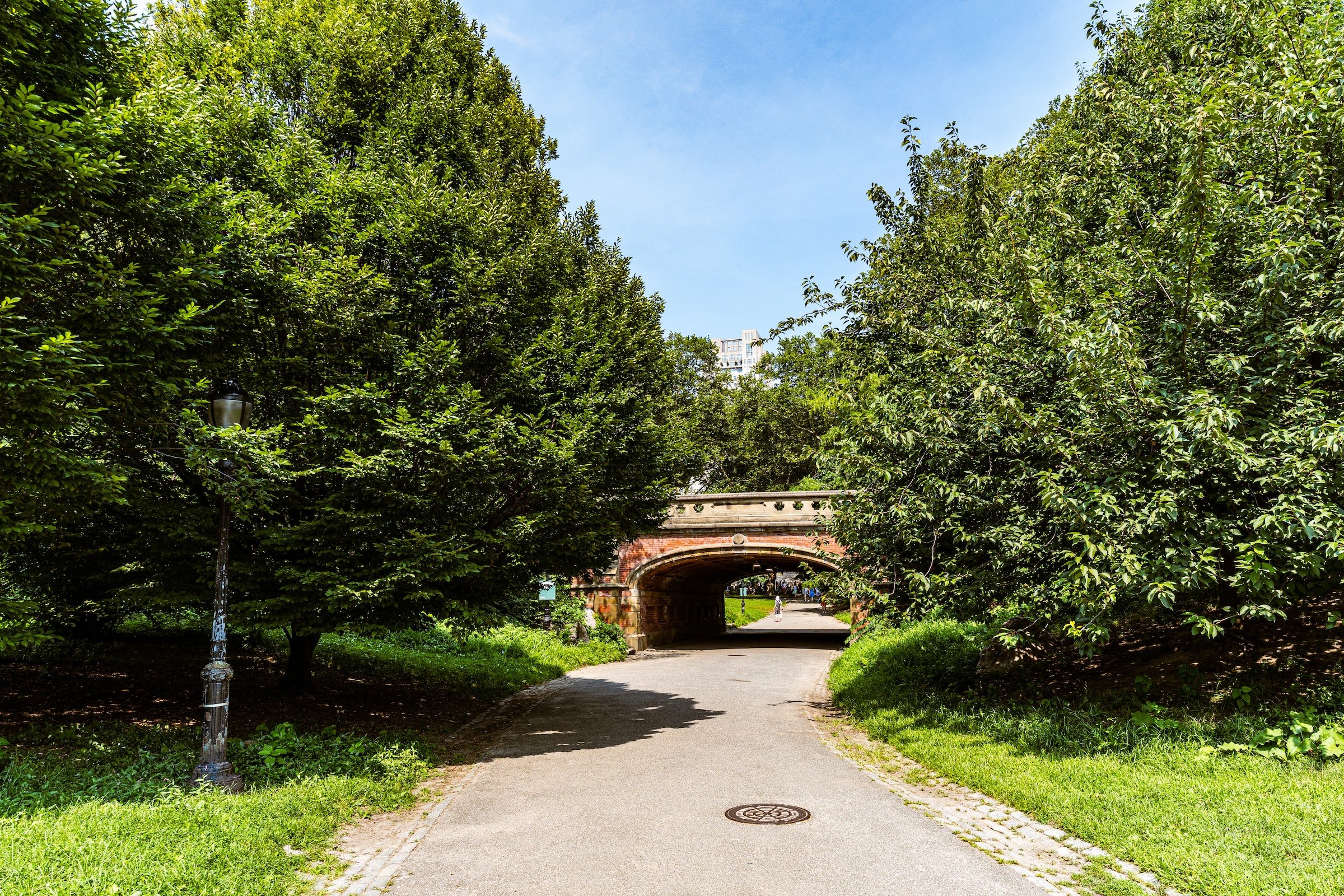
Designed to carry the carriage drive above a pedestrian route near the Fifth Avenue entrance, Green Gap Arch is now closed to public passage and used for storage following the 1988 expansion of the Central Park Zoo. Its continued presence preserves part of the original layered circulation system around the rink.
-
Opened in 1950 on the former northern arm of The Pond, the rink remains one of Central Park’s iconic recreation sites, serving ice skaters in winter and pickleball players in the warmer months.
Photography
Visual Identity
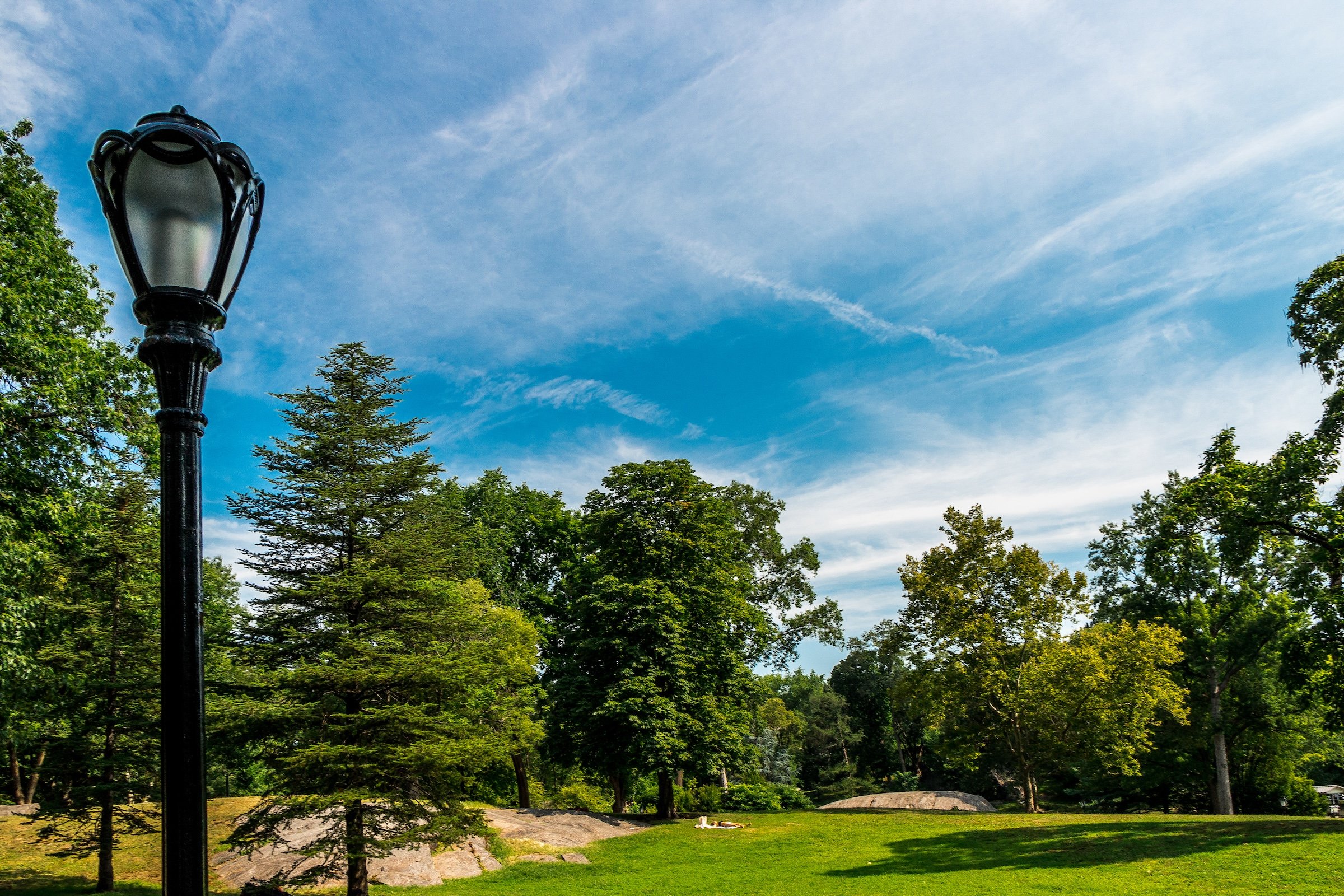
Central Park has no single visual identity. It moves between open meadow and enclosed woodland, exposed bedrock and carefully planted garden, reflective water and hard-edged skyline. Its paths can narrow into shade beneath old trees, then open suddenly toward towers, lakes, monuments, or a broad field filled with people. The Park’s character is made from those transitions: the designed discovery of one landscape giving way to another.
Water and horizon recur throughout its geography. The Lake, Reservoir, ponds, fountains, and seasonal pools of light create places of reflection—sometimes literal, sometimes figurative—where the city appears fractured, softened, or enlarged. Beyond them, Manhattan’s towers remain present as a constant reminder that this cultivated landscape exists within, not apart from, one of the world’s densest cities.
Its visual language also changes dramatically with the seasons. Winter exposes branches, stone, and skyline; spring briefly turns the Park into blossom and color; summer fills its lawns and paths with activity; autumn intensifies the drama of canopy, water, and light. Central Park is designed to be revisited, and its identity is never fixed for long.