
HECKSCHER FIELDS
Location
Geographic Setting
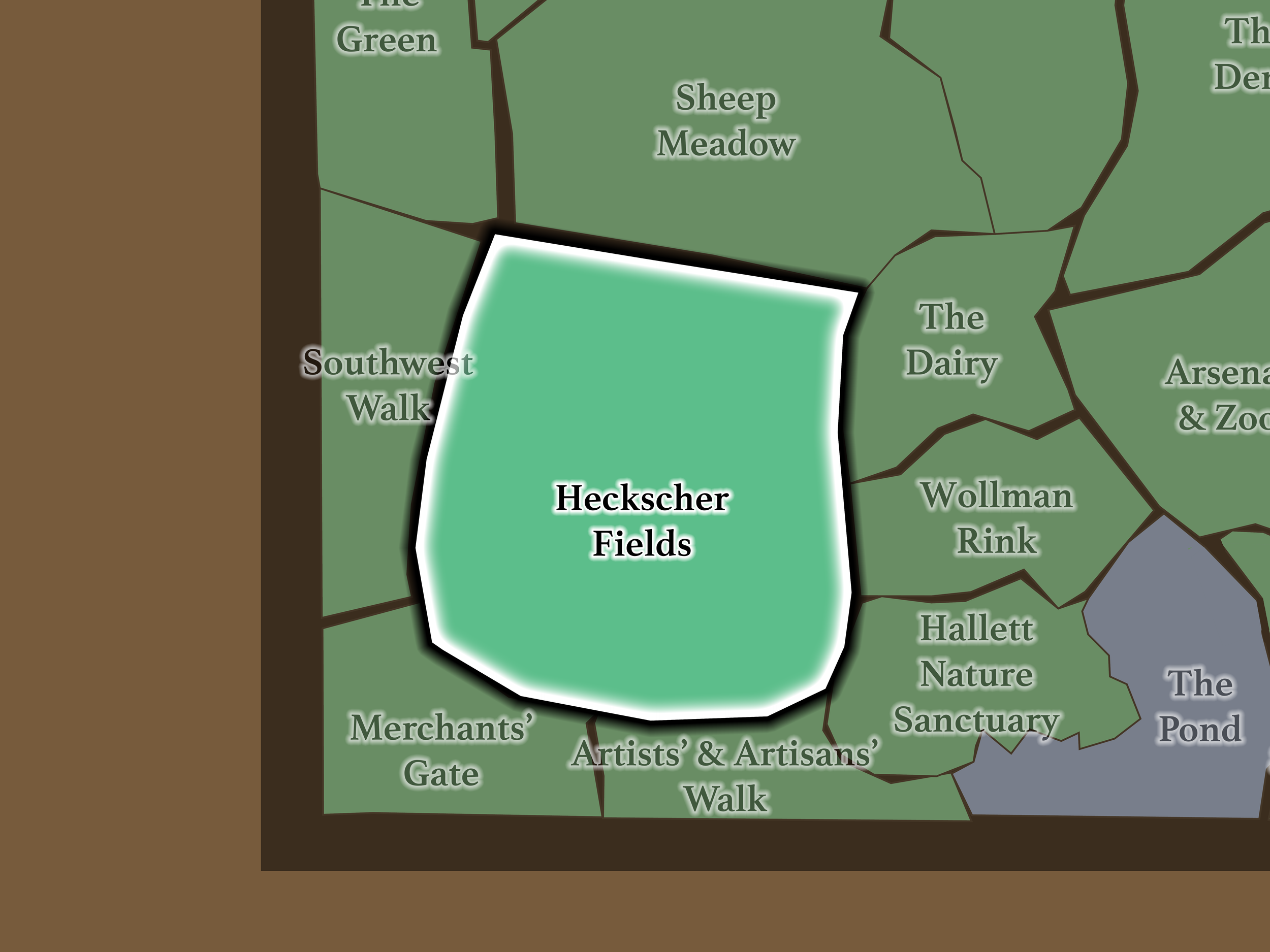
Heckscher Fields occupies a broad recreational landscape in the southwestern South End. Sheep Meadow lies north of 65th Street; The Dairy, Hallett Nature Sanctuary and Wollman Rink are across Center Drive to the east; Artists’ & Artisans’ Walk and Merchants’ Gate lie to the south; and Southwest Walk begins beyond West Drive.
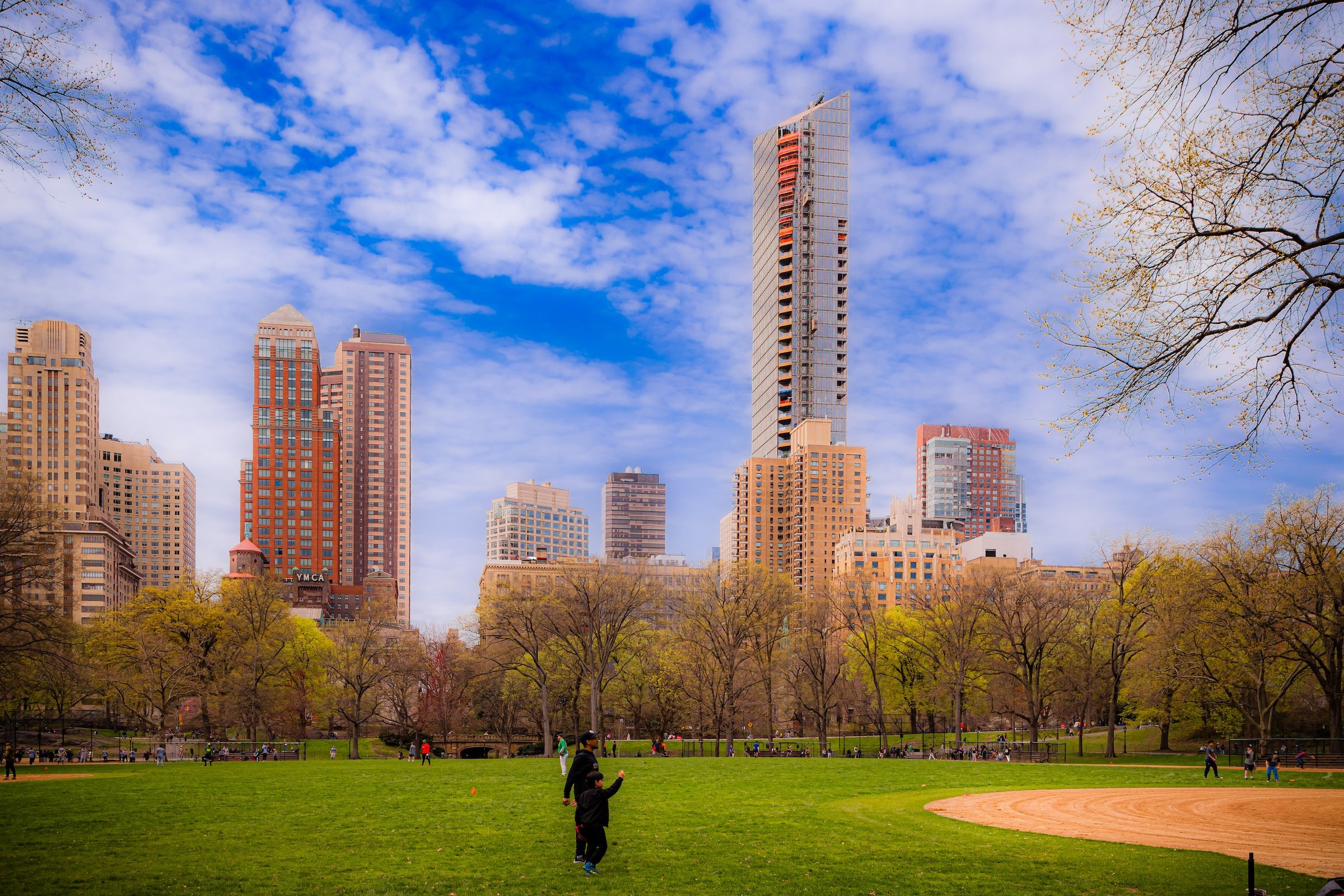
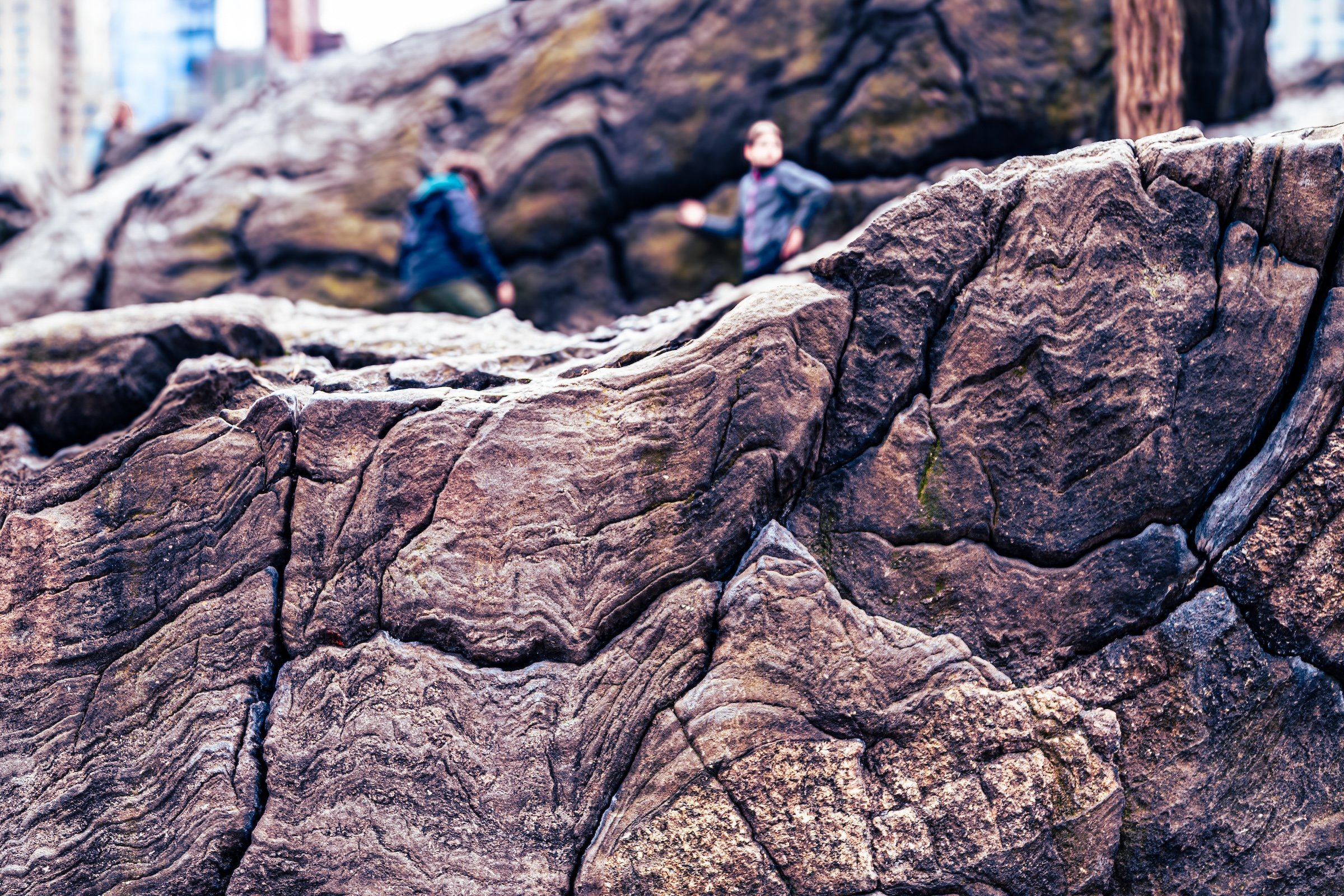
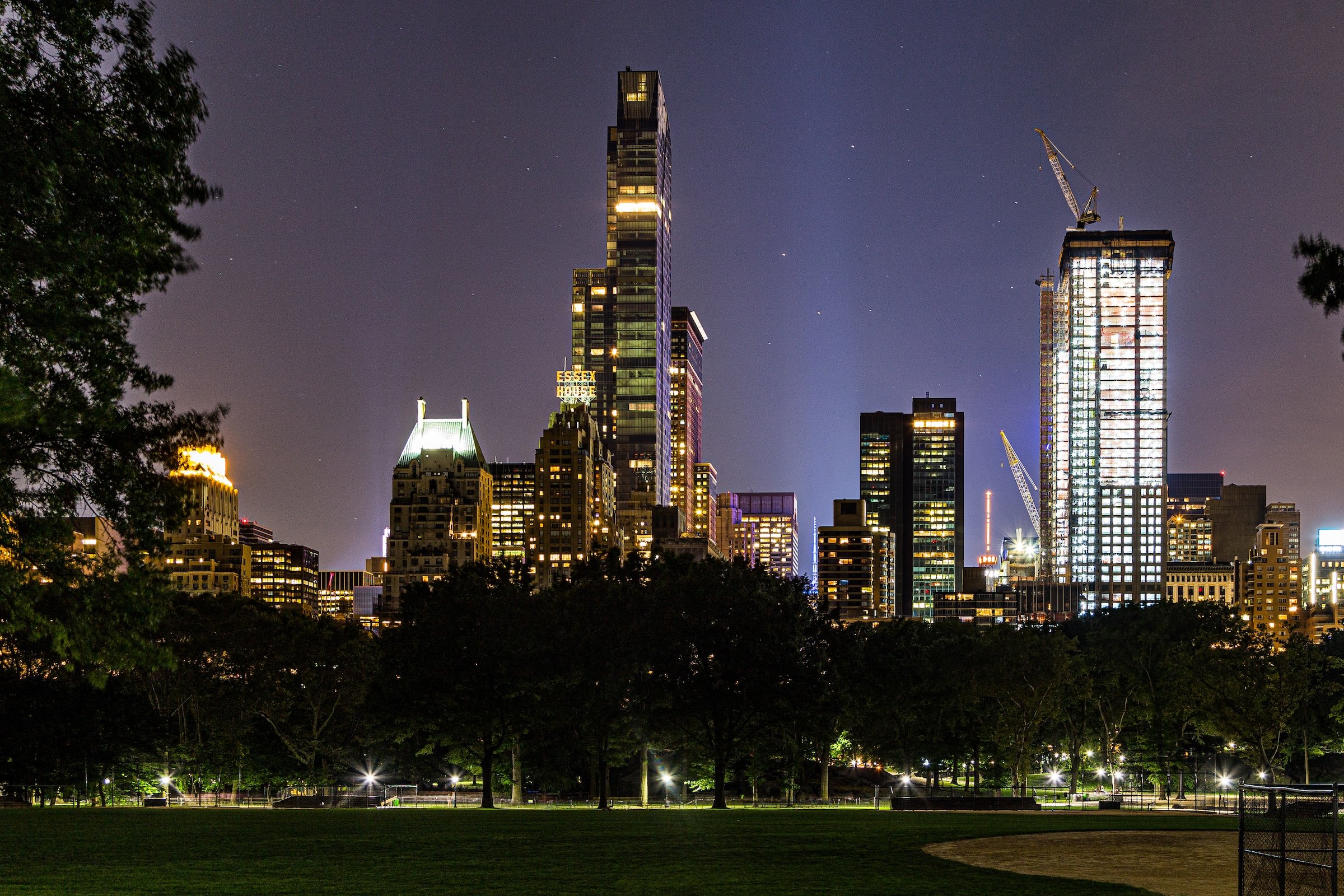
The neighborhood is unusually varied physically. Open ballfields occupy much of the center, but large outcrops of Manhattan schist rise around the playground and paths, while a dense network of arches and drives creates multiple levels of movement through the landscape. From several of the rocks and playing fields, Midtown forms a dramatic southern backdrop.
Etymology
Heckscher Fields takes its present name from philanthropist August Heckscher Sr., whose funding made possible Central Park’s first fully equipped children’s playground, opened here in 1926. Before that intervention, this broader southwest landscape was known in the nineteenth century as the Ball-ground or Play-ground, a large open meadow reserved primarily for children’s baseball, cricket and other games.
The modern name therefore links two eras of recreation: the original Ball Ground of Olmsted and Vaux’s park and the twentieth-century Heckscher Playground that transformed part of it.
History
The Greensward Plan
Recreation was part of the planning brief for Central Park from the beginning, and Olmsted and Vaux designated this southwest meadow as a Play-ground—one of the park’s principal areas for active games. The landscape was deliberately open enough for cricket and the increasingly popular game of baseball, while surrounding drives, paths, rock outcrops and arches allowed those activities to coexist with the park’s circulation system.
The area soon became part of the larger Children’s District, created as the designers responded to pressure for spaces specifically serving children and caregivers. Nearby features including the Dairy, Ballplayers’ House and later Carousel reinforced that identity.
The Grand Opening
During the nineteenth century, the Ball Ground was among the park’s most explicitly recreational landscapes. Boys played baseball and cricket here under regulated conditions intended to prevent overcrowding and protect the turf. Calvert Vaux’s nearby Ballplayers’ House provided a changing room for those using the fields.
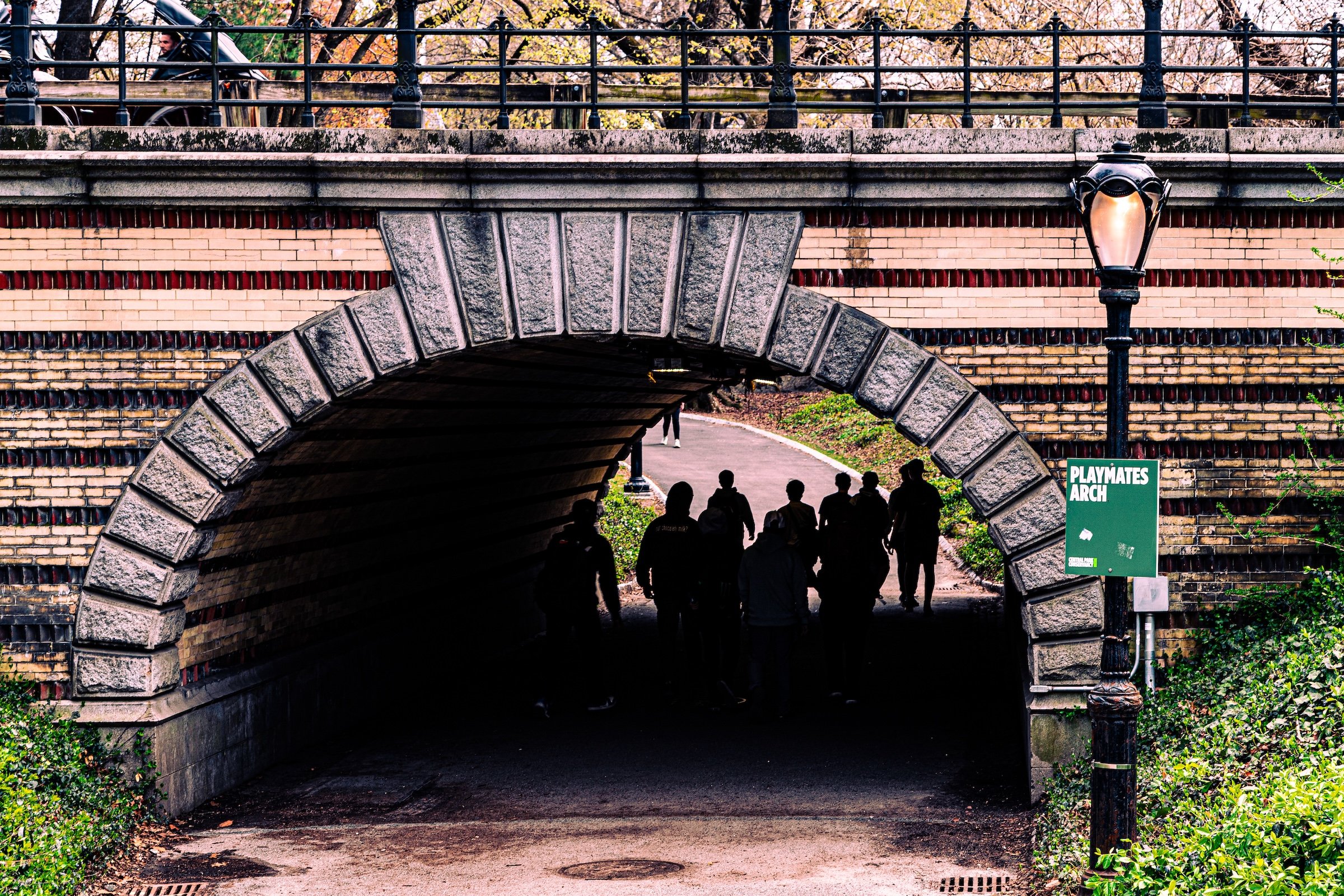
The circulation network around the grounds was equally important. Dipway, Driprock, Greyshot, Dalehead and Pinebank arches allowed pedestrians, carriage traffic and riders to move through or around the district at different levels, making this one of the clearest early demonstrations of Central Park’s three-dimensional design.
20th Century
The landscape changed substantially in the 1920s. August Heckscher financed an equipped children’s playground that opened in 1926 on part of the original Ball Ground, while the remaining meadow continued to function as playing fields. Adults also began using the ballfields during this period.
The playground was repeatedly altered during the twentieth century, including major recreational redesigns in the 1930s and 1970s. Expansion in the 1930s also cost the park one of its original iron bridges: Spur Rock Arch, built in the 1860s, was demolished in 1934 to make room for the enlarged playground.
The original Ballplayers’ House deteriorated and was removed in the 1960s; the present café building, erected in 1991, intentionally recalls it. The current Central Park Carousel arrived in 1951, although carousels have occupied this part of the Children’s District since 1871
Explore
Contemporary Landscape
Today, Heckscher Fields remains one of Central Park’s most active and spatially complex recreational landscapes. Six softball fields occupy the central lawn, while Heckscher Playground spreads across the rocky southern portion of the neighborhood. The playground was comprehensively rebuilt in 2006, and the ballfields were restored the following year with renewed turf, infields, drainage, irrigation and site furnishings.
What makes the neighborhood distinctive, however, is the overlap of recreation, geology and circulation. Umpire Rock and other schist outcrops give the area a rugged physical character; arches repeatedly carry one route above another; and the broad playing fields open toward sweeping views of Midtown. It feels less like a single field complex than a small recreational landscape system.
Waypoints
-
The present Ballfields Café stands on the site of Vaux’s original changing house for players and was designed to evoke the lost nineteenth-century building.
-
The current 1908 carousel was installed here in 1951 and is the fourth to occupy this part of the Children’s District since 1871.
-
Carries the drive over the former bridle path, connecting Heckscher Fields toward Tavern on the Green and Sheep Meadow.
-
A compact original arch that allows pedestrians arriving from Seventh Avenue to dip beneath the drive on their way toward the playground and ballfields.
-
The massive rock outcrop that gave nearby Driprock Arch its name, part of the rugged geology that interrupts the otherwise open recreational landscape.
-
A red-brick arch carrying the drive above the pedestrian connection between the Heckscher area and Wollman Rink.
-
Carries West Drive above the pedestrian route linking the Heckscher landscape with Merchants’ Gate and the southwest corner.
-
Six softball fields occupying the heart of the former nineteenth-century Ball Ground, continuing the site’s recreational function more than 150 years after organized play began here.
-
Opened in 1926 and still Central Park’s oldest and largest playground, combining climbing structures, water play, swings and the neighborhood’s natural rock formations.
-
An elegant cast-iron bridge spanning the former bridle path, its delicate ironwork seeming to emerge directly from the surrounding rock.
-
The surviving rock formation associated with the former Spur Rock Arch, once one of Vaux’s distinctive cast-iron bridges. The arch itself was demolished in 1934 during expansion of Heckscher Playground.
-
One of Central Park’s largest exposed rock outcrops, rising beside Heckscher Playground and overlooking the ballfields and Midtown skyline.
Photography
Visual Identity
Central Park has no single visual identity. It moves between open meadow and enclosed woodland, exposed bedrock and carefully planted garden, reflective water and hard-edged skyline. Its paths can narrow into shade beneath old trees, then open suddenly toward towers, lakes, monuments, or a broad field filled with people. The Park’s character is made from those transitions: the designed discovery of one landscape giving way to another.
Water and horizon recur throughout its geography. The Lake, Reservoir, ponds, fountains, and seasonal pools of light create places of reflection—sometimes literal, sometimes figurative—where the city appears fractured, softened, or enlarged. Beyond them, Manhattan’s towers remain present as a constant reminder that this cultivated landscape exists within, not apart from, one of the world’s densest cities.
Its visual language also changes dramatically with the seasons. Winter exposes branches, stone, and skyline; spring briefly turns the Park into blossom and color; summer fills its lawns and paths with activity; autumn intensifies the drama of canopy, water, and light. Central Park is designed to be revisited, and its identity is never fixed for long.