
HALLETT NATURE SANCTUARY
Location
Geographic Setting
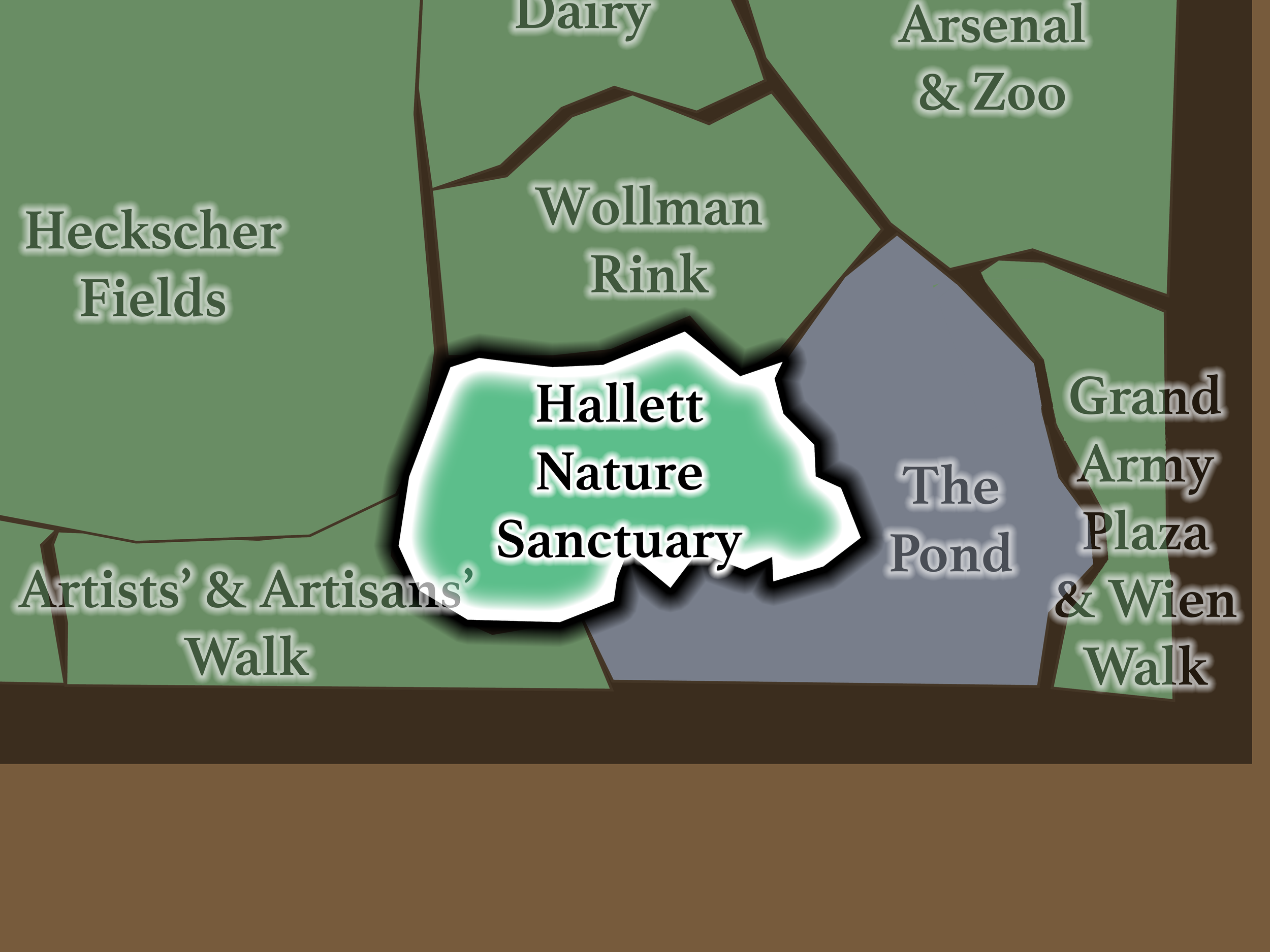
Hallett Nature Sanctuary occupies a steep, wooded promontory in the southeastern corner of the South End. The Pond wraps around it to the east and southeast; Wollman Rink lies immediately north; Heckscher Fields are across Center Drive to the west; and Artists’ & Artisans’ Walk begins beyond Center Drive to the south.
At only about four acres, Hallett is the smallest of Central Park’s three major woodland landscapes. Its steep rock, dense canopy and winding paths create an unusually enclosed experience despite its proximity to Midtown. From higher points, openings in the trees reveal The Pond, surrounding park landscapes and the skyscrapers rising immediately beyond the canopy.
Etymology
Originally known as The Promontory, the landscape was named for the rocky rise projecting above and into The Pond. In 1986 it was renamed Hallett Nature Sanctuary in memory of George Hervey Hallett Jr., a New York civic activist, nature enthusiast and avid birder.
The modern name therefore reflects a later chapter in the landscape’s history: a picturesque nineteenth-century promontory that became a twentieth-century wildlife sanctuary.
History
The Greensward Plan
Olmsted and Vaux called this rocky hill The Promontory and deliberately treated it as part of the scenery surrounding The Pond. Their original plan proposed transforming the low, swampy ground below into an irregular lake so that the surrounding bluffs and rocky slopes would appear more picturesque and secluded.
Importantly, the Promontory itself contained no public walking paths. Visitors were intended to experience it primarily from outside—as a wooded, rocky mass rising above the water rather than as a landscape to penetrate and explore.
The Grand Opening
During Central Park’s early decades, the Promontory remained largely a visual element in the composition of The Pond. Trees and vegetation gradually reinforced its wooded character, while its steep terrain and lack of paths kept visitors around its perimeter rather than within it.
Rustic architecture helped frame the surrounding landscape. A rustic shelter stood on the high rock near today’s Cop Cot, providing an elevated place from which visitors could look across the Pond and the southern park. The present Cop Cot, reconstructed in 1984, follows the tradition of the earlier structure at this location.
20th Century
The landscape’s purpose changed dramatically in 1934, when Parks Commissioner Robert Moses fenced off the Promontory and designated it a bird sanctuary. For decades afterward it remained closed to ordinary park visitors.
In 1986 the sanctuary was renamed for George Hervey Hallett Jr. Over the following years, however, minimal intervention allowed invasive vegetation—including Norway maples, wisteria and Japanese knotweed—to proliferate.
The Central Park Conservancy began restoring the woodland in 2001. Work focused on removing invasive species, rebuilding healthier native plant communities and eventually creating a trail system capable of accommodating visitors without sacrificing the sanctuary’s ecological character. Guided access began in 2013, and the restored Hallett opened for regular public visiting hours in 2016.
Explore
Contemporary Landscape
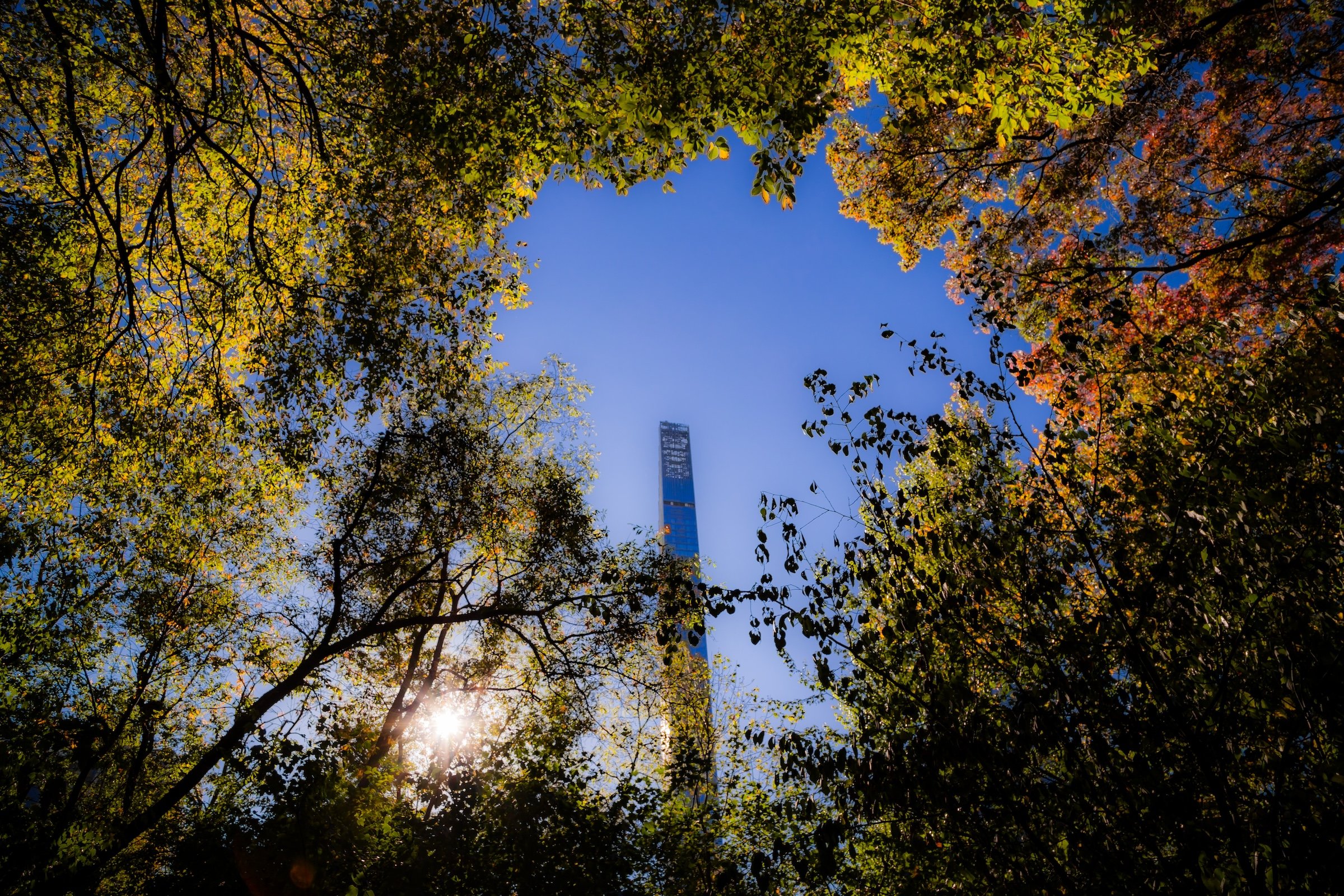
Today, Hallett offers one of Central Park’s most concentrated woodland experiences. Rustic trails climb and descend through dense planting and exposed rock, occasionally opening onto views across The Pond or toward the towers of Midtown rising beyond the trees.
That contrast is central to the experience: a rising woodland surrounded by one of the most intensely urban landscapes in the world. The canopy can almost erase the skyline, only for a supertall tower to suddenly appear between branches.
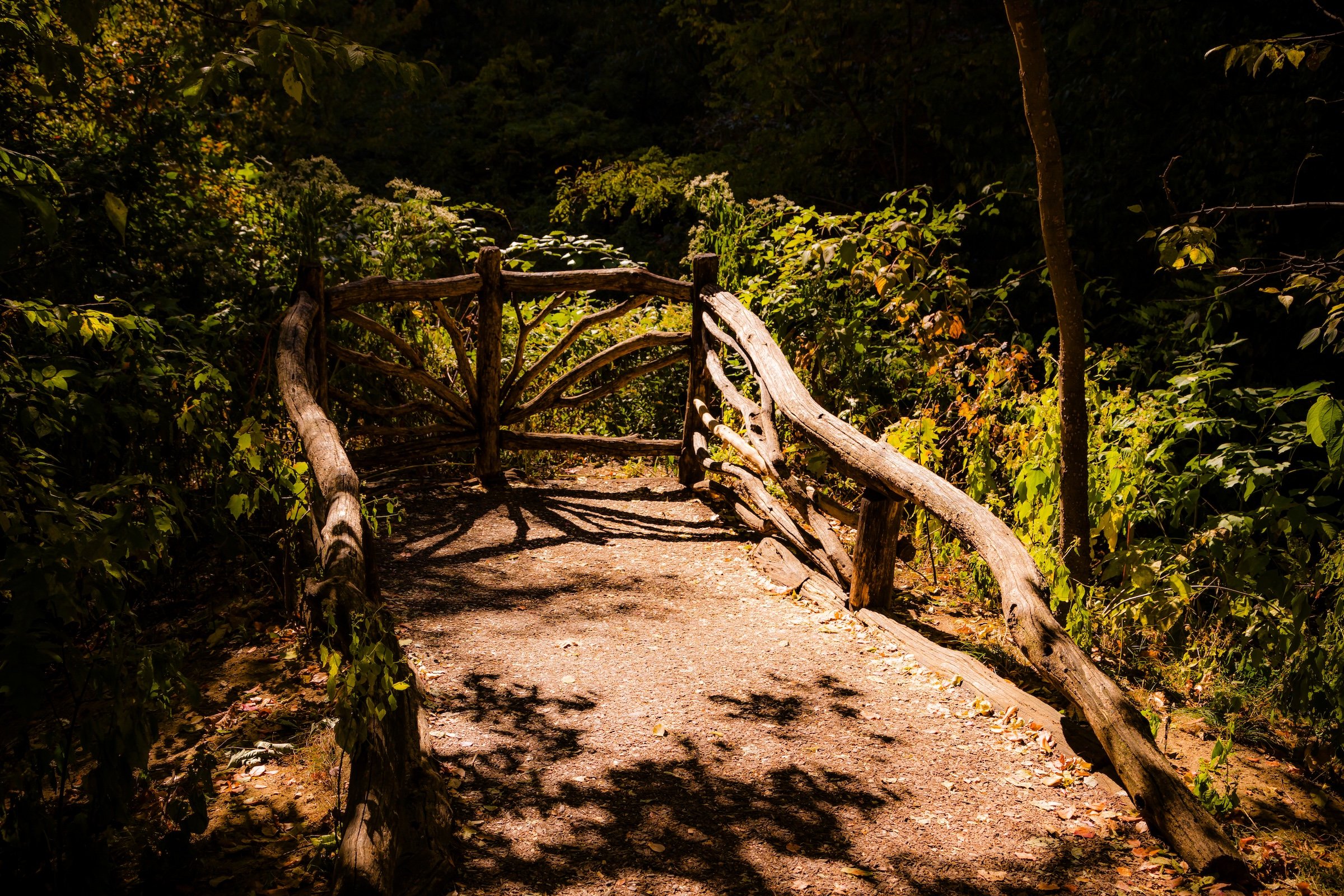
The Conservancy’s restoration added and expanded trails, native planting, rustic benches, railings, a scenic overlook and a handcrafted entrance gate while deliberately retaining the feeling of a protected woodland. A small waterfall descends from the sanctuary toward The Pond, adding another hidden layer to a landscape that was inaccessible to most visitors for more than eighty years.
Waypoints
-
Central Park’s largest rustic wooden shelter sits atop a major rock outcrop near the southern end of the landscape. Reconstructed in 1984, it recalls an earlier nineteenth-century shelter and provides an elevated retreat overlooking The Pond.
-
A distinctive named rock feature within Hallett’s rugged terrain, reinforcing the sense that this small sanctuary is as much a landscape of exposed stone and elevation as of woodland.
-
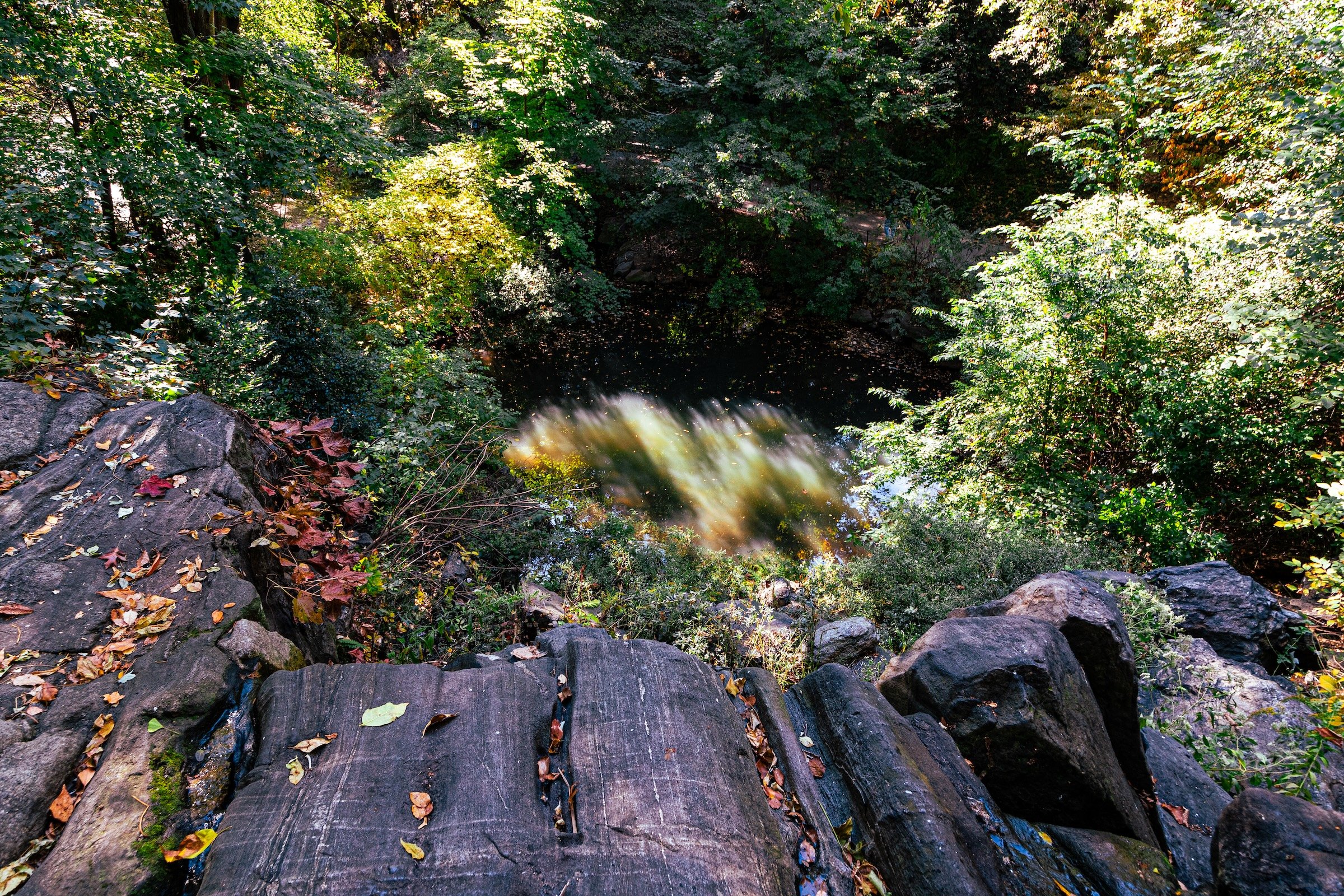
A small waterfall hidden within the sanctuary drops toward The Pond, adding moving water to Hallett’s secluded woodland experience.
Photography
VIsual Identity
Central Park has no single visual identity. It moves between open meadow and enclosed woodland, exposed bedrock and carefully planted garden, reflective water and hard-edged skyline. Its paths can narrow into shade beneath old trees, then open suddenly toward towers, lakes, monuments, or a broad field filled with people. The Park’s character is made from those transitions: the designed discovery of one landscape giving way to another.
Water and horizon recur throughout its geography. The Lake, Reservoir, ponds, fountains, and seasonal pools of light create places of reflection—sometimes literal, sometimes figurative—where the city appears fractured, softened, or enlarged. Beyond them, Manhattan’s towers remain present as a constant reminder that this cultivated landscape exists within, not apart from, one of the world’s densest cities.
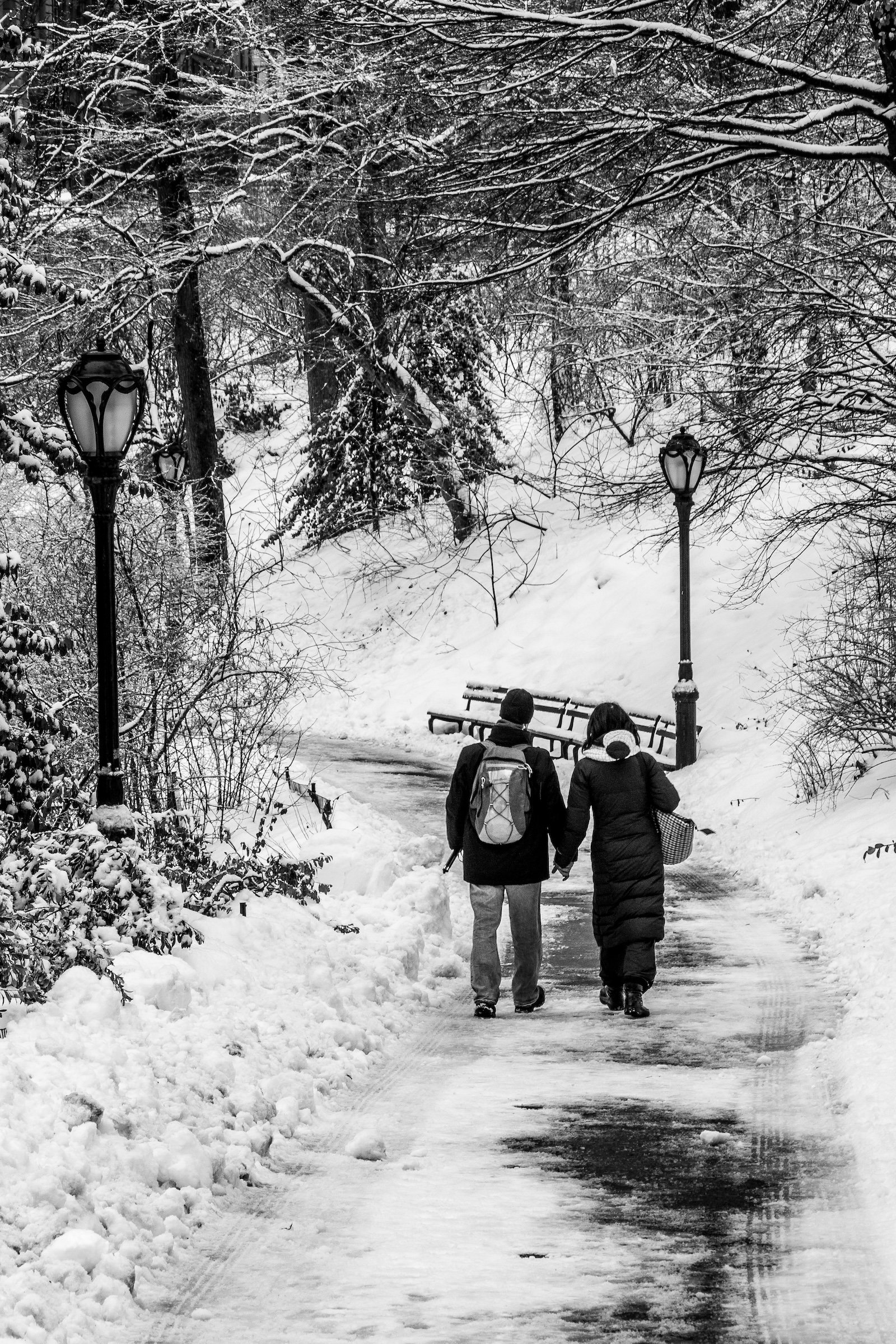
Its visual language also changes dramatically with the seasons. Winter exposes branches, stone, and skyline; spring briefly turns the Park into blossom and color; summer fills its lawns and paths with activity; autumn intensifies the drama of canopy, water, and light. Central Park is designed to be revisited, and its identity is never fixed for long.