
WEST MEADOW
Location
Geographic Setting
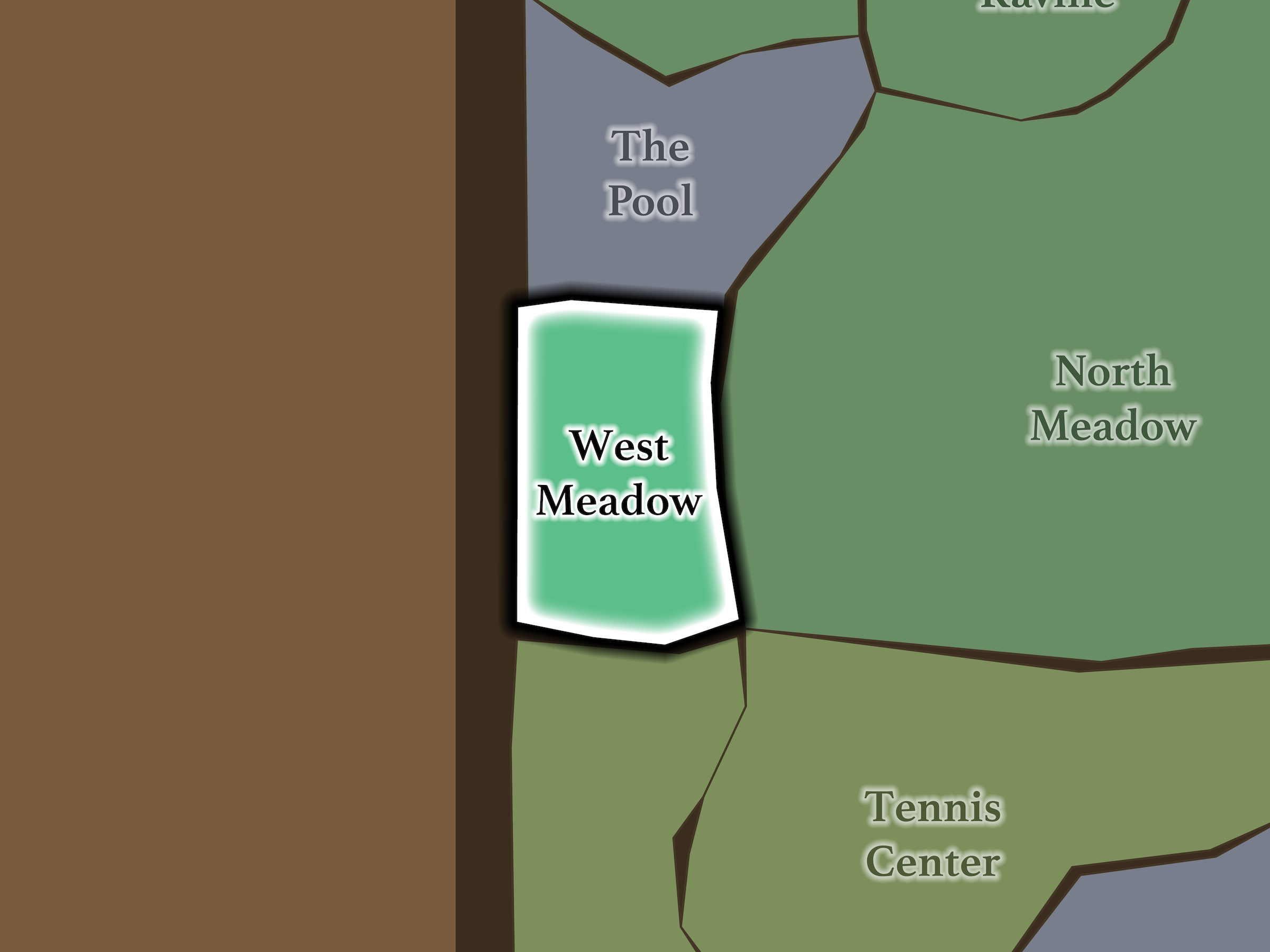
West Meadow occupies the westernmost portion of the meadow belt at the southern edge of the North End. The Pool begins above West 100th Street; North Meadow lies across West Drive; Rolling Meadows continues below the 97th Street Transverse; and Central Park West separates the landscape from Manhattan Valley.
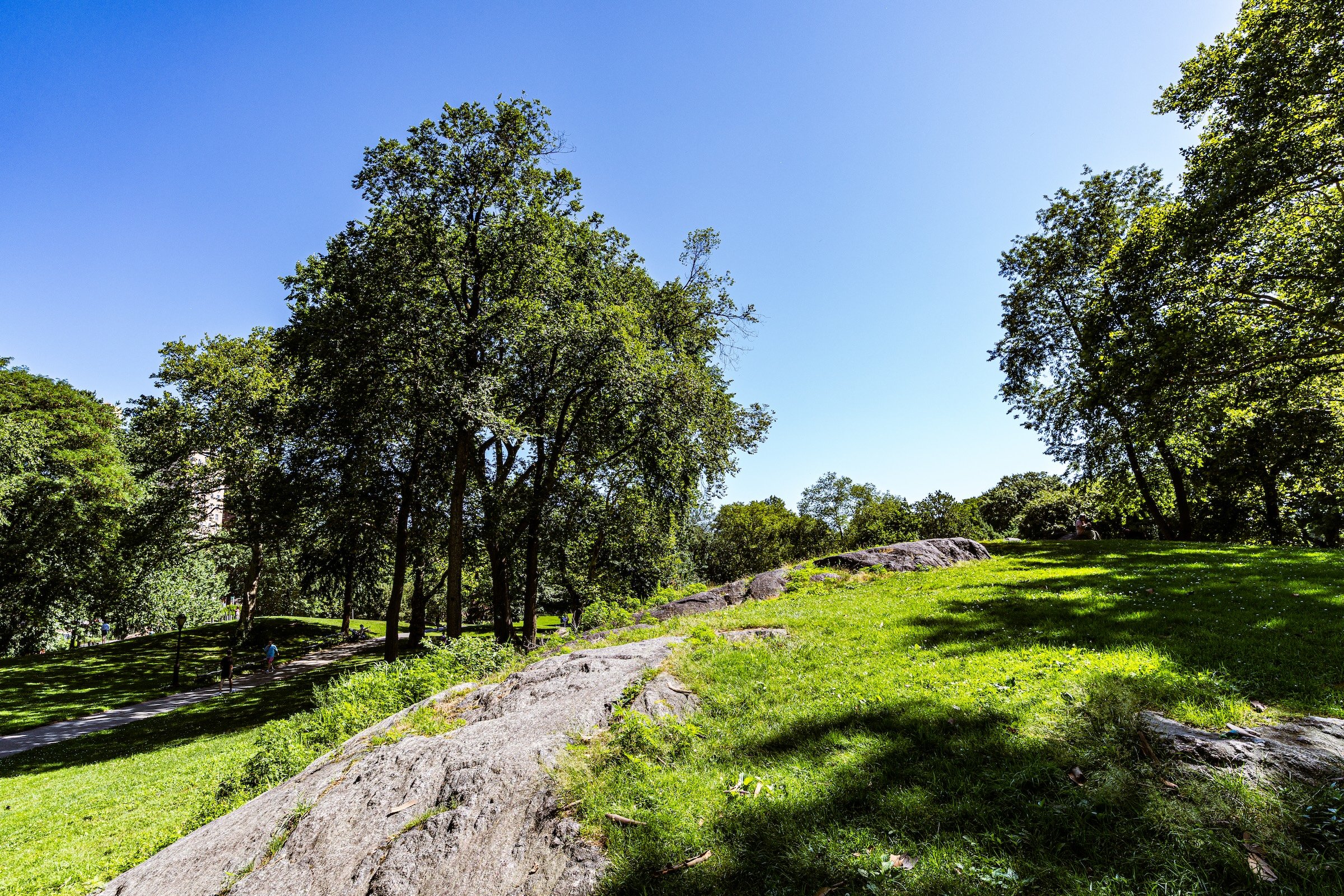
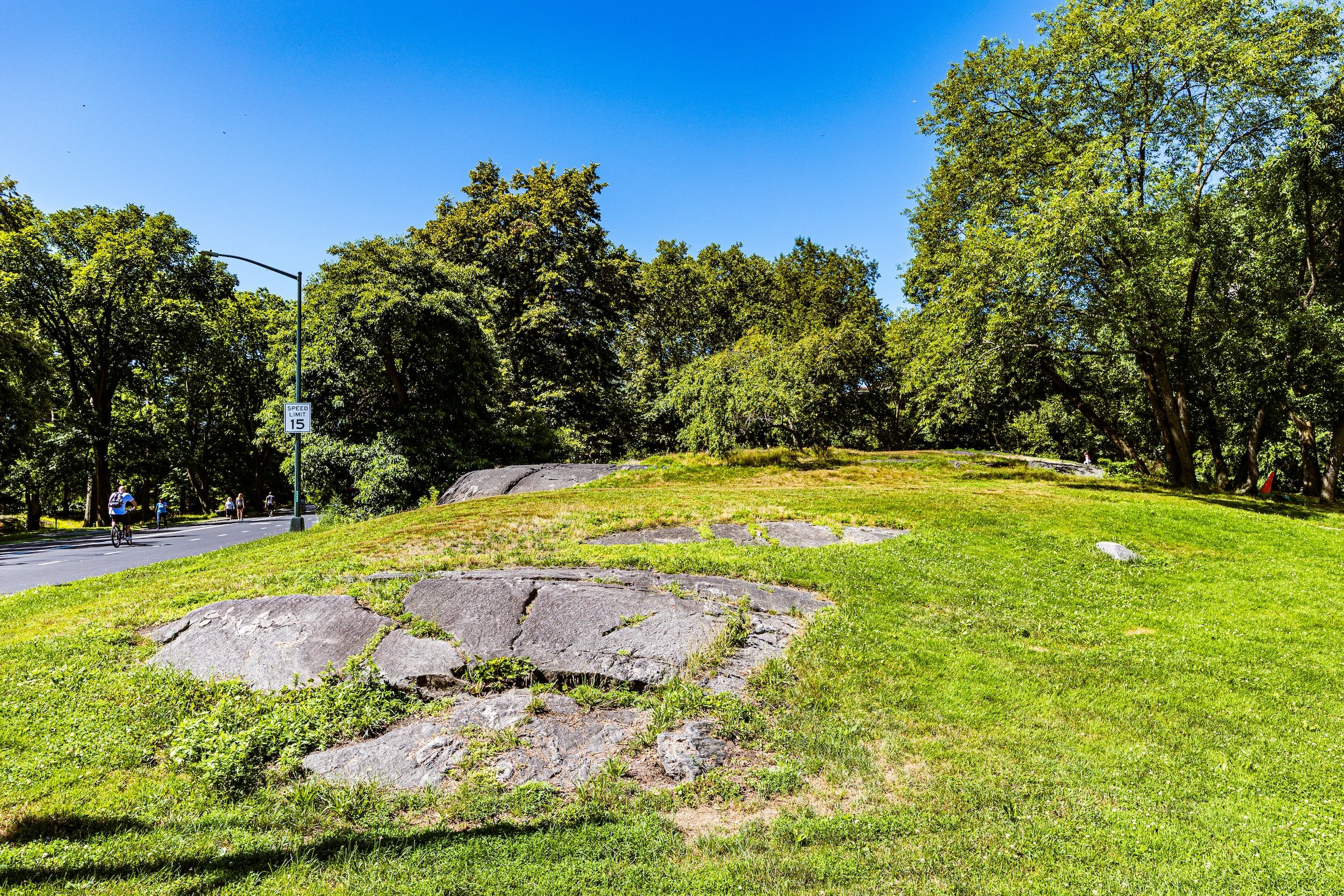
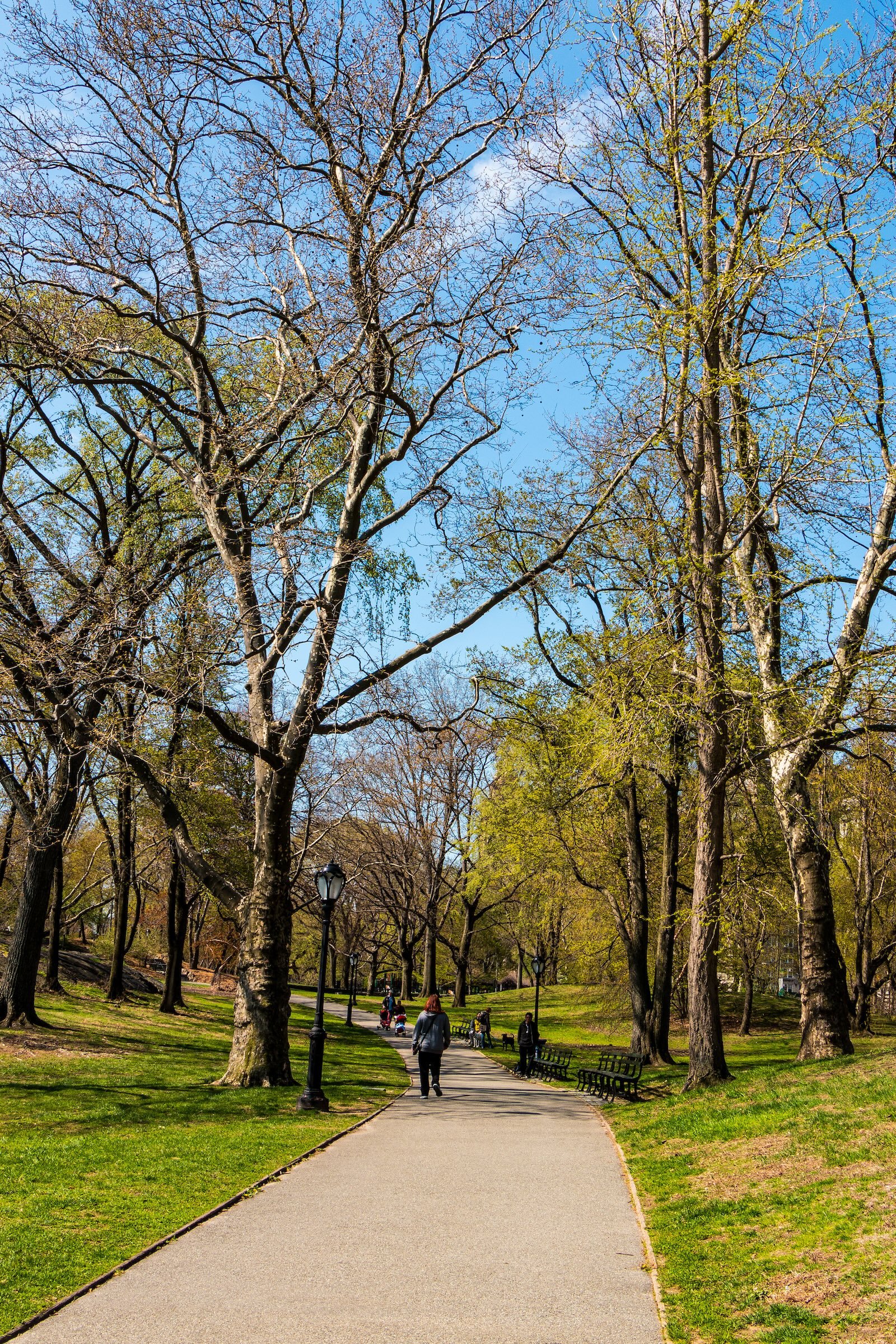
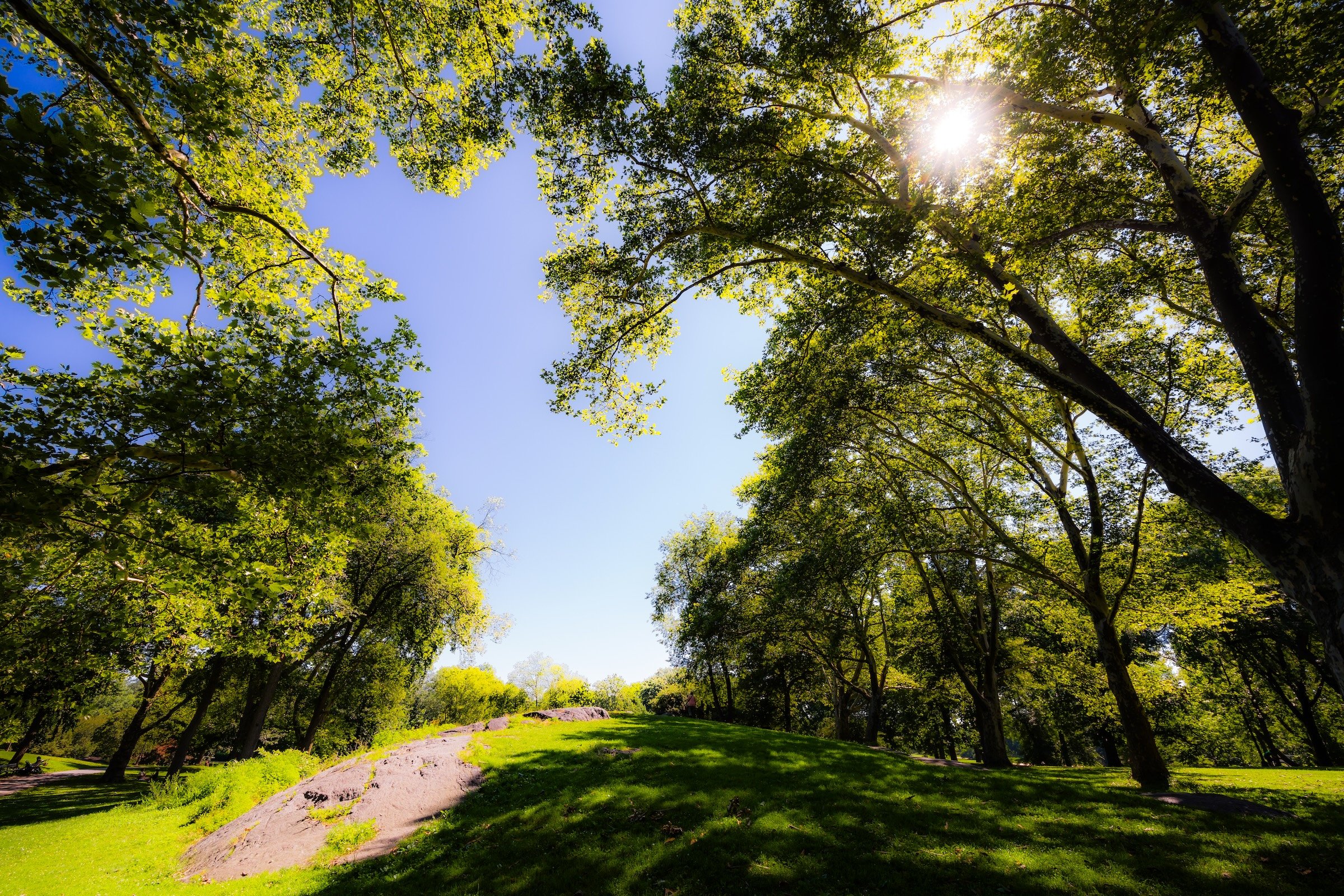
The neighborhood balances several different environments within a relatively narrow strip. Open lawns occupy portions of the interior, while mature trees create substantial shade along paths and around Tarr Family Playground. Rocky ground and changes in elevation provide a stronger sense of enclosure toward The Pool.
The result is less expansive than North Meadow but more varied: lawn, woodland edge, playground and pedestrian corridor compressed between West Drive and the city.
Etymology
West Meadow is a CityNeighborhoods designation for the narrow pastoral landscape along Central Park’s western perimeter between the 97th Street Transverse and West 100th Street.
The name completes a geographic relationship that is especially apparent across the southern edge of the North End: West Meadow → North Meadow → East Meadow. Unlike North and East Meadow, West Meadow does not appear to be a formal contemporary Conservancy place name. But the underlying landscape is not an arbitrary invention. In its 1994 annual report, the Central Park Conservancy specifically treated the perimeter landscape from West 97th to West 100th Street as a coherent restoration area, describing its scenery, paths, plantings and connection toward North Meadow.
So the CityNeighborhoods name gives a simple geographic identity to a landscape the Conservancy itself has treated as a distinct unit.
History
1858–1873: Greensward Plan & Construction
Olmsted and Vaux conceived Central Park’s western perimeter as a continuous landscape rather than simply as leftover ground between the Drive and park wall.
Here, pathways, carriage routes, lawns, tree planting and irregular terrain created a gradual transition between the open interior of the park and Manhattan beyond. The designers’ larger objective was to provide the experience of countryside—broad meadow, wooded edge and winding movement—while keeping urban intrusions as subdued as possible.
West Meadow’s location also places it near the headwaters of an older natural system. Montayne’s Rivulet, the pre-park stream later transformed into The Pool and Loch, entered the future park near West 100th Street after originating farther west near present-day Columbus Avenue and West 95th Street.
The neighborhood therefore sits at a transition between the more pastoral meadow landscapes to the south and the wetter, rougher North Woods terrain beginning immediately above it.
1858–1899: Early History & Grand Openings
During Central Park’s nineteenth-century decades, this western strip remained primarily a landscape of movement and scenery rather than organized recreation.
At West 100th Street, the park entrance became Boys’ Gate, part of the commissioners’ original system of names honoring categories of New Yorkers rather than individual benefactors. Its eastern counterpart, Girls’ Gate, stands at East 102nd Street on the opposite side of the park.
Visitors entering here could continue toward the broad North Meadow, move north toward The Pool and woodland landscapes, or travel south along the western perimeter.
20th Century: Transformation & Restoration
The neighborhood changed significantly during the Robert Moses-era expansion of recreation.
In 1935, one of Central Park’s original perimeter playgrounds was constructed near West 100th Street. By the early 1970s it had deteriorated, and neighborhood parents helped secure funding for an entirely new kind of space. Architects Ross, Ryan and Jacquette redesigned it in the emerging adventure-playground style, and the new playground opened in 1973 with interconnected climbing structures, tunnels, maze-like spaces, water play and a treehouse.
The surrounding landscape also suffered from decades of neglect. By the early 1990s, the Conservancy described the West 97th–100th Street perimeter landscape as having deteriorated paths, overgrown planting and serious erosion. Its restoration rebuilt pathways and rustic stone steps, added benches and planting, improved the West 100th Street entrance and created clearer connections toward the Tennis Center and North Meadow.
Tarr Family Playground underwent another comprehensive reconstruction in 2009. Importantly, the Conservancy restored not only the equipment but the landscape surrounding it—lowering fences and creating more generous planted margins so the playground would feel less isolated from the park around it.
Explore
21st Century: Renovation & Modernization
Today, West Meadow feels like a balance between passage and pause.
Paths carry walkers north toward The Pool or south toward Rolling Meadows, while West Drive provides the clear eastern boundary separating this quieter park-edge landscape from the much broader North Meadow.
But there is enough room between those routes to linger. Small lawns open beneath the trees, rocky edges break the terrain, and the canopy creates substantial shade. The setting feels particularly neighborhood-oriented, with Manhattan Valley immediately beyond Central Park West and Tarr Family Playground drawing families into the landscape from the western entrances.
That mixture differentiates West Meadow from its companions.
North Meadow is broad and recreational.
East Meadow is broad and pastoral.
West Meadow is narrower and more intimate—a sequence of lawns, shade, paths and recreation along the park edge.
The Conservancy’s historical treatment of West 97th–100th Street as a unified perimeter landscape makes that distinction more than cartographic convenience.
Waypoints
-
The West 100th Street entrance belongs to Central Park’s original system of named gates and forms the counterpart to Girls’ Gate at East 102nd Street. Rather than commemorate an individual, the name honors boys collectively as part of the commissioners’ broader democratic vocabulary for the park entrances.
-
This West 100th Street playground opened in its present adventure-style form in 1973, with interconnected climbing features, tunnels, a concrete maze, water play and a treehouse. The Conservancy rebuilt it in 2009 while deliberately improving its relationship with the surrounding landscape.
Photography
Visual Identity
Central Park has no single visual identity. It moves between open meadow and enclosed woodland, exposed bedrock and carefully planted garden, reflective water and hard-edged skyline. Its paths can narrow into shade beneath old trees, then open suddenly toward towers, lakes, monuments, or a broad field filled with people. The Park’s character is made from those transitions: the designed discovery of one landscape giving way to another.
Water and horizon recur throughout its geography. The Lake, Reservoir, ponds, fountains, and seasonal pools of light create places of reflection—sometimes literal, sometimes figurative—where the city appears fractured, softened, or enlarged. Beyond them, Manhattan’s towers remain present as a constant reminder that this cultivated landscape exists within, not apart from, one of the world’s densest cities.
Its visual language also changes dramatically with the seasons. Winter exposes branches, stone, and skyline; spring briefly turns the Park into blossom and color; summer fills its lawns and paths with activity; autumn intensifies the drama of canopy, water, and light. Central Park is designed to be revisited, and its identity is never fixed for long.