
ARTISTS’ & ARTISANS’ WALK
Location
Geographic Setting
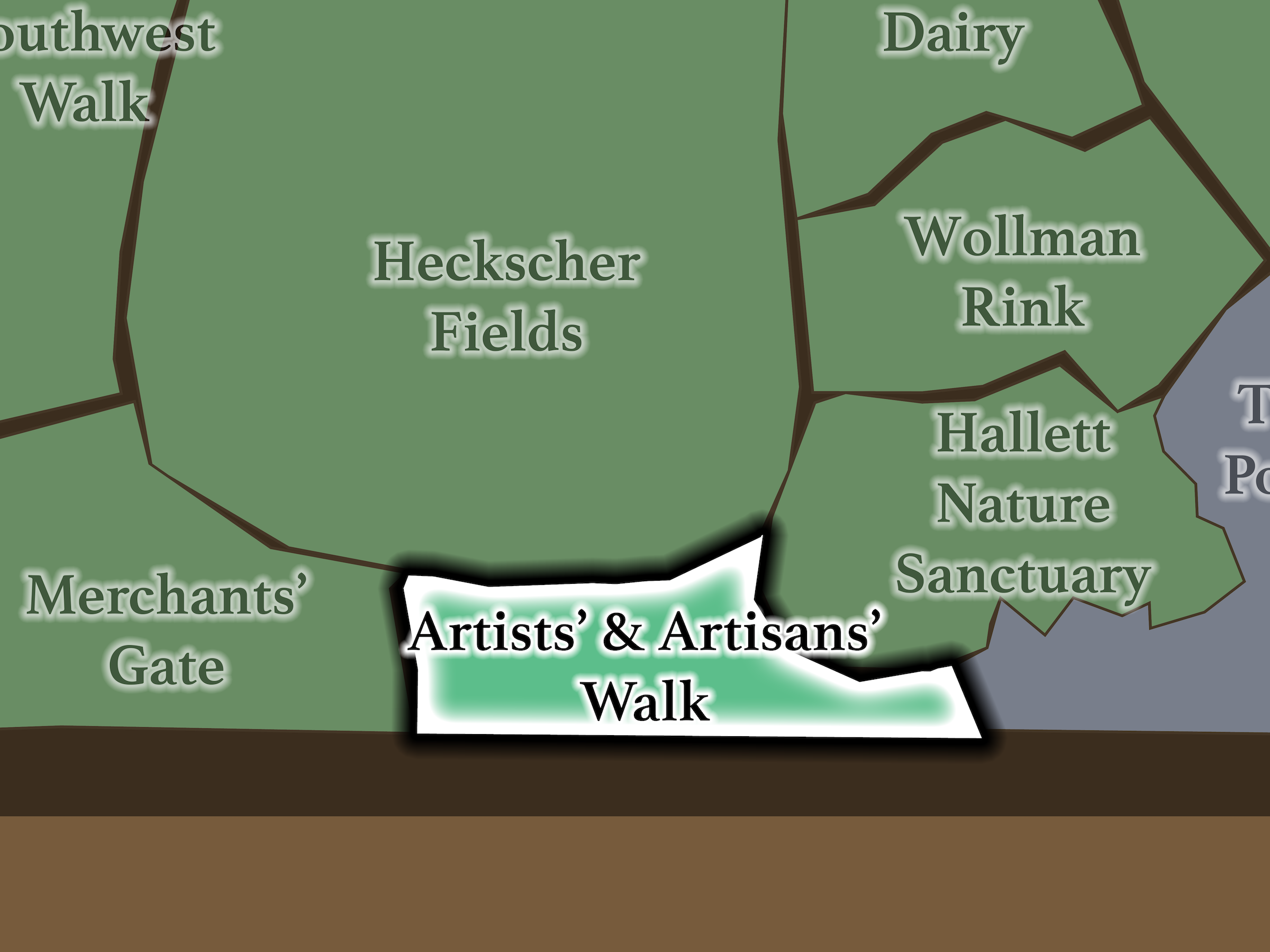
Artists’ & Artisans’ Walk occupies the southern edge of Central Park between Midtown and the landscapes immediately inside the park. Merchants’ Gate lies to the west; Heckscher Fields rise beyond Center Drive to the north; Hallett Nature Sanctuary and The Pond form its eastern transition; and Central Park South marks its hard urban edge.
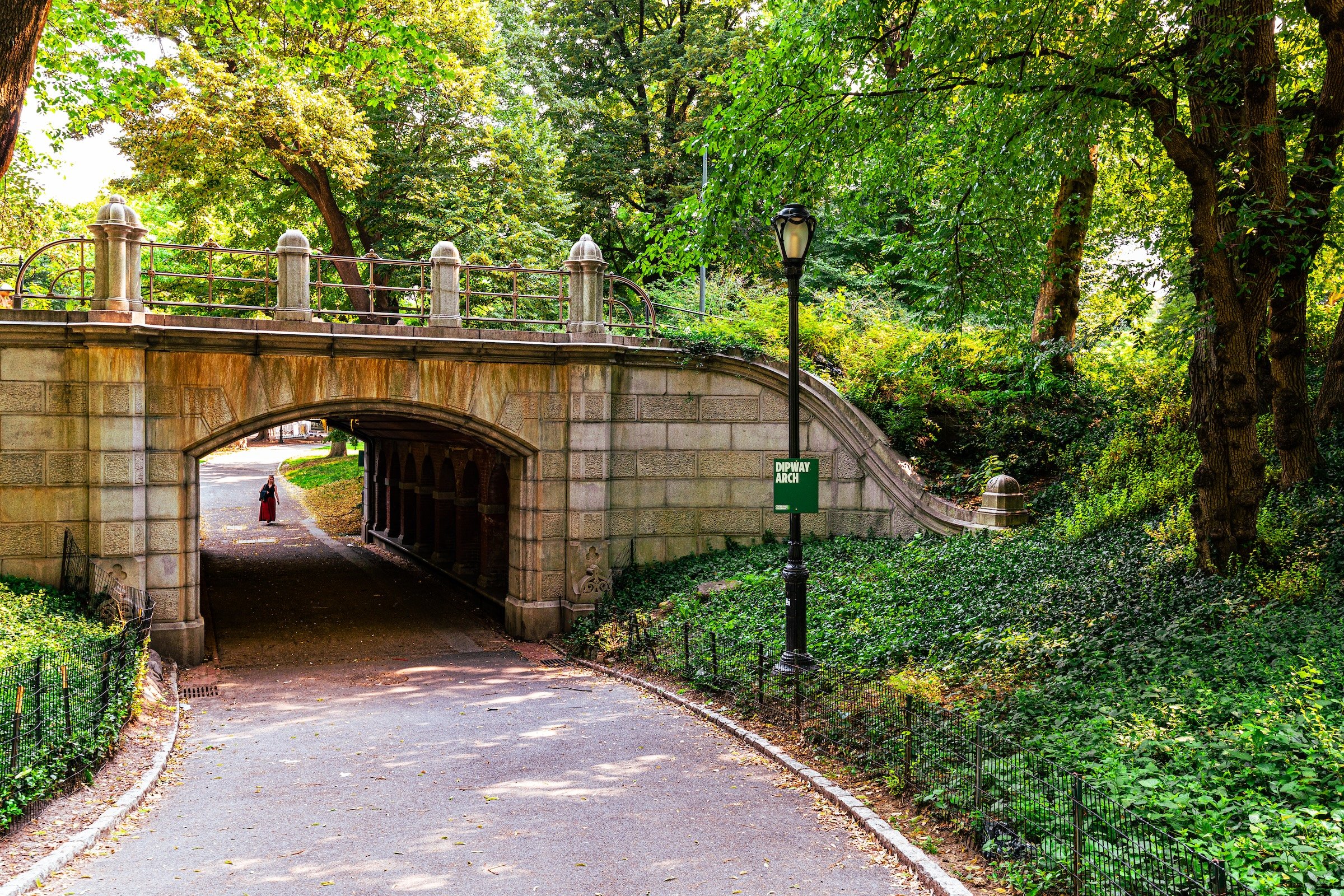
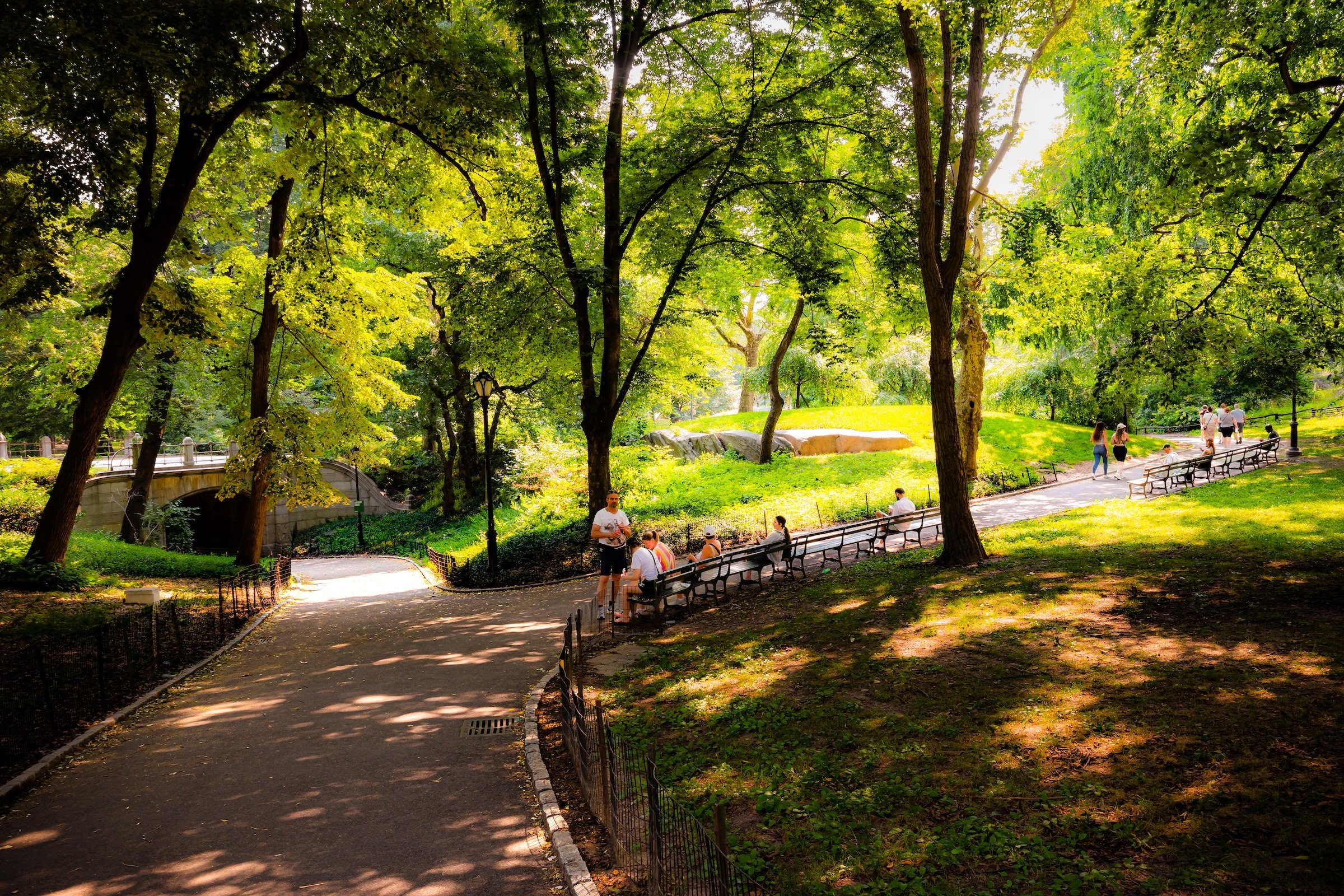
Unlike the larger landscapes around it, this area is defined primarily by passage. Visitors enter from Sixth or Seventh Avenue and are quickly distributed toward The Pond, Heckscher Fields and the interior drive-and-path network. Dipway Arch makes that circulation three-dimensional, allowing pedestrians to descend below the drive rather than intersecting it at grade.
Etymology
Artists’ & Artisans’ Walk takes its name from Artists’ Gate at Sixth Avenue and Artisans’ Gate at Seventh Avenue, two of the four occupational gate names assigned to Central Park’s southern entrances in the nineteenth century. Artists were understood broadly as those whose work brought “animation and grace” to society, while artisans represented makers whose labor produced tangible work.
The Walk designation is a CityNeighborhoods interpretation of the landscape between and beyond those entrances: an elongated pedestrian threshold connecting Central Park South with The Pond, Heckscher Fields and the park’s interior.
History
1858–1873: Greensward Plan & Construction
Olmsted and Vaux conceived Central Park’s southern edge as the principal point of arrival from the growing city below. Rather than erecting monumental European-style gateways, they favored understated entrances integrated into the park wall and landscape. The larger circulation system then separated pedestrians, carriages and riders so that movement through the park could remain safe and visually unobtrusive.
That design effectively overwrote the former property and terrain of the future park with a deliberately choreographed public threshold. Dipway Arch, built around 1860, embodies the idea especially well: the drive crosses above while pedestrians pass beneath, allowing two systems of movement to occupy the same space without disrupting one another.
1858–1899: Early History & Grand Openings
By 1862, after the southern end had taken shape, the Park Commissioners assigned civic identities to its four principal 59th Street entrances: Scholars’, Artists’, Artisans’ and Merchants’. The names were meant to recognize the varied occupations and people who collectively made New York City.
For most nineteenth-century visitors, however, those names were conceptual rather than monumental. The entrances remained physically modest, and most of the names existed primarily on plans and maps rather than being carved into the stonework. The emphasis remained on entering the park and moving into its landscapes rather than on passing through imposing gates.
20th Century: Transformation & Restoration
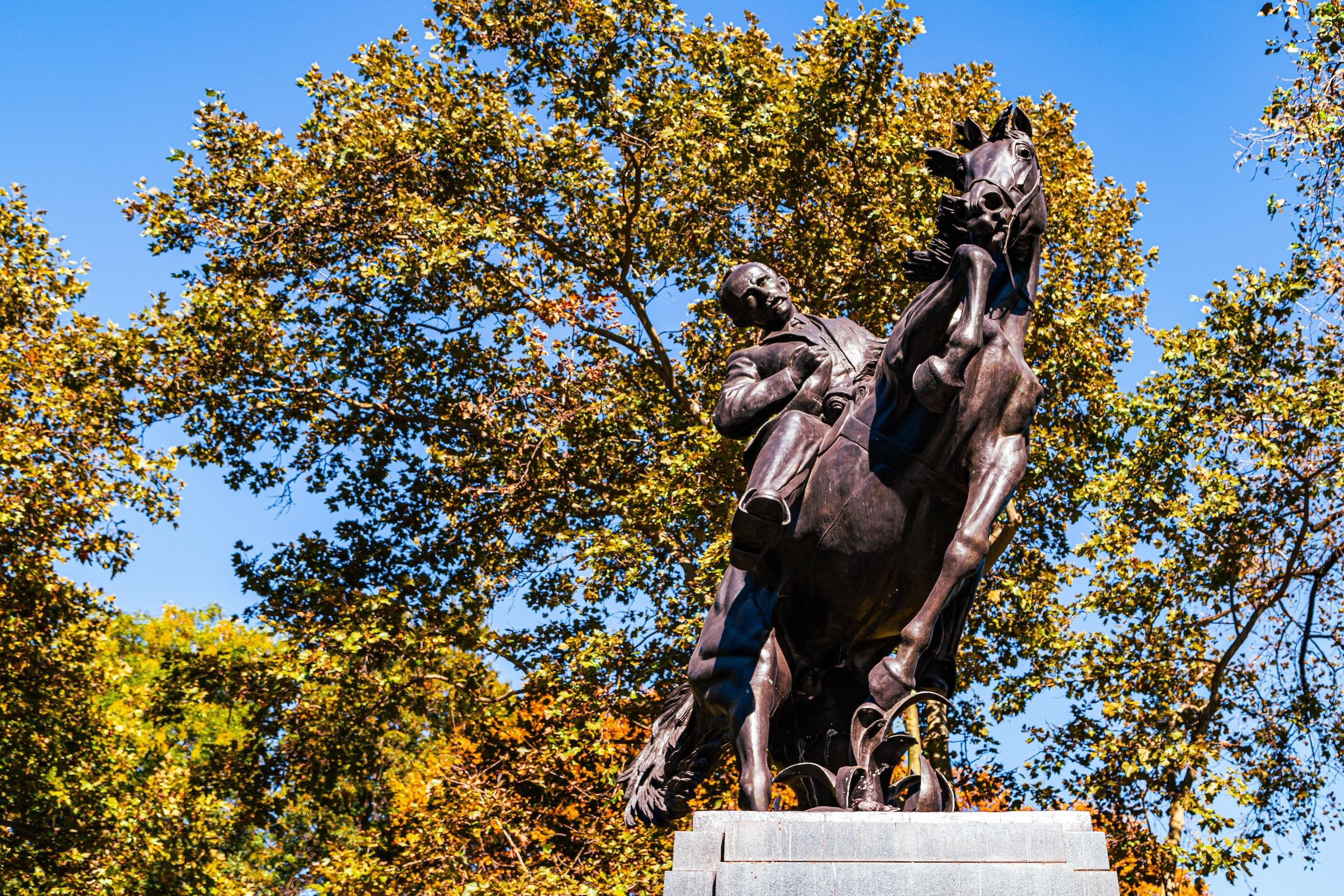
The Sixth Avenue entrance acquired an entirely new civic identity during the twentieth century. After Sixth Avenue was renamed Avenue of the Americas in 1945, the Artists’ Gate entrance became a setting for monuments honoring Latin American independence leaders. Simón Bolívar and José de San Martín were installed there in 1951; Anna Hyatt Huntington created her monument to José Martí in 1959, although political tensions delayed its installation until 1965.
The original nineteenth-century gate names also finally became physically visible. Most were carved into Central Park’s stone perimeter during Conservancy work in the 1990s, roughly 140 years after they had first been chosen.
Explore
21st Century: Renovation & Modernization
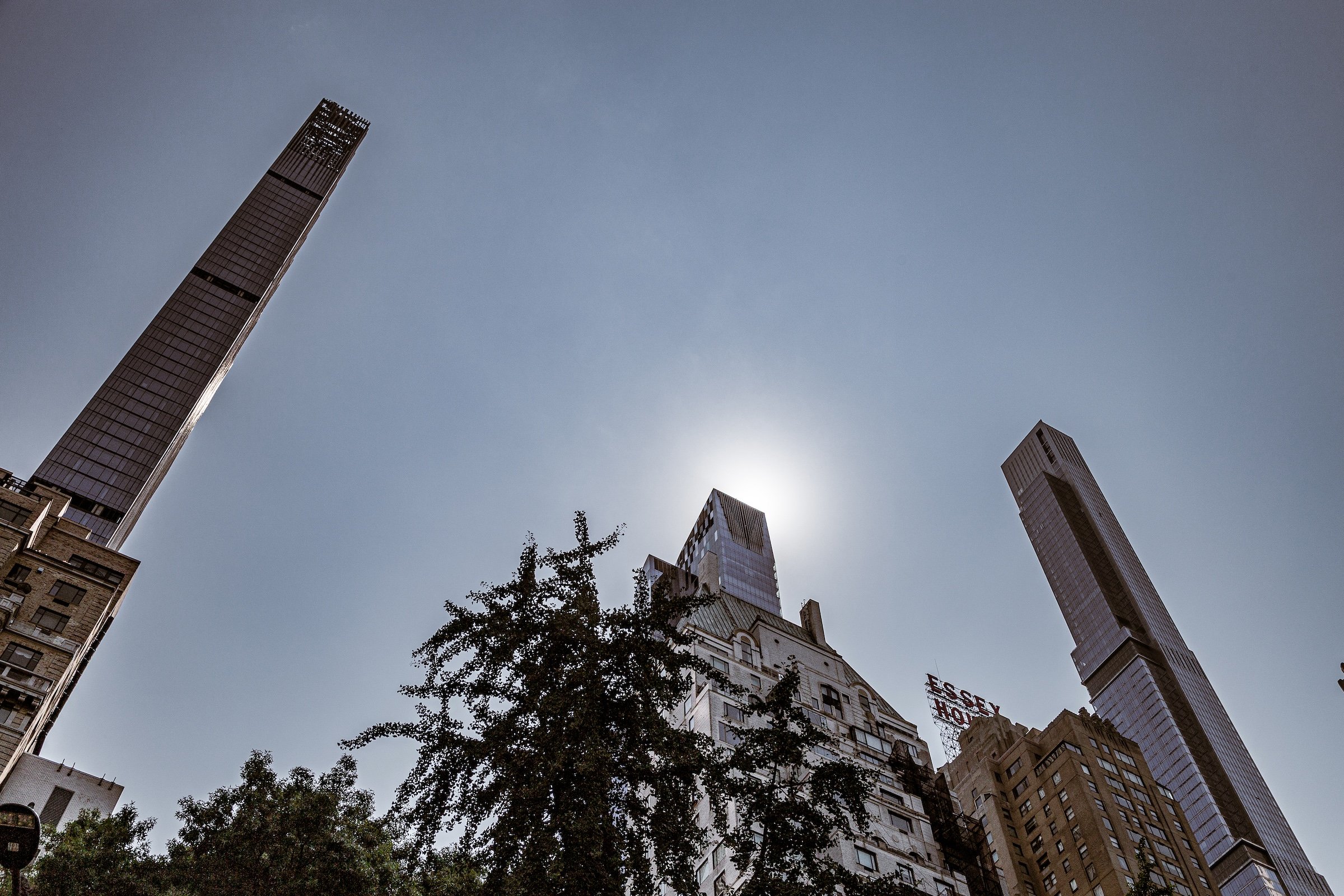
Today, Artists’ & Artisans’ Walk remains one of Central Park’s clearest transition zones between city and landscape. Midtown remains immediately visible beyond Central Park South, yet within moments the pedestrian network splits toward The Pond, Hallett Nature Sanctuary, Heckscher Fields and the interior park.
The experience is therefore less about arriving at one central destination than about choosing a direction. Artists’ Gate introduces visitors through a monumental ensemble of sculpture and open circulation; Artisans’ Gate feeds directly into the layered path-and-drive system around Dipway Arch. Together they make this strip an unusually clear example of Central Park functioning as both destination and choreography.
Waypoints
-
The Sixth Avenue entrance honors the artists, musicians, architects and other creative professions that the Park Commissioners saw as giving cultural life to the city. Today, its entrance plaza is distinguished by three monumental Latin American figures.
-
Located at Seventh Avenue, Artisans’ Gate honors the makers and skilled workers whose labor produced the city’s tangible fabric. It also provides one of the South End’s most direct entries into the park’s layered circulation system.
-
One of Central Park’s original grade-separating structures, Dipway carries the drive above a pedestrian route leading toward Heckscher Fields. Its very name describes the experience: visitors “dip” beneath the roadway and emerge farther into the park.
-
Dedicated in 1951, this equestrian monument honors the Argentine general who helped lead the independence movements of Argentina, Chile and Peru. It was a gift from the City of Buenos Aires.
-
Anna Hyatt Huntington’s dramatic equestrian sculpture depicts the Cuban independence leader at the moment of his mortal wounding in battle. Created in 1959, it was finally installed at Artists’ Gate in 1965.
-
Sally James Farnham’s monumental bronze of the Venezuelan liberator completes the trio of Latin American independence figures at Artists’ Gate and was relocated here as part of the Avenue of the Americas transformation.
Photography
Visual Identity
Central Park has no single visual identity. It moves between open meadow and enclosed woodland, exposed bedrock and carefully planted garden, reflective water and hard-edged skyline. Its paths can narrow into shade beneath old trees, then open suddenly toward towers, lakes, monuments, or a broad field filled with people. The Park’s character is made from those transitions: the designed discovery of one landscape giving way to another.
Water and horizon recur throughout its geography. The Lake, Reservoir, ponds, fountains, and seasonal pools of light create places of reflection—sometimes literal, sometimes figurative—where the city appears fractured, softened, or enlarged. Beyond them, Manhattan’s towers remain present as a constant reminder that this cultivated landscape exists within, not apart from, one of the world’s densest cities.
Its visual language also changes dramatically with the seasons. Winter exposes branches, stone, and skyline; spring briefly turns the Park into blossom and color; summer fills its lawns and paths with activity; autumn intensifies the drama of canopy, water, and light. Central Park is designed to be revisited, and its identity is never fixed for long.