
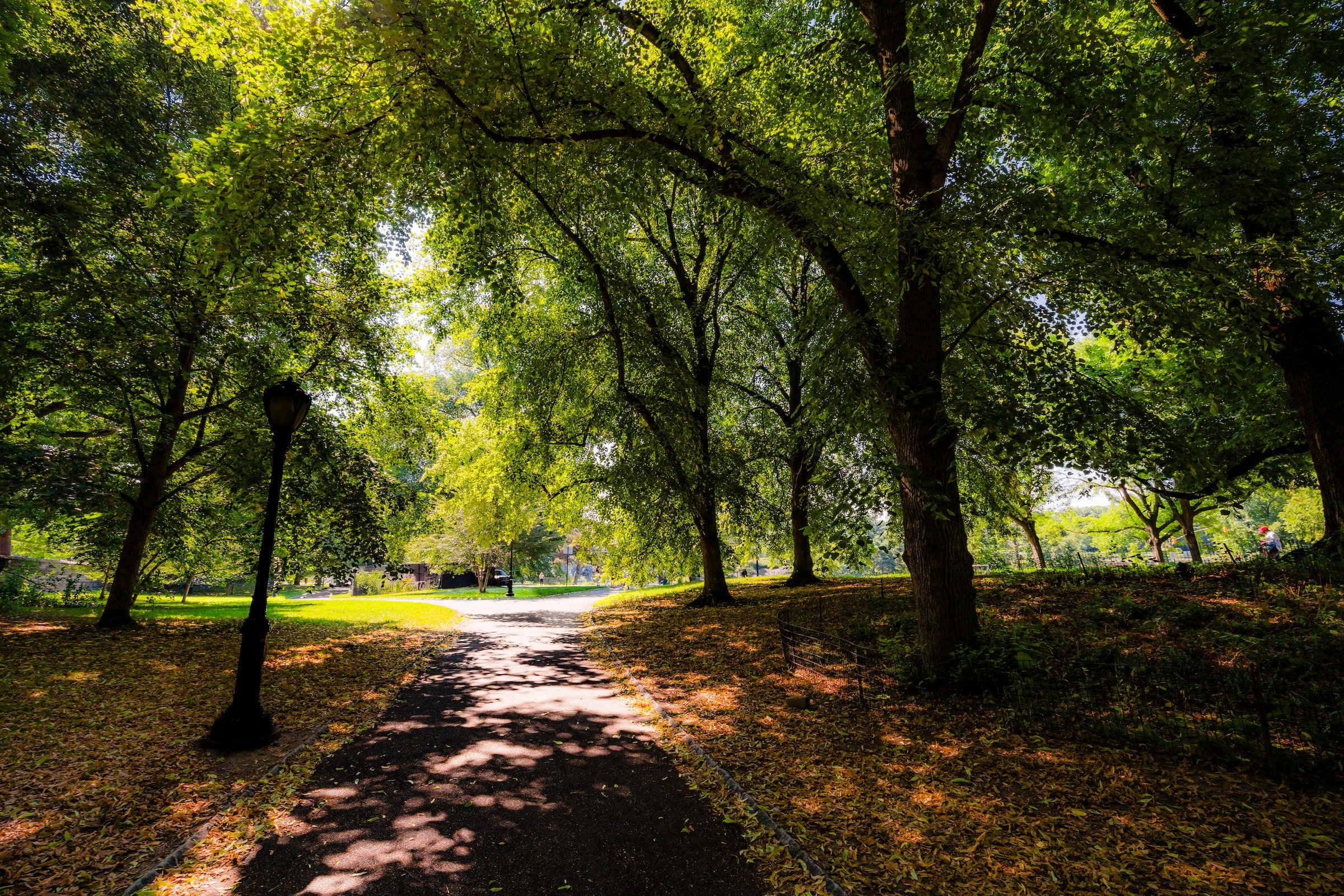
WARRIORS’ WALK
Location
Geographic Setting
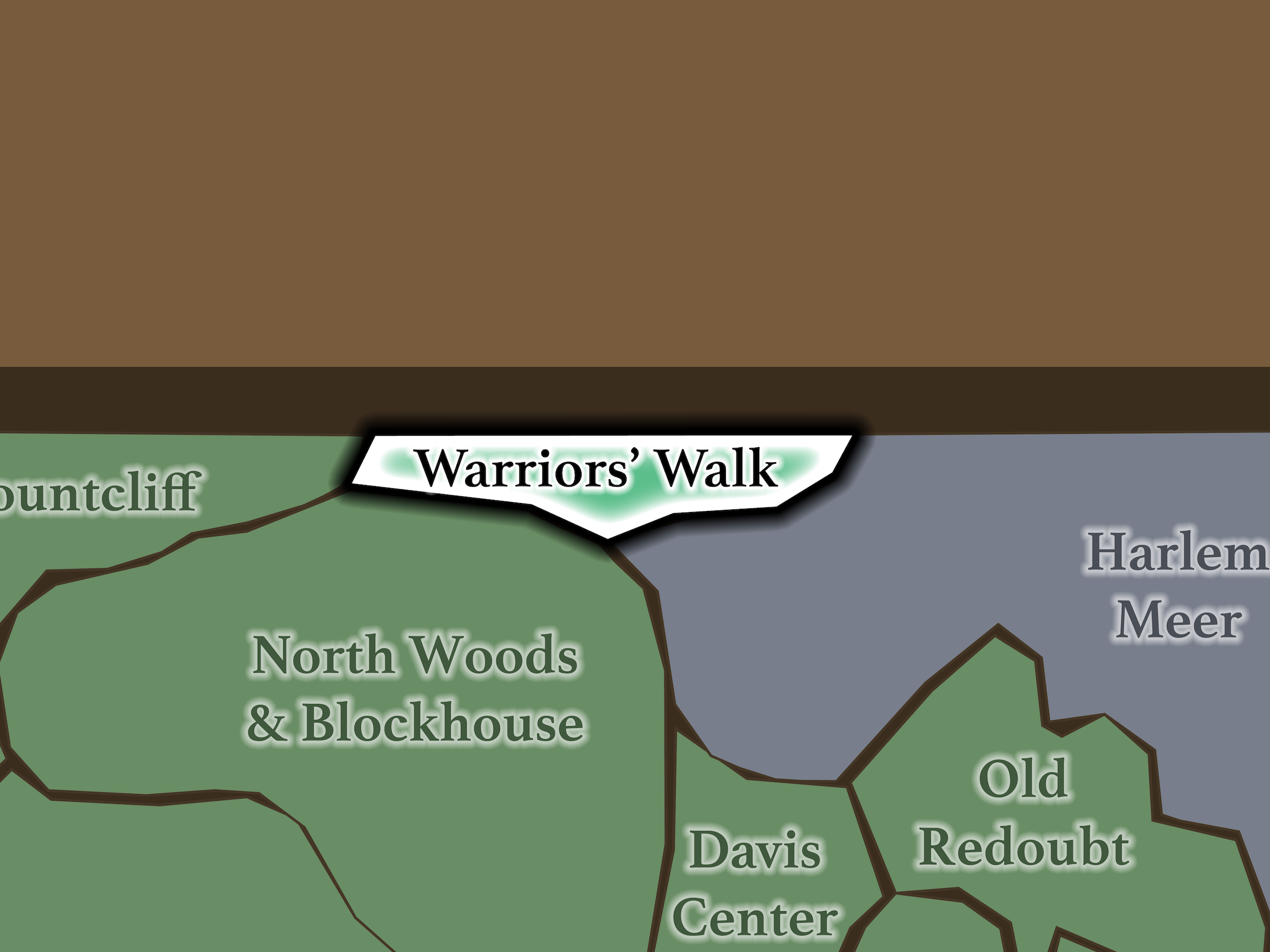
Warriors’ Walk occupies the narrow landscape immediately inside Central Park North between the park’s northwestern interior and Farmers’ Gate at Malcolm X Boulevard. Harlem Meer lies beyond Malcolm X Boulevard to the southeast; North Woods & Blockhouse descend beyond East Drive to the south; Mountcliff lies across West Drive to the west; and Harlem begins directly across Central Park North.
Its position creates a distinctive experience. Despite running along one of Harlem’s major streets, the path is buffered by mature trees, planted slopes and changes in elevation. The city remains close—often visible through the canopy—but the landscape feels considerably quieter than the more heavily visited Meer and North Woods immediately below it.
Etymology
Warriors’ Walk is a CityNeighborhoods designation for the wooded pedestrian landscape along Central Park’s northern edge between Warriors’ Gate and Farmers’ Gate.
The name takes its cue from Warriors’ Gate at Central Park North and Seventh Avenue—today Adam Clayton Powell Jr. Boulevard. In 1862, Central Park’s commissioners created a system of entrance names honoring broad groups of New Yorkers rather than prominent individuals. Among them were the Warrior, representing soldiers, and the Cultivator, encompassing farmers and naturalists; that latter idea ultimately became Farmers’ Gate.
Walk describes the landscape’s contemporary function. This is not a destination organized around a single feature, but an elongated pedestrian passage along the park’s northernmost edge.
History
1858–1873: Greensward Plan & Construction
The northern edge posed a different design problem from much of Central Park.
Here, Olmsted and Vaux had to mediate between the rugged interior of the North Woods and the city streets defining the park boundary. Paths and drives therefore became especially important, carrying visitors along and into steep terrain without sacrificing the naturalistic character of the woods.
The entrance system reinforced that civic relationship. Rather than name the gates for wealthy benefactors or political leaders, the commissioners selected categories intended to represent the people for whom Central Park had been created—artists, artisans, merchants, engineers, women, children, strangers, farmers and warriors among them.
Warriors’ Walk now links two of those nineteenth-century civic ideas along a single northern corridor.
1858–1899: Early History & Grand Openings
Warriors’ Gate at Seventh Avenue was one of the original entrance names established in 1862. Its military designation was particularly appropriate in the North End, whose high ground preserved the remains and memory of fortifications associated with the Revolutionary War and War of 1812.
The connection was once intended to become even more explicit. After the Civil War, the Seventh Regiment proposed placing its memorial at Warriors’ Gate. Park officials ultimately rejected the elaborate scheme and placed the more restrained 7th Regiment Memorial near Sheep Meadow instead.
The gate names themselves remained largely conceptual for generations. Although they appeared on maps and plans, most were not physically carved into the park walls until the Central Park Conservancy undertook the work in the late 1990s, completing the project around 2000.
20th Century: Transformation & Restoration
The northern perimeter gradually became a more conventional pedestrian landscape as Central Park’s edge was paved and formalized during the twentieth century. Like many peripheral areas, however, the landscape deteriorated during the park’s decades of declining maintenance.
The modern identity of Warriors’ Walk owes much to the Conservancy’s larger revitalization of the North End. In 2016, it completed a full restoration of the 110th Street Landscape between Lenox Avenue and Adam Clayton Powell Boulevard—almost precisely the eastern portion of the corridor defined here as Warriors’ Walk. The project restored broad areas of turf and groundcover, rebuilt and regraded paths, added granite curbs and renewed the horticultural character of the park edge.
That restoration is useful confirmation that this is not merely leftover land along the perimeter. The Conservancy itself has treated the 110th Street strip as a coherent landscape.
Explore
21st Century: Renovation & Modernization
Today, Warriors’ Walk is one of the North End’s quieter movement landscapes.
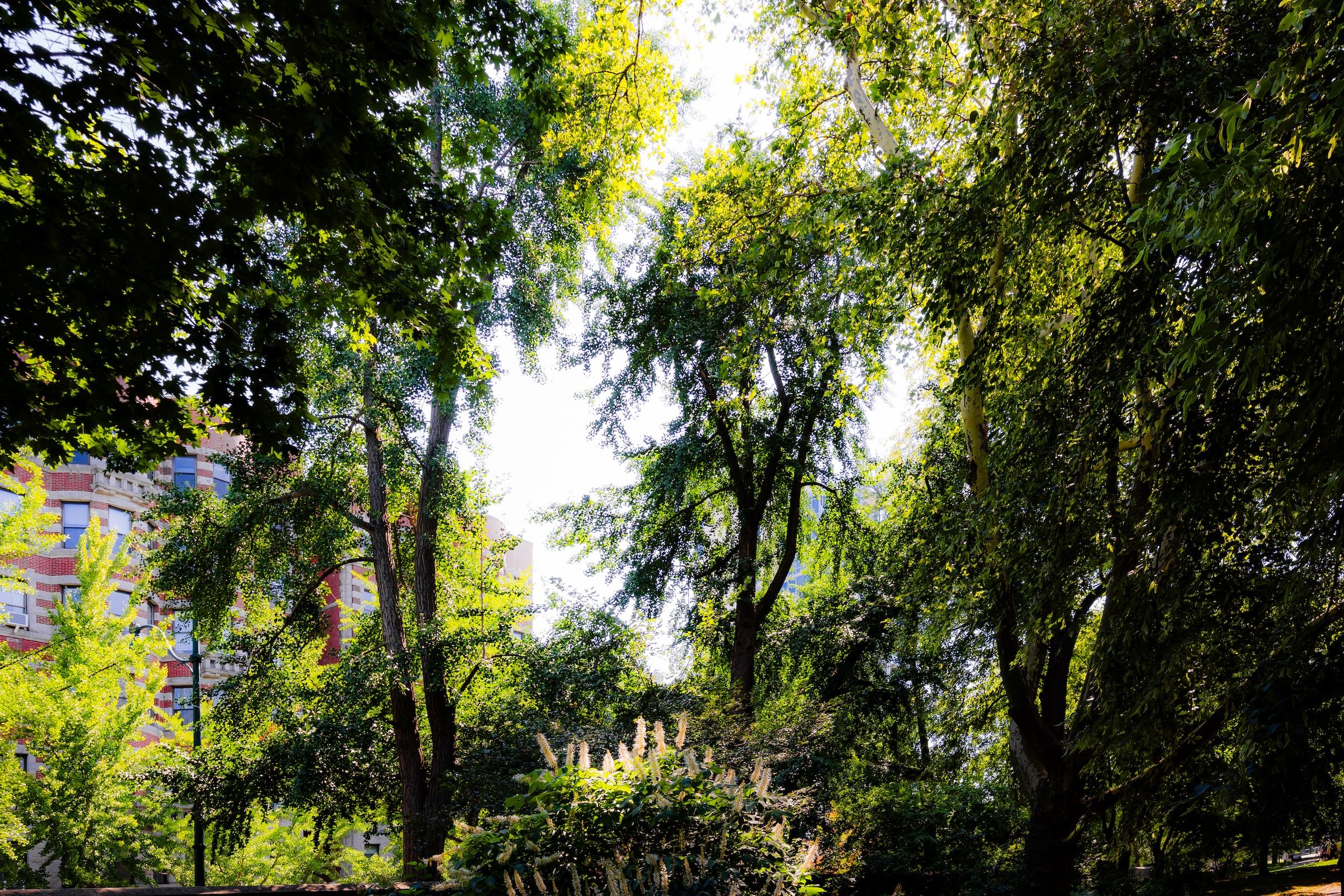
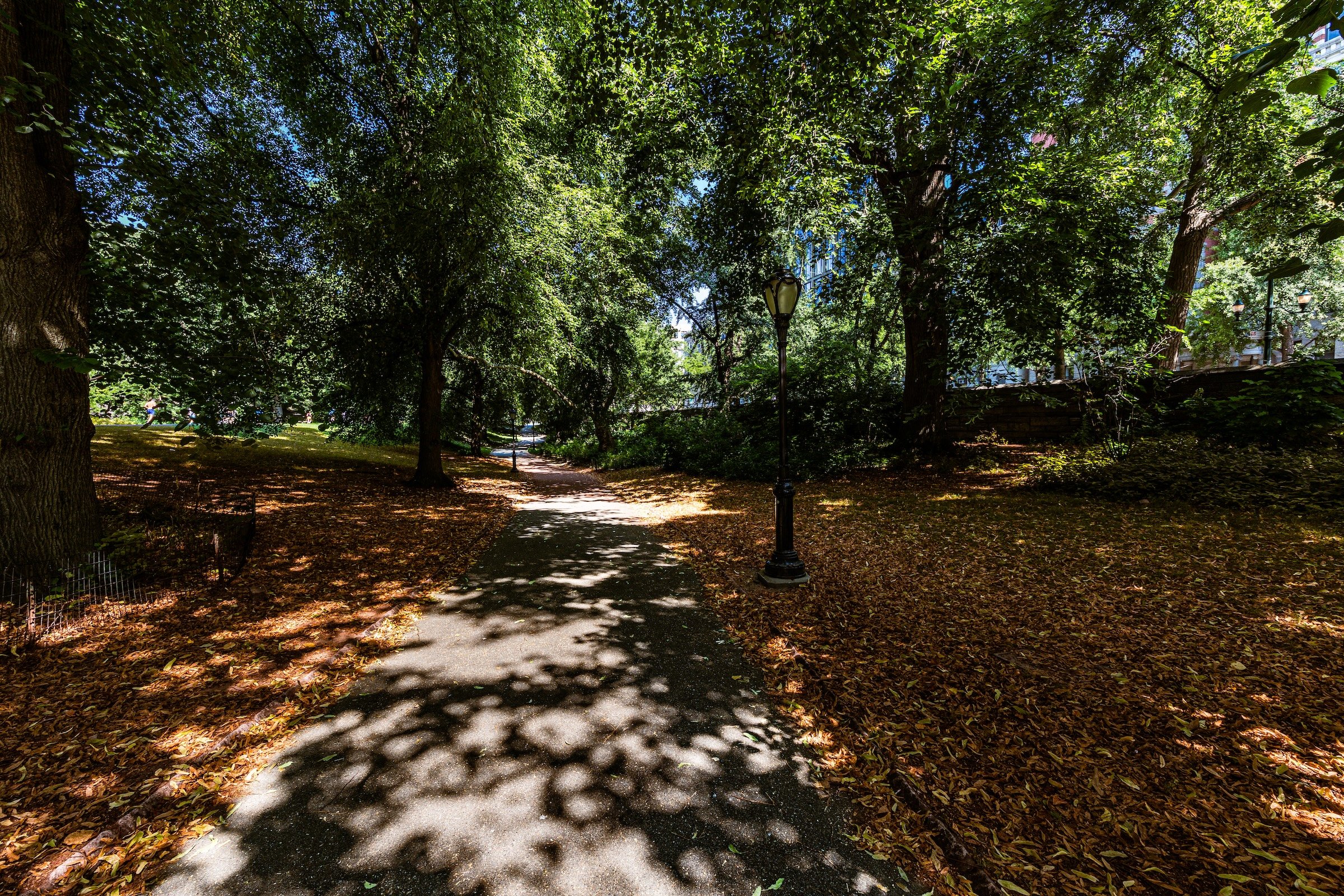
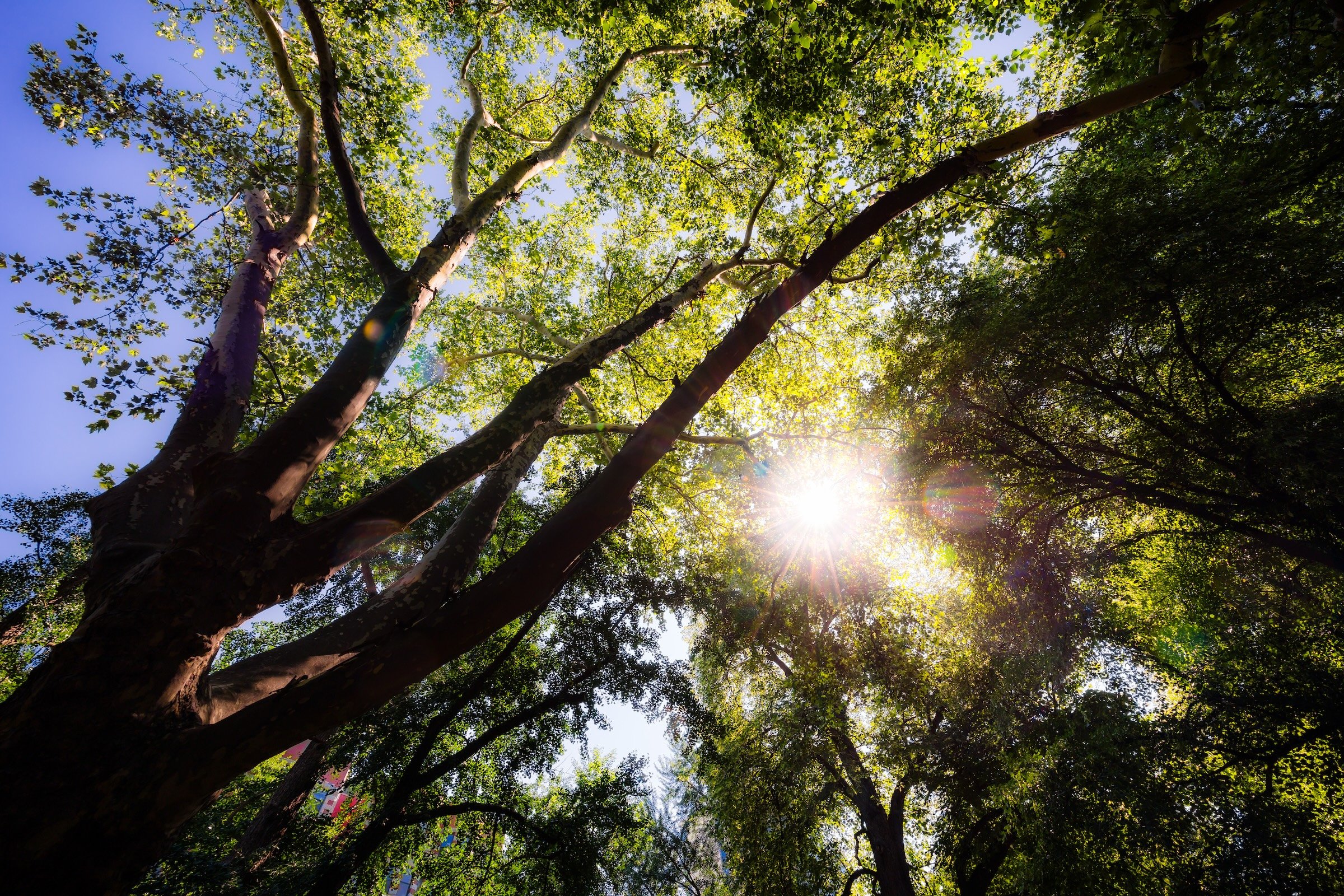
The path follows Central Park North beneath mature canopy, with small lawns, flowering groundcover and wooded slopes creating separation from the traffic immediately beyond the wall. To the south, terrain drops toward North Woods and Harlem Meer; to the north, Harlem remains continually present through the trees.
That makes Warriors’ Walk quite different from the landscapes surrounding it. Harlem Meer invites visitors toward water. North Woods pulls them inward and downhill. Mountcliff turns movement into ascent.
Warriors’ Walk moves laterally.
Its pleasure comes from continuing along the park edge rather than plunging immediately into the interior. And because it connects historic gates rather than a series of major attractions, the experience remains unusually uncluttered.
Farmers’ Gate has recently gained a new civic role as well. Beginning in 2026, the Conservancy introduced a seasonal farm stand just inside the entrance at 110th Street and Malcolm X Boulevard—an almost improbably literal twenty-first-century expression of the nineteenth-century gate name.
Waypoints
-
Located at Central Park North and Malcolm X Boulevard, Farmers’ Gate marks the eastern end of the Walk. In 2026, the historic name gained an unusually direct contemporary expression when a seasonal community farm stand began operating just inside the entrance overlooking Harlem Meer.
-
The Central Park North entrance at Adam Clayton Powell Jr. Boulevard belongs to the original 1862 gate-naming system. Its designation honored soldiers as one of the groups whose work and identity contributed to New York, and its North End location gives the name particular resonance beside the park’s historic military landscapes.
Photography
Visual Identity
Central Park has no single visual identity. It moves between open meadow and enclosed woodland, exposed bedrock and carefully planted garden, reflective water and hard-edged skyline. Its paths can narrow into shade beneath old trees, then open suddenly toward towers, lakes, monuments, or a broad field filled with people. The Park’s character is made from those transitions: the designed discovery of one landscape giving way to another.
Water and horizon recur throughout its geography. The Lake, Reservoir, ponds, fountains, and seasonal pools of light create places of reflection—sometimes literal, sometimes figurative—where the city appears fractured, softened, or enlarged. Beyond them, Manhattan’s towers remain present as a constant reminder that this cultivated landscape exists within, not apart from, one of the world’s densest cities.
Its visual language also changes dramatically with the seasons. Winter exposes branches, stone, and skyline; spring briefly turns the Park into blossom and color; summer fills its lawns and paths with activity; autumn intensifies the drama of canopy, water, and light. Central Park is designed to be revisited, and its identity is never fixed for long.