
EAST MEADOW
Location
Geographic Setting
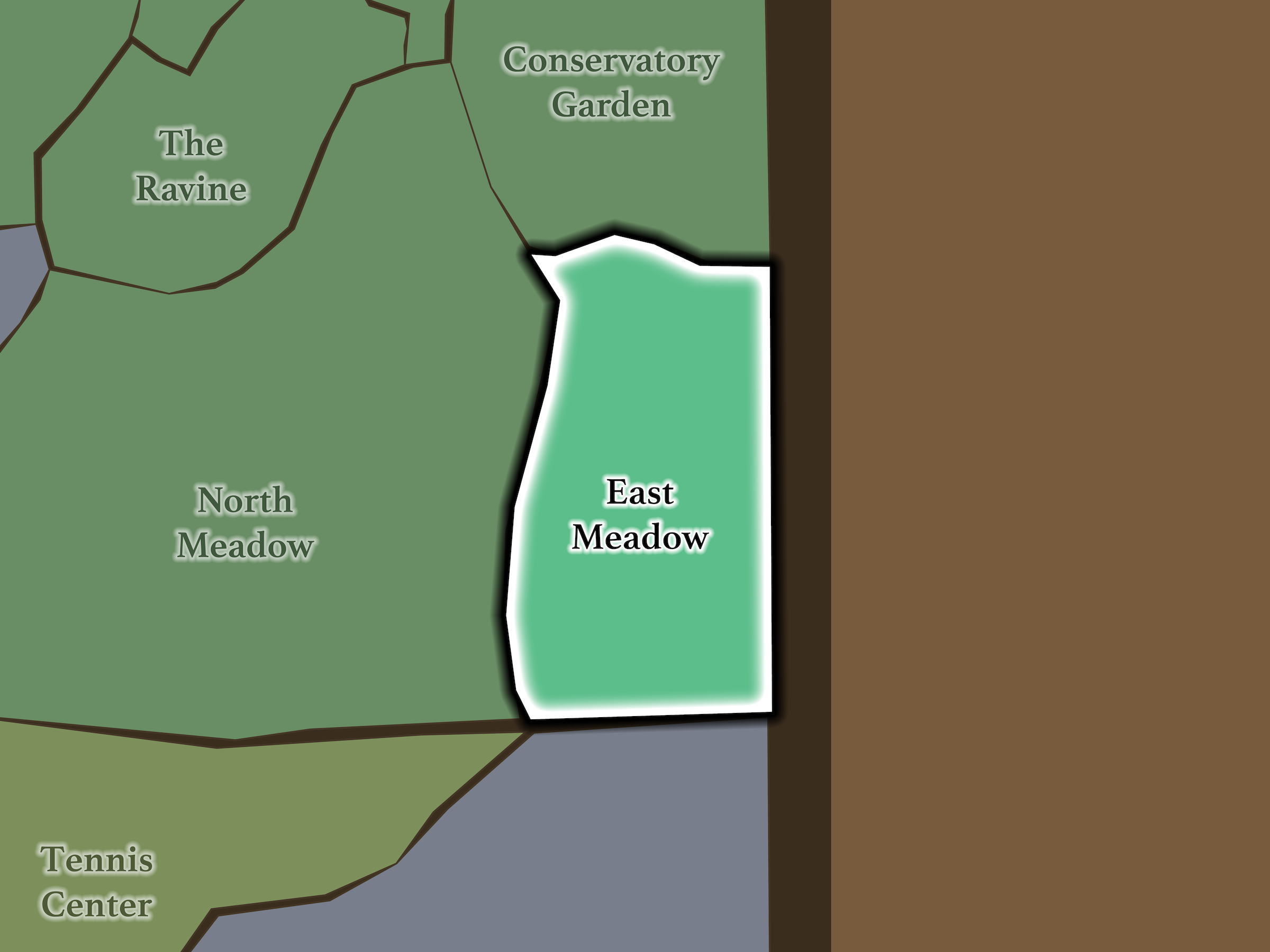
East Meadow occupies the southeastern corner of the North End. North Meadow lies across East Drive to the west; Conservatory Garden begins beyond East 102nd Street; Fifth Avenue separates the landscape from Spanish Harlem / El Barrio; and The Reservoir dominates the landscape south of the 97th Street Transverse.
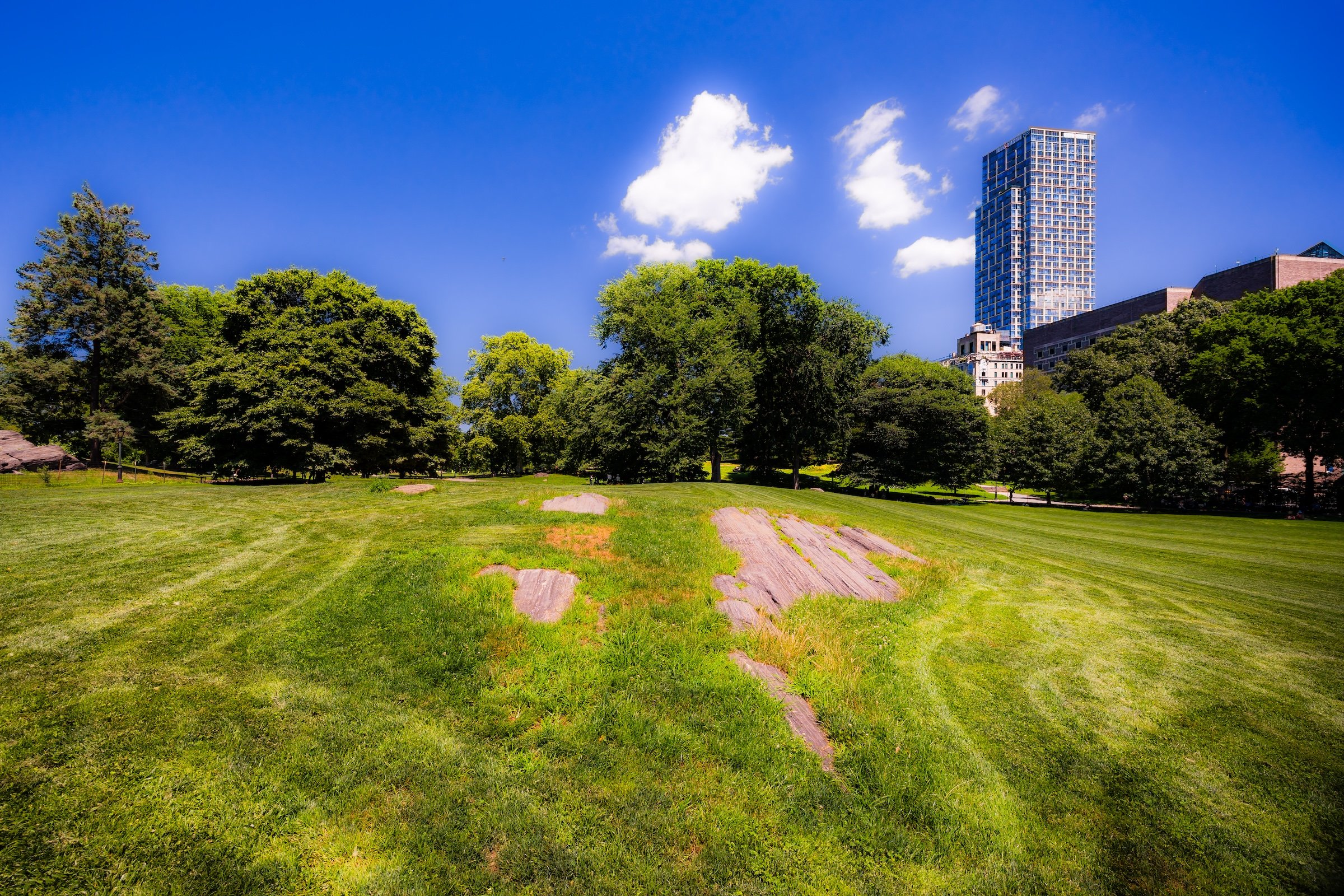
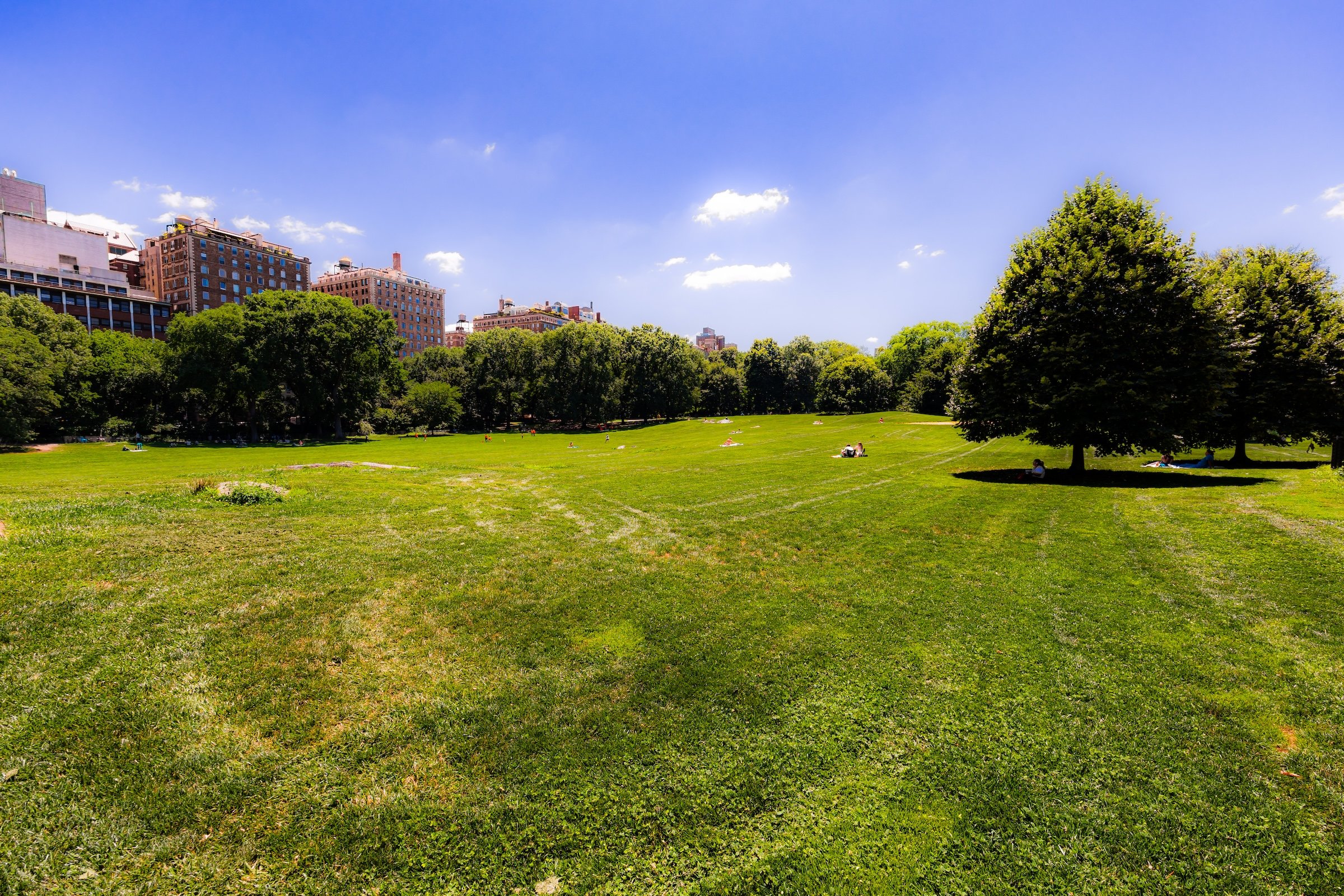
Although substantially smaller than North Meadow, East Meadow feels remarkably open. Broad lawn occupies its center, while trees and exposed Manhattan schist give definition to its edges. The eastern boundary also sits close enough to Fifth Avenue that the buildings of East Harlem remain a visible part of the experience beyond the park canopy.
That combination—open meadow, tall trees, rock and city edge—gives East Meadow a different character from the athletic landscape across East Drive.
Etymology
East Meadow takes its name from its simple geographic position: one of Central Park’s major pastoral meadows, occupying the eastern side of the North End between roughly East 97th and 100th Streets.
Its straightforward name suits the landscape. Unlike many nearby North End neighborhoods, East Meadow is not organized around a monument, building or historical installation. The meadow itself is the destination—an expansive lawn punctuated by rock outcrops and framed by some of Central Park’s finest mature trees. The Conservancy recognizes it as one of the park’s three major meadow landscapes, alongside Sheep Meadow and North Meadow.
History
1858–1873: Greensward Plan & Construction
Before Central Park, parts of what became North Meadow and East Meadow were farmed by German immigrant families, part of the scattered population displaced when the City acquired the land for the park.
Olmsted and Vaux subsequently imagined something unusually ambitious here. East Meadow was intended to form the southern portion of a large informal arboretum extending north toward what is now Conservatory Garden. The complete arboretum was never constructed, but the horticultural idea left an enduring legacy: this eastern corridor has always been unusually rich in mature specimen trees.
What emerged instead was one of the great pastoral spaces promised by the Greensward Plan itself: open grass framed by trees, offering New Yorkers visual distance and countryside-like repose within the increasingly dense city.
1858–1899: Early History & Grand Openings
During Central Park’s nineteenth-century development, East Meadow remained primarily a pastoral landscape rather than a formal recreation ground.
That distinction matters. Olmsted and Vaux envisioned Central Park’s meadows as expansive visual relief from the confined streets and buildings of Manhattan. The Conservancy still describes East Meadow in precisely those terms: one of the broad open spaces intended to evoke the countryside and provide respite from urban life.
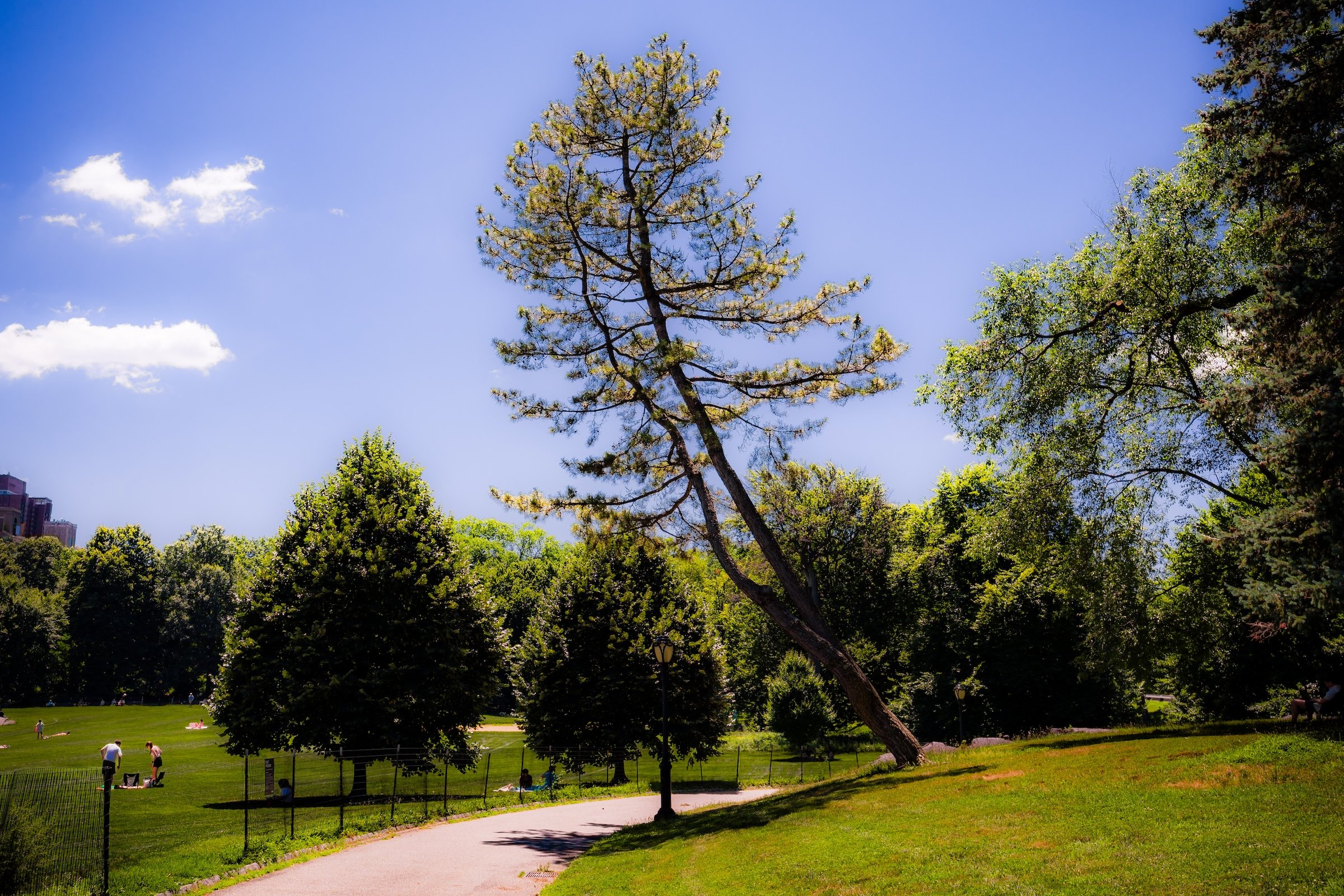
The abandoned arboretum scheme nevertheless survives indirectly in the trees. East Meadow contains numerous species, including prized American elms, and at least one elm believed to date from the park’s original planting era.
At the northern edge, the East 102nd Street entrance became Girls’ Gate, one of the park’s original named entrances—paired conceptually with Boys’ Gate on the western side near West 100th Street.
20th Century: Transformation & Restoration
Like Central Park’s other great lawns, East Meadow suffered from changing use, soil compaction and decades of inconsistent maintenance during the twentieth century.
The surrounding eastern landscape also became increasingly recreational, particularly during the Robert Moses era of the 1930s, when playgrounds and organized sporting facilities were inserted throughout Central Park. Yet East Meadow itself largely retained its pastoral character rather than being converted into permanent ballfields like neighboring North Meadow.
Its major renewal came through the Conservancy’s broader “Met to the Meer” campaign, which restored the eastern landscapes between the Metropolitan Museum of Art and Harlem Meer. East Meadow underwent extensive reconstruction involving improved drainage and irrigation, amended soil, renewed turf and landscape restoration. The work was substantially completed around 2010–2011, completing the Conservancy’s restoration of Central Park’s major lawns.
Three clay-surfaced areas were also introduced so that casual active play could occur without concentrating wear directly on the surrounding turf.
Explore
21st Century: Renovation & Modernization
Today, East Meadow is one of the North End’s great places simply to stop.
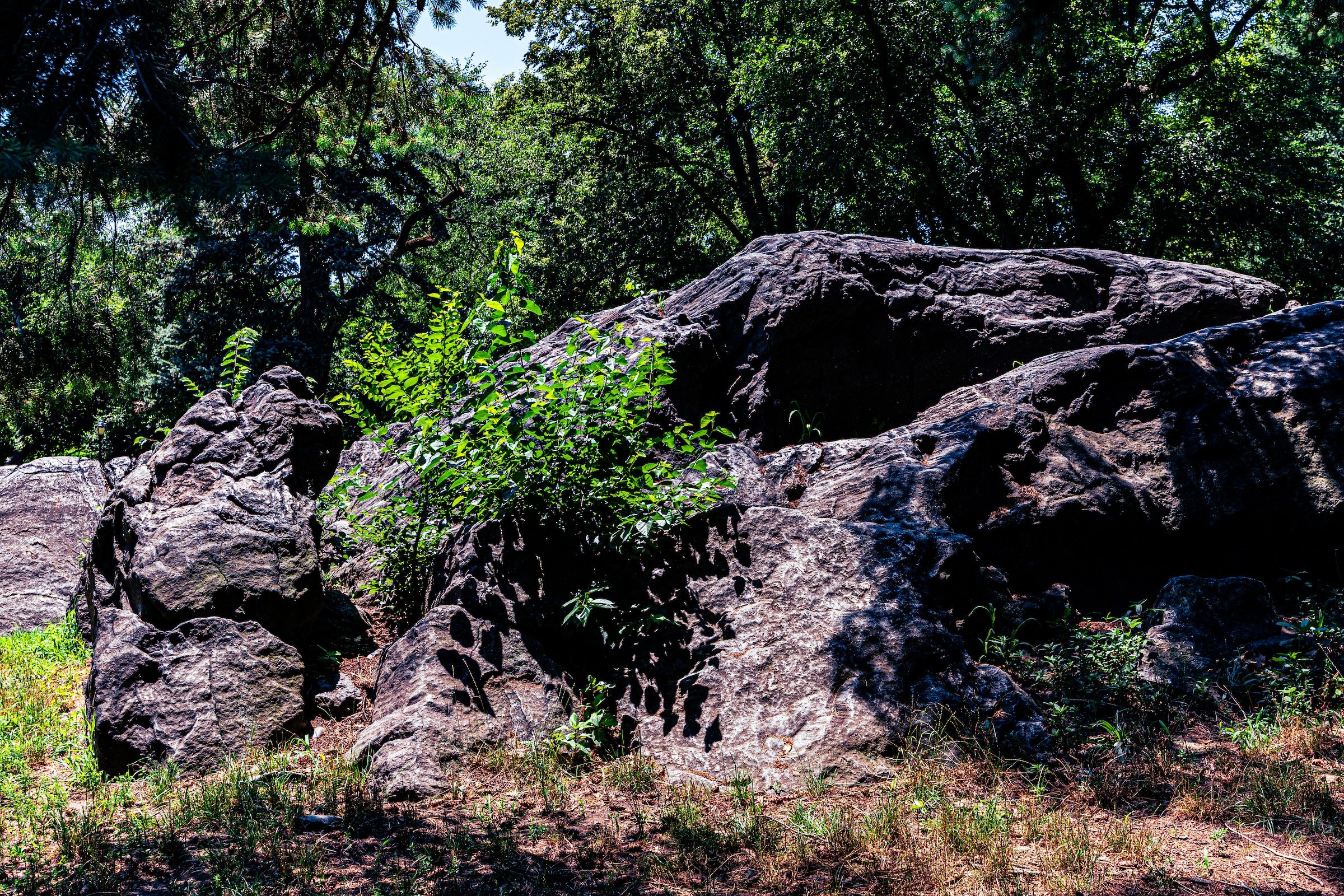
The center remains broad, open and sunny, with enough uninterrupted grass for picnicking, sunbathing, casual games or simply lying down beneath a wide sky. Around its edges, mature trees provide shade and visual enclosure without turning the landscape into woodland. Rock outcrops rise through the grass, retaining the geological character that distinguishes Central Park’s seemingly effortless meadows from ordinary urban lawns.
The contrast with North Meadow across East Drive is particularly useful. North Meadow is dominated by organized sports and its twelve playing fields; East Meadow remains considerably looser and more pastoral. The two spaces belong to the same broad meadow belt above the Reservoir, but they express different versions of recreation—activity on one side, repose on the other.
The eastern edge also keeps Manhattan unusually close. Through gaps in the trees, the buildings of Spanish Harlem rise beyond Fifth Avenue, reminding visitors that this wide pastoral clearing exists only yards from one of the densest cities in the world.
And the arboretum idea has never entirely disappeared. The Conservancy now offers an East Meadow Tree Walk, using this landscape and the route toward Conservatory Garden to highlight the remarkable diversity of species growing along the eastern North End.
Waypoints
-
Integrated into the Central Park perimeter wall near East 103rd Street, this understated 1939 memorial honors newspaper editor Arthur Brisbane. Its bas-relief portrait was created by Richmond Barthé, the prominent African American sculptor associated with the Harlem Renaissance.
-
The East 102nd Street entrance is one of Central Park’s original named gates and honors girls collectively rather than an individual dignitary. Restored by the Conservancy in 2012, it was redesigned as a safer and more welcoming pedestrian entrance after being permanently closed to automobile traffic in 2004.
Photography
Visual Identity
Central Park has no single visual identity. It moves between open meadow and enclosed woodland, exposed bedrock and carefully planted garden, reflective water and hard-edged skyline. Its paths can narrow into shade beneath old trees, then open suddenly toward towers, lakes, monuments, or a broad field filled with people. The Park’s character is made from those transitions: the designed discovery of one landscape giving way to another.
Water and horizon recur throughout its geography. The Lake, Reservoir, ponds, fountains, and seasonal pools of light create places of reflection—sometimes literal, sometimes figurative—where the city appears fractured, softened, or enlarged. Beyond them, Manhattan’s towers remain present as a constant reminder that this cultivated landscape exists within, not apart from, one of the world’s densest cities.
Its visual language also changes dramatically with the seasons. Winter exposes branches, stone, and skyline; spring briefly turns the Park into blossom and color; summer fills its lawns and paths with activity; autumn intensifies the drama of canopy, water, and light. Central Park is designed to be revisited, and its identity is never fixed for long.